Is Your Denver Home Ready for a Cold-Climate Heat Pump?
Are you wondering if your aging furnace will make it through another brutal winter, or if it is finally time to upgrade? Getting your common homeowner questions answered before the mid-fall heating startup is critical. Denver weather turns quickly, and waiting until the first major freeze to evaluate your heating system often leads to rushed decisions. You might be facing a significant choice: do you stick with a traditional gas furnace, or do you transition to modern electrification with a heat pump?
In our experience evaluating Denver homes, this decision point causes a lot of uncertainty. Homeowners want the efficiency of modern technology, but they worry about two main things: whether a heat pump can actually survive sub-zero temperatures, and whether their home's existing electrical system can handle the new load. Rapid temperature drops are typical of our mid-fall season, forcing many families to make quick choices about their comfort.
What we look for during an initial heating assessment goes far beyond simply swapping out a box in your basement. We take a first-person methodology approach, examining the entire ecosystem of your home. A successful transition to electric heating requires a deep understanding of both thermal dynamics and electrical infrastructure. By addressing these factors early in the season, you guarantee that your home remains warm, safe, and efficient no matter what the forecast brings.
Can a Heat Pump Really Handle Sub-Zero Denver Nights?
One Denver homeowner called us last fall when their furnace suddenly failed right as temperatures began to drop. Our technician arrived quickly to assess the situation and get their heating back online, but the emergency sparked a larger conversation about long-term reliability. Like many locals, they were skeptical that anything other than a gas furnace could handle the intense cold snaps characteristic of our specific winter climate profile.
The short answer is yes, but the technology matters. There is a persistent myth that heat pumps only work in mild, southern climates. While that was true decades ago, modern engineering has completely changed the landscape of home heating. Today, specific cold-climate heat pump systems are designed specifically to conquer freezing conditions.
Understanding Cold-Weather Performance Ratings
To understand how these systems work, you have to look at the engineering. Even when the air outside feels freezing to you, it still contains thermal energy. Modern compressors use advanced refrigerants with extremely low boiling points, allowing them to absorb that ambient heat, compress it, and transfer it inside your home.
Not all equipment is created equal. Here is what we look for when evaluating systems for our climate:
• Variable-speed compressors: Unlike older units that simply turn on and off, variable-speed technology ramps up and down to match the exact heating demand of your home.
• Enhanced defrost cycles: Cold-climate models feature intelligent defrost boards that prevent ice buildup on the outdoor coil without wasting excessive energy.
• HSPF2 ratings: The Heating Seasonal Performance Factor measures efficiency. Systems built for our region carry higher ratings to ensure they remain cost-effective during long winters.
• Compressor Type — Standard Heat Pump: Single or two-stage — Cold-Climate Heat Pump: Variable-speed inverter
• Performance Drop-off — Standard Heat Pump: Loses efficiency around 35°F — Cold-Climate Heat Pump: Maintains high output down to -15°F or lower
• Best Application — Standard Heat Pump: Mild climates or as part of a dual-fuel setup — Cold-Climate Heat Pump: Standalone heating in freezing climates
The Backup Furnace Question
Do you actually need a gas furnace as a backup? In many Denver homes, you can transition fully away from gas. Standalone cold-climate units are fully capable of carrying the entire heating load. However, the decision depends heavily on your home's insulation, ductwork, and overall thermal envelope.
During a thorough assessment, we evaluate your heating load. If your home is drafty or lacks sufficient insulation, a dual-fuel system—where a heat pump handles the mild cold and a gas furnace kicks in during extreme sub-zero dips—might be the most efficient route. But for well-insulated properties, a high-performance heat pump is often more than sufficient to keep your family comfortable all winter long.
Why Your Electrical Panel Might Need an Upgrade for a New Heating System
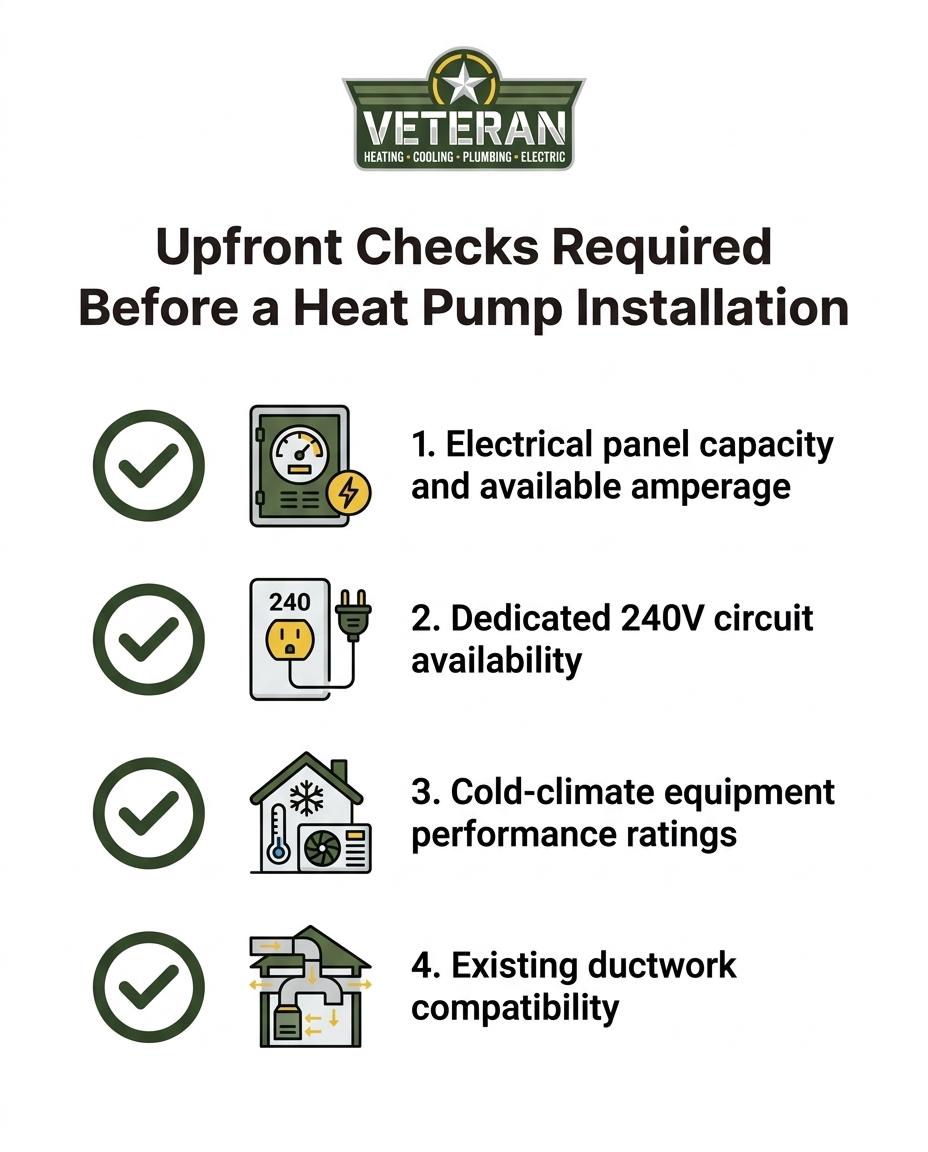
The problem: You decide to upgrade to a highly efficient heat pump, but midway through the project, the installation grinds to a halt. The contractor discovers that your home's electrical panel cannot safely supply the power the new system requires. This is a common, frustrating scenario that leaves homeowners stranded without heat.
The cause: Switching from a traditional gas furnace to a heat pump fundamentally changes how your home consumes energy. Gas furnaces only need a small amount of electricity to run the blower motor and circuit boards—usually pulling from a standard 120V circuit. Heat pumps, however, require dedicated 240V electrical circuits to power the outdoor compressor and the indoor air handler. Many older Denver homes still operate on 100-amp electrical panels, which simply do not have the physical space or the overall capacity to support modern electrification.
The solution: A thorough, upfront electrical inspection. As a veteran-owned company with in-house dual-trade expertise in both HVAC and electrical systems, we apply military precision to our estimating process. We evaluate your panel capacity before you ever sign a contract, ensuring there are no hidden surprises.
The Hidden Power Demands of Electrification
When we inspect your electrical infrastructure, we calculate the total amperage your home currently draws and what the new heating system will add. Cold-climate systems require significant, stable power. If your panel is already crowded with breakers for your kitchen appliances, washer, dryer, and lighting, adding a 30-amp to 50-amp double-pole breaker for a heat pump can overload the system.
Signs your current panel may be undersized include:
• No available breaker slots: If your panel is completely full, or if previous electricians have used "tandem" breakers to squeeze more circuits into a small box.
• Frequent tripped breakers: If running multiple appliances already causes your breakers to trip, your overall capacity is likely maxed out.
• Outdated equipment: Panels that are decades old or manufactured by brands known for safety issues must be replaced before adding heavy loads.
Avoiding Mid-Winter Installation Delays
Single-trade HVAC contractors often focus solely on the ductwork and the equipment. When they realize the electrical panel is inadequate, they have to halt the job and tell you to hire a separate electrician. This causes severe mid-winter installation delays, leaving your home freezing while you wait days or weeks for an electrical contractor to pull permits and complete the upgrade.
Because our team handles both trades, we coordinate the electrical panel upgrade alongside the HVAC installation. This cross-trade alignment keeps your project on schedule and ensures a seamless transition to your new heating system.
Selecting the Right Equipment for Your Denver Home
Choosing the right hardware is just as critical as the electrical preparation. You need equipment engineered specifically for the demands of our local weather. As a certified Midea Elite dealer, we have extensive experience installing systems that are rigorously tested for extreme conditions. Midea's advanced inverter technology provides the consistent, powerful heating required to combat freezing temperatures without causing massive spikes in your energy usage.
One local customer reached out last spring after we completed a new HVAC setup. They wanted to understand exactly how their new equipment operated, and our technicians took the time to explain the system in detail until the homeowner was completely comfortable. That level of understanding is crucial. You should know exactly what your system is doing and why.
When selecting your equipment, consider these critical factors:
• Inverter Technology: This allows the system to modulate its output. Instead of blasting hot air and then shutting off, it provides a continuous, gentle flow of warmth that keeps indoor temperatures perfectly stable.
• Smart Thermostat Integration: Modern heat pumps perform best when paired with communicating thermostats that optimize the defrost cycles and monitor outdoor temperatures.
• Acoustic Performance: High-efficiency units are remarkably quiet, meaning you won't hear a loud mechanical roar every time the system engages.
Working with specialized dealers who understand local demands ensures you get a system sized correctly for your specific square footage. If you want to dive deeper into the mechanics of these systems, understanding how a heat pump works in a four-season climate will give you a clear picture of why they are so effective year-round.
Why the October Shoulder Season is the Ideal Time for a Conversion
Last summer, a local homeowner needed a completely new heat pump installed. Our installation team went above and beyond, answering all their questions professionally and ensuring the system was ready long before the cold weather arrived. That proactive approach is exactly what we recommend. The October shoulder season—the brief window between the heat of summer and the deep freezes of winter—is the absolute best time to schedule a complex heating conversion.
Denver's shoulder season is notoriously short. Mild fall weather can turn into demanding winter conditions overnight. Waiting until your system actually breaks down in November or December limits your options and puts your family in a stressful emergency situation.
Here is a typical timeline of how a proactive mid-fall heating startup and conversion process works:
1. Initial Assessment (Week 1): We evaluate your current furnace, inspect your ductwork, and perform a comprehensive load calculation. Simultaneously, our electrical experts assess your panel capacity to determine if a 200-amp upgrade is necessary.
2. Permitting and Preparation (Week 2): Multi-trade installations require local permits. Handling this in October means avoiding the massive backlog that municipal permit offices experience during peak winter emergency season.
3. Installation and Upgrades (Week 3): We coordinate the electrical panel swap and the heat pump installation. Because the weather is still relatively mild, having your heating system offline for a day or two during the install is a minor inconvenience rather than a freezing emergency.
4. Testing and Commissioning: We run the new system through all its cycles, verify the electrical draw, and ensure the cold-climate features are fully operational before the first snow falls.
Taking action now guarantees you aren't left shivering while waiting for parts or permits when the temperature plummets.
Exploring Electrification Tax Credits and Rebates
Upgrading your home's heating and electrical infrastructure is a significant investment, but there are numerous financial incentives designed to make the transition easier. Because energy efficiency is a major priority at both the national and local levels, homeowners have access to programs that can offset the initial costs of electrification.
While specific programs change frequently, here is what you should explore:
• Federal Tax Credits: Generic federal tax credits often apply to qualifying high-efficiency heat pump installations. These credits are designed to reward homeowners who reduce their reliance on fossil fuels.
• Electrical Panel Incentives: Because a robust electrical system is required for modern energy upgrades, many state-level electrification incentives cover not just the HVAC equipment, but also the necessary electrical panel upgrades required to support it.
• Local Utility Rebates: Many regional utility providers offer rebates for switching to high-efficiency electric heating, as it helps balance the grid and reduces overall energy consumption.
We always advise our customers to consult with a qualified tax professional or check directly with their local utility provider for the most current program details and eligibility requirements. Investing in an energy-efficient system not only qualifies you for these potential incentives but also offers substantial long-term operational savings by reducing your monthly energy usage.
Common Homeowner Questions Answered: Heating and Electrical Upgrades
Navigating a major home upgrade generates a lot of queries. Here are the most frequent questions we hear from homeowners preparing for the winter season.
Do heat pumps work in Denver winters?
Yes, modern heat pumps are highly effective in Denver winters. While older models struggled in freezing temperatures, today's cold-climate heat pumps are engineered with advanced variable-speed compressors and specialized refrigerants. These systems can extract heat from the outside air even when temperatures drop well below zero, providing consistent and reliable indoor comfort throughout our harshest cold snaps.
What size electrical panel is needed for a heat pump?
Most homes require at least a 200-amp electrical panel to safely support a heat pump alongside other modern appliances. Heat pumps require dedicated 240V circuits, which draw significant continuous power. If your home still has an older 100-amp or 150-amp panel, you will likely need an upgrade to prevent overloaded circuits, tripped breakers, and potential safety hazards.
Can a heat pump replace a furnace in cold climates?
Absolutely. A properly sized, cold-climate rated heat pump can completely replace a traditional gas furnace. These systems are designed to serve as the sole heating source for a home, even in regions that experience severe winter weather. The key is ensuring the unit has the correct HSPF2 efficiency rating and low-temperature performance specifications for your specific area.
Do I need a backup furnace with a heat pump?
You do not strictly need a backup furnace if you install a high-performance cold-climate heat pump and your home is well-insulated. However, for homes with poor insulation or excessive drafts, a "dual-fuel" setup—pairing a heat pump with a gas furnace—can be beneficial. The heat pump handles the bulk of the heating, and the furnace only activates during extreme sub-zero temperature dips to maximize efficiency.
How do I know if my home is ready for a cold-climate heat pump?
Your home is ready if it has adequate electrical capacity, compatible ductwork, and a reasonably tight thermal envelope. The best way to know for sure is to have a professional evaluate your property. We check your electrical panel's amperage, inspect your existing vents for proper airflow, and perform a load calculation to determine exactly what size system your home requires.
Why do HVAC contractors need to inspect my electrical panel?
HVAC contractors must inspect your electrical panel to ensure it can safely handle the massive power draw of new electric heating equipment. If a contractor skips this step, you risk discovering mid-installation that your home cannot power the unit, leading to severe delays. A thorough upfront inspection guarantees that both the heating and electrical phases of the project are planned and executed flawlessly.
Schedule Your Upfront Heating and Electrical Assessment
Transitioning to modern, efficient heating shouldn't be a guessing game. The peace of mind that comes from a comprehensive, dual-trade system evaluation ensures that you are never left in the cold due to an unforeseen electrical issue or undersized equipment. By addressing your home's infrastructure holistically, you guarantee reliable winter comfort for years to come.
We bring a "Service to Heroes" mentality to every project, applying the discipline of a veteran-led team to ensure no details are missed. Whether you need a full panel upgrade or are ready to explore high-efficiency heating options, acting during the fall season protects your family before emergency conditions arrive. Reach out to our team today to schedule your comprehensive assessment and take control of your home's winter readiness.
ABOUT Veteran Heating, Cooling, Plumbing & Electric
Veteran Heating, Cooling, Plumbing & Electric was founded on the belief that service should be personal, honest, and community-focused. Our team is built around integrity, professionalism, and a true commitment to your home’s comfort and safety.
Led by a U.S. Army veteran with over 30 years of industry experience, we’re proud to remain locally owned and operated. Every technician, plumber, and electrician is EPA-certified, background checked, and driven to exceed expectations.
- 24/7 ServiceWe offer weekend & 24/7 emergency service. We’re here whenever you need us—day, night, or weekend, no exceptions.
- $0 Trip FeesNo dispatch or trip fees. You’ll never pay just for us to show up—service starts when the work does.
OUR SERVICES
AIR CONDITIONING

We offer specialty and seasonal services like indoor air quality upgrades, pre-winter furnace checks, and summer AC tune-ups to keep your home prepared year-round.
Our Primary Air Conditioning Services Include:
Don't see the service you need? Call our Team today!
PLUMBING
From leaks to full system installs, our plumbing services cover everything you need for a safe, reliable home water system, 24/7.
Our Primary Plumbing Include:
- Water Heater Replacement
- Water Heater Repair
- Trenchless Sewer Line
- Water Filtration
- Slab Leak
- Sewer Line Repair
Don't see the service you need? Call our Team today!
ELECTRICAL

Our electrical services ensure your home stays safe and powered, from routine fixes to complete system upgrades.
Our Primary Electrical Services Include:
- House Rewiring
- Electrician
- Electric Panel Upgrade
- Electric Panel Replacement
- EV Chargers
- Whole House Generator
Don't see the service you need? Call our Team today!
HEATING

We install, repair, and maintain heating & furnace systems with expert care to keep your Colorado home comfortable and energy-efficient year-round.
Our Primary Heating Services Include:
- Heating Installation
- Heating Replacement
- Heating Maintenance
- Heating Repair
- Heating Service
- Heating Tune-Up
Don't see the service you need? Call our Team today!