How Does a Heat Pump Work in a Four Season Climate Like Denver's?
How does a heat pump work in a four season climate is one of the most common questions homeowners ask when considering an upgrade from a traditional furnace and air conditioner setup. Here is the short answer:
A heat pump works year-round by moving heat rather than generating it:
• Winter: It extracts heat energy from cold outdoor air and transfers it inside to warm your home — even when temperatures drop below freezing
• Summer: It reverses the process, pulling heat from inside your home and releasing it outdoors, working just like an air conditioner
• Spring and Fall: Variable-speed systems automatically adjust output to match mild, fluctuating temperatures — delivering steady comfort without wasting energy
• Extreme Cold: Modern cold-climate heat pumps maintain full heating capacity down to 5°F, and select models operate effectively as low as -22°F
A single system handles all four jobs. No combustion. No separate furnace and AC. Just efficient, electric heat transfer all year long.
Denver's climate throws a lot at homeowners. Summers push into the 90s. Winters drop well below freezing. Spring mornings can swing 30 degrees before lunchtime. Finding one system that handles all of that reliably — without spiking your energy bills — is exactly what makes heat pump technology worth understanding.
The good news is that modern heat pumps have come a long way. According to the U.S. Department of Energy, today's systems can reduce electricity use for heating by up to 75% compared to electric resistance heating. And unlike a gas furnace, which tops out at around 98% efficiency, a heat pump can reach up to 300% efficiency because it moves heat instead of burning fuel to create it. That distinction matters a lot in a place like Denver, where you need serious heating in January and serious cooling in July.
This guide walks you through exactly how heat pumps perform in every season, what makes them a smart fit for the Denver Metro area, and what to look for when choosing the right system for your home.
I'm Mike Townsend, a U.S. Army veteran and HVAC industry professional whose background — including managing precision cooling systems for heat-seeking missile technology in the military — gives me a hands-on understanding of how a heat pump works in a four season climate that goes well beyond the basics. In the sections ahead, I'll break down everything you need to know to make a confident decision for your home.
What is a Heat Pump and How Does it Differ from Traditional Systems?
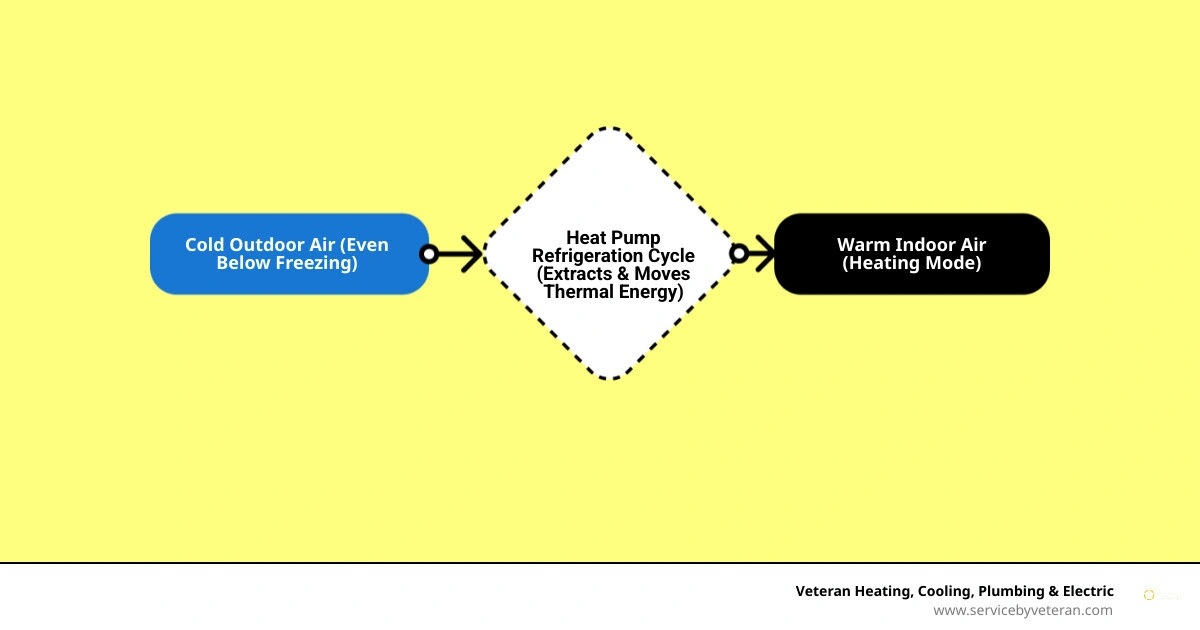
At its core, a heat pump is a "heat transporter." Unlike a furnace, which burns natural gas or uses electric resistance to create heat from scratch, a heat pump simply moves existing heat from one place to another. This is the secret to its incredible efficiency.
Think of it like a refrigerator. A fridge doesn't "create cold"; it extracts heat from the inside of the box and pushes it out into your kitchen. A heat pump does the exact same thing for your whole house. Because it moves heat rather than generating it through combustion, the energy output is often four times greater than the electrical energy used to run it. This is why we often see a Coefficient of Performance (COP) of around four, making these systems 3 to 5 times more energy efficient than even the best gas boilers.
When you look at more info about heat pump services, you'll see that this technology allows for a massive reduction in your home's carbon footprint. By switching to an electric-powered heat pump, you can reduce electricity use for heating by up to 75% compared to baseboard heaters or older electric furnaces.
• Primary Function — Heat Pump: Heating & Cooling — Gas Furnace: Heating Only — Central Air Conditioner: Cooling Only
• Energy Source — Heat Pump: Electricity — Gas Furnace: Natural Gas/Propane — Central Air Conditioner: Electricity
• Efficiency — Heat Pump: Up to 300%+ — Gas Furnace: Max 98.5% — Central Air Conditioner: Measured by SEER2
• Method — Heat Pump: Moves Heat — Gas Furnace: Creates Heat (Combustion) — Central Air Conditioner: Moves Heat Out
• Emission Level — Heat Pump: Zero Direct Emissions — Gas Furnace: Carbon Dioxide Produced — Central Air Conditioner: Zero Direct Emissions
How Does a Heat Pump Work in a Four Season Climate?
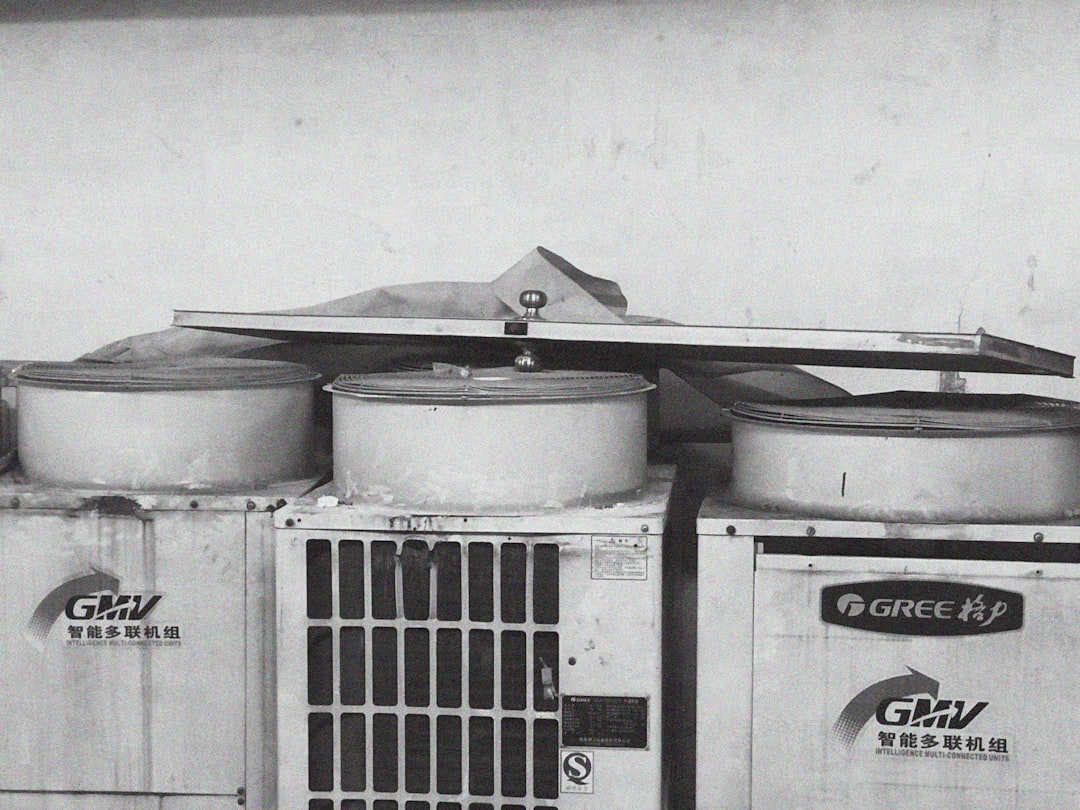
The magic of how a heat pump work in a four season climate lies in a component called the reversing valve. This clever part allows the refrigeration cycle to flip directions based on what the thermostat tells it.
In the Denver Metro area, we experience rapid weather shifts. One day it’s 65°F in Highlands Ranch, and the next morning there’s six inches of snow. The heat pump handles this by changing the role of its evaporator and condenser coils.
Winter Reliability: How Does a Heat Pump Work in a Four Season Climate?
Many homeowners in Arvada or Littleton worry that there isn't enough "heat" in 20-degree air to warm a house. However, heat energy exists in all air down to absolute zero (-459°F). Modern cold-climate heat pumps (CCHPs) are specifically engineered to find and extract that heat even in frigid Colorado winters.
Key features for winter performance include:
• Cold-Climate Certification: These models maintain 100% of their heating capacity down to 5°F.
• Extreme Operation: Select units can continue providing heat at temperatures as low as -22°F.
• HSPF2 Ratings: This stands for Heating Seasonal Performance Factor. In our region, looking for a high HSPF2 (10 or higher) ensures the system remains efficient during the long heating season.
• Defrost Cycle: When it's icy in Broomfield, the outdoor unit may develop frost. The system automatically enters a brief defrost cycle to melt the ice, ensuring the coils can continue absorbing heat.
• Dual-Fuel Options: Some homeowners choose a "hybrid" system, pairing a heat pump with a gas furnace. The furnace only kicks in during the absolute coldest nights, providing peace of mind while the heat pump handles 80-90% of the annual heating load.
Year-Round Comfort: How Does a Heat Pump Work in a Four Season Climate?
When summer hits Aurora and Castle Rock, the heat pump switches to cooling mode. It pulls heat from your indoor air and rejects it outside. But it does more than just lower the temperature; it manages humidity.
In a four-season climate, summer humidity can make 85°F feel like 95°F. Heat pumps perform "latent cooling," which is the technical term for removing moisture from the air. By using the "Auto" fan setting, the system ensures the fan only runs when the compressor is active. This prevents moisture on the coils from being blown back into your home, keeping your indoor air quality high and your skin feeling cool and dry.
Performance During Transitional Spring and Fall Seasons
Spring and fall in the Denver area—often called "shoulder seasons"—are the true test of an HVAC system. You might need heat at 6:00 AM in Lakewood and cooling by 3:00 PM.
Traditional systems are often "single-stage," meaning they are either 100% on or 100% off. This leads to "short-cycling," where the system turns on and off constantly, wasting energy and causing temperature swings.
Modern heat pumps use variable-speed compressors and modulation. Instead of a "blast" of air, the system adjusts its output in tiny increments to match the exact demand. This results in:
• Consistent Comfort: No more "hot spots" or "cold spots" in your home.
• Energy Savings: Running at a lower speed for longer periods uses significantly less electricity than frequent full-power starts.
• Quiet Operation: Because the system rarely needs to run at full blast, it operates with a whisper-quiet hum that won't disturb your backyard BBQ in Centennial.
To keep these complex systems running smoothly through these transitions, we recommend checking out more info about heat pump services to ensure your smart thermostat and variable-speed controls are properly calibrated.
Choosing the Right System for the Denver Metro Area
Selecting the right heat pump for a four-season climate isn't a one-size-fits-all process. Our team at Veteran Heating, Cooling, Plumbing & Electric looks at several factors specific to the Denver Metro area:
1. Air-Source Heat Pumps: These are the most common and cost-effective. They extract heat from the air and are perfect for most homes in Golden and Arvada.
2. Geothermal Heat Pumps: These use the stable temperature of the earth. While the installation is more involved, they offer the highest efficiency and can last 20-50 years.
3. Ductless Mini-Splits: Perfect for older homes in Denver or additions in Broomfield that don't have existing ductwork. These allow for "zone control," so you only heat or cool the rooms you're using.
4. Proper Sizing: We perform a "Manual J" calculation. This takes into account your home's insulation, window types, and local altitude to ensure the system isn't too big (which causes humidity issues) or too small (which won't keep up in a blizzard).
Financial Incentives in 2026The Inflation Reduction Act (IRA) continues to offer significant tax credits and rebates for heat pump installations. Homeowners can often see thousands of dollars in savings through federal tax credits (up to 30% of the cost). At Veteran Heating, Cooling, Plumbing & Electric, we also offer a 10% discount for veterans, seniors, and first responders to help make these upgrades even more accessible.
Frequently Asked Questions about Heat Pumps
Do heat pumps work in extreme Colorado winters?
Yes! While older models struggled below 25°F, modern cold-climate heat pumps are designed for regions like ours. With capacity retention technology, they can provide 100% of your home's heat even when it's 5°F outside. For those extra-cold nights in Castle Rock, we can install supplemental electric heat strips or set up a dual-fuel system with your existing furnace.
Can a heat pump manage high humidity in the summer?
Absolutely. In fact, because variable-speed heat pumps run for longer, lower-intensity cycles, they are actually better at dehumidification than standard air conditioners. They spend more time pulling moisture out of the air, creating a much more comfortable indoor environment during those sticky July afternoons.
What maintenance is required for year-round performance?
Because a heat pump works hard in all four seasons, regular maintenance is vital.
• Filters: Change them every 1-3 months to ensure proper airflow.
• Outdoor Unit: Keep it clear of snow, ice, and debris like leaves or cottonwood seeds.
• Professional Inspections: We recommend a spring "Cooling Check" and a fall "Heating Check." Our technicians will clean the coils, check refrigerant levels, and ensure the reversing valve is functioning perfectly.
Conclusion
Understanding how does a heat pump work in a four season climate is the first step toward a more comfortable, efficient, and eco-friendly home. Whether you are facing a scorching summer in Aurora or a freezing winter in Denver, these systems are more than capable of rising to the challenge.
At Veteran Heating, Cooling, Plumbing & Electric, we bring over 30 years of industry experience to every job. As a veteran-owned and locally operated company, we pride ourselves on integrity, honesty, and community-focused service. We stand behind our work with a lifetime warranty on parts and labor and a money-back satisfaction guarantee.
If you're ready to experience the year-round magic of a heat pump, we are here to help. From Arvada to Castle Rock and everywhere in between, our EPA-certified and background-checked technicians are ready to find the perfect solution for your home.
ABOUT Veteran Heating, Cooling, Plumbing & Electric
Veteran Heating, Cooling, Plumbing & Electric was founded on the belief that service should be personal, honest, and community-focused. Our team is built around integrity, professionalism, and a true commitment to your home’s comfort and safety.
Led by a U.S. Army veteran with over 30 years of industry experience, we’re proud to remain locally owned and operated. Every technician, plumber, and electrician is EPA-certified, background checked, and driven to exceed expectations.
- 24/7 ServiceWe offer weekend & 24/7 emergency service. We’re here whenever you need us—day, night, or weekend, no exceptions.
- $0 Trip FeesNo dispatch or trip fees. You’ll never pay just for us to show up—service starts when the work does.
OUR SERVICES
AIR CONDITIONING
.jpg)
We offer specialty and seasonal services like indoor air quality upgrades, pre-winter furnace checks, and summer AC tune-ups to keep your home prepared year-round.
Our Primary Air Conditioning Services Include:
Don't see the service you need? Call our Team today!
PLUMBING
From leaks to full system installs, our plumbing services cover everything you need for a safe, reliable home water system, 24/7.
Our Primary Plumbing Include:
- Water Heater Replacement
- Water Heater Repair
- Trenchless Sewer Line
- Water Filtration
- Slab Leak
- Sewer Line Repair
Don't see the service you need? Call our Team today!
ELECTRICAL

Our electrical services ensure your home stays safe and powered, from routine fixes to complete system upgrades.
Our Primary Electrical Services Include:
- House Rewiring
- Electrician
- Electric Panel Upgrade
- Electric Panel Replacement
- EV Chargers
- Whole House Generator
Don't see the service you need? Call our Team today!
HEATING
.jpg)
We install, repair, and maintain heating & furnace systems with expert care to keep your Colorado home comfortable and energy-efficient year-round.
Our Primary Heating Services Include:
- Heating Installation
- Heating Replacement
- Heating Maintenance
- Heating Repair
- Heating Service
- Heating Tune-Up
Don't see the service you need? Call our Team today!