Your Quick Guide to AC Troubleshooting Tips Before Calling a Pro
If your AC has stopped working or isn't cooling properly, here are the ac troubleshooting tips before calling a pro that can save you time and money:
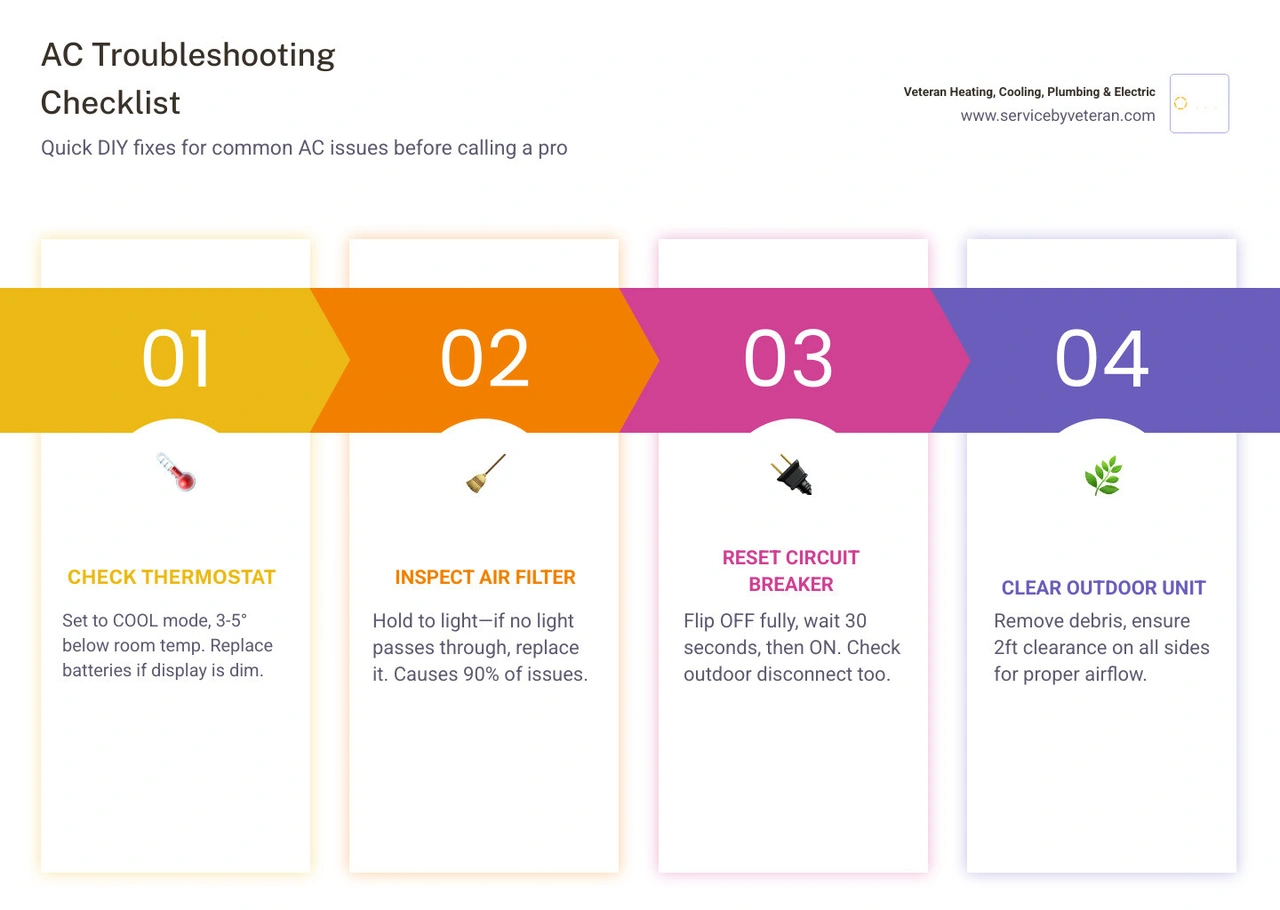
1. Check your thermostat — Set it to COOL mode and at least 3–5 degrees below room temperature. Replace batteries if the display is dim or blank.
2. Inspect your air filter — Hold it up to a light source. If no light passes through, replace it immediately. A dirty filter is the cause of roughly 9 out of 10 AC performance problems.
3. Check your circuit breaker — Look for a tripped breaker in your electrical panel. Flip it fully OFF, wait 30 seconds, then flip it back ON.
4. Check the outdoor disconnect switch — Located near your outdoor unit. Make sure it hasn't been accidentally switched off during yard work.
5. Clear debris from the outdoor unit — Remove leaves, grass clippings, and dirt. Maintain at least 2 feet of clearance on all sides.
6. Check your vents and registers — Make sure none are blocked by furniture, rugs, or other objects.
7. Inspect the condensate drain line — Look for standing water near the indoor unit, which can trigger a safety shutoff.
8. Look for ice on the refrigerant lines — If you see frost or ice on the copper lines or indoor unit, turn the system off immediately and run the fan only to thaw it.
9. Call a professional if you smell burning, hear grinding or hissing, or if the breaker keeps tripping after a reset.
Your air conditioner picks the worst possible moments to quit — like the hottest afternoon of a Denver summer when you need it most. Before you reach for the phone and schedule a service call, it's worth taking a few minutes to work through some basic checks. Many common AC issues have surprisingly simple fixes that any homeowner can handle safely without any special tools or technical knowledge. In fact, industry data shows that up to 90% of central air performance complaints trace back to a single, easy-to-fix cause: a dirty air filter. Beyond that, problems like a tripped breaker, incorrect thermostat settings, or a clogged drain line are all things you can investigate and often resolve on your own. This guide walks you through the most practical steps to try before you dial for help — so you can stay cool, avoid an unnecessary service call, and know exactly when a real problem requires professional hands.
I'm Mike Townsend, a U.S. Army veteran who managed precision cooling systems for heat-seeking missile technology during my eight years of service — experience that sharpened my understanding of how critical reliable cooling systems really are. That technical foundation, combined with decades in the home services industry, shapes how I approach ac troubleshooting tips before calling a pro and how our team at Veteran Heating, Cooling, Plumbing & Electric serves Denver Metro homeowners every day. Let's walk through what to check first.
Essential AC Troubleshooting Tips Before Calling a Pro
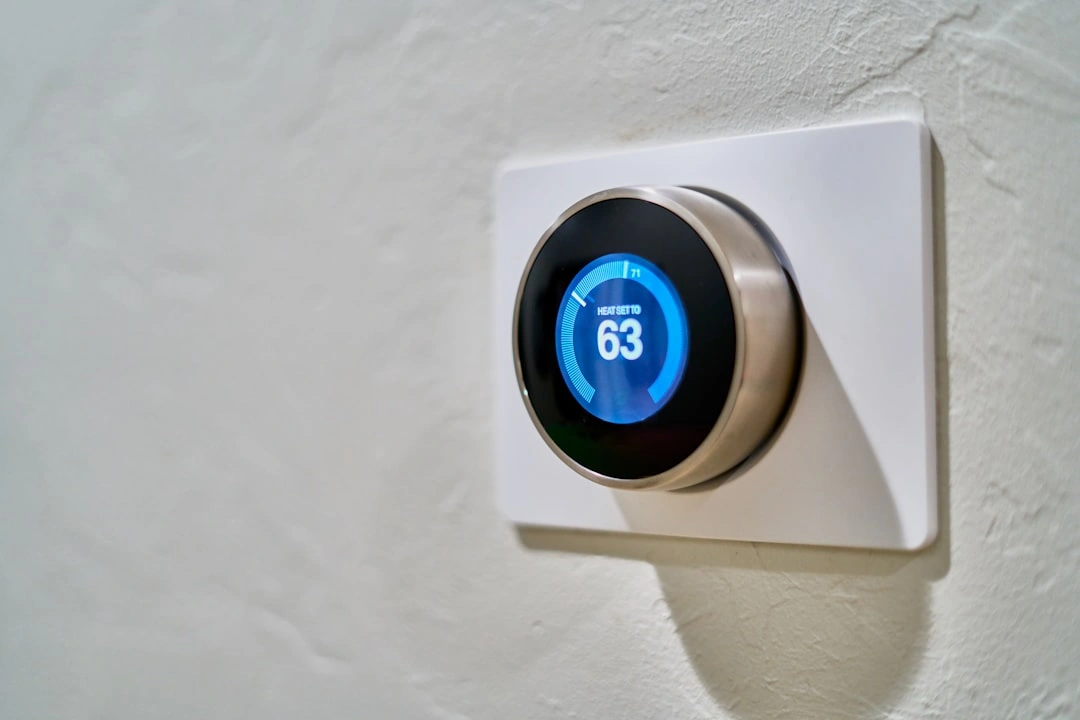
When your home starts feeling more like a sauna than a sanctuary, it’s easy to panic. However, many "broken" air conditioners are actually just suffering from a setting error or a minor power interruption. Before you assume the worst, start with the basics. These initial checks are the foundation of any AC Service call we perform, and you can easily do them yourself.
Verifying Your Thermostat and Power Supply
The thermostat is the "brain" of your cooling system. If it isn’t communicating correctly, nothing else will work.
• Mode Check: Ensure the thermostat is explicitly set to "Cool." It sounds simple, but in May 2026, as we transition between seasons in Colorado, a family member might have switched it to "Heat" or "Fan Only" during a chilly night.
• Temperature Differential: Set the target temperature at least 3 to 5 degrees below the current room temperature. If the gap is too small, the system might not trigger a cooling cycle.
• Battery Power: If the display is dim, flickering, or blank, replace the batteries immediately. A weak battery can prevent the thermostat from sending a signal to the outdoor unit.
• The "Secret" Switch: Most indoor units (furnaces or air handlers) have a power switch nearby that looks exactly like a standard light switch. It’s common for someone to accidentally flip this off while reaching for a light in a dark basement or closet. Ensure it is in the "On" position.
Checking the Circuit Breaker and Outdoor Disconnect
Your AC system typically runs on two separate circuits: one for the indoor blower and a high-voltage circuit for the outdoor compressor. If your AC won't turn on, a tripped breaker is a likely culprit.
Go to your main electrical panel (usually in the garage, basement, or on the side of the house). Look for breakers labeled "AC" or "Condenser." Even if a breaker doesn't look fully tripped, flip it all the way to "Off," wait 30 seconds, and then flip it back to "On." This resets the connection. If it trips again immediately, do not keep resetting it—this indicates a serious electrical fault that requires AC Repair Denver CO.
Don't forget the outdoor disconnect box located on the wall near your condenser. This box contains a 240-volt switch or a pull-out fuse block. Ensure the switch is "On" and the block is securely seated. These are often bumped during yard work or accidentally left off by a technician during a previous visit.
Restoring Airflow: Filters and Vents
Airflow is the lifeblood of your air conditioner. When air can’t move freely through the system, the heat exchange process fails, leading to poor cooling, higher bills, and eventually, system failure. As mentioned earlier, a dirty air filter is the single most common cause of AC problems—accounting for 9 out of 10 service calls. Furthermore, the Department of Energy notes that about 30% of energy in ducted systems is lost due to leaks or poor layout, making airflow efficiency critical. For regular upkeep, consider AC Maintenance Denver CO.
How to Replace a Clogged Air Filter
In our dry Colorado climate, dust and pet dander accumulate quickly.
• Frequency: Standard 1-inch filters should be changed every month during peak summer use. If you have 4-inch or 5-inch media filters, they can last 6 to 12 months, but you should still check them every 90 days.
• The Light Test: Not sure if it's dirty? Hold the filter up to a bright light or the sun. If you can’t see light passing through the fibers, it’s clogged.
• Pet Owners: If you have furry friends in Lakewood or Arvada, your filter will clog much faster. Check it twice as often during the shedding season.
Replacing a filter is one of the easiest AC Maintenance Arvada CO tasks you can perform to prevent the evaporator coils from freezing up.
Clearing Obstructions from Vents and Registers
Your AC is designed to move a specific volume of air. If you close too many vents or block them with furniture, you create pressure imbalances that can damage the blower motor.
• Open the Vents: Ensure at least 80% of your supply registers are fully open. Closing vents in unused rooms does not save energy; it actually strains the system.
• Furniture Clearance: Keep furniture, rugs, and curtains at least two feet away from both supply vents and return air grilles.
• Dusting: Use a vacuum attachment to clear dust from the slats of your registers.
• The 20-Degree Rule: Most AC systems are designed to maintain a maximum 20-degree difference between the outdoor temperature and your indoor setting. If it's 100°F in Centennial, don't expect your home to hit 65°F without a struggle. For help with airflow issues, AC Maintenance Lakewood CO can ensure your ductwork is clear.
Maintaining the Outdoor Condenser and Drainage
The outdoor unit (the condenser) is responsible for releasing the heat collected from inside your home. If the coils are covered in dirt or the unit is buried in overgrown bushes, it can’t breathe. This leads to "short-cycling," where the unit turns on and off rapidly, eventually burning out the compressor. Proper care here is a key part of AC Repair Lakewood CO.
Cleaning the Outdoor Unit for Better Efficiency
The silver fins on your outdoor unit are delicate but essential for heat transfer.
1. Clear the Perimeter: Maintain at least two feet of clear space around the sides of the unit. Trim back any bushes, tall grass, or weeds.
2. Top Clearance: Ensure there are at least five feet of vertical clearance above the unit. Overhanging tree branches can trap hot air, forcing the unit to work harder.
3. Gently Rinse: Turn off the power at the breaker or disconnect first. Use a garden hose with a gentle spray (never a pressure washer, which will flatten the fins) to rinse away grass clippings, spider webs, and Colorado dust. Spray from the top down and from the inside out if possible.
Regular cleaning is a staple of a professional AC Tune-Up Lakewood CO.
Identifying and Clearing a Clogged Drain Line
As your AC cools the air, it also removes humidity. This moisture collects in a drain pan and flows out through a PVC pipe. Over time, algae or "gunk" can clog this line.
• Standing Water: If you see water pooling around your indoor furnace or in the emergency drain pan, you likely have a clog.
• Safety Float Switch: Most modern systems in the Denver Metro area have a safety float switch. If the water backs up, the switch triggers and shuts down the entire system to prevent water damage to your home.
• The Vinegar Flush: To prevent clogs, pour one cup of white vinegar down the condensate drain line (usually through a T-shaped access point near the indoor unit) once every few months.
• The Vacuum Trick: If it's already clogged, you can often use a wet/dry vacuum on the outdoor end of the drain pipe to suck out the obstruction.
If water continues to back up, you may need professional AC Repair Highlands Ranch CO to clear the line and inspect the pan.
Recognizing When DIY AC Troubleshooting Tips Before Calling a Pro Aren't Enough
While we love empowering homeowners to handle basic maintenance, some issues are dangerous or require specialized tools. Knowing when to stop is just as important as knowing where to start. If you encounter the following, it's time to call in the experts for AC Repair Centennial CO.
Dealing with Frozen Evaporator Coils
If you see frost or ice on the copper refrigerant lines or the indoor unit, your system has "frozen up." This is usually caused by restricted airflow (dirty filter) or low refrigerant levels.
What to do:
1. Turn the AC "Off" at the thermostat immediately.
2. Switch the fan setting to "On" (instead of "Auto"). This pushes warm air across the coils to help them thaw.
3. Wait 2 to 4 hours for the ice to melt completely.
4. Check and replace your air filter.
If the unit freezes up again after you've replaced the filter, you likely have a refrigerant leak. Handling refrigerant requires EPA certification, so you must call for AC Repair Aurora CO.
Serious Warning Signs: Noises and Smells
Your AC should hum and blow air—that's about it. Anything else is a red flag.
• Grinding or Clanging: This often indicates a failing motor bearing or a loose fan blade. Continued operation can destroy the entire unit.
• Hissing: A loud hissing sound is usually the sign of a high-pressure refrigerant leak.
• Burning Odors: If you smell "electrical" burning or ozone, shut the system off at the breaker immediately. This indicates overheating wires or a failing capacitor, which are fire hazards.
• Frequent Tripping: If your circuit breaker trips more than once, do not reset it again. There is a short circuit somewhere that needs professional AC Repair Broomfield CO.
Preventive Maintenance for Long-Term Reliability
The average HVAC lifespan is about 15 to 20 years, but frequent minor breakdowns usually start showing up by year 12. The best way to push that lifespan to the limit is through a combination of DIY diligence and professional oversight. For homeowners in the south metro area, AC Maintenance Highlands Ranch CO is the best way to stay ahead of the heat.
• Fiberglass — Thickness: 1-inch — Replacement Schedule: Every 30 days — Best For: Basic protection, high airflow
• Pleated — Thickness: 1 to 2-inch — Replacement Schedule: Every 60-90 days — Best For: Dust and pollen reduction
• High-Efficiency Media — Thickness: 4 to 5-inch — Replacement Schedule: Every 6-12 months — Best For: Allergy sufferers, pet owners
Using AC Troubleshooting Tips Before Calling a Pro to Prevent Breakdowns
Consistency is key. Perform a visual inspection of your system every month. Look for frayed wires, check for levelness of the outdoor unit (an unlevel unit can cause compressor lubrication issues), and listen for new sounds. By catching small issues like a dirty coil or a loose vent early, you avoid the emergency service call in the middle of a July heatwave. A seasonal AC Tune-Up Columbine CO in early spring can improve efficiency by 5% to 15%, paying for itself in lower utility bills.
Frequently Asked Questions about AC Troubleshooting
Why is my AC running but not blowing cold air?
This is most often caused by a dirty air filter or a dirty outdoor condenser unit. If the system can't move air or release heat, the air coming out of your vents will be lukewarm. Other causes include incorrect thermostat settings (fan set to "On" instead of "Auto") or low refrigerant.
How do I safely reset my AC system?
To perform a "hard reset," turn the system off at the thermostat. Go to your breaker box and flip the AC breaker to "Off." Wait at least 5 to 10 minutes (this allows the internal pressures to equalize and the compressor's built-in delay to reset). Flip the breaker back to "On," then return to your thermostat and set it to "Cool."
What unusual noises indicate a serious problem?
Squealing usually points to a slipped or worn fan belt. Banging or clanking suggests a loose part in the blower or compressor. Hissing is a classic sign of a refrigerant leak, while a loud buzzing or clicking often indicates an electrical issue with the contactor or capacitor.
Conclusion
At Veteran Heating, Cooling, Plumbing & Electric, we believe in the military values of integrity and service. We want our neighbors in Denver, Arvada, Aurora, and across the Front Range to have comfortable homes without unnecessary stress. By using these ac troubleshooting tips before calling a pro, you can often resolve minor glitches yourself.
However, when the DIY fixes aren't enough, we are here to help. Led by a U.S. Army veteran with over 30 years of experience, our team provides honest, expert service with no dispatch or trip fees. We stand behind our work with a lifetime warranty on parts and labor and a 100% satisfaction guarantee. Whether you need a quick repair or a full system replacement, we are committed to serving our community with the same dedication we gave to our country.
If your troubleshooting didn't do the trick, don't sweat it. Contact us today for reliable, professional AC Repair and get your home back to the comfort level you deserve.
ABOUT Veteran Heating, Cooling, Plumbing & Electric
Veteran Heating, Cooling, Plumbing & Electric was founded on the belief that service should be personal, honest, and community-focused. Our team is built around integrity, professionalism, and a true commitment to your home’s comfort and safety.
Led by a U.S. Army veteran with over 30 years of industry experience, we’re proud to remain locally owned and operated. Every technician, plumber, and electrician is EPA-certified, background checked, and driven to exceed expectations.
- 24/7 ServiceWe offer weekend & 24/7 emergency service. We’re here whenever you need us—day, night, or weekend, no exceptions.
- $0 Trip FeesNo dispatch or trip fees. You’ll never pay just for us to show up—service starts when the work does.
OUR SERVICES
AIR CONDITIONING
.jpg)
We offer specialty and seasonal services like indoor air quality upgrades, pre-winter furnace checks, and summer AC tune-ups to keep your home prepared year-round.
Our Primary Air Conditioning Services Include:
Don't see the service you need? Call our Team today!
PLUMBING
From leaks to full system installs, our plumbing services cover everything you need for a safe, reliable home water system, 24/7.
Our Primary Plumbing Include:
- Water Heater Replacement
- Water Heater Repair
- Trenchless Sewer Line
- Water Filtration
- Slab Leak
- Sewer Line Repair
Don't see the service you need? Call our Team today!
ELECTRICAL

Our electrical services ensure your home stays safe and powered, from routine fixes to complete system upgrades.
Our Primary Electrical Services Include:
- House Rewiring
- Electrician
- Electric Panel Upgrade
- Electric Panel Replacement
- EV Chargers
- Whole House Generator
Don't see the service you need? Call our Team today!
HEATING
.jpg)
We install, repair, and maintain heating & furnace systems with expert care to keep your Colorado home comfortable and energy-efficient year-round.
Our Primary Heating Services Include:
- Heating Installation
- Heating Replacement
- Heating Maintenance
- Heating Repair
- Heating Service
- Heating Tune-Up
Don't see the service you need? Call our Team today!