Why Understanding Common Heat Pump Problems and How to Prevent Them Saves You Money and Comfort
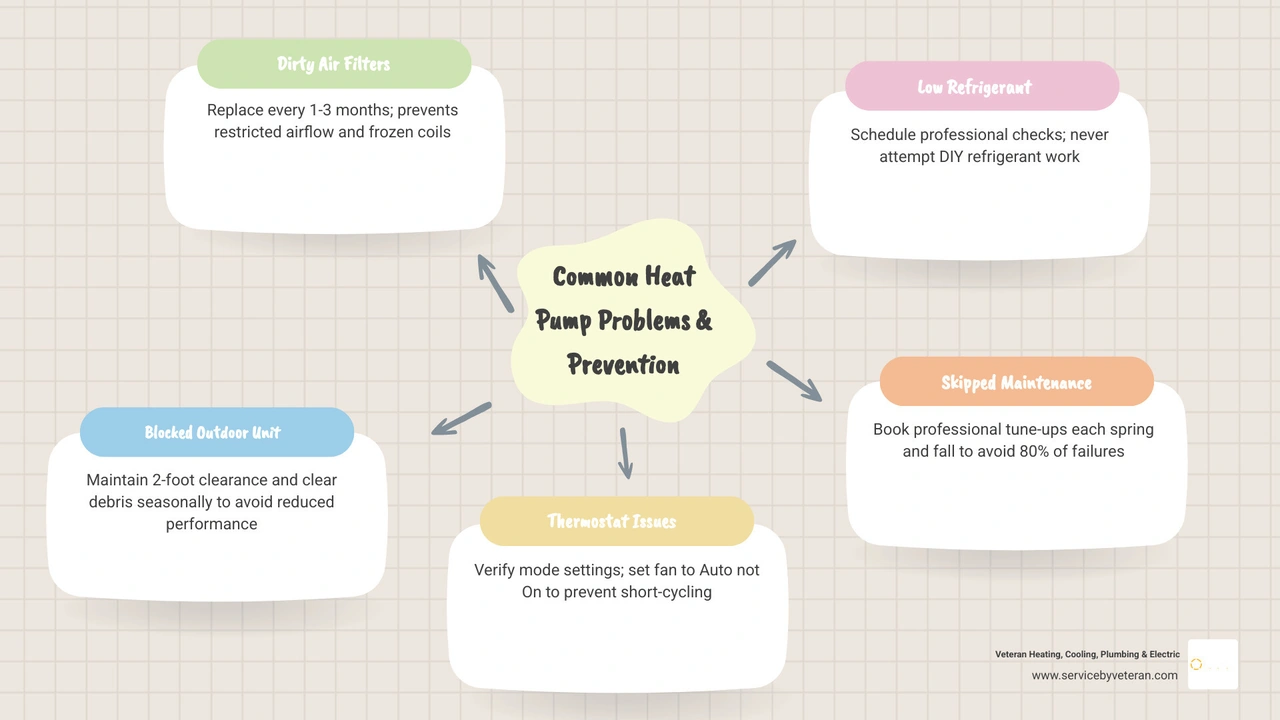
Common heat pump problems and how to prevent them comes down to five core issues most Denver Metro homeowners will face at some point:
1. Dirty air filters - Replace every 1-3 months to prevent restricted airflow and frozen coils
2. Blocked outdoor unit - Keep a 2-foot clearance and clear debris seasonally
3. Thermostat issues - Verify mode settings and set the fan to Auto, not On
4. Low refrigerant - Schedule professional checks; never attempt DIY refrigerant work
5. Skipped seasonal maintenance - Book a professional tune-up every spring and fall
Most heat pump failures do not happen suddenly. They build slowly from small, ignored maintenance issues until the system finally stops working — usually on the coldest night of the year. A dirty air filter alone can reduce system performance by up to 15%, and research shows that regular maintenance prevents up to 80% of common heat pump failures. That means the majority of costly repair calls are avoidable.
Heat pumps work harder than most homeowners realize. Unlike a furnace that only runs in winter or an air conditioner that only runs in summer, a heat pump operates year-round — moving heat into your home when it is cold and pulling heat out when it is warm. That constant, dual-season workload means wear accumulates faster, and small problems that go unnoticed can quietly grow into expensive failures.
The good news is that most of the prevention is straightforward. A few consistent habits — changing filters, clearing the outdoor unit, keeping an eye on thermostat settings, and scheduling professional tune-ups — are enough to keep the majority of problems from ever starting.
I'm Mike Townsend, a U.S. Army veteran whose military background includes managing precision cooling systems for heat-seeking missile technology — experience that gave me a deep, hands-on understanding of common heat pump problems and how to prevent them long before I brought that same discipline to home comfort systems in the Denver Metro area. In the sections ahead, I'll walk you through exactly what causes the most frequent heat pump issues and the simple steps you can take to stop them before they start.
Understanding Common Heat Pump Problems and How to Prevent Them
To stop heat pump issues before they disrupt your home’s comfort, it helps to understand how these systems operate. Unlike traditional combustion furnaces that burn natural gas or heating oil to generate heat, a heat pump is an electrical heat-transfer system. It uses a closed loop of chemical refrigerant, a compressor, an outdoor coil, an indoor coil, and a specialized reversing valve to shift thermal energy from one place to another.
In the summer, it absorbs heat from your indoor air and expels it outside, functioning exactly like a standard air conditioner. In the winter, the reversing valve switches the flow of refrigerant, allowing the system to absorb heat from the freezing outdoor air and pump it inside.
Because heat pumps transfer thermal energy rather than creating it, they can achieve remarkable efficiency levels of 300% to 400% compared to the 95% maximum efficiency of top-tier furnaces. However, because they are mechanical systems operating continuously across Colorado’s extreme seasonal temperature swings, they are susceptible to wear and tear.

When something goes wrong, the root cause usually traces back to one of three critical areas: restricted airflow, electrical failures, or refrigerant issues. If you notice your system running constantly, short-cycling (turning on and off rapidly), blowing cold air while in heating mode, or accumulating heavy layers of ice, a breakdown is often right around the corner.
Understanding these symptoms and mapping them to their primary causes is the first step toward preserving your system's performance. When persistent issues arise, securing professional Heat Pump Service is the best way to safeguard your investment.
Airflow Obstructions: The Root of Common Heat Pump Problems and How to Prevent Them
If heat pumps had a love language, it would be airflow. A heat pump must "breathe" freely to transfer heat efficiently. When airflow is restricted, the entire heat transfer process breaks down.
Inside your home, return grilles pull air across the indoor evaporator coil. If a dirty air filter or a series of closed supply vents blocks this path, the lack of warm air moving across the cold indoor coil during the cooling season will cause the coil’s temperature to drop below freezing. This leads to ice formation, which completely blocks the remaining airflow and can cause liquid refrigerant to flood back into the compressor, potentially destroying it.
During the winter, restricted indoor airflow prevents the system from releasing the heat it has gathered from outside, causing the indoor unit to overheat and cycle off prematurely.
Similarly, the outdoor unit needs to pull massive amounts of air across its coils to extract or release heat. If the outdoor unit is choked by autumn leaves, overgrown weeds, snow accumulation, or debris, the compressor has to work twice as hard to achieve the same temperature results. This extra strain can reduce your system's overall performance by 15% to 30%, driving up your monthly utility bills by 20% to 50% and rapidly aging your equipment.
For homeowners in the Aurora area, prioritizing professional Heat Pump Maintenance Aurora CO ensures your system's airflow remains unobstructed throughout the changing seasons.
Electrical and Thermostat Issues: Diagnosing Common Heat Pump Problems and How to Prevent Them
Electrical issues represent another major category of heat pump failures, accounting for a significant portion of service calls. Your heat pump relies on a network of electrical components, including contactors, relays, and capacitors, to start and run its motors safely.
The starter capacitor acts like a heavy-duty battery, delivering the high-voltage electrical surge needed to start the compressor and fan motors. Over time, heat, electrical fluctuations, and constant use degrade these capacitors. When a capacitor fails, the compressor or fan motor will hum but fail to start, which can quickly lead to overheating and motor burnout.
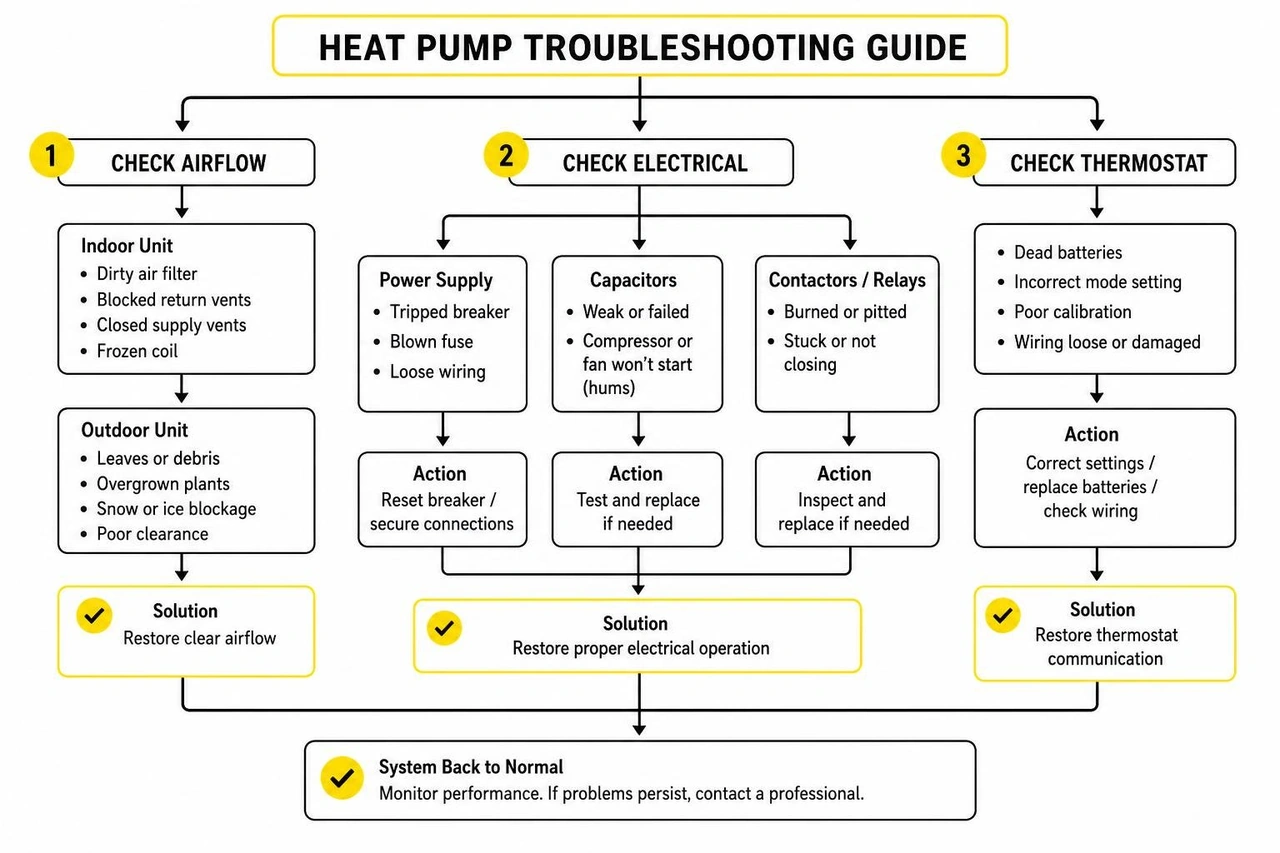
Thermostat malfunctions are equally common, accounting for roughly 25% of all heat pump service calls. Often, the issue is as simple as dead batteries, incorrect mode settings, or poor calibration. If your thermostat is not calibrated correctly, it may fail to communicate with your heat pump, leading to short-cycling or a complete failure to turn on.
Additionally, if your home experiences electrical surges—common during heavy summer storms in Arvada or Broomfield—it can trip the dedicated circuit breakers at your main electrical panel. If your heat pump suddenly stops running, checking your home's electrical panel is an essential first step.
For complex electrical issues or recurring breaker trips, contacting a professional for Heat Pump Repair Arvada CO is critical to prevent electrical fires and protect your system’s sensitive controls.
5 Simple Steps to Prevent Heat Pump Failures
Preventing major heat pump failures does not require a degree in mechanical engineering. By establishing a consistent maintenance routine, you can prevent up to 80% of common heat pump failures, extend your system's lifespan by five to seven years, and keep your utility bills low.
Homeowners who perform basic checks and routine care resolve about 40% of performance issues without ever needing to call for emergency service. If you live in Lakewood, keeping up with these steps can save you from unexpected breakdowns during peak summer or winter weather. If a problem does occur despite your efforts, professional Heat Pump Repair Lakewood CO can get your comfort back on track.
Here are the five simple, highly effective steps you can take to keep your heat pump running smoothly year-round.
Step 1: Change Air Filters Regularly
The single most important maintenance task you can perform is replacing your air filter. Think of your air filter as the system’s lungs; if it is clogged with dust, pet dander, and hair, the entire system has to strain to breathe.
• MERV Ratings: For residential heat pumps, the sweet spot for filtration is a Minimum Efficiency Reporting Value (MERV) rating between 8 and 11. These filters provide excellent air filtration, catching pollen, mold spores, and dust, without restricting the airflow your system needs. Avoid filters with MERV ratings of 13 or higher unless your HVAC system has been specifically modified to handle the increased resistance.
• Replacement Schedule: Inspect your filter monthly. If you have pets, a large family, or live in an area prone to high dust or wildfire smoke, replace your filter every 30 to 60 days. In quiet, pet-free homes, you can stretch this to every 90 days.
• The Impact: Regular filter changes optimize airflow, reduce energy consumption by up to 15%, and prevent the indoor coil from freezing, saving your compressor from catastrophic failure.
Step 2: Maintain Outdoor Unit Clearance
Your outdoor unit requires an open perimeter to draw in and expel air efficiently. When the outdoor coil is blocked, heat transfer drops, energy consumption climbs, and the system runs longer, putting extra wear on internal components.
• Two-Foot Clearance: Maintain a minimum of two feet of clear space around all sides of the outdoor unit. Trim back shrubs, weeds, decorative grasses, and low-hanging tree branches.
• Debris Removal: Regularly clear away fallen leaves, grass clippings, twigs, and windblown trash that can cling to the metal fins of the outdoor coil. You can gently wash the coil with a garden hose (with the power turned off), spraying from the inside out to remove dirt and pollen. Never use a pressure washer, as the high pressure will bend the delicate aluminum fins.
• Snow and Ice Protection: During Colorado's heavy winter storms in Castle Rock or Columbine, check the outdoor unit to ensure it is not buried in snow. Clear snow accumulation from around and on top of the unit. Additionally, ensure that leaky rain gutters are not dripping water directly onto the unit, which can create a solid block of ice that defeats the automatic defrost cycle.
Step 3: Keep Indoor Vents and Registers Open
A common misconception is that closing vents in unused rooms saves energy. In modern HVAC systems, closing vents actually has the opposite effect.
• Pressure Regulation: Your system's blower motor is designed to move a specific volume of air against a set amount of resistance (static pressure). When you close supply registers, you restrict the path of the air, increasing the pressure inside your ductwork.
• Blower Motor Strain: This elevated pressure forces the blower motor to work harder, consuming more electricity and running hotter, which can lead to premature motor failure.
• System Freezing or Overheating: In cooling mode, the reduced airflow can cause the indoor evaporator coil to freeze. In heating mode, it can cause the heat exchanger or heating elements to overheat and shut down. Keep at least 80% to 90% of your indoor supply vents and return grilles completely open and unobstructed by furniture, heavy drapes, or rugs.
Step 4: Monitor Thermostat Settings and Use Auto Mode
How you interact with your thermostat has a major impact on your heat pump's efficiency and longevity.
• The "Auto" Fan Setting: Always set your thermostat fan setting to "Auto" rather than "On." When the fan is set to "On," the indoor blower runs continuously, even when the heat pump is not actively heating or cooling. In winter, this can make the air blowing from your vents feel cold, leading you to raise the thermostat unnecessarily. In summer, continuous fan operation can re-evaporate moisture off the wet indoor coil, raising indoor humidity levels.
• Avoid Extreme Temperature Swings: Do not crank your thermostat up or down to extreme temperatures in an attempt to heat or cool your home faster—heat pumps heat and cool at a steady, consistent rate.
• Manage Auxiliary Heat: In winter, raising the thermostat setting by more than two degrees at once can trigger your system's emergency or auxiliary electric resistance heat. Auxiliary heat is highly inefficient and can double or triple your heating costs. Adjust the temperature in small increments, or install a smart thermostat designed specifically for heat pumps to manage auxiliary heat transitions smoothly.
Step 5: Schedule Professional Seasonal Tune-Ups
While DIY tasks are essential, there are critical components of your heat pump that require specialized tools and training to maintain.
• Twice-Yearly Maintenance: Because heat pumps run year-round, they require professional maintenance twice a year—once in the spring before the cooling season, and once in the autumn before the heating season.
• What the Professional Checks: During a professional tune-up, a technician will clean the indoor and outdoor coils, clear and flush the condensate drain line to prevent water damage, inspect electrical connections, test capacitors, check the operation of the reversing valve and defrost controls, and monitor refrigerant levels and pressures.
• The Lifespan Benefit: Consistent, professional maintenance keeps your system running at peak efficiency, preserves manufacturer warranties, and extends the lifespan of your heat pump to its maximum potential of 15 to 20 years.
Normal Operation vs. Actual Heat Pump Problems
Because heat pumps operate differently than traditional heating and cooling systems, homeowners often mistake normal operating behaviors for system malfunctions. This is especially true during the winter months when the outdoor unit must periodically clear frost from its coils.
The table below outlines the key differences between normal heat pump operation and actual problems that require professional attention:
• Defrost Cycle: The outdoor unit temporarily switches to cooling mode for 5 to 15 minutes to melt frost. The outdoor fan stops, and you may hear a "whooshing" sound as the reversing valve shifts. — Actual Heat Pump Malfunction: Solid Ice Accumulation: The outdoor unit is encased in a thick block of ice that does not melt after 30 minutes, or the unit is completely frozen over in summer.
• Temporary Cool Air: During a winter defrost cycle, the indoor vents may blow cooler air briefly before the auxiliary heat kicks in to temper the air. — Actual Heat Pump Malfunction: Continuous Cold Air: The system blows cold air constantly in heating mode, and the home cannot reach the set temperature.
• Steam or Water Runoff: You see steam rising from the outdoor unit during a winter defrost cycle, or water dripping from the bottom of the unit. — Actual Heat Pump Malfunction: Loud Mechanical Noises: You hear metal-on-metal grinding, loud rattling, screeching, or constant clicking from either the indoor or outdoor unit.
• Long Run Cycles: The system runs continuously in temperatures below 30°F. This is normal, as heat pumps are designed to run longer to maintain steady temperatures efficiently. — Actual Heat Pump Malfunction: Short-Cycling: The system turns on and off every few minutes regardless of the outdoor temperature, failing to heat or cool the home.
If you observe any of the actual malfunctions listed above, it is important to turn your system off at the thermostat to prevent further mechanical damage and contact a professional immediately. For residents in Greenwood Village, securing trusted Heat Pump Repair Greenwood Village CO will resolve these issues safely and quickly.
When to Call a Professional for Heat Pump Repair
While checking your thermostat settings, replacing a dirty air filter, and clearing debris from your outdoor unit are excellent DIY steps, there is a clear boundary where homeowner troubleshooting must end for safety and legal reasons.
If your basic checks do not resolve the issue, attempting complex repairs yourself can void your manufacturer’s warranty, damage sensitive system components, and expose you to severe safety hazards.
There are three primary areas where you must call a licensed, professional technician:
1. Refrigerant Issues: If your system is low on refrigerant, it is due to a leak in the closed loop. Under EPA Section 608 of the Clean Air Act, it is illegal for anyone who is not an EPA-certified technician to handle, charge, or recover chemical refrigerants. A professional must locate the leak, repair the copper lines, pull a vacuum to remove moisture, and recharge the system with the exact weight of refrigerant specified by the manufacturer.
2. Electrical Repairs: High-voltage electrical work carries a severe risk of electrocution and electrical fires. Starter capacitors hold a lethal electrical charge even after the power is disconnected. Replacing capacitors, contactors, fan motors, or repairing damaged control wiring requires specialized training and diagnostic tools.
3. Emergency Red Flags: You should shut off your system at the breaker and call for emergency service immediately if you notice:
— A burning electrical smell or smoke coming from either unit.
— Loud grinding, screeching, or metal-clanking noises (indicating motor bearing failure or a loose compressor component).
— The circuit breaker for your heat pump trips repeatedly (never reset a tripped breaker more than once, as this indicates a direct electrical short or a seized compressor motor).
Frequently Asked Questions About Heat Pump Troubleshooting
Why is my heat pump blowing cold air in heat mode?
During the winter, a heat pump can blow cooler air (typically around 85°F to 90°F) compared to the hot air (120°F+) produced by a gas furnace. This air is still warmer than your room temperature and will heat your home, but it can feel cool to the touch.
However, if the air is truly cold, check your thermostat settings to ensure the fan is set to Auto instead of On. When set to On, the fan blows air continuously even when the system isn't actively heating.
Other causes include the system being in its temporary 5-to-15 minute defrost cycle, a dirty air filter restricting airflow, or a malfunctioning reversing valve that is stuck in cooling mode.
Is it normal for my outdoor heat pump unit to freeze up in winter?
A light, uniform layer of frost on the outdoor coils is completely normal during cold weather. Heat pumps are equipped with an automatic defrost control board that periodically reverses the system to heat the outdoor coils and melt this frost.
However, if the outdoor unit is encased in a thick, solid block of ice that does not clear, this is a sign of a problem. Common causes of heavy icing include restricted airflow (due to leaves, snow, or debris blocking the unit), a broken outdoor fan motor, a faulty defrost sensor or timer, or low refrigerant levels due to a leak.
How often should I schedule professional heat pump maintenance?
Because heat pumps operate year-round to provide both heating and cooling, they experience twice the wear and tear of a standard furnace or air conditioner. You should schedule professional maintenance twice a year—once in the spring before the heavy cooling season begins, and once in the autumn before the winter cold arrives.
Regular professional tune-ups keep your system operating at peak efficiency, catch minor issues before they turn into costly breakdowns, and help protect your manufacturer's warranty coverage.
Conclusion
Your heat pump is a highly efficient, hardworking system designed to keep your home comfortable through Colorado’s hot summers and freezing winters. By understanding common heat pump problems and how to prevent them, you can protect your investment, lower your energy bills, and ensure your system is ready when you need it most.
Simple habits like replacing your air filter every 1 to 3 months, keeping a 2-foot clear zone around your outdoor unit, and keeping your indoor vents open can prevent up to 80% of common heat pump failures.
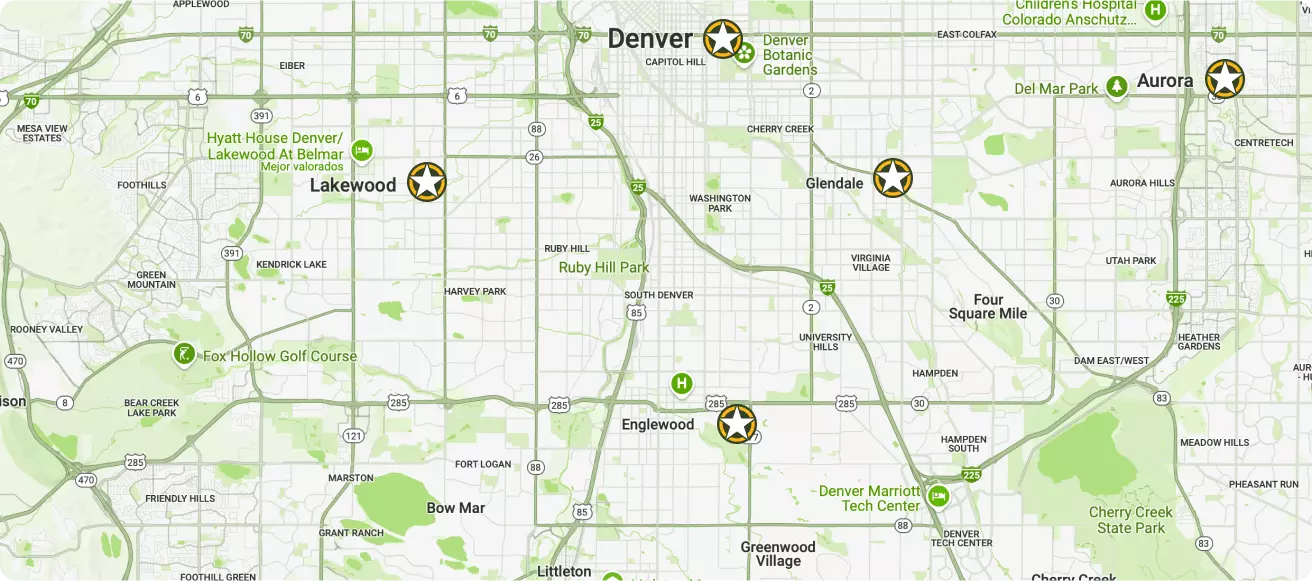
When you do need professional support, Veteran Heating, Cooling, Plumbing & Electric is here to serve you. As a veteran-owned and operated home services company led by a U.S. Army veteran with over 30 years of industry experience, we bring military precision, honesty, and integrity to every job. We proudly serve homeowners across the Denver Metro area, including Denver, Greenwood Village, Arvada, Aurora, Broomfield, Castle Rock, Centennial, Columbine, Golden, Highlands Ranch, Lakewood, and Littleton.
We believe in complete transparency and peace of mind for our clients, which is why we offer:
• Up-front pricing with no hidden fees.
• No dispatch or trip fees ever.
• A lifetime warranty on parts and labor for the original homeowner (full terms here).
• Our 1-Year Make-It-Right-or-Take-It-Back Guarantee on every complete new heating or cooling system we install. Conditions apply; the written guarantee is available before you buy.
• A phone line we answer 24/7, with real emergencies escalated to a manager right away and everything else scheduled starting at 7am.
• A 10% discount for veterans, seniors, and first responders.
To make preventative care even easier, our $9.99/month maintenance plan provides you with priority scheduling, annual tune-ups, and exclusive repair discounts to keep your home comfort systems in top shape.
Don't wait for a system breakdown to think about your heat pump's health. Contact us today to schedule your seasonal tune-up or professional repair, and experience the dedicated, honest service you deserve.
ABOUT Veteran Heating, Cooling, Plumbing & Electric
Veteran Heating, Cooling, Plumbing & Electric was founded on the belief that service should be personal, honest, and community-focused. Our team is built around integrity, professionalism, and a true commitment to your home’s comfort and safety.
Led by a U.S. Army veteran with over 30 years of industry experience, we’re proud to remain locally owned and operated. Every technician, plumber, and electrician is EPA-certified, background checked, and driven to exceed expectations.
- 24/7 ServiceWe offer weekend & 24/7 emergency service. We’re here whenever you need us—day, night, or weekend, no exceptions.
- $0 Trip FeesNo dispatch or trip fees. You’ll never pay just for us to show up—service starts when the work does.
OUR SERVICES
AIR CONDITIONING
.jpg)
We offer specialty and seasonal services like indoor air quality upgrades, pre-winter furnace checks, and summer AC tune-ups to keep your home prepared year-round.
Our Primary Air Conditioning Services Include:
Don't see the service you need? Call our Team today!
PLUMBING
From leaks to full system installs, our plumbing services cover everything you need for a safe, reliable home water system, 24/7.
Our Primary Plumbing Include:
- Water Heater Replacement
- Water Heater Repair
- Trenchless Sewer Line
- Water Filtration
- Slab Leak
- Sewer Line Repair
Don't see the service you need? Call our Team today!
ELECTRICAL

Our electrical services ensure your home stays safe and powered, from routine fixes to complete system upgrades.
Our Primary Electrical Services Include:
- House Rewiring
- Electrician
- Electric Panel Upgrade
- Electric Panel Replacement
- EV Chargers
- Whole House Generator
Don't see the service you need? Call our Team today!
HEATING
.jpg)
We install, repair, and maintain heating & furnace systems with expert care to keep your Colorado home comfortable and energy-efficient year-round.
Our Primary Heating Services Include:
- Heating Installation
- Heating Replacement
- Heating Maintenance
- Heating Repair
- Heating Service
- Heating Tune-Up
Don't see the service you need? Call our Team today!