The Right Water Heater Size Starts Here — Before You Buy
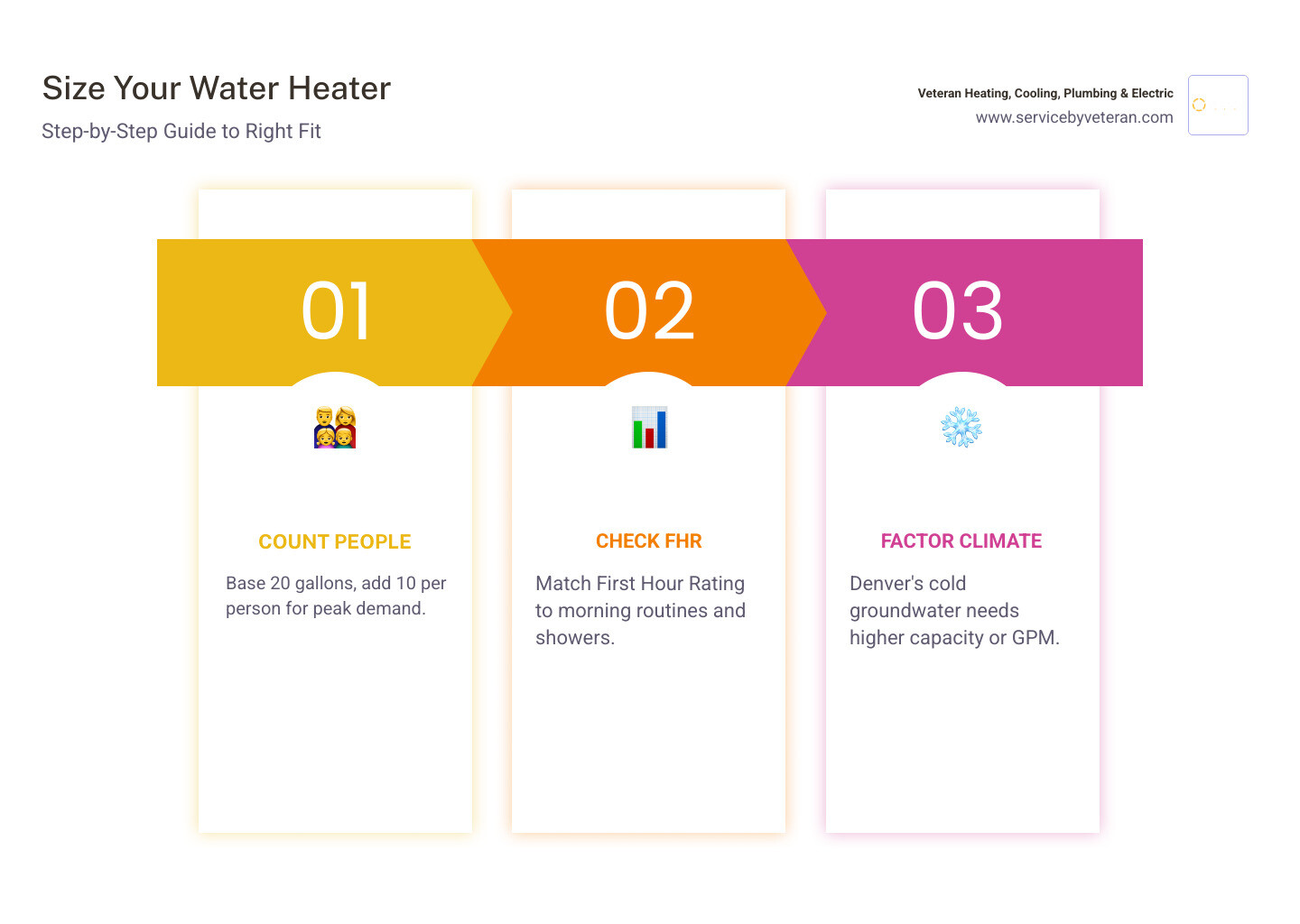
What size water heater do I need? The answer depends on how many people live in your home and when they all seem to need hot water at the same time. Here's a quick guide to get you started:
• 1-2 people — Recommended Tank Size: 30-40 gallons
• 3 people — Recommended Tank Size: 40-50 gallons
• 4 people — Recommended Tank Size: 50-75 gallons
• 5+ people — Recommended Tank Size: 75-100 gallons
Quick rule of thumb: Start with 20 gallons as a base, then add 10 gallons per person in your home.
For tankless water heaters, sizing works differently — you need to know your peak flow rate in gallons per minute (GPM) rather than storage capacity. A starting point is 6-8 GPM for 1-2 people, adding roughly 1 GPM per additional person.
These are starting points. Your actual size depends on your shower habits, appliances, number of bathrooms, and — if you're here in the Denver Metro area — Colorado's cold incoming groundwater temperatures, which can push your hot water demand higher than national averages suggest.
Too small, and you're rationing hot water like it's a scarce resource. Too large, and you're paying to keep gallons of water hot that nobody's using. Getting it right matters more than most homeowners realize — and the difference between a well-sized unit and a poorly sized one shows up every single month on your energy bill.
I'm Mike Townsend, a U.S. Army veteran and home services professional who has helped Denver Metro homeowners solve exactly this kind of problem — including answering what size water heater do I need for everything from small condos in Lakewood to large family homes in Highlands Ranch. Let's walk through how to size yours the right way.
What Size Water Heater Do I Need for My Household?
When we sit down with a homeowner in Aurora or Centennial to discuss a replacement, the first number we look at isn't the square footage of the house — it’s the occupancy count. The house doesn't use hot water; the people inside it do.
Determining the gallon capacity for a storage tank water heater is often the simplest way to get a ballpark estimate. However, "average" usage can be a bit of a trap. If you have a household of three people who all shower at different times of the day, a 40-gallon tank is plenty. If those same three people all try to shower within the same 60-minute window before work, that 40-gallon tank will leave the third person shivering.
Here is how we typically break down recommended tank sizes by family size:
• 1-2 People: A 30 to 40-gallon tank is usually the sweet spot. If it's just a couple in a Lakewood townhome, a 30-gallon unit is often sufficient, especially if they use a dishwasher and high-efficiency laundry machines.
• 3-4 People: This is the most common household size we see in suburbs like Highlands Ranch. We generally recommend a 50 to 60-gallon tank. While a 40-gallon tank can work for a family of four, it offers very little "buffer" for growth or heavy-use days.
• 5+ People: For large families in Castle Rock or Broomfield, you’re looking at 60 to 80 gallons or more. A good rule is to add 10 gallons of capacity for every additional person beyond four.
It’s also important to consider your lifestyle. Do you have a teenager who treats the shower like a private concert hall? Do you run the dishwasher and the washing machine at the same time every evening? These habits can effectively "bump" you up into the next size bracket. For more specific guidance on how your fixtures impact your plumbing system, you can find more info about plumbing services on our dedicated service page.
What size water heater do i need for a family of four?
The "family of four" is the classic American sizing dilemma. In many older Denver homes, you’ll find a standard 40-gallon gas water heater. For a family of four with staggered schedules, this can work. However, modern morning routines have changed.
If your family of four has two people showering in one bathroom while the kids get ready in another, a 40-gallon tank will struggle. We often recommend a 50-gallon tank for a family of four as the "gold standard." It provides enough hot water for back-to-back showers and ensures that the dishwasher doesn't steal all the heat from your morning rinse. If you have an electric unit, a 50-gallon tank is almost mandatory for four people because electric heaters have a slower recovery rate than gas units.
What size water heater do i need for a home with multiple bathrooms?
If you live in a newer build in Arvada or Golden with three or four bathrooms, your fixture count becomes just as important as your family size. High-flow showerheads, oversized soaking tubs, and guest suites all place a massive instantaneous demand on your system.
A large soaking tub can hold 60 to 75 gallons of water. If you have a 50-gallon water heater, you literally cannot fill that tub with hot water in one go because the tank will run dry before the tub is full. For homes with "luxury" fixtures, we often look at 75-gallon tanks or even dual-tank setups. Arvada residential codes and local building standards also play a role in how these units must be installed, particularly regarding venting and safety clearances.
Sizing Storage Tank Units with First Hour Rating (FHR)
If you look at the yellow EnergyGuide label on a water heater, you’ll see a number called the First Hour Rating (FHR). This is actually a much more important number than the total gallon capacity of the tank.
FHR is the amount of hot water the heater can supply per hour, starting with a full tank. It combines the tank’s storage capacity with its "recovery rate" — how fast the burner or elements can heat up new cold water coming in.
To calculate your needed FHR, you should estimate your "peak hour demand." Think about the busiest hour in your house. For most, it’s between 6:30 AM and 7:30 AM.
• Shower: 20 gallons
• Shaving: 2 gallons
• Dishwasher: 6-10 gallons
• Washing Hands: 2 gallons
If three people shower and you run a load of dishes in that hour, your peak demand is roughly 68-72 gallons. You would want a water heater with an FHR that meets or exceeds that number.
• 30 Gallons — Typical Gas FHR: 55-60 Gallons — Typical Electric FHR: 40-45 Gallons
• 40 Gallons — Typical Gas FHR: 65-75 Gallons — Typical Electric FHR: 50-55 Gallons
• 50 Gallons — Typical Gas FHR: 75-90 Gallons — Typical Electric FHR: 60-65 Gallons
As you can see, a gas water heater with a higher BTU (British Thermal Unit) input will have a much better FHR than an electric model of the same size. This is why we often suggest larger tanks for our customers in Lakewood or Littleton who rely on electric power. You can learn more about how we evaluate these ratings by visiting our page for more info about plumbing services.
Calculating Flow Rate for Tankless Water Heater Sizing
Tankless water heaters are the "special forces" of the plumbing world — compact, efficient, and capable of providing endless hot water. But sizing them is a completely different ballgame. You aren't worried about gallons in a tank; you're worried about Gallons Per Minute (GPM).
To size a tankless unit, we look at two factors:
1. Peak Flow Rate: How many fixtures will be running at the exact same time?
2. Temperature Rise: How much does the heater need to warm the water?
In a Littleton winter, the water coming into your home from the ground can be as cold as 40°F. If you want your shower at 120°F, the unit has to provide an 80-degree "temperature rise." This is a heavy lift. A tankless unit that provides 8 GPM in Florida might only provide 4.5 GPM during a Denver January.
To find your GPM needs, add up the fixtures you use at once:
• Low-flow Showerhead: 1.5 - 2.0 GPM
• Kitchen Faucet: 1.0 - 1.5 GPM
• Bathroom Faucet: 0.5 - 1.0 GPM
• Dishwasher: 1.0 - 2.0 GPM
If you want to be able to run two showers and the dishwasher simultaneously, you need a unit that can handle at least 5.0 to 6.0 GPM at a high temperature rise. If the unit is too small, you'll experience a "cold water sandwich" or a significant drop in water pressure when the second shower starts. For residents in the Denver Metro area, we always prioritize high-BTU gas tankless units to ensure they can handle our specific climate. For a deeper dive into these systems, check out more info about plumbing services.
Environmental and Lifestyle Factors Affecting Hot Water Demand
Beyond just the number of people, your environment in the Denver Metro area dictates a lot about your water heater's performance.
Colorado Climate and Altitude:Our high altitude affects the boiling point of water and the efficiency of gas burners. Furthermore, our groundwater is significantly colder than in southern states. This means your water heater has to work harder and longer to reach your desired temperature. We often recommend adding a 10-20% "buffer" to your sizing calculations if you live in particularly cold or high-altitude areas like Golden or Castle Rock.
Fixture Habits:Are you using low-flow fixtures? A modern 1.5 GPM showerhead will stretch your hot water much further than an old 2.5 GPM head. Similarly, a high-efficiency front-load washing machine uses significantly less hot water than an old top-loader. If you’ve recently upgraded your appliances, you might actually be able to get away with a slightly smaller unit — though we usually suggest staying with a standard size to "future-proof" the home.
Installation Space and the 18-Inch Rule:In many homes in Columbine or Broomfield, the water heater is tucked away in a basement closet or a utility room. Physical space is a major constraint. When upgrading to a larger tank, you must ensure it actually fits. Modern tanks are often wider than older models because they have thicker insulation to meet energy efficiency standards.
We also have to follow the 18-inch rule: most building codes require at least 18 inches of clearance in front of the service controls and the pressure relief valve. This ensures that we can safely maintain and repair the unit. If your space is too tight for a larger tank, that might be the perfect reason to consider a tankless unit, which mounts on the wall and frees up floor space. You can find more info about plumbing services regarding installation requirements on our website.
Frequently Asked Questions
How can I tell if my current water heater is too small?
The most obvious sign is that you’re consistently running out of hot water. If the first person gets a great shower but the second person is shivering by the five-minute mark, your tank capacity or your FHR is too low. Other signs include frequent "cycling" (the heater turning on and off constantly) or water that only stays lukewarm during periods of high demand. If you can’t run the dishwasher and take a shower at the same time without a temperature drop, it’s time to look at a larger size.
Is it better to oversize or undersize a water heater?
While "bigger is better" is a common mindset, oversizing can lead to unnecessary standby loss. This is the energy wasted keeping a large volume of water hot when nobody is using it. However, in our experience, undersizing is a much more expensive mistake. Replacing an undersized unit that was just installed can cost thousands. We typically recommend "right-sizing" with a slight lean toward a larger capacity to account for future household growth or visiting guests.
Should I choose a gas or electric water heater for faster recovery?
Gas water heaters generally have a much faster recovery rate than electric ones. A typical gas burner can heat 30 to 40 gallons of water per hour, while an electric element might only manage 12 to 20 gallons. If you have a large family with back-to-back morning routines, gas is usually the way to go. However, if your home in Denver isn't piped for gas, we can look at high-wattage electric elements or hybrid heat pump water heaters, which are incredibly efficient.
Conclusion
Choosing the right water heater size isn't just about avoiding a cold shower; it’s about ensuring your home runs efficiently and your utility bills stay manageable. Whether you're in a cozy bungalow in Lakewood or a sprawling estate in Castle Rock, the team at Veteran Heating, Cooling, Plumbing & Electric is here to help you make the right call.
We are a veteran-owned and operated company, led by a U.S. Army veteran with over 30 years of experience. We take the values of integrity and service seriously. That’s why we offer a lifetime warranty on parts and labor, a money-back satisfaction guarantee, and 24/7 emergency service with no dispatch or trip fees.
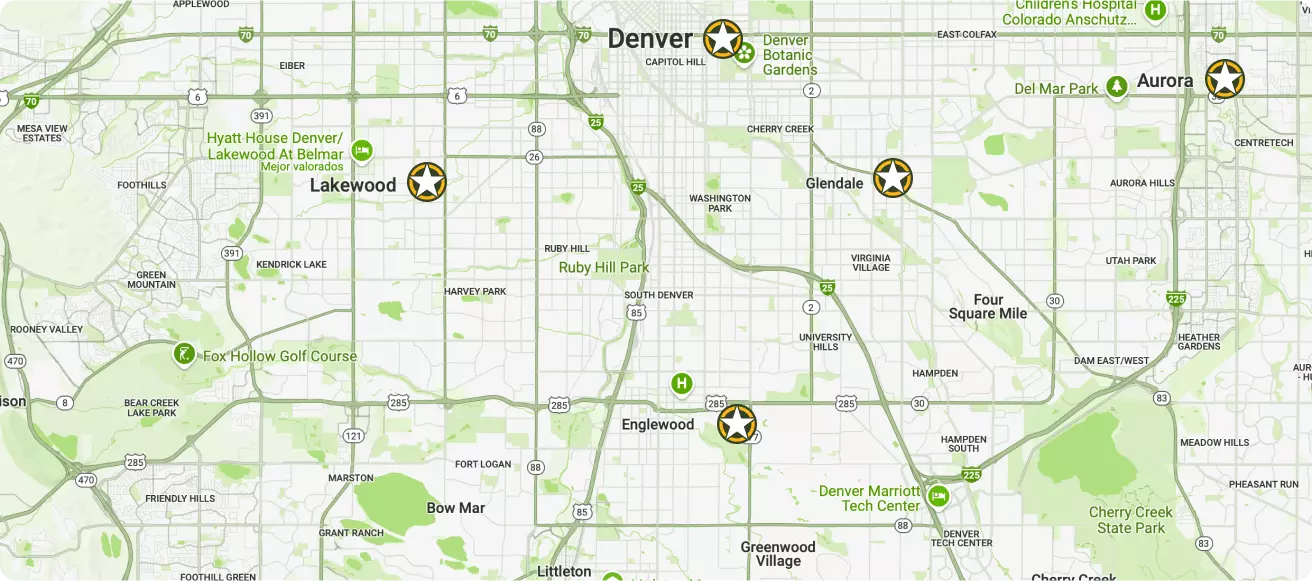
We proudly serve the entire Denver Metro area, including:
• Arvada & Aurora
• Broomfield & Westminster
• Castle Rock & Highlands Ranch
• Centennial & Columbine
• Golden & Lakewood
• Littleton & Greenwood Village
Don't guess when it comes to your home's comfort. If you're asking yourself, "what size water heater do I need?" give us a call. We’ll help you calculate your peak demand and find the perfect unit for your family’s needs. For more info about plumbing services, reach out to us today and experience the honest, community-focused service you deserve.
ABOUT Veteran Heating, Cooling, Plumbing & Electric
Veteran Heating, Cooling, Plumbing & Electric was founded on the belief that service should be personal, honest, and community-focused. Our team is built around integrity, professionalism, and a true commitment to your home’s comfort and safety.
Led by a U.S. Army veteran with over 30 years of industry experience, we’re proud to remain locally owned and operated. Every technician, plumber, and electrician is EPA-certified, background checked, and driven to exceed expectations.
- 24/7 ServiceWe offer weekend & 24/7 emergency service. We’re here whenever you need us—day, night, or weekend, no exceptions.
- $0 Trip FeesNo dispatch or trip fees. You’ll never pay just for us to show up—service starts when the work does.
OUR SERVICES
AIR CONDITIONING
.jpg)
We offer specialty and seasonal services like indoor air quality upgrades, pre-winter furnace checks, and summer AC tune-ups to keep your home prepared year-round.
Our Primary Air Conditioning Services Include:
Don't see the service you need? Call our Team today!
PLUMBING
From leaks to full system installs, our plumbing services cover everything you need for a safe, reliable home water system, 24/7.
Our Primary Plumbing Include:
- Water Heater Replacement
- Water Heater Repair
- Trenchless Sewer Line
- Water Filtration
- Slab Leak
- Sewer Line Repair
Don't see the service you need? Call our Team today!
ELECTRICAL

Our electrical services ensure your home stays safe and powered, from routine fixes to complete system upgrades.
Our Primary Electrical Services Include:
- House Rewiring
- Electrician
- Electric Panel Upgrade
- Electric Panel Replacement
- EV Chargers
- Whole House Generator
Don't see the service you need? Call our Team today!
HEATING
.jpg)
We install, repair, and maintain heating & furnace systems with expert care to keep your Colorado home comfortable and energy-efficient year-round.
Our Primary Heating Services Include:
- Heating Installation
- Heating Replacement
- Heating Maintenance
- Heating Repair
- Heating Service
- Heating Tune-Up
Don't see the service you need? Call our Team today!