The Hidden Risks of Mid-Fall Heating Startups
You wake up to a freezing house, adjust the thermostat, and wait for the familiar rush of warm air. Instead, the heating system runs for five minutes, blows lukewarm air, and abruptly shuts down. Finding reliable local service expertise and area tips is critical when your system fails during the first major temperature drop of the year. After sitting dormant all summer, your furnace or heat pump faces a massive operational load the moment you demand heat. Parts are stiff, dust has settled, and electrical components haven't drawn a heavy current in months.
This creates a stressful decision point for homeowners: trying to figure out if a sluggish mid-fall October startup is just a dirty filter you can fix yourself, or a complex mechanical failure requiring a professional diagnostic. At Veteran Heating, Cooling, Plumbing & Electric, we have spent years preparing Denver homes for winter, and our team sees firsthand how quickly minor issues escalate when ignored. A system that short-cycles during the first cold snap is waving a red flag. Ignoring that warning often leads to a complete breakdown just as the deep winter freeze sets in.
Understanding Why Dormant Heating Systems Struggle During the First Cold Snap
Heating equipment does not like to sit idle. When a furnace or heat pump remains off for an entire summer, the physical environment inside the cabinet changes. Lubricants settle away from moving bearings, dust accumulates on sensitive flame sensors, and blower motors become stiff. When the thermostat suddenly calls for a massive amount of heat, the system has to overcome months of physical inertia in a matter of seconds.
The Impact of Summer Dormancy
The transition from summer cooling to winter heating is the most vulnerable time for your HVAC system. When you initiate that first heating cycle, you might notice a burning smell. This initial startup odor is usually just accumulated dust burning off the heat exchanger—a normal occurrence that dissipates within an hour. However, if that smell is accompanied by grinding noises, electrical humming, or a system that repeatedly turns on and off, you are dealing with mechanical stiffness or restricted airflow rather than just harmless dust.
• Settled debris: Dust acts as an insulator on flame sensors and heat exchangers, causing the system to misread temperatures and trigger safety shutoffs.
• Stiff motor bearings: Blower motors that haven't spun in months require a massive surge of electricity to break their resting inertia.
• Stuck valves: Gas valves and reversing valves (in heat pumps) can become sticky, delaying the delivery of heat to the home.
Altitude and Airflow Challenges
Operating a heating system in the Denver metro area introduces unique environmental factors. In our years of servicing homes from the heart of Denver to the surrounding foothills, our technicians have learned exactly how the high altitude impacts your equipment. Because of the high altitude, the air is significantly thinner here than at sea level. Thinner air holds less mass, which means it absorbs and transfers heat less efficiently as it passes over your furnace's heat exchanger. To compensate, your system requires precise, unobstructed airflow. If a dirty filter or blocked vent restricts that airflow even slightly, the heat exchanger cannot shed its heat fast enough. It rapidly overheats, and the high limit switch forcefully shuts the system down to prevent a fire hazard. This extreme temperature swing, combined with thin air, means your equipment must be calibrated perfectly to survive the winter without short-cycling.
The Dual-Trade Technical Advantage: HVAC and Electrical Expertise Combined
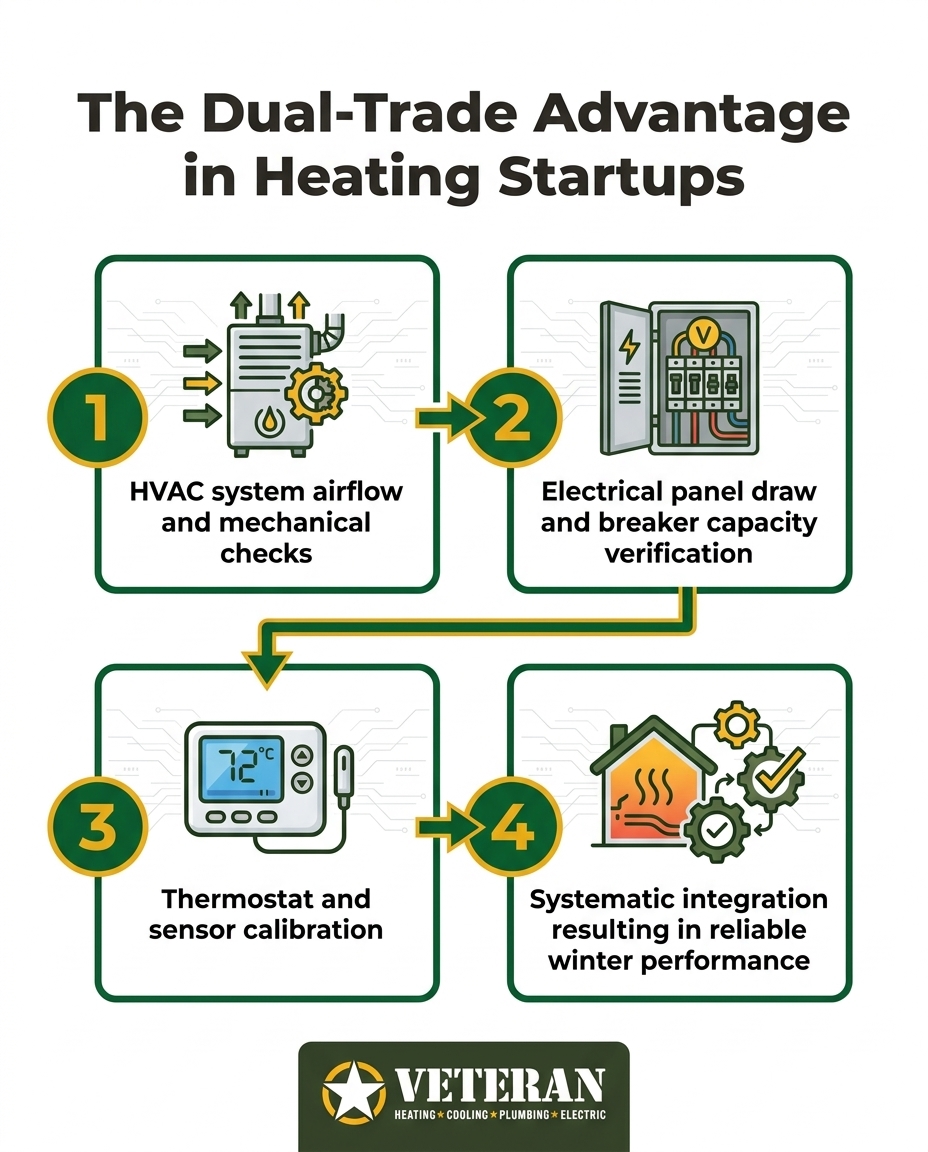
Many homeowners assume a heating failure is strictly an HVAC problem. However, modern furnaces and heat pumps are highly complex electrical appliances. A sluggish mid-fall October startup is frequently tied to how your home's electrical panel handles the sudden demand for power.
Electrical Draw and Short-Cycling
When a stiff blower motor or dormant compressor tries to start, it draws a massive amount of electricity—known as Locked Rotor Amps (LRA). If the motor struggles to turn, that electrical draw spikes higher and lasts longer than it should. This sustained spike can overheat the wiring, drain a weak run capacitor, or trip a breaker in your main electrical panel. Without dual-trade expertise, a standard technician might replace a blown fuse in the furnace without ever testing the breaker panel to see why the fuse blew in the first place.
Systematic Troubleshooting
Diagnosing a modern heating system requires looking beyond the metal cabinet in your basement. It requires evaluating the entire infrastructure, from the thermostat on the wall to the breaker in the panel, all the way to the blower motor pushing the air. Having both HVAC and electrical expertise under one roof means our team can track a short-cycling issue back to its true root cause, whether it is a failing heat exchanger or a degraded circuit breaker that can no longer handle the system's startup amperage.
Military Precision in Diagnostics: What Veteran-Owned Means for Your Home
When you search for local service expertise and area tips, you will likely see many companies highlighting their credentials. For our team at Veteran Heating, Cooling, Plumbing & Electric, being a veteran-owned and operated company is more than just a label; it is the foundation of how we operate in the field. We bring military discipline, transparency, and a commitment to service directly to the home services industry. In the military, skipping a step on a pre-flight checklist can be catastrophic. We apply that exact same mindset to diagnosing your heating system.
Our disciplined approach ensures no component is left unchecked. When one of our technicians arrives at your home, they follow strict Standard Operating Procedures (SOPs) that eliminate guesswork.
• Initial Assessment — Standard Approach: Looking at the part that broke. — Our Disciplined Protocol: Testing the entire system sequence of operations from the electrical panel to the vents.
• Airflow Verification — Standard Approach: Checking if the filter looks clean. — Our Disciplined Protocol: Measuring static pressure to ensure the blower motor isn't straining against hidden blockages.
• Safety Controls — Standard Approach: Assuming safety switches work. — Our Disciplined Protocol: Manually testing high limit switches and flame sensors to verify they will trigger in an emergency.
• Homeowner Briefing — Standard Approach: Handing over an invoice. — Our Disciplined Protocol: Providing a transparent, jargon-free debrief on system health and exact repair requirements.
This level of precision is what guarantees a systemic, thorough diagnostic. By adhering strictly to these protocols, we prevent overlooked maintenance issues from turning into freezing nights in the middle of January.
Safe Homeowner Checks vs. Professional Diagnostics
While military-grade precision is required for internal repairs, there are several safe, simple steps homeowners can take before making a service call. Knowing the boundary between basic maintenance and a professional diagnostic is the key to protecting your equipment and your safety.
Basic Pre-Flight Checks
Before you turn your system on for that mid-fall October test run, perform these safe homeowner checks:
1. Inspect and replace the air filter: A clogged filter is the number one cause of furnace short-cycling. Pull the filter out, hold it up to a light, and if you cannot see light shining through, replace it immediately.
2. Verify thermostat settings: Ensure the thermostat is explicitly set to "Heat" and that the fan is set to "Auto." Replace the batteries if the screen is fading.
3. Clear the vents: Walk through your home and ensure all supply and return registers are open and unblocked by furniture or rugs. Closing vents in unused rooms actually damages your system by increasing static pressure.
4. Check the outdoor unit (Heat Pumps): If you rely on a heat pump, ensure the outdoor cabinet is free of autumn leaves, overgrown bushes, and debris.
When to Call the Experts
If you have completed the basic checks and your system is still struggling, it is time to stop. Never attempt to open the furnace cabinet to adjust gas valves, test electrical capacitors, or bypass safety switches. If you hear loud electrical buzzing, smell persistent burning plastic, or notice the system turning off after only a few minutes of operation, you need a professional. Understanding how a heat pump works in a four-season climate reveals just how sensitive these high-voltage systems are to amateur tampering. Delaying professional intervention when a system is short-cycling will only burn out expensive components like the blower motor or compressor.
Real-World Reliability: Responding to Early-Season Furnace Malfunctions
Unexpected heating failures require a rapid, efficient response to restore safety and comfort. The true test of an HVAC provider isn't just how well they install a system, but how they respond when things go wrong during a temperature drop.
During a sudden mid-October cold snap last fall, our dispatch team at Veteran Heating, Cooling, Plumbing & Electric received an urgent call from a Denver metro area homeowner whose furnace stopped working properly just as evening temperatures began to plummet. A failing heating system at the start of the season can cause immense stress, especially when the house loses heat rapidly. We dispatched a technician promptly, arriving fully prepared to diagnose the sudden failure. By applying our systematic troubleshooting process, our technician identified the root cause and fixed the furnace issue quickly. The heating system was restored efficiently, giving the homeowner immediate peace of mind. We are committed to fixing the problem rapidly without ever cutting corners on safety protocols, ensuring the repair holds up through the rest of the winter.
Preparing High-Efficiency Systems for Heavy Winter Loads
Modern heating equipment is vastly different from the basic furnaces installed twenty years ago. Today's high-efficiency systems are packed with sensitive electronics, variable-speed motors, and complex staging controls that require specialized knowledge to maintain.
Rigorous Training Standards
As a certified Midea Elite dealer, our technicians at Veteran Heating, Cooling, Plumbing & Electric undergo rigorous, specialized manufacturer training. High-efficiency systems rely on inverter-driven compressors and modulating gas valves that adjust their output in tiny increments. You cannot simply "eyeball" the calibration on these units. They require digital diagnostic tools and a deep understanding of manufacturer specifications to ensure they are operating correctly. This specialized training ensures that every installation and maintenance protocol meets the highest industry standards.
Calibration for Heavy Winter Loads
A thorough pre-winter inspection is about fine-tuning the system for optimal energy use. When a high-efficiency system is properly calibrated, it runs longer, gentler cycles that use less electricity and gas while keeping the home's temperature perfectly stable. If these systems are left uncalibrated, they revert to operating like older, inefficient models—wasting energy and putting unnecessary wear and tear on the components during peak usage. By relying on disciplined, professional diagnostics, you ensure your complex heating equipment is fully prepared to handle the heaviest winter loads without missing a beat.
Frequently Asked Questions
Why is it good to use a veteran-owned business?
Choosing a veteran-owned business means you are hiring a team that values discipline, integrity, and strict adherence to protocols. In the home services industry, this translates to thorough, systematic diagnostics where no safety checks are skipped. Veteran-owned companies often bring a military mindset to their operations, ensuring prompt communication, transparent explanations, and a commitment to completing the job correctly the first time.
What should I check before turning on my furnace in the fall?
The most important step is checking and replacing your HVAC air filter to ensure unobstructed airflow. You should also verify that your thermostat is set to "Heat" with fresh batteries, and walk through your home to ensure all supply and return vents are open and unblocked by furniture. Finally, clear any debris away from your outdoor heat pump unit or furnace exhaust pipes before initiating the first heating cycle.
Why is my heater short cycling when I turn it on?
Short-cycling happens when a heating system turns on for a few minutes and abruptly shuts off before the house is warm. This is most commonly caused by a dirty air filter restricting airflow, which causes the heat exchanger to overheat and trip a safety limit switch. It can also be caused by electrical draw issues, a malfunctioning flame sensor, or an oversized unit that heats the immediate space too quickly.
How do I find veteran-owned contractors in my area?
You can often find veteran-owned contractors by checking local business directories, searching for specific veteran-owned business certifications, or looking at the "About Us" sections of local service websites. Many veteran-owned companies proudly display their background and military values on their homepage and service vehicles, making it easy to identify their commitment to disciplined service.
How does dual-trade (HVAC and electrical) expertise help with heating startups?
Modern heating systems are heavy electrical appliances that put a massive strain on your home's breaker panel when they start up. Dual-trade expertise allows a technician to diagnose the entire system, from the mechanical blower motor to the electrical circuit breaker. This prevents situations where an HVAC technician blames the electrical panel, or an electrician blames the furnace, ensuring the root cause is found and fixed quickly.
Why are mid-fall inspections critical for high-efficiency heat pumps?
High-efficiency heat pumps rely on complex inverter technology and precise refrigerant charges to operate effectively during extreme cold. A mid-fall inspection calibrates these sensitive components before they are subjected to heavy winter loads. Ensuring the system is perfectly tuned prevents unnecessary wear and tear, maximizes energy efficiency, and guarantees the heat pump can handle sudden temperature drops without failing.
ABOUT Veteran Heating, Cooling, Plumbing & Electric
Veteran Heating, Cooling, Plumbing & Electric was founded on the belief that service should be personal, honest, and community-focused. Our team is built around integrity, professionalism, and a true commitment to your home’s comfort and safety.
Led by a U.S. Army veteran with over 30 years of industry experience, we’re proud to remain locally owned and operated. Every technician, plumber, and electrician is EPA-certified, background checked, and driven to exceed expectations.
- 24/7 ServiceWe offer weekend & 24/7 emergency service. We’re here whenever you need us—day, night, or weekend, no exceptions.
- $0 Trip FeesNo dispatch or trip fees. You’ll never pay just for us to show up—service starts when the work does.
OUR SERVICES
AIR CONDITIONING

We offer specialty and seasonal services like indoor air quality upgrades, pre-winter furnace checks, and summer AC tune-ups to keep your home prepared year-round.
Our Primary Air Conditioning Services Include:
Don't see the service you need? Call our Team today!
PLUMBING
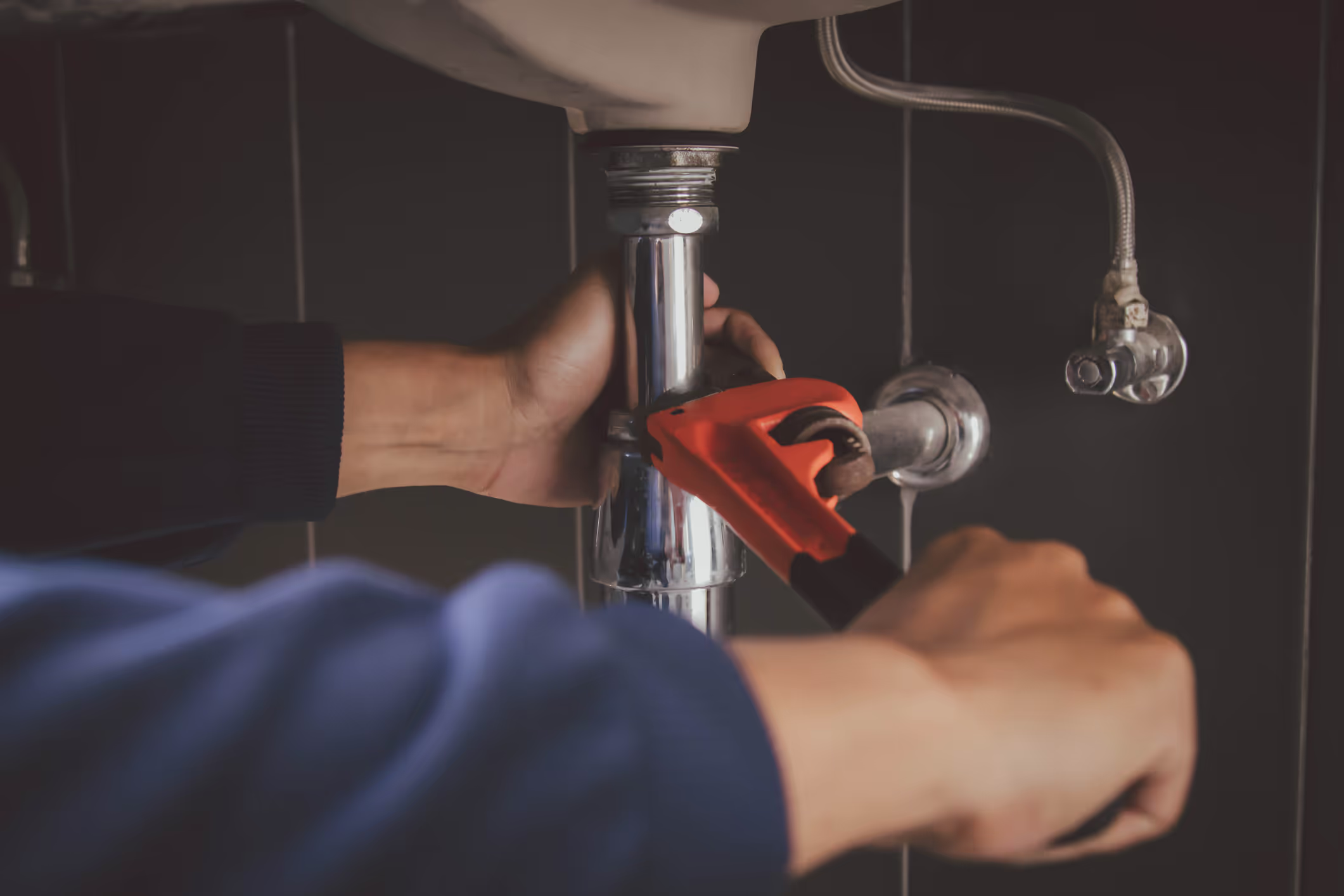
From leaks to full system installs, our plumbing services cover everything you need for a safe, reliable home water system, 24/7.
Our Primary Plumbing Include:
- Water Heater Replacement
- Water Heater Repair
- Trenchless Sewer Line
- Water Filtration
- Slab Leak
- Sewer Line Repair
Don't see the service you need? Call our Team today!
ELECTRICAL

Our electrical services ensure your home stays safe and powered, from routine fixes to complete system upgrades.
Our Primary Electrical Services Include:
- House Rewiring
- Electrician
- Electric Panel Upgrade
- Electric Panel Replacement
- EV Chargers
- Whole House Generator
Don't see the service you need? Call our Team today!
HEATING

We install, repair, and maintain heating & furnace systems with expert care to keep your Colorado home comfortable and energy-efficient year-round.
Our Primary Heating Services Include:
- Heating Installation
- Heating Replacement
- Heating Maintenance
- Heating Repair
- Heating Service
- Heating Tune-Up
Don't see the service you need? Call our Team today!