Why Heat Pump Maintenance Tips for Homeowners Matter More Than You Think
Following the right heat pump maintenance tips for homeowners can be the difference between a system that runs efficiently for 15 to 20 years and one that needs early replacement after just 10 to 12 years. Here is a quick summary of the most important steps to keep your heat pump in top shape:
Essential heat pump maintenance tasks at a glance:
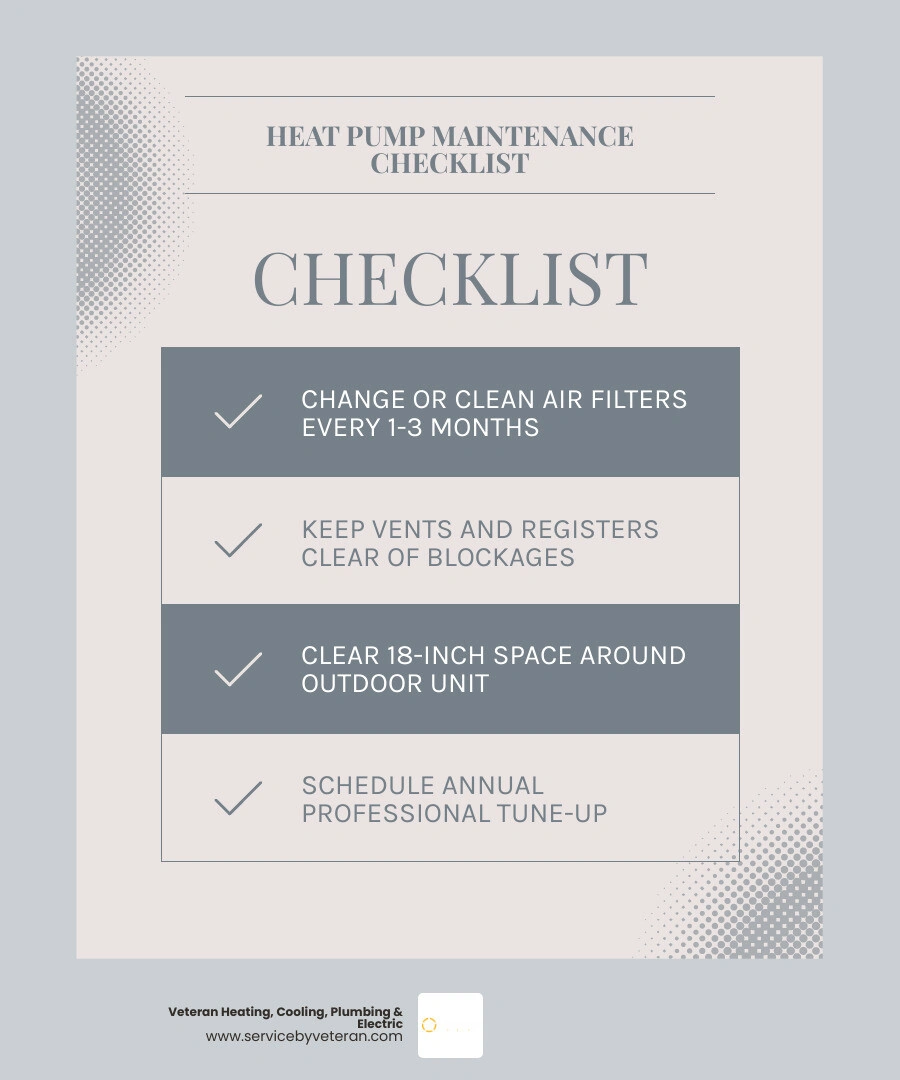
1. Change or clean air filters - every 1 to 3 months depending on usage and home conditions
2. Keep vents and registers clear - never block returns or close vents in unused rooms
3. Clear the outdoor unit - maintain at least 18 inches of clearance and remove debris regularly
4. Set your thermostat wisely - use a steady temperature and avoid large setbacks that trigger backup heat
5. Rinse outdoor coils - a gentle hose rinse a few times per year keeps heat transfer efficient
6. Schedule professional service - at least once a year, ideally in spring and fall
A heat pump works year-round, unlike a furnace or air conditioner that only runs one season at a time. That constant operation means wear builds up faster, and small issues can quietly grow into costly repairs. Research shows that a well-maintained heat pump uses 10% to 25% less energy than a neglected one — and dirty filters alone can waste up to 25% of a system's energy output. Even more telling: at least one in three service calls can be resolved simply by swapping out a clogged filter. Regular upkeep is not just good practice — it directly protects your comfort, your indoor air quality, and your wallet.
I'm Mike Townsend, a U.S. Army veteran whose background includes managing precision cooling systems for heat-seeking missile technology — experience that taught me exactly how critical consistent, detail-oriented maintenance is to keeping any system performing at its best. That same discipline shapes how our team at Veteran Heating, Cooling, Plumbing & Electric approaches heat pump maintenance tips for homeowners across the Denver Metro area. Read on for a complete, section-by-section guide to everything you need to know.
Heat pump maintenance tips for homeowners: what it is and why it matters
Heat pump maintenance is the routine care that keeps your system moving heat efficiently in both summer and winter. That includes simple homeowner tasks like replacing filters, cleaning around vents, checking the thermostat, and keeping the outdoor unit clear. It also includes professional tune-ups to inspect electrical parts, confirm airflow, check refrigerant performance, and catch wear before it turns into a breakdown.
For homeowners in Denver, Aurora, Lakewood, Littleton, Castle Rock, Golden, Columbine, Centennial, Highlands Ranch, Broomfield, Arvada, and Greenwood Village, this matters even more because heat pumps have to handle changing seasons, dry air, dust, spring debris, and winter snow.
Why regular upkeep makes such a big difference
A heat pump is efficient by design, but only when air can move freely and components stay clean. Research consistently shows that neglected systems can use 10% to 25% more energy than well-maintained ones. Regular upkeep can reduce energy consumption by as much as 25%, which is a pretty good return for tasks as glamorous as changing a filter and moving a patio chair.
Maintenance also affects lifespan. A well-cared-for heat pump may last 15 to 20 years. A neglected one may be ready for replacement in 10 to 12 years. The reason is simple: dirt, restricted airflow, and minor electrical or mechanical problems force the system to work harder every day.
How maintenance improves efficiency, comfort, and indoor air quality
Good maintenance does more than lower utility bills. It helps your home feel more even from room to room and improves indoor air quality.
When filters are dirty, registers are dusty, or vents are blocked, your system has to strain to move air. That can mean:
• uneven temperatures
• stuffy rooms
• more dust circulating indoors
• weaker airflow
• longer run times
Keeping filters clean, vacuuming registers, and leaving vents open supports healthy airflow. That is especially important in homes with pets, allergies, or higher dust levels.
Air-source vs. other heat pump systems: what changes
Most homeowners in our service area have air-source heat pumps, which use an outdoor unit and an indoor air handler or ducted system. These need regular attention to both indoor airflow and outdoor coil cleanliness.
Other systems have slightly different needs:
• Ductless mini-splits need filter cleaning and attention to each indoor head, plus outdoor unit care.
• Geothermal systems do not have the same exposed outdoor coil as an air-source heat pump, but they still need filter changes, airflow checks, and professional inspections.
• Dual-fuel systems may also involve a furnace, which adds another layer of service needs.
The basics stay the same: clean airflow paths, proper thermostat operation, and scheduled professional maintenance.
The DIY heat pump maintenance tips for homeowners can safely handle
Most homeowners can handle several routine tasks safely without opening sealed components or touching electrical or refrigerant parts.
A good DIY checklist includes:
• check filters monthly
• clean or replace filters as needed
• vacuum supply and return grilles
• keep all vents open and unobstructed
• inspect the outdoor unit for leaves, dirt, and overgrowth
• maintain about 18 inches of clearance around the unit
• gently rinse outdoor coils when dirty, with power off
• confirm thermostat settings are appropriate for the season
• watch for drainage issues near the indoor unit
• clear light snow buildup around the outdoor unit
Change or clean filters on the right schedule
If we had to pick the most important item in this guide, this would be it.
Dirty filters are one of the most common causes of poor performance. They can waste up to 25% of a heat pump's energy output, and a large share of service calls trace back to clogged filters.
A practical rule for heat pump maintenance tips for homeowners is to check filters every month. Replacement timing depends on the filter type and your home:
• 1-inch disposable filters often need attention about every 1 to 3 months
• washable filters should be cleaned on the schedule in the manufacturer instructions
• homes with pets, allergies, remodeling dust, or generally dusty conditions may need monthly replacement or cleaning
• thicker media filters may last longer, but they still need regular inspection
Always use the correct filter size and type recommended for your system. A filter that is too restrictive can create airflow problems instead of solving them.
Keep vents, returns, and indoor components clear
Your heat pump cannot do its job if air cannot circulate.
A few simple habits help a lot:
• vacuum registers and return grilles monthly
• keep furniture, curtains, rugs, and boxes away from vents
• do not close vents in unused rooms
• keep return air pathways open, especially in bedrooms
Closing vents may seem like an easy way to save money, but it usually reduces efficiency and can create pressure imbalances. In homes with central returns, even closed bedroom doors can affect airflow if there is not a good return path.
Clean around the outdoor unit without causing damage
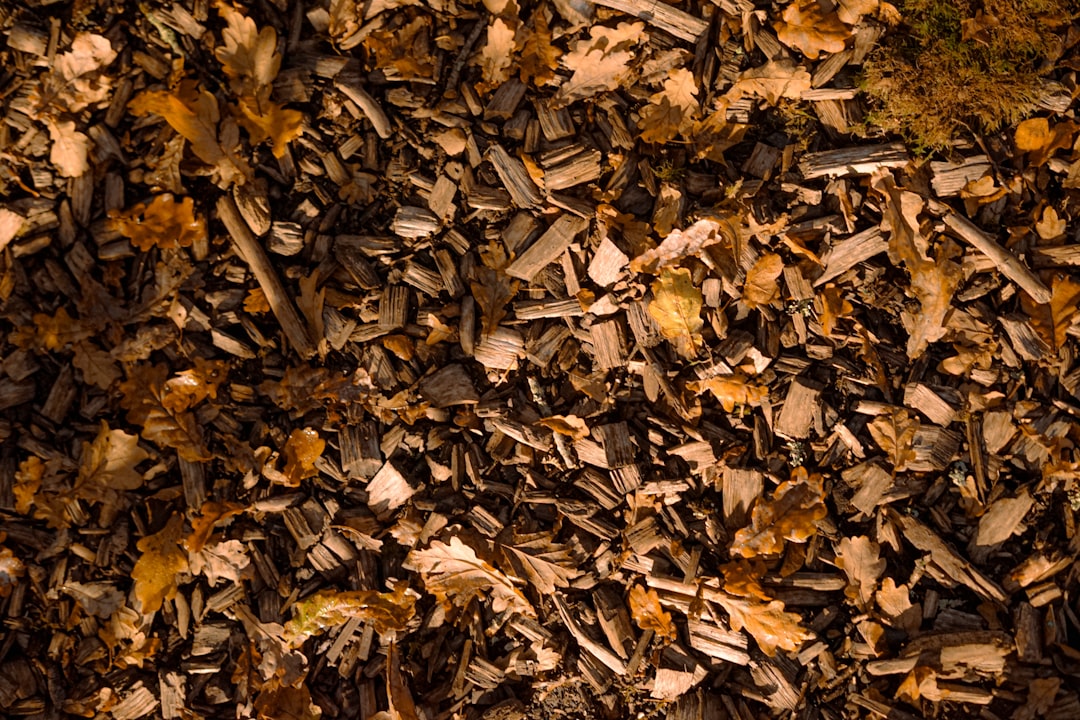
Your outdoor unit needs breathing room in every season. Aim for at least 18 inches of clearance around it. Trim back shrubs and grasses, and remove leaves, cottonwood fluff, mulch, and grass clippings.
For safe outdoor care:
1. Turn power off at the disconnect if you plan to rinse the coil.
2. Remove loose debris by hand.
3. Use a gentle garden hose spray to rinse dirt from the coil fins.
4. Avoid pressure washers, harsh scrubbing, or bending the fins.
5. Keep pets, storage bins, and decorative items away from the unit.
In winter, clear drifting snow around the unit, but do not chip at ice on the cabinet or coils.
Use thermostat settings that help, not hurt, performance
Heat pumps like consistency. Large thermostat setbacks can trigger backup heat, which is much less efficient than normal heat pump operation.
Best practices include:
• keep temperatures relatively steady
• avoid dramatic up-and-down changes
• use the fan setting on Auto rather than On, unless your system is designed for continuous variable-speed circulation
• avoid regular use of Emergency Heat unless there is an actual equipment problem or a technician instructs you to use it
If you have a programmable or smart thermostat, make sure it is compatible with heat pumps. Heat pump-specific controls can help reduce unnecessary backup heat operation.
Seasonal maintenance habits that keep a heat pump efficient all year
Because heat pumps heat and cool, they benefit from seasonal attention rather than a once-and-done approach.
Spring and summer checks for cooling performance
Before cooling season ramps up, it helps to:
• inspect the outdoor coil for dirt and debris
• rinse the coil gently if needed
• check that the condensate drain is draining properly
• make sure supply and return vents are open
• switch the thermostat to the correct cooling settings
• listen for unusual sounds during startup
Summer is also a good time to notice whether the system is running longer than usual, blowing weak air, or struggling to keep up on hot afternoons.
Fall and winter checks for heating performance
Before and during heating season:
• replace or clean the filter
• clear leaves and debris from the outdoor unit
• keep snow from building up around the cabinet
• confirm the thermostat is operating in the right mode
• monitor the defrost cycle
Some frost on the outdoor unit in winter can be normal. Heat pumps periodically enter defrost mode to clear it. What is not normal is thick, persistent ice that does not clear, especially if performance drops. That can point to airflow problems, drainage issues, or a system fault.
Auxiliary heat may run during very cold weather, but if it seems to be on all the time, it is worth having the system checked.
Warning signs your heat pump needs maintenance or repair
Call for service if you notice:
• rattling, grinding, buzzing, or hissing noises
• weak airflow
• hot and cold spots around the house
• short cycling
• constant running with poor comfort
• musty or burning odors
• persistent ice buildup
• water leaking near the indoor unit
• a sudden spike in energy use
• the system blowing cool air in heat mode or warm air in cool mode when it should not
These symptoms do not always mean a major repair is needed, but they are your system's version of waving a tiny mechanical flag.
What professional heat pump maintenance should include
DIY care is important, but it is only part of the picture. A professional tune-up checks the parts homeowners should not handle, and it helps protect efficiency, reliability, and warranty support.
If you need system care beyond routine upkeep, learn more about our heat pump service.
How often to schedule professional service
At minimum, most heat pumps should be professionally serviced once a year. Because they run year-round, many homeowners benefit from twice-yearly visits, usually before peak cooling and peak heating seasons.
More frequent attention may make sense if:
• your system runs heavily all year
• your home has high dust levels
• you have pets
• the equipment is older
• you want preseason peace of mind
What a technician typically checks during a tune-up
A thorough maintenance visit often includes:
• checking thermostat operation and calibration
• inspecting filters and airflow
• cleaning indoor and outdoor coils as needed
• measuring refrigerant performance
• checking electrical connections and controls
• inspecting capacitors, contactors, and motors
• testing the blower and fan operation
• flushing or clearing the condensate drain
• checking the reversing valve
• testing defrost controls
• inspecting ductwork for leaks or airflow restrictions
• verifying temperature rise or drop across the system
• reviewing overall system condition and wear
This is where small issues are often found early, before they lead to bigger repairs or poor seasonal performance.
What homeowners should leave to a professional
Some tasks are not DIY jobs, even for handy homeowners. We recommend leaving these to a qualified technician:
• refrigerant checks or recharging
• electrical testing and component replacement
• compressor diagnostics
• reversing valve diagnosis
• deep coil cleaning that requires disassembly
• defrost control troubleshooting
• duct leakage testing
• internal blower or motor service
The simple rule: if it involves sealed refrigerant lines, electrical components, or opening the equipment beyond basic access panels, it is time to call us.
Maintenance plans, service areas, and how to choose the right help
A maintenance routine works best when it is consistent. That is one reason many homeowners prefer a scheduled service plan instead of trying to remember everything between snowstorms, school pickups, and that one houseplant we all forget to water.
Is a maintenance plan worth it for homeowners?
For many homeowners, yes.
A maintenance plan can help with:
• regular service reminders
• priority scheduling
• fewer surprise breakdowns
• better long-term system performance
• documented service history
• less stress during extreme weather
At Veteran Heating, Cooling, Plumbing & Electric, we focus on preventive care that helps homeowners protect comfort and avoid unnecessary wear. That fits naturally with our veteran-led, community-focused approach to honest service.
Service options for homeowners across the Denver Metro
We provide heat pump help throughout the Denver Metro area. You can explore location-specific service pages here:
• Heat pump maintenance in Denver
• Heat pump maintenance in Aurora
• Heat pump service in Lakewood
• Heat pump service in Littleton
If your system is older, struggling, or simply overdue for care, these local pages are a good place to start.
More local heat pump maintenance and service resources
We also serve nearby communities with dedicated heat pump resources:
• Heat pump service in Broomfield
• Heat pump service in Centennial
• Heat pump service in Highlands Ranch
• Heat pump maintenance in Golden
• Heat pump maintenance in Columbine
• Heat pump maintenance in Castle Rock
Frequently Asked Questions about heat pump maintenance tips for homeowners
• Filter replacement — DIY homeowner task: Yes — Professional service: Yes
• Vent and register cleaning — DIY homeowner task: Yes — Professional service: Yes
• Outdoor debris removal — DIY homeowner task: Yes — Professional service: Yes
• Thermostat setting checks — DIY homeowner task: Yes — Professional service: Yes
• Basic outdoor coil rinse — DIY homeowner task: Yes, with power off and gentle water — Professional service: Yes
• Refrigerant testing — DIY homeowner task: No — Professional service: Yes
• Electrical diagnostics — DIY homeowner task: No — Professional service: Yes
• Reversing valve and defrost testing — DIY homeowner task: No — Professional service: Yes
• Deep internal cleaning — DIY homeowner task: Limited — Professional service: Yes
• Performance measurements — DIY homeowner task: Limited — Professional service: Yes
Can I service my heat pump myself?
Yes, partially. Homeowners can safely handle the basics:
• changing filters
• cleaning vents and registers
• keeping the outdoor unit clear
• rinsing accessible outdoor coils gently
• checking thermostat settings
• watching for warning signs
But service is not the same as full maintenance. Professional work is still needed for internal diagnostics, refrigerant, electrical parts, and performance testing.
How often should I clean the outdoor unit and check filters?
Check filters monthly. Some homes can go longer between replacements, but monthly inspection is the safest habit. Outdoor units should be visually checked often and cleaned whenever debris begins to build up. A gentle rinse a few times per year is helpful if the coil is dirty.
After wind, landscaping work, or spring cottonwood season, it is smart to give the unit an extra look.
Should I close vents in unused rooms to save energy?
No. In most homes, closing vents does not improve efficiency and can actually make the system work harder. Heat pumps depend on balanced airflow. Closed vents can increase pressure in the duct system, reduce comfort, and lower performance. It is better to keep vents open and make sure furniture or rugs are not blocking them.
Conclusion
The best heat pump maintenance tips for homeowners are usually the simplest ones: change filters on time, keep airflow open, clear debris around the outdoor unit, use smart thermostat settings, and schedule regular professional service. Those habits can help reduce energy use, improve indoor air quality, and support a longer system life.
At Veteran Heating, Cooling, Plumbing & Electric, we help homeowners across the Denver Metro keep their heat pumps reliable in every season. Whether you need routine maintenance, a deeper system check, or year-round support, we are here to help with the same honest, detail-oriented service we are known for.
For the next step, explore our main heat pump services page.
ABOUT Veteran Heating, Cooling, Plumbing & Electric
Veteran Heating, Cooling, Plumbing & Electric was founded on the belief that service should be personal, honest, and community-focused. Our team is built around integrity, professionalism, and a true commitment to your home’s comfort and safety.
Led by a U.S. Army veteran with over 30 years of industry experience, we’re proud to remain locally owned and operated. Every technician, plumber, and electrician is EPA-certified, background checked, and driven to exceed expectations.
- 24/7 ServiceWe offer weekend & 24/7 emergency service. We’re here whenever you need us—day, night, or weekend, no exceptions.
- $0 Trip FeesNo dispatch or trip fees. You’ll never pay just for us to show up—service starts when the work does.
OUR SERVICES
AIR CONDITIONING
.jpg)
We offer specialty and seasonal services like indoor air quality upgrades, pre-winter furnace checks, and summer AC tune-ups to keep your home prepared year-round.
Our Primary Air Conditioning Services Include:
Don't see the service you need? Call our Team today!
PLUMBING
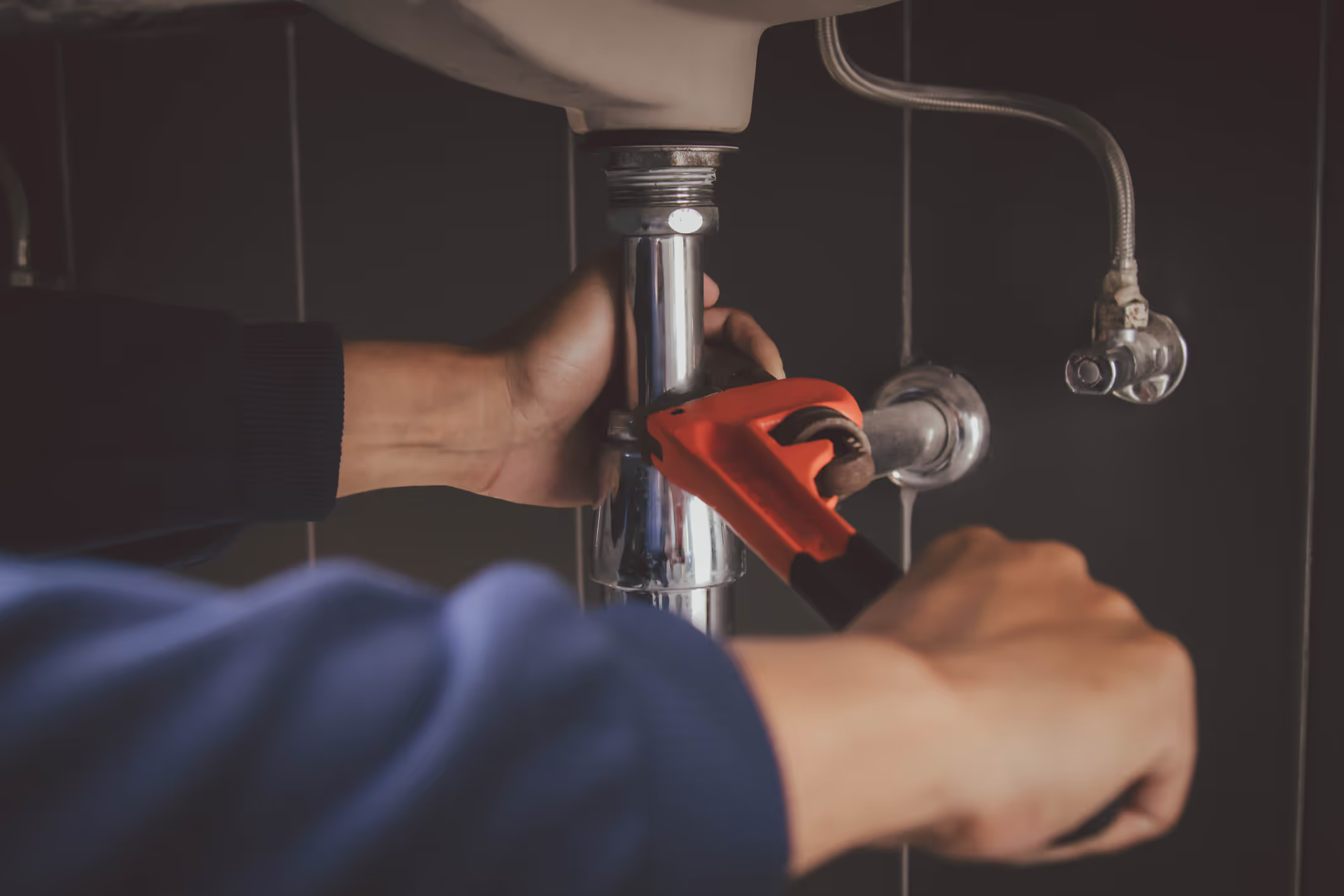
From leaks to full system installs, our plumbing services cover everything you need for a safe, reliable home water system, 24/7.
Our Primary Plumbing Include:
- Water Heater Replacement
- Water Heater Repair
- Trenchless Sewer Line
- Water Filtration
- Slab Leak
- Sewer Line Repair
Don't see the service you need? Call our Team today!
ELECTRICAL

Our electrical services ensure your home stays safe and powered, from routine fixes to complete system upgrades.
Our Primary Electrical Services Include:
- House Rewiring
- Electrician
- Electric Panel Upgrade
- Electric Panel Replacement
- EV Chargers
- Whole House Generator
Don't see the service you need? Call our Team today!
HEATING
.jpg)
We install, repair, and maintain heating & furnace systems with expert care to keep your Colorado home comfortable and energy-efficient year-round.
Our Primary Heating Services Include:
- Heating Installation
- Heating Replacement
- Heating Maintenance
- Heating Repair
- Heating Service
- Heating Tune-Up
Don't see the service you need? Call our Team today!