Are You Facing an AC Breakdown or Just a Denver Heatwave?
Is your air conditioner actually failing, or is it simply fighting a losing battle against the intense summer sun? If you find yourself answering the 'Is my AC broken or just struggling?' question during Denver's hottest week of the year, you are certainly not alone. At Veteran Heating, Cooling, Plumbing & Electric, our dispatchers field countless calls every July from homeowners facing this exact scenario. It is late in the afternoon, the thermostat is set to a comfortable 70 degrees, but the indoor temperature stubbornly hovers at 77 degrees. The equipment is running constantly, yet the house feels uncomfortably warm. This exact situation triggers panic for countless homeowners every summer.
Before you jump to conclusions, you face an immediate decision point: do you request an emergency dispatch right now, or do you perform a simple, safe at-home test first? During extreme weather, cooling systems frequently operate exactly as designed despite the uncomfortable conditions inside your living room. Understanding the difference between a mechanical failure and a weather-maxed unit saves you time, stress, and unnecessary panic.
For professional support, explore our HVAC services and air conditioning repair and service options.
The Physics of Denver's Climate: High Altitude and AC Efficiency
To understand why your cooling system behaves the way it does, you first have to look at the unique environment surrounding your home. In our years of servicing Denver-area homes, we've seen firsthand how the local climate places a highly specific environmental load on residential equipment that homeowners in coastal or midwestern cities rarely experience.
How Altitude Impacts Air Density
At 5,280 feet above sea level, the air is significantly thinner than it is at lower elevations. This lower air density directly impacts how your air conditioner functions. Your outdoor unit, known as the condenser, relies on a fan to pull ambient air across a series of metal fins and coils. As the air passes over these coils, it absorbs the heat that the refrigerant absorbed from inside your house, carrying it away into the atmosphere.
Because the air is thinner at high altitudes, there are fewer air molecules available to absorb and carry away that heat. This reduction in air density lowers the overall heat transfer efficiency of standard residential cooling equipment. The compressor has to work longer and harder to reject the same amount of heat compared to a system operating at sea level.
Compounding Extreme Temperatures
When you combine this altitude factor with a peak July heatwave in Denver, the challenge multiplies. If the ambient outdoor temperature climbs above 90 degrees, the thin air is already hot, making it even more difficult for the condenser coils to release heat. The system is physically capable of moving heat, but the local atmospheric conditions slow the process down dramatically. Understanding this physical limitation is the first step in diagnosing whether your equipment is broken or simply doing the best it can under extreme local conditions.
The 15-20 Degree Rule: Understanding Your System's Design Limits
Our technicians frequently find that many homeowners mistakenly believe an air conditioner produces a specific temperature of cold air based on the thermostat setting. In reality, residential cooling systems operate on a principle known as a temperature differential, or temperature split.
What is a Temperature Differential?
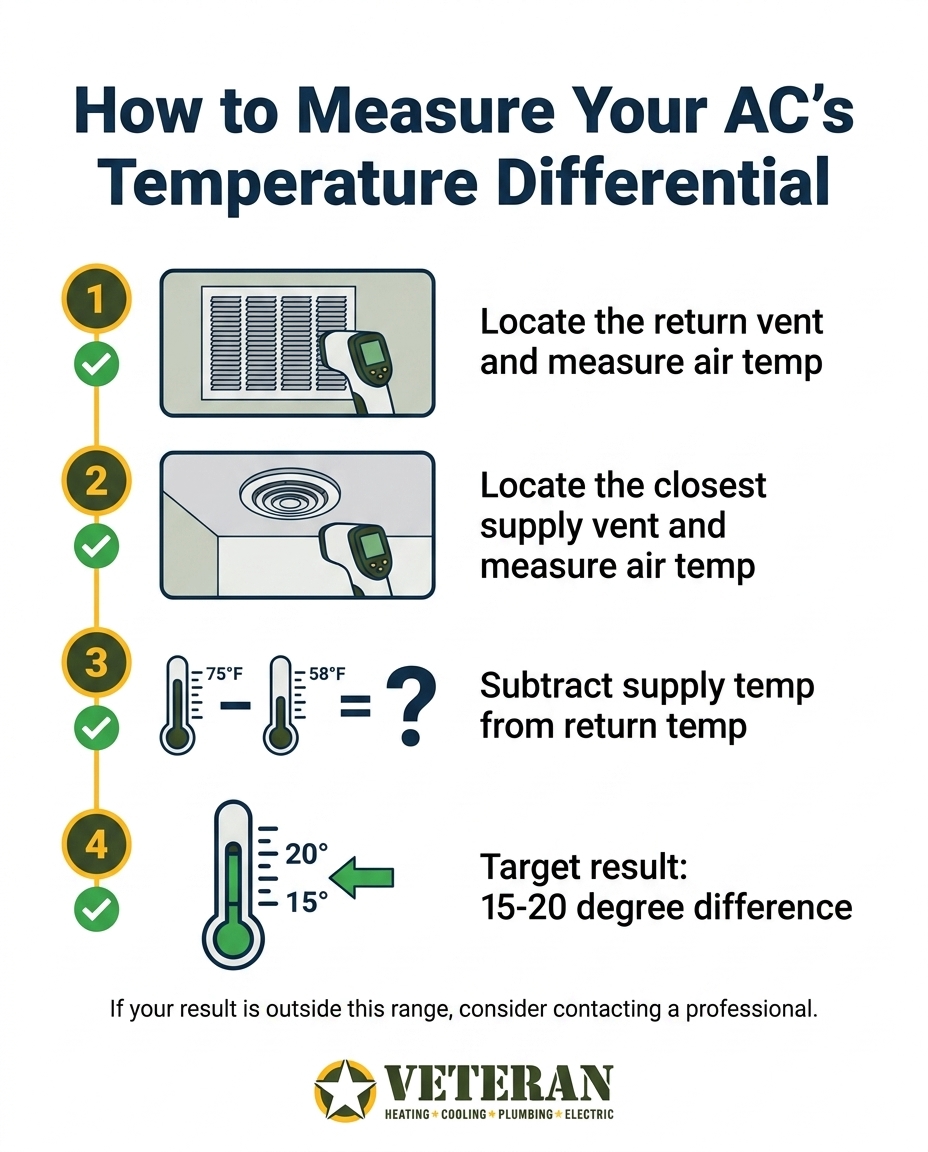
Standard residential air conditioners are engineered to lower the temperature of the air passing through the indoor unit by a specific, limited amount. They do not magically drop the ambient indoor air to an arbitrary number on your wall. Instead, a healthy system will typically produce a 15-20 degree temperature differential between return and supply vents. This means if the air entering the system (the return air) is 80 degrees, the air blowing out of the vents (the supply air) should be between 60 and 65 degrees.
Design Limits vs. Thermostat Settings
This physical limit becomes incredibly important during severe heatwaves. HVAC systems are sized and installed based on historical climate averages, not the single hottest day of the decade. If it is 98 degrees outside, the heat radiating through your roof, walls, and windows is immense. Expecting the house to reach 68 degrees under those conditions exceeds the physical design limits of standard equipment.
Here is a quick breakdown of how outdoor heat affects indoor cooling expectations:
• 80°F - 85°F — Typical Indoor Expectation: Easily maintains 70°F - 72°F — System Status: Normal cycling, comfortable
• 90°F - 95°F — Typical Indoor Expectation: Struggles to drop below 75°F — System Status: Running constantly, max capacity
• 98°F+ — Typical Indoor Expectation: May hover around 78°F - 80°F — System Status: Weather-maxed, heat gain exceeds cooling
If the system is blowing air that is 15 to 20 degrees cooler than the air it is pulling in, the mechanical components are doing exactly what they were built to do.
How to Safely Measure Your AC's Temperature Differential
Rather than guessing if your unit is failing, you can perform a safe, actionable test right inside your living room. You do not need to open any equipment, touch electrical components, or inspect refrigerant lines. All you need is a basic digital probe thermometer.
Note on tools: Do not use an infrared (IR) laser thermometer for this test. Infrared guns measure the surface temperature of the metal vent grilles, which can be affected by the surrounding drywall, rather than the actual temperature of the moving air.
1. Prepare your thermometer: Ensure your digital probe thermometer (like a standard meat thermometer) is clean and turned on.
2. Locate your main return vent: This is the large grille where air gets sucked into the system, often located in a hallway or ceiling. It usually houses your air filter.
3. Take the return reading: Insert the metal probe slightly into the return vent slots. Wait one full minute for the numbers to stabilize. Write this temperature down. This is your baseline indoor air temperature.
4. Locate the closest supply vent: Find the vent that blows out cold air nearest to the indoor air handler or furnace. Taking the reading close to the unit prevents the air from warming up as it travels through long stretches of ductwork in a hot attic.
5. Take the supply reading: Insert the probe into the supply vent. Wait one full minute for the reading to stabilize and write this number down.
6. Calculate the difference: Subtract the supply vent temperature from the return vent temperature.
If the result is a 15-20 degree temperature differential between return and supply vents, your system is producing the correct amount of cooling. If you are curious about the mechanics behind this process, you can learn more about how your indoor and outdoor AC units work together to move this heat outside.
Why Your System Runs Constantly Without Reaching 75°F
If your temperature differential test passes with flying colors, you might still wonder why the equipment refuses to shut off. A pattern we see often during Denver's peak summer heat is a system that runs continuously without reaching the desired thermostat setting. This is usually a system fighting a losing battle against thermal dynamics, not a mechanical breakdown.
The Battle of Heat Gain
Every home has a thermal envelope—the roof, walls, windows, and doors that separate the indoors from the outdoors. During a peak July heatwave in Denver, the sun beats down on your roof, heating the attic to well over 130 degrees. This heat radiates down through the ceiling. Solar radiation blasts through south-facing windows. Hot air infiltrates through tiny gaps around doors.
Your cooling system has a fixed capacity to remove heat. If the house is gaining heat from the sun faster than the air conditioner can remove it, the indoor temperature will slowly rise, even if the unit runs 100 percent of the time. The constant operation is perfectly normal; the system is simply trying to offset the massive heat gain.
Proactive Steps to Help Your System
Instead of seeking a mechanical repair for a properly testing system, focus on reducing the heat load on your home. You can improve overall comfort by taking a few proactive steps:
• Block solar heat: Close blinds, shades, and curtains on south and west-facing windows during the hottest parts of the afternoon.
• Optimize airflow: Ensure all interior doors remain open to allow air to circulate freely back to the return vents. Never close vents in unused rooms, as this increases static pressure and strains the blower motor.
• Check the filter: A clogged filter drastically reduces airflow, making it harder for the system to distribute cold air.
Keeping the equipment clean and optimized is the best defense against extreme weather. Enrolling in a routine AC maintenance plan ensures your coils are clean and the airflow is unrestricted before the worst of the summer heat arrives.
Honest Diagnostics: Avoiding Unnecessary Dispatch Fees
At Veteran Heating, Cooling, Plumbing & Electric, operational integrity means giving homeowners the tools to understand their equipment before rushing to collect a dispatch fee. The entire purpose of teaching this temperature differential test is to save you money and unnecessary stress during the busiest season of the year.
Working with a veteran-owned company means you can expect the same level of discipline and accountability that military service demands. That translates directly into honest business practices. When the weather pushes systems to their absolute limits, many companies will gladly roll a truck, charge an emergency fee, and spend five minutes looking at the unit only to tell you that it is just hot outside. True integrity involves prioritizing long-term trust over a quick, unnecessary service call.
Educating homeowners is a core value for our team. One of our local customers experienced this firsthand last summer during the installation of a new heat pump. Technicians John, Jacob, and Tanner did not just hook up the system and rush off to the next job; they stayed to answer every question and explain exactly how the new equipment operates under heavy environmental loads. That same commitment to transparent communication applies to troubleshooting. If your system passes the split test, you deserve honest reassurance that your equipment is mechanically sound, rather than a high-pressure sales pitch for repairs you do not need.
Signs Your AC Truly Needs Professional Troubleshooting
While a 15-20 degree split indicates a healthy system, there are absolutely times when your air conditioner requires professional intervention. If your at-home test fails or you notice secondary symptoms, it is time to book a service call.
Watch for these clear indicators of a mechanical breakdown:
• Low temperature differential: If the difference between your return and supply air is significantly lower than 15 degrees (for example, only an 8-degree drop), the system is underperforming. This often points to a refrigerant issue or a failing compressor.
• Blowing warm air: If the supply vents are blowing air that is the same temperature or warmer than the room, shut the system off immediately to prevent compressor damage.
• Visible ice formation: Ice forming on the indoor evaporator coil or the outdoor copper refrigerant lines indicates a severe airflow restriction or a pressure problem. A system cannot cool properly when frozen.
• Unusual noises or smells: Grinding, squealing, or buzzing sounds from the outdoor unit require immediate attention. Similarly, musty or burning odors from the vents warrant a professional inspection.
When you do need a professional, you should expect thorough, dependable service. Whether one of our technicians is diagnosing a frozen evaporator coil or, like our own Jimi Knight did for a customer last spring, thoroughly resolving multiple kitchen sink plumbing issues, the standard remains the same: efficient diagnosis, clear communication, and sticking firmly to the quoted price.
Comprehensive AC Troubleshooting FAQs
How many degrees can an AC cool below outside temp?
Our team typically tells customers that standard residential units generally max out at dropping the indoor temperature about 20 degrees below the outdoor ambient temperature. If it is 100 degrees outside, maintaining an indoor temperature of 80 degrees means the system is operating at its maximum design capacity. Expecting the house to reach 68 degrees in triple-digit heat pushes the equipment beyond the physical limits of its engineering.
How do I check my AC temperature differential?
Use a digital probe thermometer to measure the air entering the return vent and subtract the temperature of the air exiting the closest supply vent. Insert the probe into the main return grille and wait one minute for a stable reading. Then, repeat the process at the supply vent nearest the indoor unit. A healthy system will show a difference of 15 to 20 degrees between the two readings.
Is it normal for my AC to run constantly in extreme heat?
Yes, if outdoor temperatures exceed 90 degrees, systems often run continuously to offset the heat load, which is perfectly normal as long as the supply air is properly chilled. The constant operation is simply the equipment working to remove the heat radiating through your roof and windows. As long as the temperature differential test passes, continuous running will not harm a well-maintained unit.
Why is my AC running but not cooling the house?
This can be due to a dirty filter, restricted airflow, or the system simply operating at its maximum design capacity against extreme exterior heat. First, check your air filter and replace it if it is visibly clogged with dust. Next, perform a temperature differential test; if the air coming out of the vents is 15-20 degrees cooler than the room, the system is working properly but is overwhelmed by the heat gain of the house.
Can Denver's altitude actually damage my air conditioner?
Altitude doesn't damage the system, but the thinner air reduces heat transfer efficiency, meaning the unit has to work harder and longer to achieve the same cooling effect as it would at sea level. Because there are fewer air molecules at 5,280 feet to carry heat away from the outdoor condenser coils, local systems experience longer run times during peak summer months compared to identical units installed at lower elevations.
Get Honest Answers for Your Denver AC Concerns
Navigating a peak summer heatwave is stressful enough without worrying about a failing cooling system. By taking a few minutes to check for a 15-20 degree temperature differential between return and supply vents, you can gain immediate peace of mind. A properly testing system proves that your equipment is fighting hard and doing exactly what it was designed to do, even if the house feels a bit warmer than you prefer.
However, if your test reveals a weak temperature split, or if you notice ice, strange noises, or warm air blowing from the vents, prompt professional attention is absolutely necessary. Do not let a struggling system turn into a catastrophic failure. Reach out to our local experts at Veteran Heating, Cooling, Plumbing & Electric for honest diagnostics, clear answers, and dependable solutions that prioritize your long-term comfort over a quick fix.
ABOUT Veteran Heating, Cooling, Plumbing & Electric
Veteran Heating, Cooling, Plumbing & Electric was founded on the belief that service should be personal, honest, and community-focused. Our team is built around integrity, professionalism, and a true commitment to your home’s comfort and safety.
Led by a U.S. Army veteran with over 30 years of industry experience, we’re proud to remain locally owned and operated. Every technician, plumber, and electrician is EPA-certified, background checked, and driven to exceed expectations.
- 24/7 ServiceWe offer weekend & 24/7 emergency service. We’re here whenever you need us—day, night, or weekend, no exceptions.
- $0 Trip FeesNo dispatch or trip fees. You’ll never pay just for us to show up—service starts when the work does.
OUR SERVICES
AIR CONDITIONING
.jpg)
We offer specialty and seasonal services like indoor air quality upgrades, pre-winter furnace checks, and summer AC tune-ups to keep your home prepared year-round.
Our Primary Air Conditioning Services Include:
Don't see the service you need? Call our Team today!
PLUMBING
From leaks to full system installs, our plumbing services cover everything you need for a safe, reliable home water system, 24/7.
Our Primary Plumbing Include:
- Water Heater Replacement
- Water Heater Repair
- Trenchless Sewer Line
- Water Filtration
- Slab Leak
- Sewer Line Repair
Don't see the service you need? Call our Team today!
ELECTRICAL

Our electrical services ensure your home stays safe and powered, from routine fixes to complete system upgrades.
Our Primary Electrical Services Include:
- House Rewiring
- Electrician
- Electric Panel Upgrade
- Electric Panel Replacement
- EV Chargers
- Whole House Generator
Don't see the service you need? Call our Team today!
HEATING
.jpg)
We install, repair, and maintain heating & furnace systems with expert care to keep your Colorado home comfortable and energy-efficient year-round.
Our Primary Heating Services Include:
- Heating Installation
- Heating Replacement
- Heating Maintenance
- Heating Repair
- Heating Service
- Heating Tune-Up
Don't see the service you need? Call our Team today!