The Complexity of Upgrading Systems in Co-Owned Homes
If you are navigating an Upgrading to a Tankless Water Heater in Aurora: A Look Inside a Shared-Property Installation project, you already know that the logistical challenges go far beyond just plumbing. The old unit is failing, the house needs to go on the summer real estate market, and neither you nor your estranged co-owner wants to mediate technical details or pricing disputes. When a shared property requires a critical system replacement, the standard protocol must shift from a simple handshake to structured, neutral project management. Whether you need routine maintenance or comprehensive home services, having a professional contractor handle the administrative burden changes everything.
The Legal Reality of Joint Deeds
Most homeowners do not realize that when multiple names remain on a property deed, a single individual cannot always authorize major structural or system modifications unilaterally. A home in Aurora that is co-owned by separated parties requires strict legal compliance before any significant work begins. If one party signs a contract without the other's documented consent, it can create significant liabilities for both the homeowners and the contractor performing the work. This is especially true for permanent fixtures that alter the home's infrastructure, gas lines, or electrical panels.
The friction point: Standard contracting practices usually involve handing a paper estimate to whoever happens to answer the front door. In a shared-property scenario, this immediately forces one homeowner into the uncomfortable position of being the middleman. They are suddenly responsible for relaying complex mechanical information, justifying the costs, and securing agreement from an estranged partner.
Removing the Homeowner from the Middle
To eliminate this interpersonal friction, the approach to property repairs must change entirely. Instead of relying on one owner to communicate with the other, a professional front office steps in to act as a neutral project manager. This means establishing separate, direct lines of communication with each party on the deed. Every technical explanation, scheduling update, and approval request is handled by the contractor's staff, shielding both owners from unnecessary contact and ensuring that all legal authorizations are gathered properly before a single wrench is turned.
Understanding Aurora's High-Altitude Venting and Permit Rules
Upgrading to a modern Tankless Water Heater is not a simple plug-and-play swap, especially in this region. At an elevation exceeding 5,400 feet, the physical properties of the air directly impact how combustion appliances operate. The air is thinner, meaning there is less oxygen available for the burner. If a high-efficiency system is installed without accounting for this environmental factor, it will run rich, produce excess carbon monoxide, and eventually damage its own heat exchanger.
The Physics of High-Altitude Derating
To ensure safe and efficient operation, equipment installed at high elevations requires specific adjustments known as derating. This process modifies the fuel-to-air ratio so the burner operates correctly in thinner air. Because these adjustments directly affect the safety and emissions of the home, local building codes enforce strict compliance.
Here is a breakdown of how high-altitude factors change the installation requirements:
• Combustion Air — Standard Elevation: Standard factory settings — Aurora (5,400+ ft) Requirements: Mandatory derating to adjust fuel/oxygen mix
• Venting Materials — Standard Elevation: Standard PVC often acceptable — Aurora (5,400+ ft) Requirements: Strict adherence to high-temp, schedule 40 PVC or concentric venting
• Exhaust Termination — Standard Elevation: Basic exterior clearance — Aurora (5,400+ ft) Requirements: Extended clearances to account for heavy winter snow loads
• Permit Scrutiny — Standard Elevation: Routine visual inspection — Aurora (5,400+ ft) Requirements: Rigorous verification of altitude adjustments and gas pressure
Navigating the Local Permitting Process
Because of these strict safety parameters, pulling accurate local plumbing permits is an absolute necessity. The city requires documentation that the unit is rated for the altitude and that the venting meets code. More importantly, securing these permits requires authorized consent from the legal homeowners. If a property is jointly owned, the city and the contractor need assurance that the work is fully authorized. Trying to bypass these legal and technical steps can delay property sales, flag home inspections, and cause severe compliance issues down the line. Managing these strict municipal requirements is exactly why securing professional plumbing services with a structured administrative back-office is so critical.
How Military-Grade Administration Removes Interpersonal Friction
Coordinating a major home upgrade between two separated parties requires more than just technical skill; it demands rigorous organizational discipline. Working with a veteran-owned company means you are getting the same level of discipline and accountability that military service demands. This operational structure is what transforms a highly stressful shared-property upgrade into a smooth, manageable process.
Standard Operating Procedures for Communication
A typical pattern we see is that miscommunication causes more delays than mechanical failures. When an estranged couple is forced to discuss a five-figure home repair, the conversation rarely stays focused on plumbing. Military-grade administration solves this by relying on strict Standard Operating Procedures (SOPs). Every step of the consultation, estimate delivery, and approval process follows a defined protocol.
• Documented transparency: Every phone call, email, and text message is logged in a centralized system, ensuring there is a clear record of what was discussed and agreed upon.
• Neutral delivery: Information is presented factually and objectively, focusing strictly on the mechanical needs of the home and the requirements of the building code.
• Equal access: Both co-owners receive the exact same information at the exact same time, preventing any suspicion that one party is withholding details or manipulating the scope of work.
Shielding the Homeowner
The ultimate goal of this disciplined front-office approach is to reassure the reader that they do not have to mediate technical explanations or pricing discussions. If your co-owner in Aurora has questions about why a specific venting modification is required, they do not call you—they call the project manager. The front office absorbs the back-and-forth, answering all questions independently and keeping the project moving forward without requiring the homeowners to interact directly.
Digital Dual-Approval Workflows for Shared Properties
Securing legal consent from multiple parties who refuse to be in the same room requires a modernized approach to contracting. The days of leaving a carbon-copy estimate on the kitchen counter are over. To protect both the homeowners and the contractor, the approval process for a new Tankless Water Heater must be entirely digital, secure, and trackable.
The Step-by-Step Approval Protocol
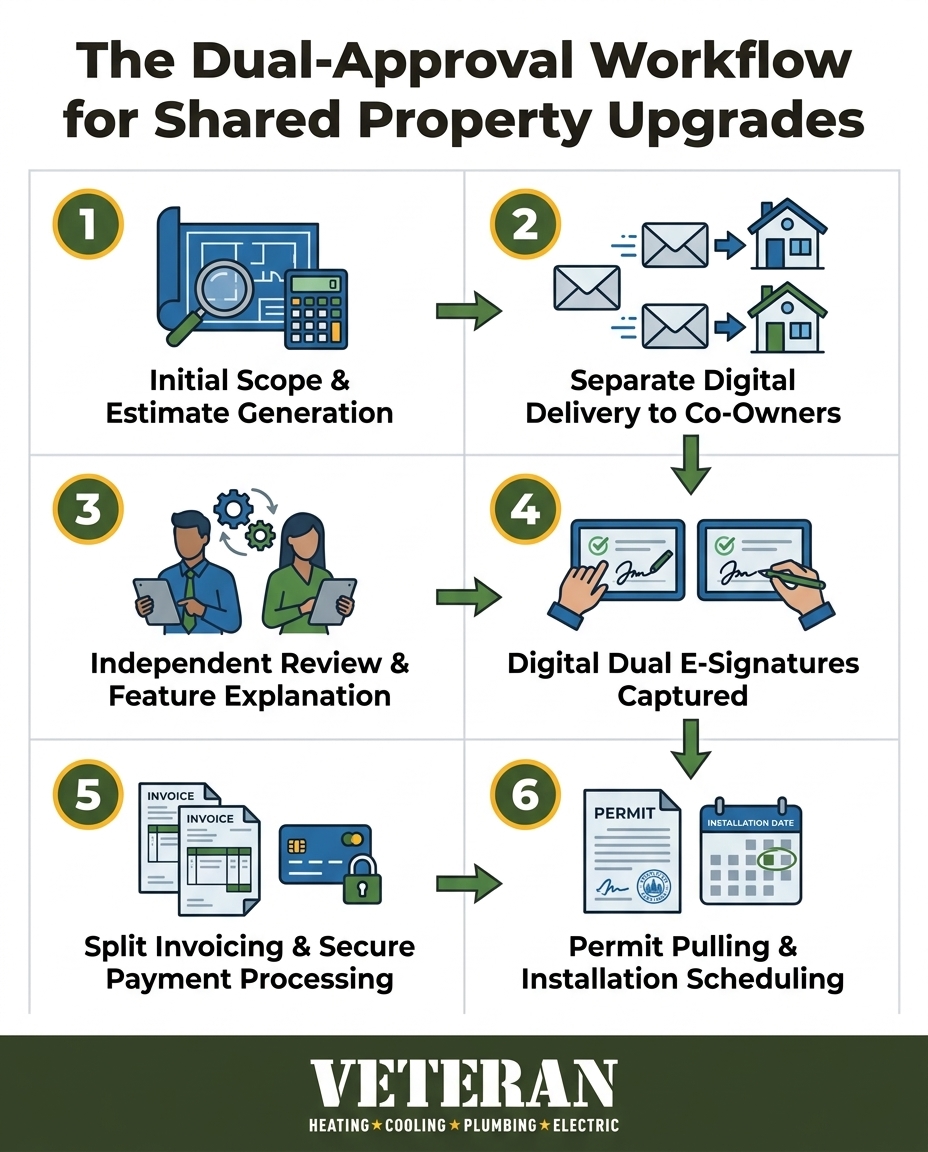
Here is how the digital workflow operates to ensure separate, legally binding approvals:
1. Initial Scope Generation: The technician evaluates the property, determines the high-altitude requirements, and builds a comprehensive project scope. This includes all necessary permits, equipment, and labor.
2. Synchronized Digital Delivery: Instead of presenting the quote on-site to one person, the front office emails secure, identical links to both co-owners simultaneously.
3. Independent Review Sessions: Each owner has the opportunity to review the scope privately. If they have questions, they schedule a call with the office. During a recent winter consultation, a customer noted how a team member, Jim, professionally answered all questions and explained features, benefits, discounts, and options directly to them, ensuring they were well-informed about the system before any decisions were made.
4. Dual Electronic Signatures: Once both parties are satisfied with the scope, they sign the contract electronically. These e-signatures are legally binding, time-stamped, and log the IP address of the signer, providing absolute legal clarity that both owners consented to the property modification.
5. Permit Authorization: With dual signatures secured, the administrative team has the legal backing required to pull municipal permits and schedule the installation.
This workflow completely removes the pressure of on-the-spot decision making. It gives both individuals the time and space to understand the investment without feeling pressured by the presence of their former partner.
Transparent Split Invoicing for Joint Homeowners
Once the technical scope of the Tankless Water Heater is approved, the most common pain point in shared property upgrades quickly surfaces: how the project is funded. In many separation scenarios, joint checking accounts have already been closed, and finances have been decoupled. Splitting costs for a major home improvement can quickly reignite disputes if not handled with precision.
The Logistics of Divided Payments
Standard accounting software used by most small businesses is not designed to split a single job into multiple, distinct invoices going to different people. However, a structured administrative office has the capability to issue split invoices directly to separate parties. Once the payment terms are agreed upon—whether it is a 50/50 split or another arrangement dictated by a separation agreement—the billing department generates independent invoices.
Secure Digital Portals: Each owner receives a private link to a secure payment portal. This allows each individual to handle their portion securely and privately. One owner might choose to pay their half with a credit card to earn travel points, while the other might prefer an ACH bank transfer. Neither party sees the other's banking details or payment method.
Individualized Funding Routes
Because the invoices are separated, it also opens up alternative funding routes that can be applied to individual portions of the total project cost. If one owner has the liquid capital to pay out of pocket but the other needs to break their half into monthly payments, the front office can facilitate flexible financing options for just that specific portion. This flexibility ensures that the project is not delayed simply because one party needs different financial accommodations.
Timing System Replacements for Summer Real Estate Transfers
The urgency to replace a failing system on a shared property is often driven by the real estate market. Summer is the peak season for real estate transactions, making July a critical time for finalizing property separations and getting homes ready for prospective buyers. If you are preparing to list a jointly owned home in Aurora, ignoring an aging or non-compliant hot water system is a risk you cannot afford.
Preventing Inspection Delays
When a buyer makes an offer on a home, the first thing they do is hire a home inspector. Inspectors are trained to look closely at major mechanical systems, especially combustion appliances. If they find an old water heater with improper high-altitude venting, signs of backdrafting, or a lack of municipal permits, they will flag it immediately. This gives the buyer leverage to demand a lower price, ask for seller concessions, or worse, walk away from the deal entirely.
Resolving shared property upgrades before listing the home prevents these costly delays. By installing a modern, high-efficiency hot water system, you remove a major objection from the buyer's mind. A new system adds tangible value and appeals to prospective buyers who want a move-in-ready property without the looming threat of an expensive repair.
Aligning with the Sale Timeline
Coordinating this upgrade requires careful timing. The dual-approval process, permitting, and installation must be completed before the real estate photographer arrives and the listing goes live. We highly recommend reviewing a comprehensive water heater replacement guide to understand the timeline and align the upgrade seamlessly with your property sale schedule.
Executing a Seamless Tankless Water Heater Installation in Aurora, CO
Once the front office has secured the dual electronic signatures, processed the split invoices, and pulled the municipal permits, the project transitions from administration to on-site execution. This is where operational discipline meets technical expertise. Because all the logistical hurdles have been cleared in advance, the actual installation day is highly predictable and low-stress.
Professionalism on the Property
Regardless of which co-owner is present at the house on the day of service, the field team arrives with a clear mandate. The technicians bring punctuality, respect, and a protective approach to the property, laying down drop cloths and wearing shoe covers. Their job is to execute the approved scope of work exactly as written, without renegotiating terms or discussing pricing with whoever happens to be home.
Following a recent spring installation, a homeowner shared that technicians Joey and Lu promptly, courteously, and professionally explained the operation of the new system, resulting in a job well done. This level of thorough, neutral communication is standard practice. After the unit is mounted, the gas lines are connected, and the high-altitude derating is verified, the team performs a comprehensive test of the system.
Finalizing the Documentation
A proper tankless water heater installation aurora co concludes with rigorous documentation. The technicians walk the present homeowner through the basic operation, maintenance expectations, and error codes. However, the process does not end there. The front office ensures that all final documentation, including the closed municipal permit, the paid split invoices, and the manufacturer warranty registrations, are distributed digitally to both co-owners. This leaves a clean, indisputable paper trail that satisfies both parties and provides the exact documentation needed for the upcoming real estate transfer.
Frequently Asked Questions
Who is legally responsible for plumbing repairs on a jointly owned home?
Both individuals listed on the property deed generally share the legal and financial responsibility for maintaining the home's critical infrastructure. If a major system fails, local municipalities and building codes hold the legal owners accountable for ensuring repairs meet safety standards. Consulting your specific separation agreement or legal counsel is recommended to determine exact financial splits.
Do both property owners have to approve a plumbing permit in Aurora?
Yes, municipal building departments typically require authorization from the legal owners of the property before issuing permits for major structural or mechanical changes. If a home is co-owned, a contractor must ensure they have documented consent from the parties on the deed to proceed legally. This protects the city, the contractor, and the homeowners from unauthorized property modifications.
How do contractors handle billing and split invoicing for jointly owned properties?
A structured contractor uses digital invoicing systems to divide the total project cost into separate, independent bills based on the owners' agreed-upon split. Each owner receives a private link to a secure payment portal where they can pay their portion via credit card, ACH, or individual financing. This ensures neither party has to collect money from the other.
Can one co-owner sign a home improvement contract without the other?
While one person can physically sign a document, doing so on a jointly owned property without the other owner's consent can create significant legal liabilities. Reputable contractors require dual approvals or legal documentation proving one party has the authority to authorize work unilaterally. This strict protocol prevents disputes and ensures the contract is fully enforceable.
What specific high-altitude adjustments are required for Aurora water heaters?
Because Aurora sits at an elevation above 5,400 feet, gas-fired appliances must be derated to account for thinner air and less oxygen. This involves adjusting the gas manifold pressure or swapping burner orifices to prevent the unit from running too rich. Additionally, high-altitude installations often face stricter venting requirements to ensure exhaust gases clear the home safely during heavy winter snows.
Navigating a major property upgrade with an estranged co-owner does not have to be a source of constant stress. By relying on a structured front office that manages digital dual-approvals, separate communications, and secure split invoicing, you are completely removed from the middleman role. Schedule your consultation today to experience a clear, neutral, and step-by-step explanation of how we handle shared-property logistics from start to finish.
ABOUT Veteran Heating, Cooling, Plumbing & Electric
Veteran Heating, Cooling, Plumbing & Electric was founded on the belief that service should be personal, honest, and community-focused. Our team is built around integrity, professionalism, and a true commitment to your home’s comfort and safety.
Led by a U.S. Army veteran with over 30 years of industry experience, we’re proud to remain locally owned and operated. Every technician, plumber, and electrician is EPA-certified, background checked, and driven to exceed expectations.
- 24/7 ServiceWe offer weekend & 24/7 emergency service. We’re here whenever you need us—day, night, or weekend, no exceptions.
- $0 Trip FeesNo dispatch or trip fees. You’ll never pay just for us to show up—service starts when the work does.
OUR SERVICES
AIR CONDITIONING
.jpg)
We offer specialty and seasonal services like indoor air quality upgrades, pre-winter furnace checks, and summer AC tune-ups to keep your home prepared year-round.
Our Primary Air Conditioning Services Include:
Don't see the service you need? Call our Team today!
PLUMBING
From leaks to full system installs, our plumbing services cover everything you need for a safe, reliable home water system, 24/7.
Our Primary Plumbing Include:
- Water Heater Replacement
- Water Heater Repair
- Trenchless Sewer Line
- Water Filtration
- Slab Leak
- Sewer Line Repair
Don't see the service you need? Call our Team today!
ELECTRICAL

Our electrical services ensure your home stays safe and powered, from routine fixes to complete system upgrades.
Our Primary Electrical Services Include:
- House Rewiring
- Electrician
- Electric Panel Upgrade
- Electric Panel Replacement
- EV Chargers
- Whole House Generator
Don't see the service you need? Call our Team today!
HEATING
.jpg)
We install, repair, and maintain heating & furnace systems with expert care to keep your Colorado home comfortable and energy-efficient year-round.
Our Primary Heating Services Include:
- Heating Installation
- Heating Replacement
- Heating Maintenance
- Heating Repair
- Heating Service
- Heating Tune-Up
Don't see the service you need? Call our Team today!