
The Thanksgiving Morning Plumbing Phenomenon
Late November is officially here, and while your focus is naturally on the menu, preventing garbage disposal jams during holidays is the most critical step you can take to keep your kitchen fully operational. On the biggest cooking day of the year, your plumbing system faces an unprecedented volume of heavy, fibrous food waste. A kitchen sink backup while hosting family is a highly stressful scenario, but understanding how and why these breakdowns happen puts you in complete control of the situation.
In the plumbing industry, the day after Thanksgiving is widely known as "Brown Friday." National historical service call data shows that residential plumbing demand can surge by up to 50% during this 48-hour window. However, the actual damage usually begins much earlier. In our years of servicing Denver homes at Veteran Heating, Cooling, Plumbing & Electric, we've found that the true spike in disposal failures actually happens on Thanksgiving morning itself. This is the exact moment when intense meal preparation intersects with a sudden influx of heavy food scraps.
The typical pattern our technicians see is straightforward: A busy homeowner is rushing to prep side dishes, peeling dozens of potatoes and chopping stalks of celery directly into the sink basin. The disposal is flipped on, a terrible grinding noise follows, and suddenly the water stops draining. You are now faced with a critical decision point: how to safely manage the rest of your holiday cooking waste without causing a catastrophic sink backup that shuts down your kitchen.
As a local, veteran-owned team that navigates this Thanksgiving morning rush year after year, we know firsthand that nearly all of these emergencies are entirely preventable. By understanding the mechanical limits of your equipment and establishing a few disciplined prep rules, you can keep your holiday meal completely on track.
The Anatomy of a Holiday Garbage Disposal Jam
To understand why kitchen sinks fail so frequently during late November, it helps to understand exactly how your equipment works. Most homeowners envision their garbage disposal as a high-speed blender with sharp, spinning blades that chop food into tiny pieces. In reality, residential disposals do not have blades at all. They operate more like a centrifugal pump.
The problem: Inside the grinding chamber, a spinning plate (the impeller) uses two small, blunt metal lugs (impeller arms) to sling food waste forcefully against a stationary, serrated grind ring. The food is pulverized by this blunt force until the particles are small enough to wash through the small holes in the ring and down your drain lines.
The cause: Residential garbage disposal impellers are engineered for light, daily use—scraping a few dinner plates or washing away minor crumbs. They are absolutely not designed for commercial-level holiday prep. Our plumbing team frequently sees what happens when a Denver homeowner suddenly introduces two pounds of dense, fibrous, or starchy vegetable matter into the chamber all at once: the system is immediately overwhelmed. The blunt impellers cannot break down the sheer volume of tough material. Instead of pulverizing the food, the impeller arms get wedged, or the material turns into a thick paste that completely seals the drainage holes.
The solution: Prevention is significantly easier, cheaper, and less stressful than emergency remediation. The psychological stress of a kitchen plumbing failure while hosting a house full of family members cannot be overstated. Dirty water backing up into the sink, the inability to run the dishwasher, and the sudden halt of meal prep creates unnecessary chaos. By shifting your mindset from "the disposal can handle anything" to treating the disposal as a fragile backup system, you protect your kitchen's workflow.
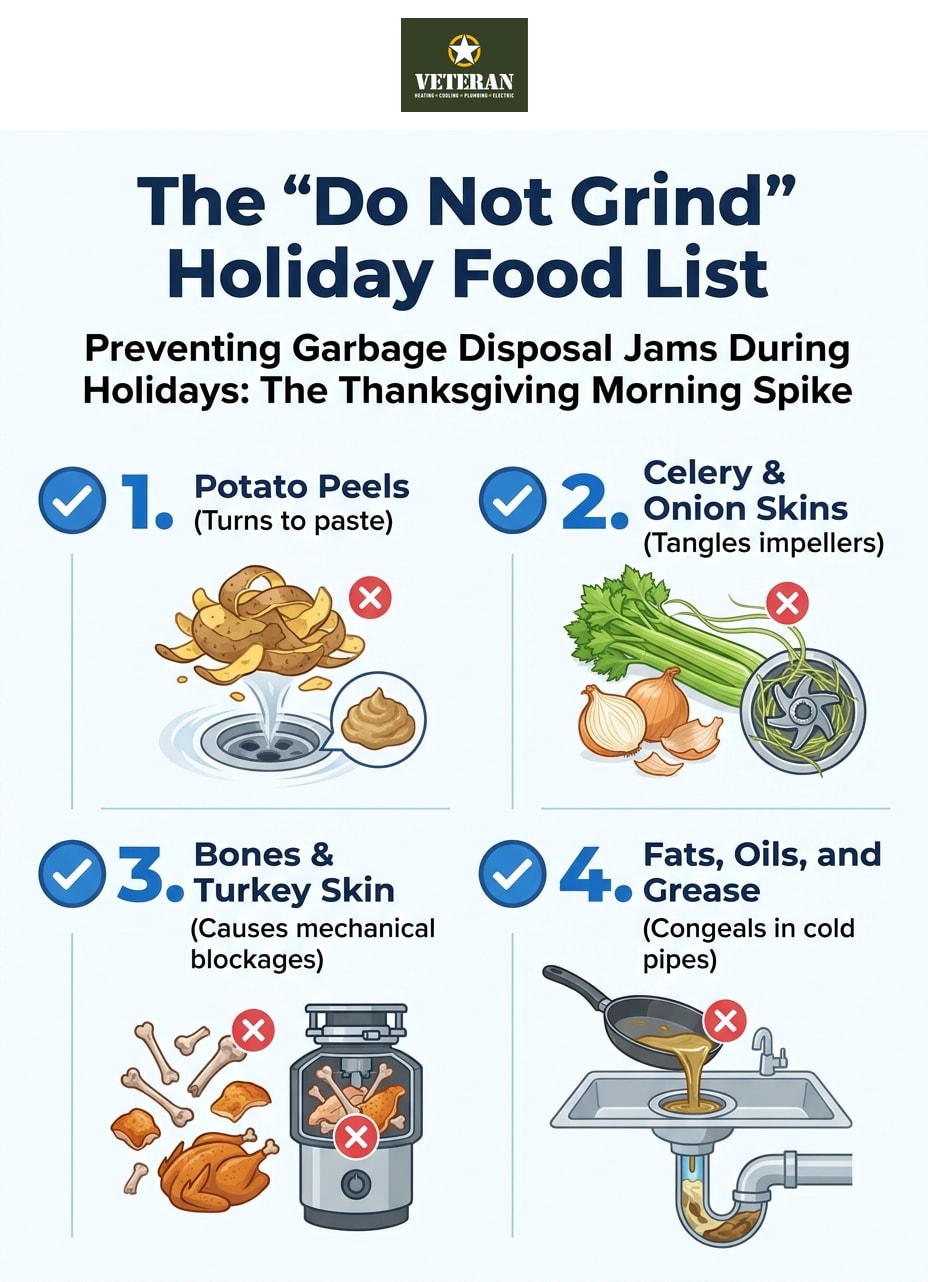
The 'Do Not Grind' Holiday Food List
The most effective defense against a Thanksgiving morning plumbing disaster is knowing exactly what materials cause the most severe mechanical failures. Based on the clogs our team clears every November, certain foods bypass the grinding mechanism entirely, either turning into a glue-like substance or wrapping themselves around the internal moving parts.
Starchy Offenders
Starchy foods are deceptive because they seem soft and easy to grind. However, when starch mixes with water inside a confined plumbing pipe, it undergoes a physical change, expanding and transforming into a thick, non-Newtonian paste.
• Potato peels: This is the number one culprit of holiday drain calls we receive. A large batch of potato peels will slip right past the impellers, turn into a thick, glue-like paste, and coat the inside of your P-trap, catching every other piece of debris that follows.
• Pasta and rice: Even after they are cooked, pasta and rice continue to absorb water and expand. If large amounts are flushed down the sink, they swell inside the pipes, creating a dense, solid blockage that water cannot penetrate.
• Baking flour: Rinsing excess flour down the drain is essentially mixing raw dough inside your plumbing. It hardens quickly and sticks to the walls of the pipes.
Fibrous and Tough Scraps
Fibrous vegetables have high tensile strength. Instead of breaking apart upon impact, their long, stringy fibers survive the grinding process and wreak havoc on the moving parts.
• Celery and asparagus: The tough, stringy threads of these vegetables act like rope. They wrap tightly around the impeller arms, eventually locking the spinning plate in place and burning out the motor.
• Onion skins and corn husks: The thin, papery membrane of an onion skin is so light that it often bypasses the grind ring entirely, plastering itself over the drain exit like a piece of wet tape.
• Poultry bones and turkey skin: While some high-end disposals claim to handle small chicken bones, turkey bones are far too dense. They will cause immediate physical blockages or chip the grind ring. Turkey skin is highly elastic and will wrap around the impellers just like celery strings.
• Potato Peels — Safe for Disposal?: Trash / Compost Only — The Mechanical Risk: Turns into a thick, glue-like paste that coats pipes.
• Celery Stalks — Safe for Disposal?: Trash / Compost Only — The Mechanical Risk: Fibers wrap around the impeller and lock the motor.
• Turkey Bones — Safe for Disposal?: Trash / Compost Only — The Mechanical Risk: Too dense; causes immediate physical blockages.
• Gravy & Drippings — Safe for Disposal?: Trash (Once Cooled) — The Mechanical Risk: Congeals into a solid block of grease inside cold pipes.
• Minor Plate Scrapings — Safe for Disposal?: Safe (in small amounts) — The Mechanical Risk: Easily pulverized and flushed with cold water.
Why Late November Weather Makes Grease Dangerous
Beyond solid food waste, Fats, Oils, and Grease (commonly referred to as FOG in the plumbing industry) represent the second major threat to your kitchen sink during the holidays. Turkey drippings, butter, bacon grease, and heavy cooking oils are abundant during holiday meal preparation. While it might be tempting to pour these warm liquids down the drain to get them out of the way, doing so invites a massive plumbing failure.
In our experience serving the Denver area, this risk is heavily amplified by our local climate. With Denver's late November cold snaps, the ground temperature drops significantly, which means your residential plumbing lines become much colder than they are during the summer months. When hot, liquid turkey grease is poured down the drain, it travels only a short distance before hitting these freezing-cold pipes.
The rapid cooling effect: The moment the warm liquid grease contacts the cold plumbing walls, it undergoes a rapid phase change. It congeals and hardens almost instantly, turning from a flowing liquid into a solid, impenetrable block of waxy fat. Once this layer of hardened grease coats the inside of your pipes, it acts like a sticky trap. Every stray coffee ground, eggshell, or piece of food that washes down the sink afterward will stick to the grease, building up layer by layer until the pipe is completely sealed shut.
The correct disposal method: Never pour hot oil or grease into the sink, even if you are running hot water alongside it. Instead, pour the warm drippings into a disposable container, such as an empty tin can, a glass mason jar, or a heavy-duty cardboard milk carton. Set the container aside on the counter or place it in the refrigerator to cool and solidify. Once the grease has hardened into a solid block, you can safely throw the entire container into the regular household trash.
A Disciplined Prep Checklist for Kitchen Plumbing
At Veteran Heating, Cooling, Plumbing & Electric, we view holiday cooking not just as a meal, but as a complex operation with many moving parts. To ensure the kitchen remains fully operational during high-stress hosting, you need a non-negotiable, preventative mission checklist. By implementing these steps before the first potato is peeled, you protect your equipment from failure.
1. Establish a dedicated staging area: Before cooking begins, set up a countertop compost bin or a small trash can directly next to your prep station. Make this the mandatory drop zone for all peels, ends, and food scraps. By keeping the main trash receptacle at waist level, you remove the temptation to sweep scraps into the sink basin.
2. The 15-second cold water flush rule: Whenever you do need to use the disposal for minor plate scrapings, always turn on the cold water first. Let the cold water run for a full 15 seconds before turning on the unit, keep it running while the food is grinding, and leave it running for another 15 seconds after you turn the unit off. Cold water is imperative—it keeps any residual fats solid so they can be chopped up and flushed away, whereas hot water melts fats and allows them to coat the pipes further down the line.
3. Practice micro-batching: If you must feed permitted scraps into the unit, do so slowly and in small, controlled batches. Never pack the chamber full of food and then turn it on. Turn the water and the motor on first, then slowly drop small amounts of food into the drain, allowing the system to clear each batch before adding more.
4. Brief your kitchen crew: Guests and well-meaning family members often jump in to help with the dishes, unaware of your disposal's boundaries. Establish clear kitchen rules early in the day. Politely inform anyone helping with the cleanup that all plates should be scraped directly into the trash can, not rinsed off into the sink. A quick briefing prevents a well-intentioned guest from accidentally shutting down your plumbing.
Recognizing When a Jam Requires a Professional
Even with strict discipline, accidents happen. A stray turkey bone or a dropped spoon can instantly halt your cleanup efforts. It is highly important to recognize the warning signs of a severe jam and understand exactly when attempting a DIY fix becomes dangerous or counterproductive.
The warning signs of a locked motor: If you flip the switch and hear a loud, persistent humming or buzzing sound, but the internal plate is not spinning, the motor is receiving electrical power but the impellers are physically locked by an obstruction. If you flip the switch and hear complete silence, the unit has likely overheated and tripped its internal thermal overload switch, or it has tripped the main electrical breaker for the kitchen.
The dangers of overworking the system: Never leave the unit turned on if it is humming but not spinning. This will rapidly burn out the motor and destroy the appliance. Furthermore, never stick your hands down into the grinding chamber to retrieve an item, and do not attempt deep electrical resets or wiring inspections without a proper license. Water and electricity are a dangerous combination, and internal appliance repairs require professional expertise.
Avoid harsh chemical reactions: When faced with a backed-up sink, many homeowners reach for a bottle of liquid drain cleaner. Our licensed plumbers strongly advise against this. Pouring caustic chemicals into a sink full of standing water will not dissolve a mechanical blockage like a turkey bone or a tangled mass of celery. Instead, the chemicals will sit in the basin, creating a toxic hazard for the plumber who eventually has to open the pipes. This is exactly why harsh chemical drain cleaners often fail on stubborn clogs and end up causing more damage to the metal components of your sink.
What to do while waiting for help: If your system fails on Thanksgiving, immediately turn off the switch and locate the electrical breaker panel to cut power to the unit completely. Stop using that side of the sink. Remember that your dishwasher likely drains through the same plumbing line as the garbage disposal, so do not run a load of dishes, or the dirty water will simply back up into the sink basin. Place a bucket under the P-trap inside the cabinet just in case of a slow leak, and wait for a licensed professional to safely clear the line.
Frequently Asked Questions About Holiday Kitchen Plumbing
What foods shouldn't go down a garbage disposal during the holidays?
You should completely avoid putting potato peels, celery, onion skins, poultry bones, and turkey skin down the drain. These fibrous and starchy foods bypass the grinding mechanism, either turning into a thick paste that clogs the pipes or wrapping tightly around the moving parts. Always throw these heavy prep scraps directly into the trash or a compost bin.
Why is my garbage disposal humming but not spinning?
A humming sound indicates that the motor is receiving electricity, but the internal grinding plate is physically jammed by an obstruction. If you hear this noise, turn the unit off immediately to prevent the motor from burning out. The blockage is usually caused by a hard object like a bone or a dense mass of fibrous vegetables locking the impellers in place.
Can you put potato peels in the garbage disposal?
No, you should never put potato peels in the disposal. Potatoes are incredibly starchy, and when those peels are ground up and mixed with water, they expand into a thick, glue-like paste. This paste coats the inside of your plumbing lines and quickly hardens into a stubborn blockage that requires professional tools to clear.
Is it safe to pour turkey grease down the drain?
It is never safe to pour liquid grease, fats, or oils down any household drain. Even if the grease is warm and you run hot water with it, the liquid will rapidly cool and congeal once it hits the colder pipes underground. This forms a solid, waxy block that catches other food debris and seals the pipe completely.
How do you know when a garbage disposal jam requires a plumber?
You need a professional if the unit is completely silent and resetting the internal breaker does not restore power, or if the unit hums but remains locked after safely attempting to dislodge the visible debris with a wooden spoon handle. Never attempt deep electrical repairs, wiring resets, or dismantling the unit yourself without a license.
Keep Your Holiday Meal on Track
A definitive list of what to avoid is your best defense against unexpected plumbing disasters this season. By treating your sink with care, utilizing your trash can for heavy prep waste, and keeping grease out of the pipes, you can focus entirely on hosting your family. Preventing garbage disposal jams during holidays ultimately comes down to preparation and discipline. If a Thanksgiving morning emergency does strike, stop using the sink, cut the power, and reach out to the experts at Veteran Heating, Cooling, Plumbing & Electric for safe, professional assistance.
ABOUT Veteran Heating, Cooling, Plumbing & Electric
Veteran Heating, Cooling, Plumbing & Electric was founded on the belief that service should be personal, honest, and community-focused. Our team is built around integrity, professionalism, and a true commitment to your home’s comfort and safety.
Led by a U.S. Army veteran with over 30 years of industry experience, we’re proud to remain locally owned and operated. Every technician, plumber, and electrician is EPA-certified, background checked, and driven to exceed expectations.
- 24/7 ServiceWe offer weekend & 24/7 emergency service. We’re here whenever you need us—day, night, or weekend, no exceptions.
- $0 Trip FeesNo dispatch or trip fees. You’ll never pay just for us to show up—service starts when the work does.
OUR SERVICES
AIR CONDITIONING

We offer specialty and seasonal services like indoor air quality upgrades, pre-winter furnace checks, and summer AC tune-ups to keep your home prepared year-round.
Our Primary Air Conditioning Services Include:
Don't see the service you need? Call our Team today!
PLUMBING
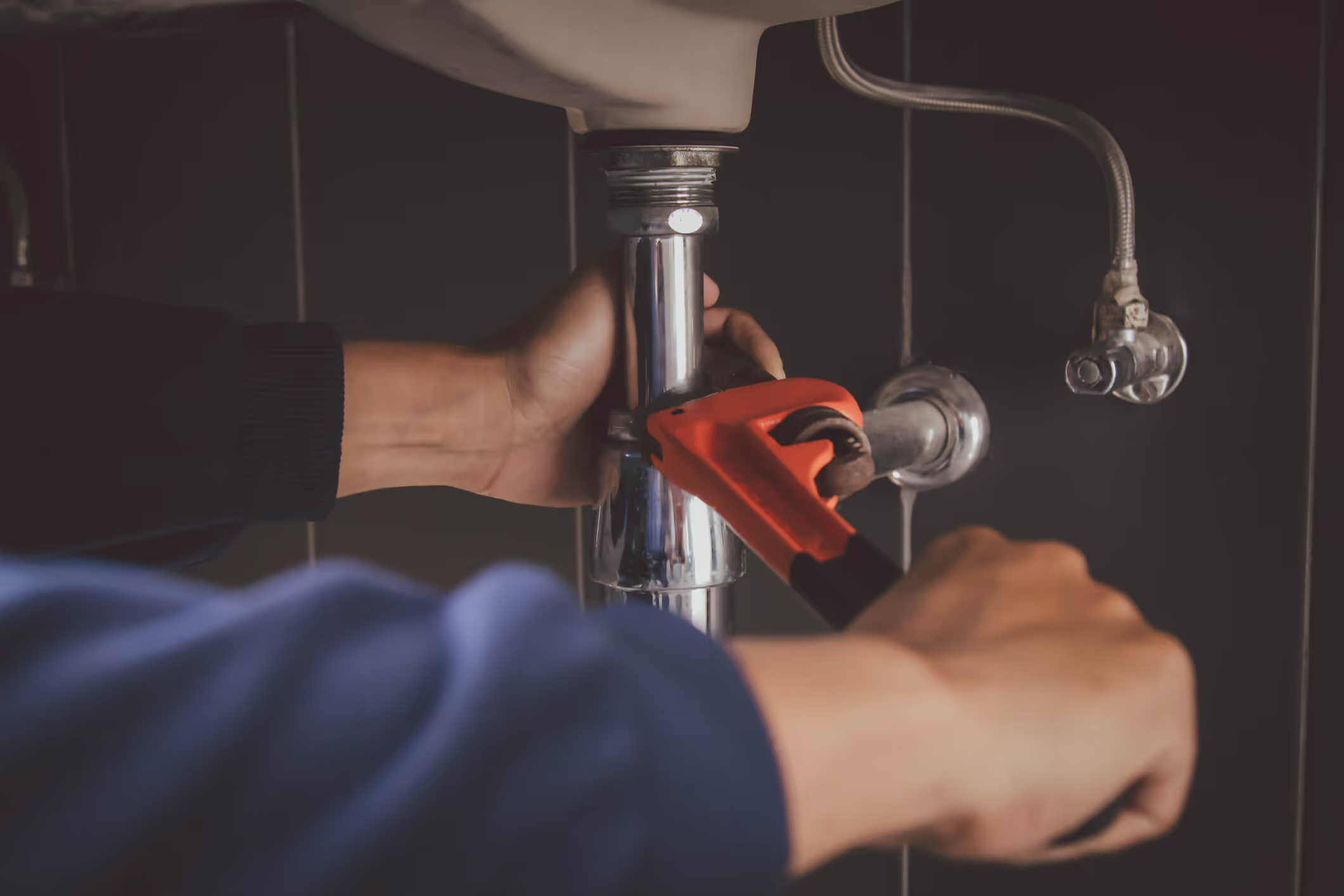
From leaks to full system installs, our plumbing services cover everything you need for a safe, reliable home water system, 24/7.
Our Primary Plumbing Include:
- Water Heater Replacement
- Water Heater Repair
- Trenchless Sewer Line
- Water Filtration
- Slab Leak
- Sewer Line Repair
Don't see the service you need? Call our Team today!
ELECTRICAL

Our electrical services ensure your home stays safe and powered, from routine fixes to complete system upgrades.
Our Primary Electrical Services Include:
- House Rewiring
- Electrician
- Electric Panel Upgrade
- Electric Panel Replacement
- EV Chargers
- Whole House Generator
Don't see the service you need? Call our Team today!
HEATING

We install, repair, and maintain heating & furnace systems with expert care to keep your Colorado home comfortable and energy-efficient year-round.
Our Primary Heating Services Include:
- Heating Installation
- Heating Replacement
- Heating Maintenance
- Heating Repair
- Heating Service
- Heating Tune-Up
Don't see the service you need? Call our Team today!