What Permits Are Needed for Mini Split Installation — Here's What Denver Homeowners Must Know
What permits are needed for mini split installation is one of the most important questions to answer before your new system goes in — and skipping this step can cost you far more than the permit itself.
In most U.S. jurisdictions, including cities across the Denver Metro area, you will typically need one or more of the following permits:
• Electrical permit — Required for new 240V dedicated circuits, breaker additions, and hardwiring the outdoor unit
• Mechanical/HVAC permit — Required for refrigerant line installation, wall penetrations, and condensate drainage
• Building permit — Required in some municipalities when structural modifications or exterior changes are involved
These requirements are grounded in two major national codes: IMC Section 106.1 (International Mechanical Code) and NEC Article 440 (National Electrical Code), which most Colorado municipalities have adopted. Whether you are in Denver, Lakewood, Aurora, or Arvada, permanent HVAC installations almost always trigger at least an electrical permit — and often a mechanical one too.
Installing without these permits is not just a technicality. It can void your manufacturer warranty, complicate your homeowner's insurance, and create serious problems when you sell your home.
I'm Mike Townsend, a U.S. Army veteran whose military work included managing precision cooling systems for heat-seeking missile technology — experience that gave me a deep respect for the safety standards and code compliance that govern what permits are needed for mini split installation. That same commitment to precision and doing things right guides every installation our team performs across the Denver Metro area.
Why Local Building Codes Require Permits for Mini Splits
When you decide to upgrade your home’s comfort, it might feel like the paperwork is just a hurdle, but these codes exist for your protection. Under IMC Section 106.1, any permanent mechanical system installation requires a permit to ensure the equipment is safe for the occupants. Similarly, NEC Article 440 governs the electrical requirements for air conditioning and refrigerating equipment.
In the Denver Metro area, our local building departments use these codes to manage several critical safety factors:
• Refrigerant Safety: Mini splits use high-pressure refrigerants. If handled incorrectly, these can lead to toxic chemical exposure or even explosions. Permits ensure the person handling the lines is qualified.
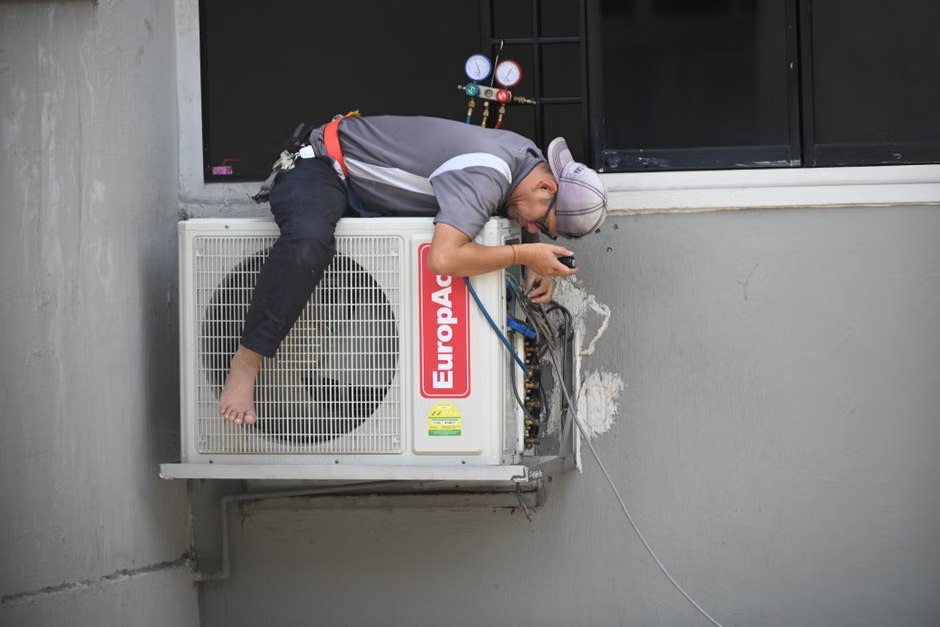
• Structural Integrity: Installing a mini split involves drilling holes through your exterior walls for the line set. Codes ensure these penetrations don't weaken your home's structure or allow water and pests to enter.
• Fire Prevention: Most mini splits require a dedicated 240-volt circuit. Improper wiring is a leading cause of house fires. An electrical permit ensures your home’s panel can handle the load and that the wiring is up to current safety standards.
• Electrical Load Management: Our local grids in places like Arvada and Centennial are robust, but your home’s electrical panel has a limit. Permits require a load calculation to ensure you aren't overloading your system.
If you are looking for more information about how these systems work, you can explore our mini-split installation services to see how we handle these technical requirements.
What permits are needed for mini split installation in the Denver Metro Area?
As of April 2026, the requirements across the Denver Metro area remain strict. Whether you live in Denver, Aurora, Lakewood, Arvada, or Centennial, the "what" and "why" of permitting generally fall into three categories.
Comparison of Permit Triggers
• Installing a new 240V circuit — Electrical Permit Required?: Yes — Mechanical Permit Required?: No
• Running refrigerant piping — Electrical Permit Required?: No — Mechanical Permit Required?: Yes
• Hardwiring an outdoor unit — Electrical Permit Required?: Yes — Mechanical Permit Required?: No
• Cutting through structural walls — Electrical Permit Required?: No — Mechanical Permit Required?: Yes (often Building)
• Adding a condensate drain — Electrical Permit Required?: No — Mechanical Permit Required?: Yes
Navigating Electrical Permits for Your New System
The electrical side of what permits are needed for mini split installation is usually the first "trigger." Most high-efficiency mini splits require a dedicated 240V circuit. This isn't something you can just plug into a standard wall outlet.
To comply with the National Electrical Code (NEC) in Colorado, we must ensure:
• Dedicated Breakers: The system must have its own circuit breaker in your main panel.
• Outdoor Disconnect Boxes: A weatherproof "disconnect" box must be installed within sight of the outdoor condenser. This allows a technician (or a first responder) to quickly cut power to the unit in an emergency.
• Hardwiring Requirements: Most outdoor units must be hardwired using liquid-tight conduit to protect the wires from our Colorado weather.
Mechanical Permits and What Permits are Needed for Mini Split Installation
The mechanical permit focuses on the "guts" of the HVAC system. This covers the refrigerant piping (line sets) and the indoor air handlers. In our service areas like Lakewood and Broomfield, inspectors want to see that the line set is properly insulated to prevent energy loss and that the wall penetrations are sealed with fire-rated materials.
Crucially, federal law requires anyone opening or charging refrigerant lines to hold an EPA Section 608 Certification. Even if you are pulling a "homeowner permit," you cannot legally handle the refrigerant yourself without this certification. This is a major reason why professional installation is the standard for these systems.
Consequences of Skipping the Permitting Process
It might be tempting to save a few dollars by skipping the permit, but as a veteran-led company, we believe in doing things right the first time. The risks of unpermitted work in the Denver Metro area are significant:
1. Insurance Claim Denials: If an unpermitted electrical connection causes a fire, your insurance company may deny the claim entirely. They view unpermitted work as a "known risk" you took outside of code.
2. Home Resale Complications: When you go to sell your home in Castle Rock or Highlands Ranch, the buyer's inspector will check for permits. If they find an unpermitted HVAC system, it can stall the sale, force you to pay for "after-the-fact" permits (which are often double the price), or even require you to rip the system out.
3. Municipal Fines: Local building departments can issue "Stop Work" orders or daily fines if they catch an unpermitted installation in progress.
4. Voided Manufacturer Warranties: Almost all major mini split manufacturers require proof of professional, permitted installation to honor their parts warranty. If your compressor fails in three years and you don't have a permit on file, you're on the hook for the full cost of the repair.
5. Safety Hazards: Beyond the legalities, improper drainage can lead to mold inside your walls, and improper wiring can lead to shocks or fires.
The Role of Inspections and Professional Licensing
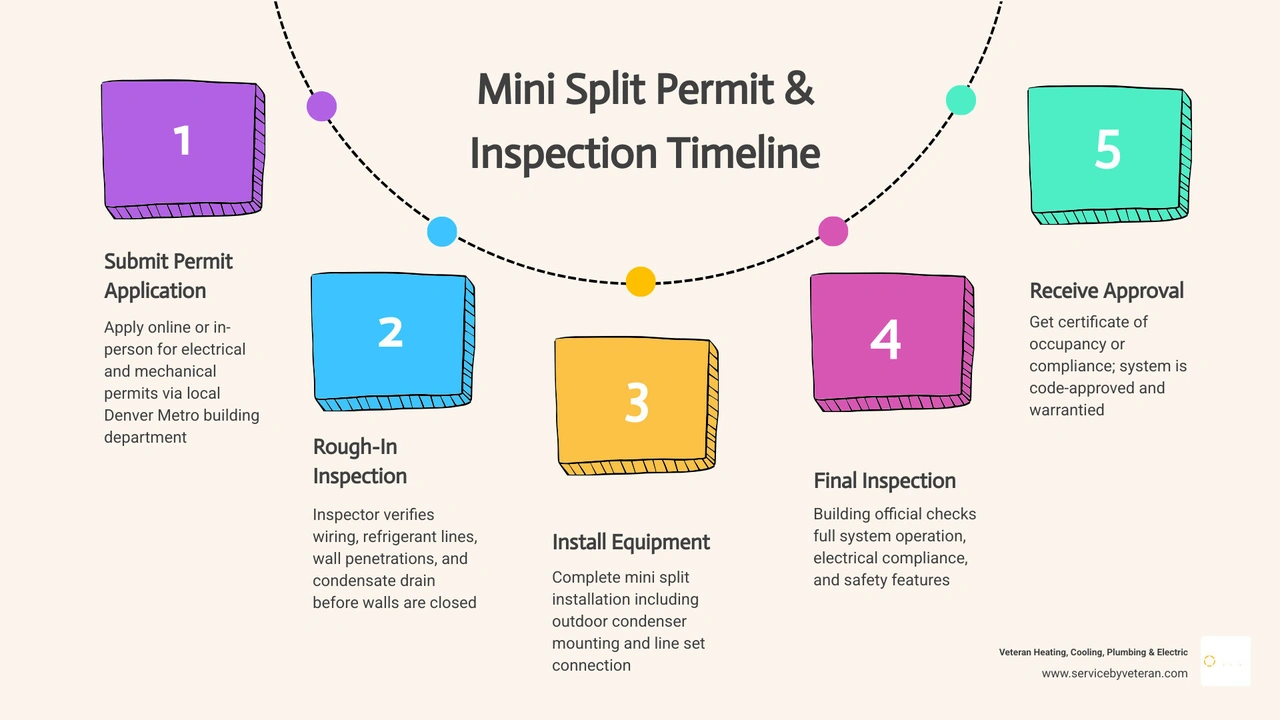
Once the permit is pulled, the process isn't over. Inspections are the "final check" that ensures our work meets the high standards we promise.
• Rough-in Inspections: If we are running wiring through unfinished walls (like in a basement finish in Littleton), the inspector needs to see the wiring before the drywall goes up.
• Final Mechanical Sign-off: After the system is running, an inspector will visit to check the outdoor unit's placement, the condensate drainage, and the electrical disconnect.
• Zoning and HOA Rules: In many Denver Metro neighborhoods, zoning laws dictate "setbacks"—how far the outdoor unit must be from your property line. HOA rules might also require specific "setback" distances or line set covers that match your home's exterior color.
At Veteran Heating, Cooling, Plumbing & Electric, our technicians are background-checked and EPA-certified. We handle the permit applications and schedule the inspections for you, so you don't have to navigate the bureaucracy of the Aurora or Denver building departments alone.
Frequently Asked Questions about Mini Split Permits
Can I pull the permits myself for a DIY installation?
In many Colorado municipalities, homeowners are allowed to pull their own permits if they live in the home. However, there is a catch: you are then legally responsible for the entire installation. If the work fails inspection, you must fix it yourself. Furthermore, you still cannot legally handle the refrigerant without EPA certification. Most homeowners find that the liability risks and the specialized tools required (like vacuum pumps and micron gauges) make professional installation more cost-effective.
Do HOA rules affect my permit requirements?
While an HOA cannot usually override city safety codes, they can add their own layers of "aesthetic" permits. For example, an HOA in Highlands Ranch might require you to submit a request to the architectural review committee to ensure the outdoor unit isn't visible from the street or that you use specific line set covers. Always check your HOA bylaws before we start the work.
How long does the permit approval process take in 2026?
Fortunately, most Denver Metro cities have moved to online application portals. In cities like Arvada and Lakewood, simple mechanical and electrical permits can often be approved within 1 to 3 business days. Some jurisdictions even offer same-day "over-the-counter" digital approvals for standard residential HVAC replacements.
Conclusion
Understanding what permits are needed for mini split installation is the first step toward a cooler, more comfortable home. While the rules might seem complex, they are there to ensure that your investment is safe, legal, and efficient.
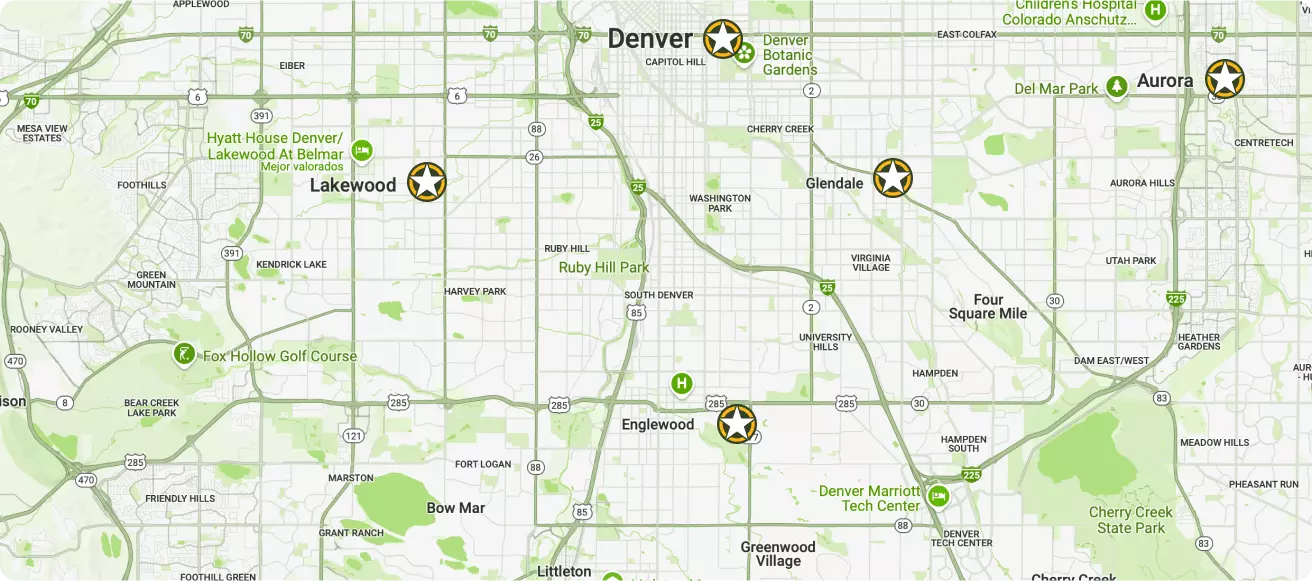
At Veteran Heating, Cooling, Plumbing & Electric, we take the mission of your home comfort seriously. We serve the entire Denver Metro area, including Denver, Arvada, Aurora, Broomfield, Castle Rock, Centennial, Columbine, Golden, Highlands Ranch, Lakewood, and Littleton.
When you choose us, you're getting a veteran-owned team that values integrity and honesty above all else. We provide a lifetime warranty on parts and labor, 24/7 emergency availability, and a money-back guarantee. We don't just install a unit; we ensure your home is up to code and your family is safe.
Ready to upgrade your home with a ductless system? Schedule your professional mini split installation with our expert team today, and let us handle the paperwork while you enjoy the comfort.
ABOUT Veteran Heating, Cooling, Plumbing & Electric
Veteran Heating, Cooling, Plumbing & Electric was founded on the belief that service should be personal, honest, and community-focused. Our team is built around integrity, professionalism, and a true commitment to your home’s comfort and safety.
Led by a U.S. Army veteran with over 30 years of industry experience, we’re proud to remain locally owned and operated. Every technician, plumber, and electrician is EPA-certified, background checked, and driven to exceed expectations.
- 24/7 ServiceWe offer weekend & 24/7 emergency service. We’re here whenever you need us—day, night, or weekend, no exceptions.
- $0 Trip FeesNo dispatch or trip fees. You’ll never pay just for us to show up—service starts when the work does.
OUR SERVICES
AIR CONDITIONING
.jpg)
We offer specialty and seasonal services like indoor air quality upgrades, pre-winter furnace checks, and summer AC tune-ups to keep your home prepared year-round.
Our Primary Air Conditioning Services Include:
Don't see the service you need? Call our Team today!
PLUMBING
From leaks to full system installs, our plumbing services cover everything you need for a safe, reliable home water system, 24/7.
Our Primary Plumbing Include:
- Water Heater Replacement
- Water Heater Repair
- Trenchless Sewer Line
- Water Filtration
- Slab Leak
- Sewer Line Repair
Don't see the service you need? Call our Team today!
ELECTRICAL

Our electrical services ensure your home stays safe and powered, from routine fixes to complete system upgrades.
Our Primary Electrical Services Include:
- House Rewiring
- Electrician
- Electric Panel Upgrade
- Electric Panel Replacement
- EV Chargers
- Whole House Generator
Don't see the service you need? Call our Team today!
HEATING
.jpg)
We install, repair, and maintain heating & furnace systems with expert care to keep your Colorado home comfortable and energy-efficient year-round.
Our Primary Heating Services Include:
- Heating Installation
- Heating Replacement
- Heating Maintenance
- Heating Repair
- Heating Service
- Heating Tune-Up
Don't see the service you need? Call our Team today!