Choosing Between Central Air vs Mini Split for Front Range Homes with Existing Ductwork
Central air vs mini split for front range homes is one of the most common questions Colorado homeowners face when it's time to upgrade or replace their cooling system — and the right answer depends on a handful of factors specific to life along the Front Range.
Here's a quick-reference breakdown to help you decide:
• Best for — Central Air: Homes with existing, well-sealed ductwork — Ductless Mini Split: Homes without ducts, additions, or problem rooms
• SEER2 efficiency range — Central Air: 13-21+ SEER2 — Ductless Mini Split: 18-38+ SEER2
• Duct energy loss — Central Air: Up to 20-30% lost through leaks — Ductless Mini Split: Zero — no ducts involved
• Zoning control — Central Air: Limited without add-ons — Ductless Mini Split: Built-in, room-by-room control
• Noise level (indoors) — Central Air: 50-75 dB — Ductless Mini Split: 20-35 dB (near silent)
• Heating capability — Central Air: Paired with furnace — Ductless Mini Split: Most models are full heat pumps
• Federal tax credit (2026) — Central Air: Up to $600 — Ductless Mini Split: Up to $2,000
• Whole-home coverage — Central Air: Yes, with one system — Ductless Mini Split: Yes, with multi-zone setup
• Best for Colorado winters — Central Air: With gas furnace backup — Ductless Mini Split: Cold-climate (hyper-heat) models recommended
The Front Range throws a unique mix at your HVAC system — dry summers, dramatic temperature swings, and altitude that affects how any cooling system performs. Whether you're in a 1960s ranch in Lakewood, a new build in Highlands Ranch, or a converted bonus room in Arvada, the "best" system isn't universal. It comes down to your home's infrastructure, how you use your space, and your long-term comfort goals.
I'm Mike Townsend, a U.S. Army veteran and the founder of Veteran Heating, Cooling, Plumbing & Electric — my background managing precision cooling systems in the military gave me a technical foundation that directly shapes how I approach the central air vs mini split for front range homes question for every customer we serve. Let's walk through everything you need to know to make a confident, informed decision.

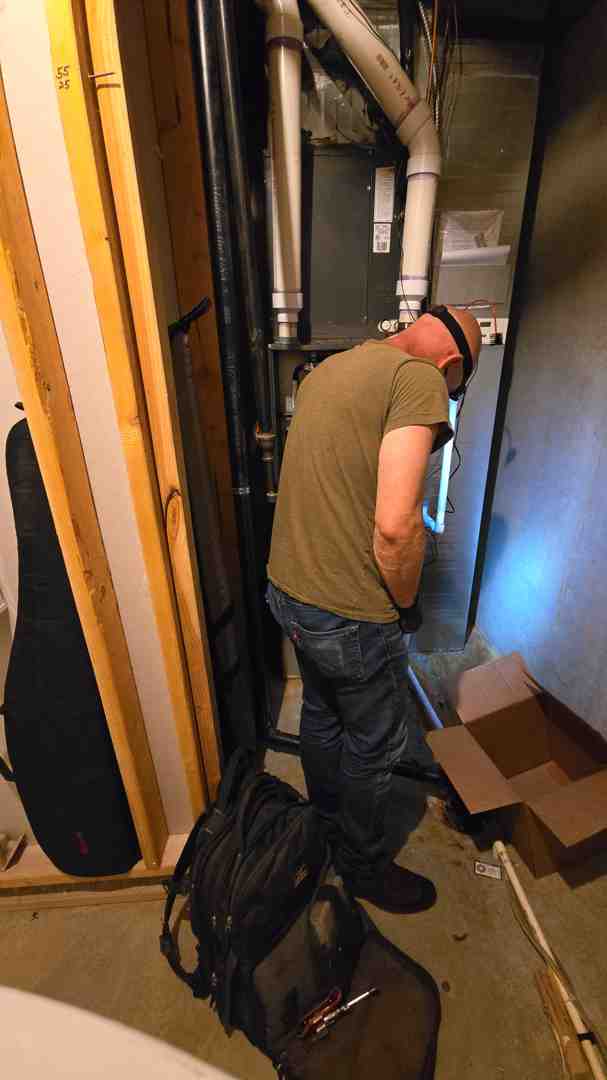
When we step into a home in Centennial or Littleton, the first thing we look at is the existing infrastructure. If your home already has a forced-air furnace and a network of ducts in good condition, central air is often the most straightforward path. It’s designed for whole-home uniformity, ensuring that every room reaches the same temperature simultaneously.
However, "good condition" is the operative phrase. In many older properties across the Denver Metro area, ductwork can be a hidden energy drain. Statistics show that typical duct systems can lose 20% to 30% of conditioned air through leaks, poor insulation, or thermal bypass. If your ducts are located in a sweltering attic, your central AC has to work significantly harder just to get cold air to your living room.
For those living in historic Denver neighborhoods or older homes in Golden where ductwork was never installed, mini splits are a game-changer. Retrofitting an older home with central air often requires "opening up" walls, dropping ceilings, or sacrificing precious closet space to fit bulky metal pipes. In contrast, a mini split requires only a tiny three-inch hole for the refrigerant lines.
Home layout considerations often dictate the choice:
• Home Additions: If you’ve just finished a basement in Arvada or added a sunroom in Broomfield, extending existing ductwork can "overload" your current central system, shortening its lifespan. A single-zone mini split is often a more cost-effective "surgical" solution.
• Multi-Story Homes: We frequently see tri-level homes where the top floor is a "pizza oven" while the basement is a "refrigerator." A hybrid approach — keeping central air for the main floor and adding a mini split for the upper level — is a popular way to fix solar imbalance.
• Historic Properties: Preserving the architectural integrity of a classic Victorian or mid-century ranch is much easier when you aren't tearing out drywall for vents.
If you’re wondering which path fits your specific layout, you can find More info about mini-split services to see how these systems integrate into different home styles.
Energy Efficiency and SEER2 Performance in Colorado’s Dry Climate
As of April 2026, the HVAC industry has fully embraced SEER2 (Seasonal Energy Efficiency Ratio 2) standards. These ratings are designed to reflect real-world conditions more accurately, especially the air pressure found in ductwork. This shift has highlighted a major advantage of ductless systems: they don't have to fight duct friction to deliver comfort.
Mini splits utilize advanced inverter technology, which acts like "cruise control" for your cooling. Traditional central AC units are often "all or nothing" — they gulp electricity to start up, blast cold air until the thermostat is satisfied, and then shut off. Inverter-driven mini splits, however, smoothly ramp their speed up and down to maintain a steady temperature. This can lead to a 30% to 40% reduction in operational electricity consumption compared to older, fixed-speed units.
Comparing Efficiency: Central Air vs Mini Split for Front Range Homes
In the dry, high-altitude climate of the Front Range, efficiency isn't just a buzzword; it’s the primary driver of your monthly overhead.
• Central Air — Typical SEER2 Range: 13 - 21+ — Efficiency Advantage: Good for uniform cooling in duct-ready homes.
• Mini Split — Typical SEER2 Range: 18 - 38+ — Efficiency Advantage: Superior part-load efficiency; eliminates duct loss.
By eliminating the 20-30% energy waste associated with leaky ducts, mini splits start with a massive head start. Furthermore, they allow for "occupancy-based cooling." If you spend your day in a home office in Aurora, you don't need to pay to cool the guest bedrooms and dining room on the other side of the house.
Noise Levels: Central Air vs Mini Split for Front Range Homes
For many of our customers in quiet neighborhoods like Highlands Ranch or Castle Rock, noise is a major factor. Central air systems typically range from 50 to 75 decibels — similar to a garbage disposal or gentle rainfall. You’ll definitely hear the "whoosh" of air when the system kicks on.
Mini splits are the undisputed champions of quiet. Indoor units operate at 20 to 35 decibels, which is as quiet as a whisper or a library. This makes them ideal for:
• Bedrooms: For light sleepers who don't want to hear a compressor cycling on and off.
• Home Offices: Ensuring your Zoom calls aren't interrupted by a loud blower motor.
• Nurseries: Maintaining a peaceful environment for the little ones.
To keep things even quieter, we use vibration-isolating mounts for outdoor units, ensuring that no mechanical hum transfers through your home's walls. If you’re interested in a system that you’ll feel but never hear, you can explore More info about mini-split services.
Year-Round Comfort: Can Mini Splits Handle Colorado Winters?
A common myth we hear is that mini splits are "just for cooling." In reality, most modern mini splits are sophisticated heat pumps capable of providing highly efficient heating even when Colorado winters get tough.
In places like Castle Rock or the higher elevations of Golden, we recommend "cold-climate" or "hyper-heat" models. These units are specifically engineered to maintain 100% of their heating capacity even when temperatures drop to 5°F, and many can continue operating down to -15°F or lower. They feature base pan heaters to prevent ice buildup and variable-speed compressors that can pull heat out of incredibly cold outdoor air.
While many Denver Metro homeowners choose to keep their existing gas furnace as a backup for those rare sub-zero "Polar Vortex" weeks, a mini split can handle the vast majority of our winter days. This "two-for-one" value means you’re investing in a year-round comfort solution rather than just a summer luxury.
Frequently Asked Questions about Central Air vs Mini Split for Front Range Homes
Which system requires more frequent maintenance?
Maintenance is the key to reaching that 15-to-20-year lifespan for either system. However, the routines differ:
• Central Air: Requires changing one or two large filters every 30 to 90 days. You also need to keep the outdoor condenser clear of Denver’s cottonwood seeds and debris.
• Mini Splits: These units have small, reusable filters inside each indoor head that should be rinsed every 14 to 45 days. Because they move less air per unit, they can clog faster if you have pets or a dusty environment.
Both systems require an annual professional tune-up to check refrigerant levels and electrical connections. One perk of mini splits? You can skip the periodic duct cleaning costs that central systems require.
How do federal tax credits and local rebates apply in 2026?
The financial landscape for HVAC upgrades has never been better for Colorado residents. Under the Inflation Reduction Act, qualifying high-efficiency heat pump mini splits can eligible for federal tax credits up to $2,000. In contrast, central AC units that are cooling-only typically cap out at a $600 credit.
Additionally, local utility providers like Xcel Energy often offer rebates for ENERGY STAR® certified equipment. When you combine federal credits with local incentives, the "sticker price" gap between a high-end central system and a multi-zone mini split often shrinks significantly.
Which system is better for home resale value in the Denver Metro area?
Historically, central air was the "gold standard" because it was invisible. However, in 2026, the tide is shifting. Today’s energy-conscious buyers in Arvada and Lakewood are looking for "green" home features and lower utility bills.
A professionally installed, multi-zone mini split system with clean "line hides" (the covers that protect the exterior pipes) is increasingly seen as a premium upgrade. For homes that previously had no cooling — like many of our beautiful older homes in the Denver area — adding a mini split can significantly increase the property's appraisal value and market appeal.
Conclusion
At Veteran Heating, Cooling, Plumbing & Electric, we don’t believe in a "one-size-fits-all" approach to the central air vs mini split for front range homes debate. Our mission is to provide the same level of integrity and precision I learned in the Army to every home we visit across the Denver Metro area, from Aurora to Castle Rock.
Whether you choose the whole-home uniformity of central air or the whisper-quiet efficiency of a ductless mini split, we stand behind our work with a lifetime warranty on parts and labor and a money-back guarantee. We’re locally owned, veteran-led, and available 24/7 for those hot July weekends when you need us most.
Ready to find the perfect cooling solution for your Colorado home? Schedule your mini-split installation today and let us help you stay comfortable for years to come.
ABOUT Veteran Heating, Cooling, Plumbing & Electric
Veteran Heating, Cooling, Plumbing & Electric was founded on the belief that service should be personal, honest, and community-focused. Our team is built around integrity, professionalism, and a true commitment to your home’s comfort and safety.
Led by a U.S. Army veteran with over 30 years of industry experience, we’re proud to remain locally owned and operated. Every technician, plumber, and electrician is EPA-certified, background checked, and driven to exceed expectations.
- 24/7 ServiceWe offer weekend & 24/7 emergency service. We’re here whenever you need us—day, night, or weekend, no exceptions.
- $0 Trip FeesNo dispatch or trip fees. You’ll never pay just for us to show up—service starts when the work does.
OUR SERVICES
AIR CONDITIONING
.jpg)
We offer specialty and seasonal services like indoor air quality upgrades, pre-winter furnace checks, and summer AC tune-ups to keep your home prepared year-round.
Our Primary Air Conditioning Services Include:
Don't see the service you need? Call our Team today!
PLUMBING
From leaks to full system installs, our plumbing services cover everything you need for a safe, reliable home water system, 24/7.
Our Primary Plumbing Include:
- Water Heater Replacement
- Water Heater Repair
- Trenchless Sewer Line
- Water Filtration
- Slab Leak
- Sewer Line Repair
Don't see the service you need? Call our Team today!
ELECTRICAL

Our electrical services ensure your home stays safe and powered, from routine fixes to complete system upgrades.
Our Primary Electrical Services Include:
- House Rewiring
- Electrician
- Electric Panel Upgrade
- Electric Panel Replacement
- EV Chargers
- Whole House Generator
Don't see the service you need? Call our Team today!
HEATING
.jpg)
We install, repair, and maintain heating & furnace systems with expert care to keep your Colorado home comfortable and energy-efficient year-round.
Our Primary Heating Services Include:
- Heating Installation
- Heating Replacement
- Heating Maintenance
- Heating Repair
- Heating Service
- Heating Tune-Up
Don't see the service you need? Call our Team today!