AC Circuit Breaker Keeps Tripping What It Means for Your Home
AC circuit breaker keeps tripping what it means is something every homeowner deserves a straight answer to — so here it is upfront:
When your AC breaker keeps tripping, your home's electrical system is detecting more current than the circuit can safely carry and is shutting down to prevent overheating, damaged wiring, or an electrical fire. It is not a random glitch. It is a warning.
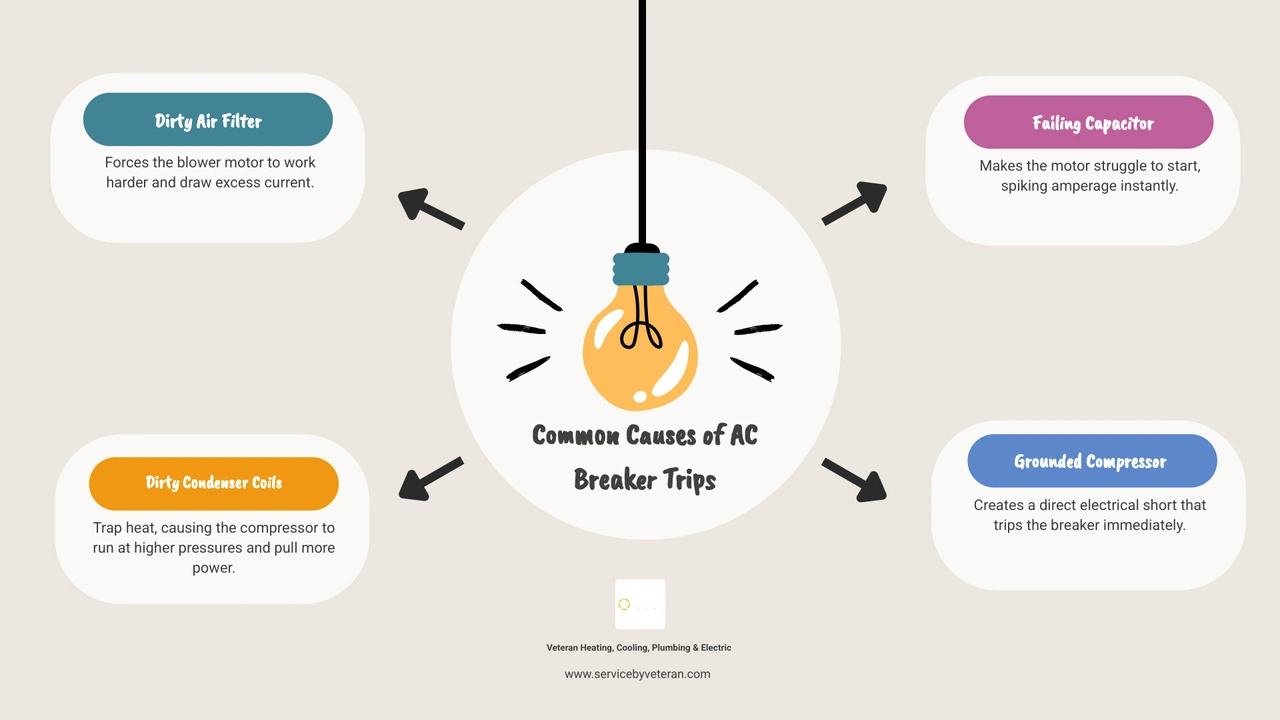
The most common reasons your AC breaker keeps tripping include:
• Dirty air filter — forces the blower motor to work harder and draw excess current
• Dirty condenser coils — trap heat, causing the compressor to run at higher pressures and pull more power
• Failing capacitor — makes the motor struggle to start, spiking amperage instantly
• Hard-starting compressor — draws three to five times its normal running current at startup
• Grounded compressor — creates a direct electrical short that trips the breaker immediately
• Loose or damaged wiring — causes arc faults or shorts that overwhelm the circuit
• A worn-out breaker — may trip on normal loads if the breaker itself is degraded
If your breaker trips once and holds after a reset, monitor it closely. If it trips again right away or repeatedly, do not keep resetting it — turn your system off and call a licensed HVAC technician. Repeated resets can damage wire insulation and the breaker itself, and in the worst cases, create a fire hazard inside your walls.
I'm Mike Townsend, a U.S. Army veteran and founder of Veteran Heating, Cooling, Plumbing & Electric, serving the Denver Metro area — and understanding exactly what an ac circuit breaker keeps tripping what it means for your home's safety is something I take seriously, drawing on both my military background managing precision cooling systems and decades of hands-on HVAC experience. In the sections below, I'll walk you through every cause, what to check yourself, and when to put the tools down and call a pro.
To truly understand what is happening when your air conditioner knocks out its own power supply, we have to look at how your home's electrical system is designed. Your central air conditioner is not like a standard household lamp. It is a heavy-duty machine that requires a significant amount of electricity to run.
Because of this high power demand, modern electrical standards in 2026 require central HVAC systems to run on a dedicated circuit. This circuit is controlled by a double-pole breaker in your electrical panel. While a standard single-pole breaker provides 120 volts for normal outlets and lights, a double-pole breaker links two hot wires together to supply 240 volts of electricity directly to your AC unit.
When your double-pole breaker trips, it is responding to one of three primary electrical events:
1. Electrical Overload: This occurs when your AC unit is working too hard and pulling more electrical current (amperage) than the circuit is rated to handle. For example, if you have a 40-amp breaker and a mechanical strain causes your AC to pull 45 amps, the breaker will trip to protect the wires from melting.
2. Short Circuit: This happens when a hot electrical wire comes into direct contact with a neutral wire or another hot wire. This bypasses the normal resistance of the system, causing an immediate, massive spike in current that trips the breaker instantly.
3. Ground Fault: A specific type of short circuit where a hot wire touches a grounded component, such as the metal cabinet of your outdoor condenser unit or a ground wire.
If your home was built several decades ago, or if your electrical panel has not been updated recently, your breaker panel might struggle to keep up with the demands of modern, high-efficiency cooling systems. If you suspect your panel is outdated or the breaker itself is weak, scheduling professional Electrical Services is the safest way to evaluate your system and ensure your home is up to code.
Common Airflow and Mechanical Causes of a Tripped Breaker
It might surprise you to learn that many electrical trips actually start as simple mechanical issues. When your air conditioning system cannot breathe or release heat properly, it has to work twice as hard to cool your home. In the HVAC world, mechanical strain equals electrical strain. The harder a motor has to push or pull, the more electrical current it draws from your panel.
Keeping up with seasonal maintenance is the easiest way to prevent these mechanical overloads. If you want to keep your system running smoothly throughout the hot Colorado summers, scheduling regular AC Maintenance Arvada CO will help ensure your system stays clean, efficient, and completely clear of airflow restrictions.
Airflow Blockages and the AC Circuit Breaker Keeps Tripping What It Means
When we talk about airflow blockages, we often use the analogy of trying to breathe through a thick pillow. If you block the air coming into your system, the indoor blower motor has to fight incredibly hard to pull air through the restriction. This extra resistance causes the blower motor to overheat and draw a high level of amperage, eventually tripping your circuit breaker.
Furthermore, restricted airflow causes the temperature of your evaporator coils to plummet. Without warm indoor air passing over the cold coils, the moisture on them freezes solid. This ice further blocks airflow, trapping your system in a vicious cycle. The blower motor continues to run at maximum strain against a solid block of ice until the electrical load exceeds the breaker's limit. If your system has already iced over, you will need professional AC Service Aurora CO to safely thaw the system, diagnose the root cause, and restore proper airflow.
Dirty Condenser Coils and System Pressure
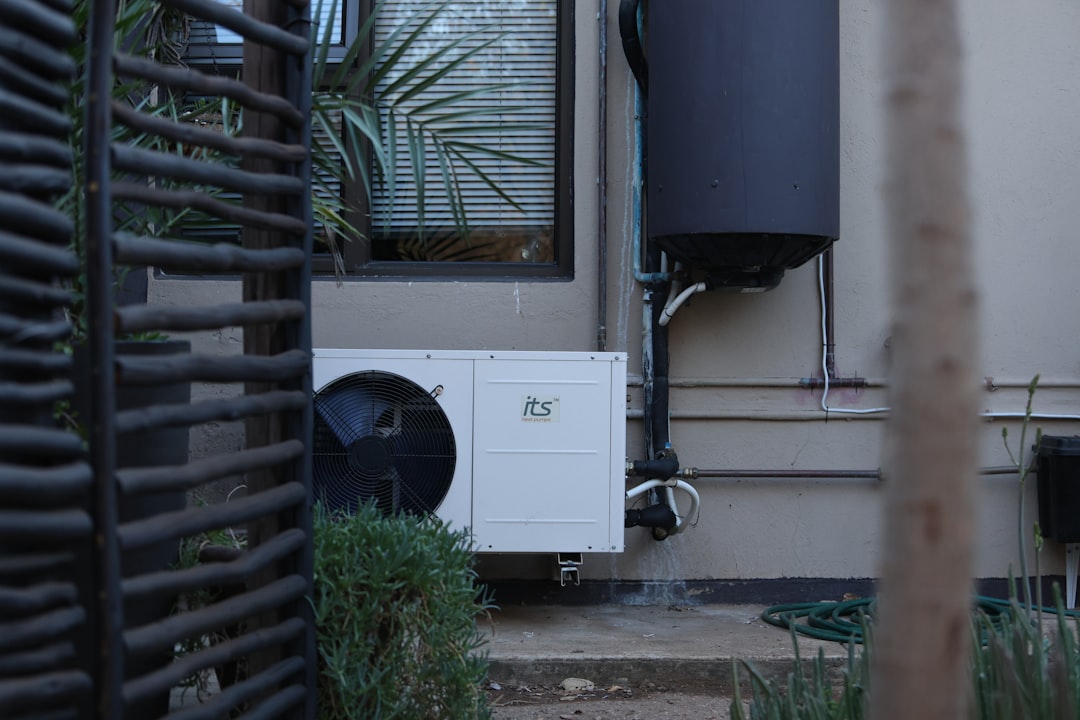
While the indoor unit absorbs heat from your home, the outdoor condenser unit has the crucial job of releasing that heat into the outside air. To do this, your outdoor compressor pumps refrigerant through the condenser coils, and a large fan blows outdoor air across those coils to dissipate the heat.
If your outdoor unit is caked in dirt, lawn clippings, or Denver's famous cottonwood fluff, those coils become insulated. The heat cannot escape. As a result, the pressure inside the refrigerant lines (known as head pressure) skyrockets. The compressor must work under extreme pressure to pump the refrigerant, which forces it to draw more electrical current. On a hot afternoon, this extra amp draw will easily push your breaker past its tripping point. A comprehensive AC Tune Up Littleton CO includes a thorough cleaning of these outdoor coils, keeping system pressures low and preventing hot-weather breaker trips.
Electrical Component Failures That Trigger Repeated Trips
When mechanical components are clean but the system still cuts power, the issue usually lies within the electrical components of the air conditioner itself. Over time, the extreme summer heat in Colorado combined with natural wear and tear can cause sensitive electrical parts to degrade. If your home's electrical system is older, these component failures can put a massive strain on your electrical panel, occasionally requiring an Electric Panel Upgrade to handle the electrical loads safely.
Failing Capacitors and the AC Circuit Breaker Keeps Tripping What It Means
Think of your AC's capacitors as temporary, high-powered batteries. Their job is to store up electrical energy and release it in a massive burst to help your compressor and fan motors start running, and then provide steady power to keep them spinning.
When a start or run capacitor begins to fail, it loses its ability to store this electrical charge. Without that extra booster jolt, the compressor motor will struggle to start up. It will sit there humming, trying to draw more and more power to force itself to turn. This massive spike in startup current (often called locked rotor amps) will instantly trip your breaker.
For aging compressors that are beginning to experience "hard starting" (struggling to start even with a good capacitor), an HVAC technician can install a hard start kit. This kit provides an extra electrical boost during those critical first seconds of startup, reducing the strain on your electrical system and preventing the breaker from tripping.
Grounded Compressors and Wiring Issues
A grounded compressor is the worst-case scenario for an air conditioning system. This occurs when the protective electrical insulation surrounding the motor windings inside the compressor breaks down. When this insulation fails, the live electrical wires come into direct contact with the metal frame of the compressor, creating a direct short circuit to ground.
When a compressor grounds out, the electrical current bypasses all internal resistance and flows directly into the ground. This instantly ignites the oil inside the compressor, causing a severe internal burnout and immediately popping the circuit breaker the second the system tries to turn on. In almost all cases, a grounded compressor requires a full system replacement, as replacing the compressor alone on an older unit is rarely cost-effective.
Additionally, loose wiring, corroded contactors, or damaged wire insulation can cause arc faults and short circuits. Because these electrical faults generate extreme heat, they represent a significant fire hazard if they are ignored.
• Startup Sound — Compressor Hard Starting: Loud clicking, groaning, or heavy humming — Grounded Compressor: Immediate trip, no sound or a sudden loud pop
• Amperage Draw — Compressor Hard Starting: Spikes briefly to 3–5x normal rating — Grounded Compressor: Massive, instant spike exceeding breaker limits
• Breaker Behavior — Compressor Hard Starting: Trips after a few seconds of struggling — Grounded Compressor: Trips instantly the moment the thermostat calls for cooling
• Urgency & Solution — Compressor Hard Starting: High. Can often be saved with a hard start kit or new capacitor — Grounded Compressor: Critical. Requires full compressor or system replacement
How to Safely Troubleshoot and Prevent AC Breaker Trips
If your air conditioner trips the breaker, you do not need to panic, but you do need to be smart and safe. Here is our step-by-step troubleshooting protocol to help you handle the situation without putting your home or your safety at risk:
1. Turn the System Off at the Thermostat: Before you touch the electrical panel, make sure your AC is not actively calling for cooling. Turn your thermostat to the "Off" position.
2. Locate Your Electrical Panel: Find your main breaker box and look for the double-pole breaker labeled "AC" or "HVAC." It will likely be sitting in a position between "On" and "Off," often showing a red indicator.
3. Follow the "One-Reset" Rule: You are allowed to reset a tripped breaker exactly one time. Push the breaker firmly to the "Off" position until you hear it click, and then flip it back to "On."
4. Wait 15 to 30 Minutes: Give your system a chance to rest and let any built-up pressure inside the refrigerant lines equalize.
5. Turn the Thermostat Back to "Cool": Switch your thermostat back to cooling mode and monitor the system.
6. Check the Air Filter: While you wait, check your indoor air filter. If it is gray, dusty, or clogged, replace it immediately with a fresh one.
7. Inspect the Outdoor Unit: Take a walk outside and ensure there are no leaves, weeds, or debris blocking the airflow around your outdoor condenser.
If the breaker trips a second time, stop immediately. Do not try to reset it again. Repeatedly forcing a tripped breaker to reset can permanently damage your home's wiring, destroy your AC's sensitive electronics, or spark an electrical fire. Keep the breaker off and schedule a professional AC Repair to have a licensed technician locate and resolve the fault.
Frequently Asked Questions About Tripping AC Breakers
Why does my AC trip the breaker only when it is very hot outside?
When the outdoor temperature climbs, your AC has to work much harder to dump heat outside. This causes the refrigerant pressures (head pressure) inside the system to rise significantly. To pump against this high pressure, the compressor must draw more electrical current. If your system has dirty coils, a weak capacitor, or an aging compressor, the extra amp draw on a hot afternoon will easily push the system past its limit, causing a thermal overload and tripping the breaker.
Can a refrigerant leak cause my circuit breaker to trip?
Yes, absolutely. When your AC is low on refrigerant due to a leak, it cannot cool your home efficiently. This forces the system to run continuously for hours on end without a break. Because the compressor relies on the returning refrigerant to keep itself cool, a low refrigerant level causes the compressor to overheat. As it gets hotter, the internal electrical resistance increases, causing it to draw more amperage and eventually trip the breaker.
Is it dangerous to keep resetting my AC breaker if it trips?
Yes, it is highly dangerous. A circuit breaker is a safety device designed to prevent electrical fires. If you repeatedly reset a tripping breaker, you are bypassing this safety mechanism and forcing high-voltage electricity through a faulted circuit. This can quickly overheat the copper wires inside your walls, melt the plastic wire insulation, damage your electrical panel, and potentially start a devastating house fire.
Conclusion
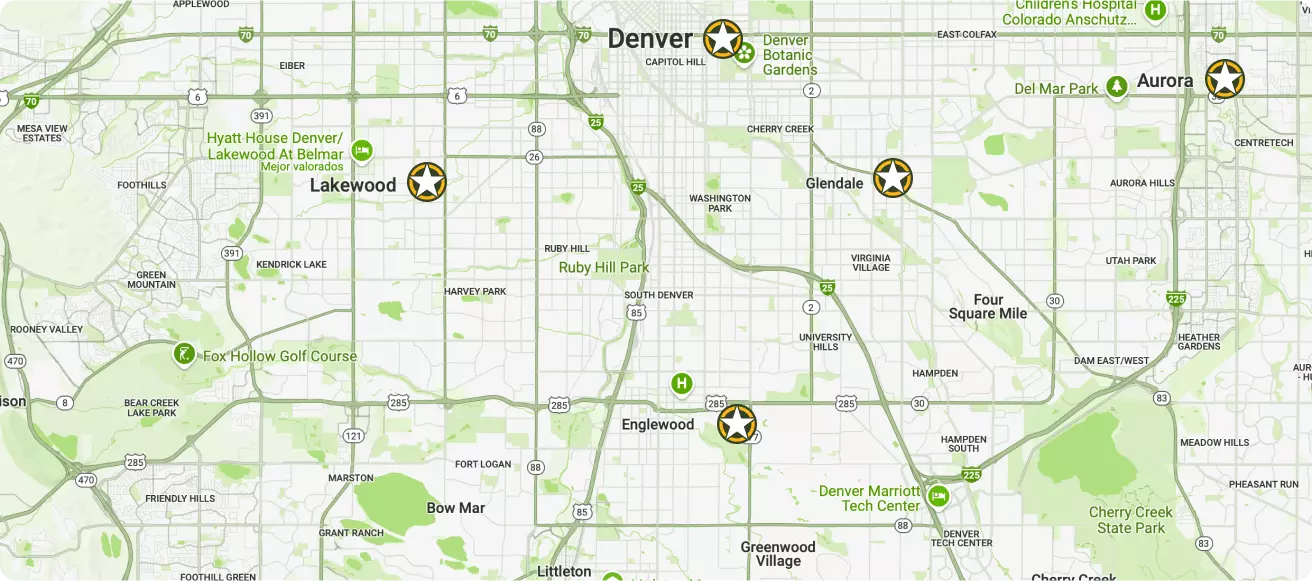
At Veteran Heating, Cooling, Plumbing & Electric, we believe in serving our Denver Metro community with the same integrity and dedication to service that guided us during our military careers. Led by a U.S. Army veteran with over 30 years of industry experience, we are proud to offer honest, dependable home services throughout Denver, Arvada, Aurora, Broomfield, Castle Rock, Centennial, Columbine, Golden, Highlands Ranch, Lakewood, and Littleton.
We stand behind our work with an industry-leading lifetime warranty on all parts and labor, upfront pricing, and a complete satisfaction guarantee with a money-back policy. We also offer a 10% discount for veterans, seniors, and first responders, alongside our convenient $9.99/month maintenance plan to keep your home's systems running perfectly year-round.
If your air conditioner is giving you trouble and tripping your breaker, do not take unnecessary risks with your home's electrical safety. Contact us today to schedule your professional AC Repair and let our background-checked, EPA-certified technicians restore safety and comfort to your home.
ABOUT Veteran Heating, Cooling, Plumbing & Electric
Veteran Heating, Cooling, Plumbing & Electric was founded on the belief that service should be personal, honest, and community-focused. Our team is built around integrity, professionalism, and a true commitment to your home’s comfort and safety.
Led by a U.S. Army veteran with over 30 years of industry experience, we’re proud to remain locally owned and operated. Every technician, plumber, and electrician is EPA-certified, background checked, and driven to exceed expectations.
- 24/7 ServiceWe offer weekend & 24/7 emergency service. We’re here whenever you need us—day, night, or weekend, no exceptions.
- $0 Trip FeesNo dispatch or trip fees. You’ll never pay just for us to show up—service starts when the work does.
OUR SERVICES
AIR CONDITIONING
.jpg)
We offer specialty and seasonal services like indoor air quality upgrades, pre-winter furnace checks, and summer AC tune-ups to keep your home prepared year-round.
Our Primary Air Conditioning Services Include:
Don't see the service you need? Call our Team today!
PLUMBING
From leaks to full system installs, our plumbing services cover everything you need for a safe, reliable home water system, 24/7.
Our Primary Plumbing Include:
- Water Heater Replacement
- Water Heater Repair
- Trenchless Sewer Line
- Water Filtration
- Slab Leak
- Sewer Line Repair
Don't see the service you need? Call our Team today!
ELECTRICAL

Our electrical services ensure your home stays safe and powered, from routine fixes to complete system upgrades.
Our Primary Electrical Services Include:
- House Rewiring
- Electrician
- Electric Panel Upgrade
- Electric Panel Replacement
- EV Chargers
- Whole House Generator
Don't see the service you need? Call our Team today!
HEATING
.jpg)
We install, repair, and maintain heating & furnace systems with expert care to keep your Colorado home comfortable and energy-efficient year-round.
Our Primary Heating Services Include:
- Heating Installation
- Heating Replacement
- Heating Maintenance
- Heating Repair
- Heating Service
- Heating Tune-Up
Don't see the service you need? Call our Team today!