How Long Does an AC Unit Last on the Front Range? (Quick Answer)
How long does an AC unit last on the Front Range is one of the most common questions Colorado homeowners ask — and the answer is a bit different than what you'll find in national guides.
Here's a quick summary before we dive deeper:
• Minimal maintenance — Expected AC Lifespan: 8–10 years
• Average maintenance — Expected AC Lifespan: 10–14 years
• Regular professional tune-ups — Expected AC Lifespan: 13–18 years
• Excellent care and ideal conditions — Expected AC Lifespan: Up to 20 years
Denver sits at 5,280 feet above sea level. That altitude forces your AC to work roughly 15% harder than it would at sea level. Add in intense UV exposure, dramatic day-to-night temperature swings, dry air, and the occasional wildfire smoke season — and it's clear why Front Range AC units tend to wear out faster than the national average of 15–20 years suggests.
Most homeowners in the Denver Metro area can realistically expect 13 to 18 years from a well-maintained central air conditioning system. Units that are neglected or improperly sized often fail well before the 10-year mark.
I'm Mike Townsend, a U.S. Army veteran and founder of Veteran Heating, Cooling, Plumbing & Electric — my background managing precision cooling systems in the military gave me a understanding of how environment and maintenance directly impact how long an AC unit lasts on the Front Range. In the sections below, we'll walk through everything you need to know to protect your investment and keep your home cool through every Colorado summer.
How Long Does an AC Unit Last on the Front Range?
When you buy a new home comfort system, you are making a significant long-term investment. Naturally, you want to know how many seasons of reliable cooling you will get for your money. While national manufacturers often print "15 to 20 years" on their brochures, local reality on the Front Range looks a bit different.
The typical lifespan of a central air conditioning system in communities like Lakewood, Littleton, and Centennial ranges from 13 to 18 years under normal operating conditions and with consistent professional upkeep. Without that upkeep, a system can easily experience catastrophic failure in as little as 8 to 10 years.
Our local environment plays a massive role in this compressed lifespan. To truly understand why a system in Aurora or Arvada might wear out faster than one in a humid coastal state, you have to look at how our unique regional weather patterns and high altitude interact with mechanical equipment. Our dry air, rapid seasonal shifts, and thin atmosphere create a high-stress environment. For a deeper dive into how these regional environmental traits impact all of your home’s systems, take a look at our comprehensive guide on How Colorado Climate Affects Your HVAC and Plumbing.
To illustrate the difference between national expectations and what we actually see on the ground here in Colorado, consider this comparison:
• Typical Lifespan — National Average: 15 to 20 Years — Front Range Colorado: 13 to 18 Years
• System Workload — National Average: Standard baseline operating stress — Front Range Colorado: 15% higher workload due to thin air
• UV & Ozone Exposure — National Average: Moderate to low — Front Range Colorado: Extremely high (accelerates outdoor component wear)
• Diurnal Temp Swings — National Average: Mild day-to-night variations — Front Range Colorado: High swings (up to 30–40°F differences in a single day)
• Air Quality Hazards — National Average: Regional humidity/pollen — Front Range Colorado: Dry dust, windstorms, and summer wildfire smoke
Why Colorado's High Altitude and Climate Accelerate AC Wear
It is no secret that living along the Front Range is beautiful, but the very things we love about our home—the sunshine, the mountains, and the crisp air—are incredibly tough on mechanical systems. When an air conditioner is installed in a high-altitude, semi-arid climate, it is subjected to immediate mechanical disadvantages.
How Long Does an AC Unit Last on the Front Range at High Altitude?
At 5,280 feet in Denver (and even higher as you move up into Castle Rock or Golden), the atmospheric pressure is significantly lower than at sea level. Because the air is thinner, it contains less mass per cubic foot.
Since air is the medium your air conditioner uses to transfer heat away from your home, thin air means the system has to work much harder to achieve the same cooling effect. To compensate for the lack of air density, your outdoor condenser fan and indoor blower motor must run longer and cycle more frequently. This "altitude penalty" means your system works about 15% harder than a sea-level equivalent, accelerating wear on the compressor—the heart of your AC unit.
Furthermore, the thin atmosphere allows more intense ultraviolet (UV) radiation to reach the ground. This intense UV exposure breaks down the wire insulation, plastic components, and seals on your outdoor condenser unit much faster than in other parts of the country.
As these components degrade, the risk of electrical shorts and refrigerant leaks increases. Evaporator coils inside your home also experience higher thermal stress as they struggle to transfer heat efficiently in dry air, which can lead to premature coil failures and expensive refrigerant recharges.
Temperature Swings and Diurnal Cycles in Denver Metro
The Front Range is famous for its dramatic diurnal temperature swings. It is not uncommon to experience a hot, sunny 90°F afternoon in Broomfield or Aurora, followed by a rapid drop into the 50s once the sun dips behind the Rockies.
While these cool evenings are incredibly pleasant, they present a unique challenge for your HVAC system. During the heat of the day, your compressor and fan motors expand as they heat up under heavy loads. When the temperature plummets at night, these metal and copper components contract quickly.
This rapid thermal expansion and contraction puts intense physical stress on the soldered joints within your copper refrigerant lines and electrical connections. Over time, this constant flexing can cause micro-fractures, leading to slow refrigerant leaks or sudden electrical component failures.
Additionally, because our daytime temperatures can spike quickly, systems that lack advanced variable-speed technology are forced to cycle on and off rapidly (short-cycling) to maintain comfort, which dramatically shortens the life of the compressor clutch and start capacitors.
Key Warning Signs Your Cooling System is Nearing Retirement
Air conditioners rarely fail completely without warning. Usually, they drop subtle clues that their mechanical components are reaching the end of their useful lives. Recognizing these signs early can save you from a stressful emergency breakdown in the middle of a July heatwave.
If your system is starting to blow lukewarm air, struggles to maintain your thermostat settings on hot days, or is making unusual rattling, squealing, or grinding noises, it is telling you that something is seriously wrong.
When these symptoms start appearing in a system that is pushing double digits in age, it is time to start planning for an upgrade. To explore modern, high-efficiency options that can handle Colorado's climate with ease, read more about our professional AC Replacement services.
Rising Energy Bills and Decreasing Efficiency
Have you noticed your summer utility bills climbing year over year, even though your local utility rates have remained relatively flat? This is a classic sign of system degradation.
As an air conditioner ages, its internal components wear down. Friction increases in the motor bearings, the compressor loses its compression efficiency, and the condenser coils become permanently impacted with microscopic dust and debris. As a result, the system must consume more electricity to deliver the same amount of cooling.
Modern cooling systems are rated by SEER2 (Seasonal Energy Efficiency Ratio 2). Older systems installed in the early 2010s or late 2000s often operate at 10 to 13 SEER.
As these systems age, their actual operating efficiency can drop by 30% to 40%. Upgrading to a modern 14 to 18 SEER2 system not only restores your home’s comfort but can also slash your summer cooling bills significantly, allowing the new system to gradually pay for itself.
Frequent Repairs and the $5,000 Rule
If you find yourself calling for AC Repair Near Me every summer, you are likely throwing good money after a failing system. To help homeowners make an objective, unemotional decision between repairing or replacing an aging unit, we recommend using the $5,000 Rule.
The math is simple: Multiply the age of your AC unit by the cost of the recommended repair. If the total exceeds $5,000, replacement is almost always the smarter, more economical long-term choice.
• Example A (Repair): You have an 8-year-old AC unit that needs a new start capacitor costing $350. $$text{Age (8)} times text{Repair Cost ($350)} = $2,800$$Since $2,800 is well below the $5,000 threshold, repairing the system is a highly reasonable choice.
• Example B (Replace): You have a 13-year-old AC unit with a failed compressor. The repair will run about $1,800. $$text{Age (13)} times text{Repair Cost ($1,800)} = $23,400$$Since $23,400 is vastly higher than the $5,000 threshold, investing in a new, warrantied system is much more logical than repairing a unit that is already near the end of its typical Front Range lifespan.
Another critical factor is the type of refrigerant your system uses. If your AC was installed before 2010, it likely runs on R-22 (Freon).
Because R-22 has been completely phased out by the EPA due to environmental regulations, sourcing this refrigerant for a leak repair is exceptionally difficult and costly. If an R-22 system develops a refrigerant leak, replacement is almost always the only sensible option.
Maximizing Longevity Through Proper Sizing, Installation, and Maintenance
While we cannot change Colorado’s high altitude or extreme climate, we can control how your system is selected, installed, and maintained. These three factors are the single greatest determinants of how long does an ac unit last on the front range.
The journey to a 15-to-20-year lifespan begins on day one. Proper installation quality is paramount.
When a system is put in, it must be sized accurately using a Manual J load calculation. This scientific calculation takes into account your home’s square footage, wall insulation, window orientations, and local climate data.
Many untrustworthy contractors simply guess the size or install an oversized unit, thinking "bigger is better." However, an oversized AC unit will cool your home too quickly and shut off, a process known as short-cycling. This constant starting and stopping places massive electrical and mechanical strain on the compressor, leading to early failure.
To ensure your system is sized and installed with military-grade precision, always work with a qualified AC Installation Contractor and check out our detailed AC Installation services.
The Critical Role of Professional AC Maintenance
If you want your car to last 200,000 miles, you don’t skip oil changes. The exact same logic applies to your home's cooling system. Consistent, proactive maintenance is the absolute key to keeping your air conditioner running efficiently and preventing costly, unexpected breakdowns.
At Veteran Heating, Cooling, Plumbing & Electric, we recommend a professional tune-up every spring before the summer heat sets in. For a complete breakdown of when and why to schedule these visits, check out our guide on How Often Should You Service Your HVAC System.
During a standard professional tune-up, an EPA-certified technician will wash your outdoor condenser coils, clear out built-up organic debris, check refrigerant levels, test all electrical capacitors, tighten wiring connections, and lubricate moving parts. This simple annual service keeps your system running at peak efficiency and catches minor issues before they cascade into catastrophic mechanical failures. Learn more about how a small investment in preventative care pays off in our article on How an AC Tune-Up Prevents Costly Breakdowns.
How Long Does an AC Unit Last on the Front Range with Regular Tune-Ups?
The difference in lifespan between a neglected system and a meticulously maintained system is staggering. A central air conditioner along the Front Range that receives no regular maintenance typically lasts only 8 to 10 years before a major component—usually the compressor or outdoor fan motor—fails permanently.
On the flip side, the exact same system subjected to annual professional tune-ups and regular filter changes can easily reach 15 to 20 years of reliable service. That represents nearly a decade of extra cooling performance, saving you thousands of dollars in premature replacement costs.
To make sure your system is getting the thorough care it deserves during its annual visit, review our AC Tune-Up Checklist: What Your Technician Should Check.
Frequently Asked Questions About Colorado AC Lifespan
We help homeowners throughout the Denver Metro area navigate their heating and cooling decisions every single day. Here are some of the most common questions we hear regarding AC longevity in our local climate.
Is it better to replace my AC and furnace at the same time in Colorado?
In almost every scenario, yes. Your furnace and air conditioner share the same indoor blower motor and ductwork system. When you replace both units together, you ensure that you are installing a perfectly matched system.
Matched systems are designed by the manufacturer to operate in harmony, maximizing energy efficiency and ensuring that your indoor comfort is balanced. Furthermore, replacing both systems simultaneously saves you a substantial amount of money on labor costs, and it ensures that your entire HVAC system is covered under a fresh, shared warranty.
How often should I change my air filters in Denver's dry climate?
Because the Front Range is semi-arid and prone to high winds, dust and airborne debris are much more prevalent here than in other regions. During a typical summer, we recommend checking your air filter every 30 days and replacing it at least every 60 to 90 days.
However, during active wildfire seasons or if you have indoor pets, your filters can clog much faster. A dirty, clogged filter restricts airflow, forcing your AC blower motor to work harder, run hotter, and consume more electricity, which dramatically shortens its lifespan.
How long does a water heater last in Colorado compared to an AC?
While a well-maintained AC unit on the Front Range can last 13 to 18 years, water heaters generally have a shorter operational lifespan due to our highly mineralized local water supply. A standard tank water heater in Colorado typically lasts between 8 and 12 years before sediment buildup and tank corrosion necessitate a replacement.
Tankless models can last up to 20 years with proper annual flushing. For a detailed breakdown of what to expect from your home's water heating system, take a look at our guide on How Long Does a Water Heater Last in Colorado.
Conclusion
Understanding how long does an ac unit last on the front range allows you to make smart, proactive decisions for your home's comfort and your family's budget. While our high altitude, intense UV rays, and rapid temperature swings place extra physical demands on your cooling system, proper sizing, professional installation, and routine maintenance can easily extend your system’s life up to 18 years or more.
At Veteran Heating, Cooling, Plumbing & Electric, we build our business on the core military values of integrity, honest communication, and dedicated service to our community. As a veteran-owned and operated team led by a U.S. Army veteran with over 30 years of industry experience, we stand behind our craftsmanship with an industry-leading lifetime warranty on all parts and labor, alongside a complete satisfaction money-back guarantee.
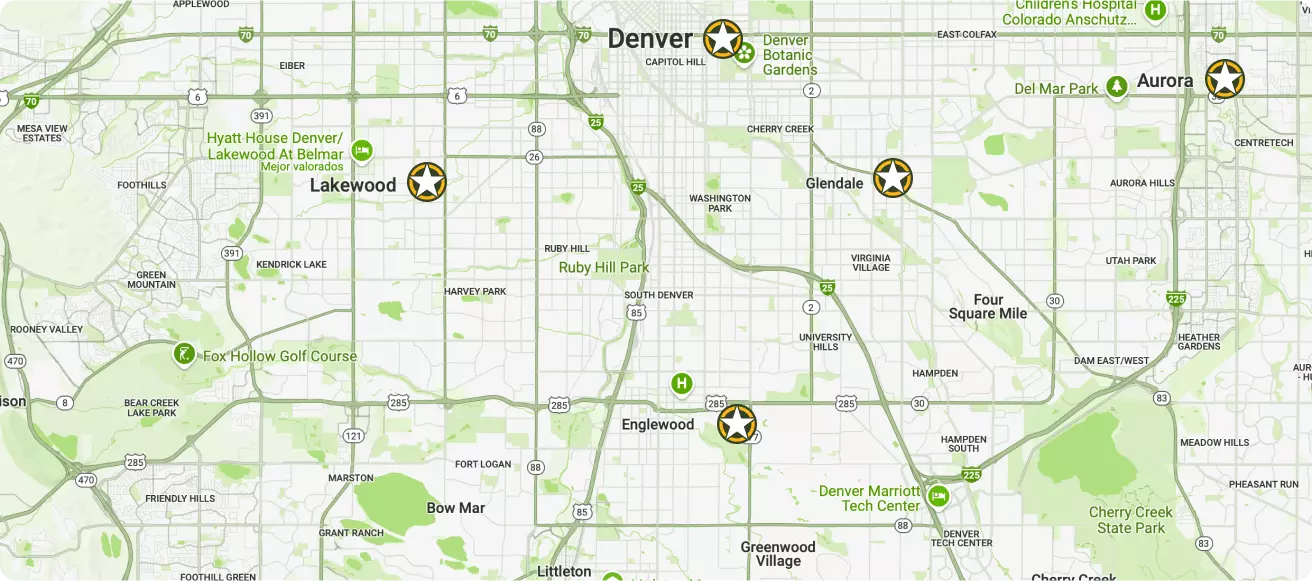
Whether you are looking to extend the life of your current system with a comprehensive tune-up or are ready to explore a high-efficiency replacement, we are here to help. We proudly serve homeowners across the entire Denver Metro area, including Arvada, Aurora, Broomfield, Castle Rock, Centennial, Columbine, Golden, Highlands Ranch, Lakewood, and Littleton. If you live in the Broomfield area, be sure to read our localized AC Installation Broomfield Guide for specific regional tips.
When you partner with us, you can always count on:
• Veteran-owned integrity and transparent, up-front pricing
• No dispatch or trip fees ever
• EPA-certified, background-checked technicians
• Our $9.99/month maintenance plan with priority scheduling and repair discounts
• A 10% discount for veterans, seniors, and first responders
• 24/7 weekend and emergency service availability
Don't wait for your system to fail on the hottest day of the summer. Schedule your professional AC service today and experience the peace of mind that comes with military-grade home comfort!
ABOUT Veteran Heating, Cooling, Plumbing & Electric
Veteran Heating, Cooling, Plumbing & Electric was founded on the belief that service should be personal, honest, and community-focused. Our team is built around integrity, professionalism, and a true commitment to your home’s comfort and safety.
Led by a U.S. Army veteran with over 30 years of industry experience, we’re proud to remain locally owned and operated. Every technician, plumber, and electrician is EPA-certified, background checked, and driven to exceed expectations.
- 24/7 ServiceWe offer weekend & 24/7 emergency service. We’re here whenever you need us—day, night, or weekend, no exceptions.
- $0 Trip FeesNo dispatch or trip fees. You’ll never pay just for us to show up—service starts when the work does.
OUR SERVICES
AIR CONDITIONING
.jpg)
We offer specialty and seasonal services like indoor air quality upgrades, pre-winter furnace checks, and summer AC tune-ups to keep your home prepared year-round.
Our Primary Air Conditioning Services Include:
Don't see the service you need? Call our Team today!
PLUMBING
From leaks to full system installs, our plumbing services cover everything you need for a safe, reliable home water system, 24/7.
Our Primary Plumbing Include:
- Water Heater Replacement
- Water Heater Repair
- Trenchless Sewer Line
- Water Filtration
- Slab Leak
- Sewer Line Repair
Don't see the service you need? Call our Team today!
ELECTRICAL

Our electrical services ensure your home stays safe and powered, from routine fixes to complete system upgrades.
Our Primary Electrical Services Include:
- House Rewiring
- Electrician
- Electric Panel Upgrade
- Electric Panel Replacement
- EV Chargers
- Whole House Generator
Don't see the service you need? Call our Team today!
HEATING
.jpg)
We install, repair, and maintain heating & furnace systems with expert care to keep your Colorado home comfortable and energy-efficient year-round.
Our Primary Heating Services Include:
- Heating Installation
- Heating Replacement
- Heating Maintenance
- Heating Repair
- Heating Service
- Heating Tune-Up
Don't see the service you need? Call our Team today!