What the Refrigerant Transition Means for Your Next AC Purchase in Denver
How the refrigerant transition affects your next AC purchase is something every Denver Metro homeowner needs to understand before signing off on a new system in 2026. Here is a quick summary:
• New systems use different refrigerants. As of January 1, 2025, new residential AC equipment can no longer be manufactured using R-410A. New units must use A2L refrigerants like R-454B or R-32.
• Your existing system is not illegal. You can keep running and servicing your current R-410A system. No one is forcing an immediate replacement.
• Servicing older systems is getting more expensive. R-410A production has been cut significantly, driving up the price per pound and making routine repairs costlier than they used to be.
• New systems are more efficient. A2L systems offer roughly 10-15% better energy efficiency than comparable R-410A units.
• Retrofitting is not possible. You cannot simply swap refrigerants in an existing R-410A system. The new refrigerants require different equipment entirely.
• New systems include built-in safety features. A2L units come with mandatory leak detection sensors and mitigation boards that older systems do not have.
If your AC is aging, running up your energy bills, or starting to need frequent repairs, this transition is directly relevant to the decision you are facing right now.
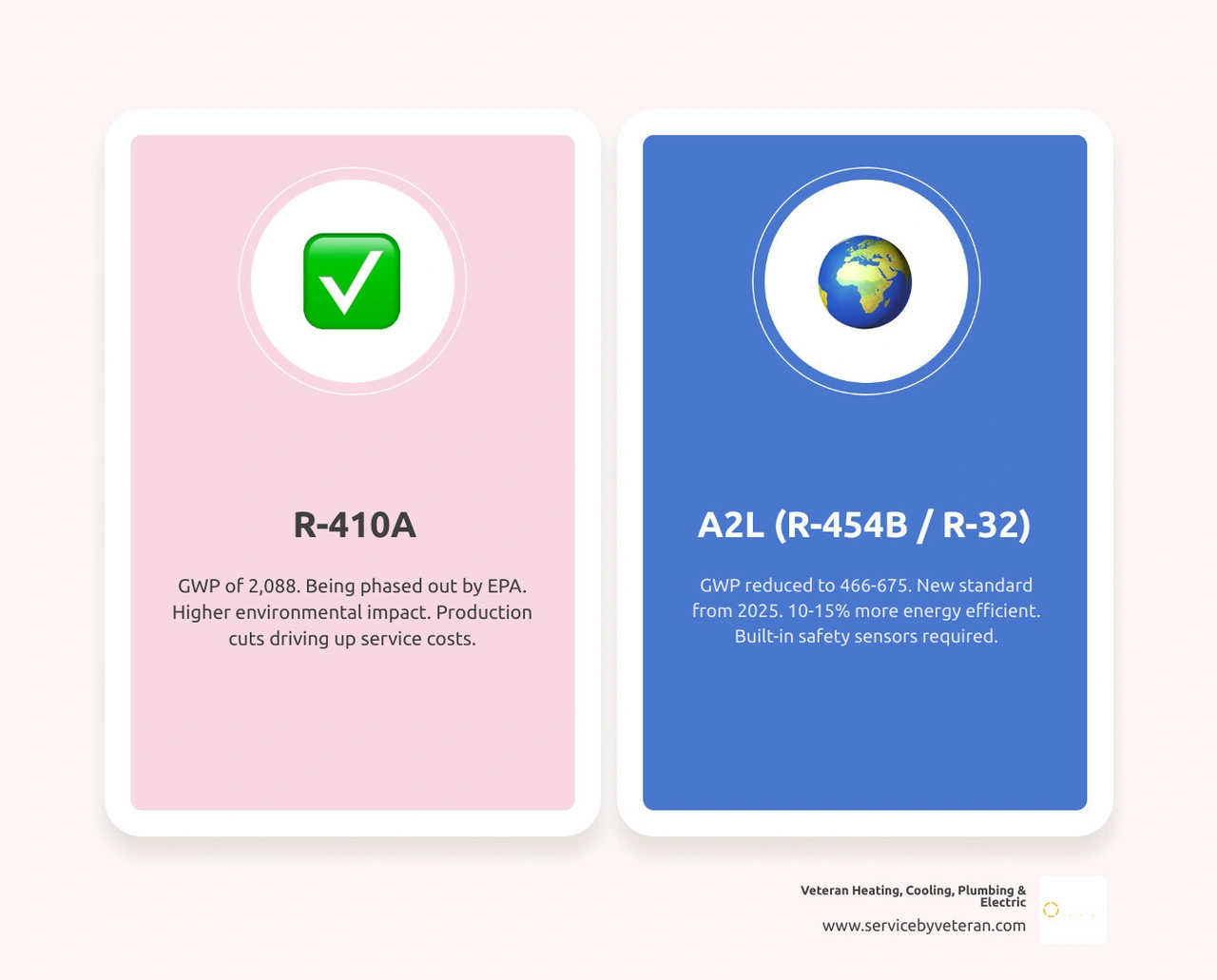
The refrigerant shift is not a minor industry tweak. It is a permanent, regulatory-driven change under the EPA’s American Innovation and Manufacturing (AIM) Act, designed to dramatically reduce the climate impact of HVAC refrigerants. R-410A carries a Global Warming Potential (GWP) of 2,088. The new A2L refrigerants replacing it — R-454B and R-32 — have GWPs of 466 and 675 respectively, representing a reduction of up to 78%. That is a meaningful environmental shift, and it is reshaping every AC purchase decision being made in the Denver Metro area right now.
I’m Mike Townsend, a U.S. Army veteran whose military service included managing precision cooling systems for heat-seeking missile heads — experience that gave me a deep, hands-on understanding of how refrigerant systems work under pressure. That technical foundation is part of why how the refrigerant transition affects your next AC purchase is something I take seriously, and why I want to make sure our Denver-area neighbors have clear, honest information before making one of the bigger home investments they will face this year.
Understanding the 2025-2026 HVAC Phase-Out of R-410A
To understand why this shift is happening, we have to look back at how the HVAC industry got here. For decades, the standard refrigerant in residential air conditioners was R-22 (often called Freon). It was phased out because it contributed to the depletion of the earth’s protective ozone layer. Its replacement, R-410A, solved the ozone problem but came with a high Global Warming Potential.
Because R-410A traps heat in the atmosphere at a rate over two thousand times greater than carbon dioxide, the EPA mandated a systematic phase-down under the AIM Act. This legislation requires a step-by-step reduction in the production and import of high-GWP hydrofluorocarbons (HFCs). By 2026, production of virgin R-410A has dropped to just 60% of its historical baseline, with further cuts of up to 85% mandated by 2036.
How does this play out locally? In Colorado, our climate presents unique demands on our cooling systems. From the dry, intense heat of the Front Range to rapid temperature swings, our home systems work hard. Understanding How Colorado Climate Affects Your HVAC and Plumbing helps clarify why having an efficient, reliable air conditioner is so critical. As R-410A supplies tighten, keeping an older, inefficient system running through hot Colorado summers will become increasingly impractical.
How the Refrigerant Transition Affects Your Next AC Purchase
If you are shopping for a new air conditioner, you will find that the equipment landscape has completely changed. Manufacturers have transitioned their production lines to accommodate A2L refrigerants, primarily R-454B and R-32.
When you hire an AC Installation Contractor to replace your unit, they will install a system specifically engineered for these new compounds. These systems utilize advanced compressors, updated safety controls, and redesigned indoor and outdoor coils. Because the grace period for installing older R-410A inventory has concluded, any standard new installation will feature this next-generation technology.
How the Refrigerant Transition Affects Your Next AC Purchase Regarding Energy Efficiency
One of the biggest advantages of the transition is the boost in operational efficiency. A2L systems are engineered to operate 10% to 15% more efficiently than their R-410A predecessors. Specifically, systems utilizing R-32 have demonstrated up to a 12% improvement in cooling efficiency under standard operating conditions.
This efficiency increase coincides with the Department of Energy’s SEER2 standards. SEER2 utilizes updated testing procedures that better replicate the actual static pressure found in a home’s ductwork. Because new A2L equipment is designed to meet these rigid standards, homeowners can expect lower electricity consumption and more consistent indoor comfort.
If you are weighing your options between a traditional central system and zoned comfort, reviewing a Central AC vs Ductless Mini Split Comparison can help you decide which highly efficient A2L system fits your home layout.
• R-410A — Global Warming Potential (GWP): 2,088 — Relative Efficiency Gain: Baseline — Safety/Flammability Class: A1 (Non-Flammable)
• R-32 — Global Warming Potential (GWP): 675 — Relative Efficiency Gain: Up to 12% higher — Safety/Flammability Class: A2L (Mildly Flammable)
• R-454B — Global Warming Potential (GWP): 466 — Relative Efficiency Gain: 8% to 10% higher — Safety/Flammability Class: A2L (Mildly Flammable)
How the Refrigerant Transition Affects Your Next AC Purchase and Installation Safety
The term “mildly flammable” (A2L) can sound alarming at first. However, the safety profile of these refrigerants has been thoroughly tested and proven. Under the ASHRAE Standard 34 safety classification, A2L refrigerants are incredibly difficult to ignite. They require a high-energy ignition source (like an open flame) and a very specific concentration in the air to burn. Even if ignition occurs, their flame speed is exceptionally slow—often described as a lazy, self-extinguishing smolder rather than a rapid burn.
To put this in perspective, common household items like hairspray, rubbing alcohol, and natural gas are significantly more flammable than A2L refrigerants.
Because of these safety classifications, installation protocols have been upgraded. Technicians must use specialized, spark-resistant tools, including vacuum pumps and recovery machines rated for A2L use. If you are planning an upgrade in the south metro area, working with professionals who understand these strict safety guidelines for AC Replacement Highlands Ranch CO ensures your system is installed to meet both manufacturer specifications and local building codes.
Safety and Technology Upgrades in Modern A2L Systems
The shift to A2L technology has driven impressive innovations in HVAC engineering. These are not the simple mechanical systems of the past; modern air conditioners are highly sophisticated machines designed with built-in safety monitoring.
Mandatory Leak Detection Systems and Mitigation Boards
Every new A2L central air conditioning system includes mandatory safety features to prevent refrigerant accumulation in the event of a leak. This setup includes:
1. Refrigerant Detection Sensors (RDS): Mounted directly on the indoor evaporator coil, these sensors constantly monitor for the presence of refrigerant.
2. Mitigation Boards: If the sensor detects a leak reaching 25% of the refrigerant’s lower flammability limit, it communicates instantly with the system’s control board.
3. Automatic System Response: The mitigation board instantly shuts down the outdoor compressor to stop the flow of refrigerant and engages the indoor blower fan at 100% capacity. Running the fan dilutes the leaking refrigerant with household air, keeping concentrations safely below any threshold where ignition could occur.
This advanced safety loop is standard on all new ducted systems. Homeowners planning a system upgrade can read our AC Replacement Aurora CO Complete Guide to see how these safety standards integrate into modern home comfort designs.
Why Retrofitting an Older R-410A System is Impossible
A common question we hear is whether a homeowner can simply “drop in” R-32 or R-454B into their existing R-410A air conditioner. The short answer is no.
A2L refrigerants operate at different pressures and require entirely different synthetic compressor oils than older units. Mixing refrigerants or putting A2L gas into an R-410A system will ruin the compressor, void the manufacturer’s warranty, and create a serious safety hazard since older systems lack the mandatory leak detection sensors and mitigation boards.
To transition to the new, eco-friendly refrigerant, you must replace both the outdoor condenser and the indoor evaporator coil. For a detailed look at what a full system replacement involves, check out our AC Replacement Bow Mar CO Complete Guide.
Repair vs. Replace: Navigating Your Cooling Decisions in Colorado
If you have an aging R-410A system, you are likely wondering whether you should patch it up one more time or invest in a new A2L system.
Evaluating the Age and Performance of Your Current Unit
The average lifespan of a residential air conditioner in Colorado is typically between 12 and 15 years. If your system is approaching or has passed this window, major repairs may no longer be a wise investment.
If your system is still relatively young and only needs minor electrical repairs or cleaning, keeping it running makes perfect sense. Following an AC Tune Up Guide for Colorado Homeowners is the best way to maintain efficiency and catch minor issues before they turn into costly breakdowns. However, if your system is over a decade old and experiences frequent breakdowns, replacing it with a modern A2L unit will provide peace of mind and lower utility bills.
The Rising Expense of Servicing Older R-410A Systems
Because the EPA has cut R-410A production by 40% in 2026, wholesale prices for this older refrigerant have doubled. This means that a standard leak repair and refrigerant recharge that used to be a routine service is now a major financial decision.
Topping off a leaking system year after year is like putting air into a tire with a nail in it—it is a temporary, expensive fix. If your older system has a significant refrigerant leak, the cost of the repair and the scarce R-410A refrigerant can quickly approach the value of the system itself. If you are facing a cooling emergency and need an honest assessment, searching for reliable AC Repair Near Me will connect you with our team to help you weigh the repair costs against a long-term replacement.
Frequently Asked Questions About the Refrigerant Transition
Do I need to replace my existing R-410A system immediately?
No. There is no law requiring you to replace a working R-410A system. You can continue to operate and service your current air conditioner for the rest of its natural lifespan. Reclaimed and recycled R-410A will remain available for repairs for years to come, though the cost of the refrigerant will continue to rise as supplies dwindle.
Can I use new A2L refrigerants in my old R-410A air conditioner?
No. R-32 and R-454B are chemically incompatible with older R-410A equipment. They use different oils, operate under different pressures, and require advanced electronic safety controls that older systems do not have. Trying to use these new refrigerants in an old system will destroy the unit and create safety risks.
What should I ask an HVAC contractor before buying a new system in 2026?
When getting bids for a new air conditioner, ask the contractor the following questions:
• Are your technicians EPA-certified and specifically trained in handling A2L refrigerants?
• Do you use spark-resistant vacuum pumps and recovery equipment during installation?
• Does the quoted system include a built-in Leak Detection System (LDS) and mitigation board?
• Will you perform a dry-nitrogen pressure test and evacuate the lines to 250 microns to ensure there are no leaks before charging the system?
Conclusion
How the refrigerant transition affects your next AC purchase comes down to choosing the right partner to guide you through these new technological and safety standards. While the transition brings changes to the equipment and installation process, the long-term benefits of improved energy efficiency and reduced environmental impact make it a positive step forward for Denver Metro homeowners.
At Veteran Heating, Cooling, Plumbing & Electric, we bring military-grade precision and honest, community-focused service to every job. As a veteran-owned and operated team led by a U.S. Army veteran with over 30 years of experience, we stand behind our craftsmanship with a lifetime warranty on parts and labor and a complete satisfaction guarantee. Whether you live in Lakewood, Centennial, Littleton, or anywhere else in the Denver area, we are here to provide clear, upfront guidance without any pressure.
Ready to explore your options for a modern, high-efficiency cooling system? Schedule professional AC service today with our background-checked, EPA-certified technicians.
ABOUT Veteran Heating, Cooling, Plumbing & Electric
Veteran Heating, Cooling, Plumbing & Electric was founded on the belief that service should be personal, honest, and community-focused. Our team is built around integrity, professionalism, and a true commitment to your home’s comfort and safety.
Led by a U.S. Army veteran with over 30 years of industry experience, we’re proud to remain locally owned and operated. Every technician, plumber, and electrician is EPA-certified, background checked, and driven to exceed expectations.
- 24/7 ServiceWe offer weekend & 24/7 emergency service. We’re here whenever you need us—day, night, or weekend, no exceptions.
- $0 Trip FeesNo dispatch or trip fees. You’ll never pay just for us to show up—service starts when the work does.
OUR SERVICES
AIR CONDITIONING
.jpg)
We offer specialty and seasonal services like indoor air quality upgrades, pre-winter furnace checks, and summer AC tune-ups to keep your home prepared year-round.
Our Primary Air Conditioning Services Include:
Don't see the service you need? Call our Team today!
PLUMBING
From leaks to full system installs, our plumbing services cover everything you need for a safe, reliable home water system, 24/7.
Our Primary Plumbing Include:
- Water Heater Replacement
- Water Heater Repair
- Trenchless Sewer Line
- Water Filtration
- Slab Leak
- Sewer Line Repair
Don't see the service you need? Call our Team today!
ELECTRICAL

Our electrical services ensure your home stays safe and powered, from routine fixes to complete system upgrades.
Our Primary Electrical Services Include:
- House Rewiring
- Electrician
- Electric Panel Upgrade
- Electric Panel Replacement
- EV Chargers
- Whole House Generator
Don't see the service you need? Call our Team today!
HEATING
.jpg)
We install, repair, and maintain heating & furnace systems with expert care to keep your Colorado home comfortable and energy-efficient year-round.
Our Primary Heating Services Include:
- Heating Installation
- Heating Replacement
- Heating Maintenance
- Heating Repair
- Heating Service
- Heating Tune-Up
Don't see the service you need? Call our Team today!