Are Two-Stage and Variable-Speed Systems Worth the Extra Cost?
Deciding are two stage and variable speed systems worth the extra cost is one of the most common questions homeowners face when replacing an aging AC. The short answer: for most homes in the Denver Metro area, yes — but the right choice depends on your climate, home size, ductwork condition, and how long you plan to stay in the house.
Here is a quick breakdown to help you decide at a glance:
• Single-stage — Best For: Tight budgets, mild climates — Key Benefit: Low upfront cost — Worth the Upgrade?: Baseline only
• Two-stage — Best For: Most homes, moderate climates — Key Benefit: Better comfort, lower bills than single-stage — Worth the Upgrade?: Yes, over single-stage
• Variable-speed — Best For: Hot/humid climates, long-term owners — Key Benefit: Maximum efficiency and humidity control — Worth the Upgrade?: Yes, especially in Colorado summers
Key takeaways:
• Two-stage systems run at roughly 65% capacity most of the time, reducing energy use and improving comfort over single-stage units
• Variable-speed systems modulate from as low as 25% up to 100% capacity, holding indoor temperatures within 0.5 to 1 degree of your setpoint
• Variable-speed systems can cut cooling costs by 30 to 45% compared to older single-stage equipment
• Payback periods typically range from 3 to 6 years in warmer, high-use climates — and can stretch longer in milder zones
• Proper sizing and ductwork quality matter just as much as the system type you choose
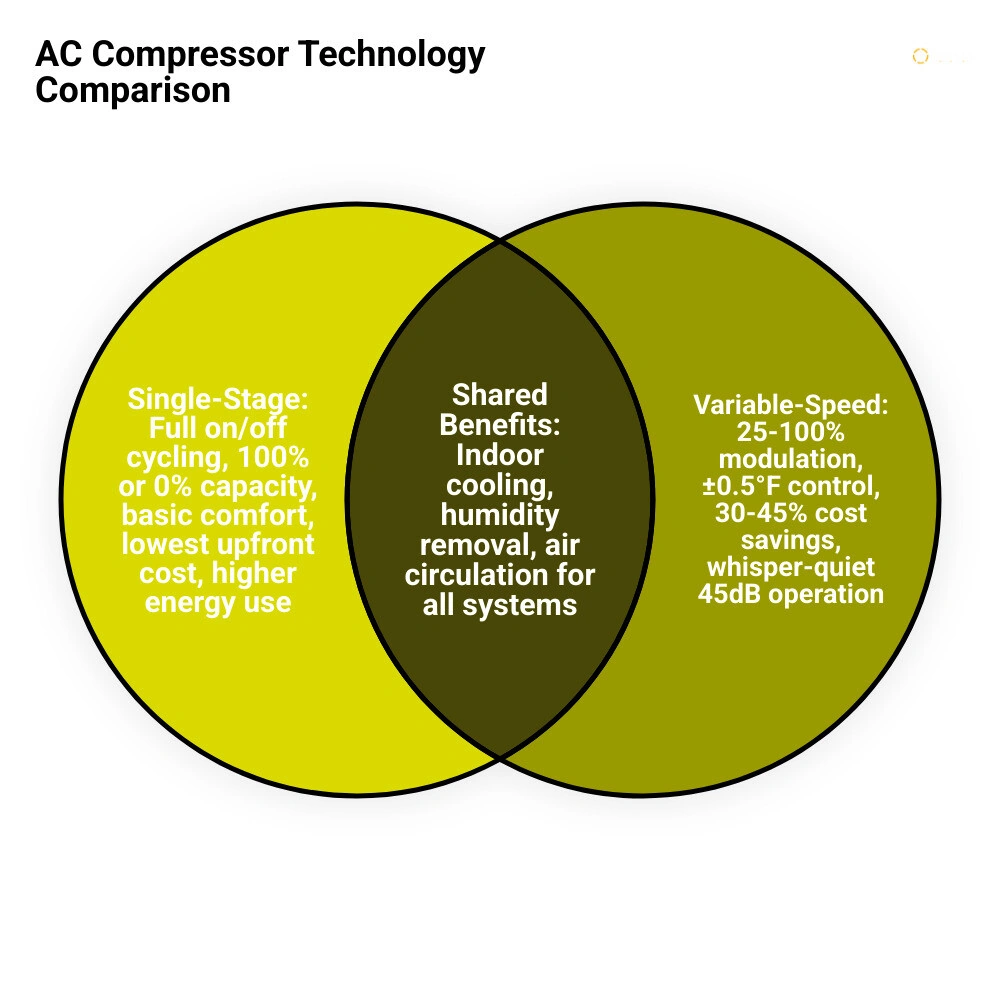
Think of it this way: a single-stage system is a light switch — fully on or fully off. A two-stage system gives you two settings. A variable-speed system works like a dimmer, constantly adjusting to deliver exactly what your home needs, no more and no less.
If you have ever walked into a room that felt stuffy and heavy even though the thermostat read 72°F, you have already experienced what single-stage systems do poorly — humidity control. That discomfort is exactly what upgraded technology is designed to fix.
I'm Mike Townsend, a U.S. Army veteran and the founder of Veteran Heating, Cooling, Plumbing & Electric, and my background managing precision cooling systems in the military gives me a unique perspective on why the question of are two stage and variable speed systems worth the extra cost deserves a straight, no-fluff answer. In this guide, I'll walk you through everything you need to make a confident decision for your Denver Metro home.
Understanding the Technology: Single-Stage vs. Two-Stage vs. Variable-Speed
To truly evaluate if these upgrades make sense, we must look at how the compressor—the heart of your air conditioning system—operates.
Single-Stage Systems
A single-stage AC is built on simple, older technology. The compressor operates at exactly one speed: 100% capacity. When your home warms up, the system kicks on at full blast, runs until the target temperature is reached, and then shuts down completely. This frequent on-and-off cycle is known as "short-cycling." It creates noticeable temperature swings and places a heavy physical strain on the electrical components during every start-up.
Two-Stage Systems
A two-stage system introduces a high and a low setting. The compressor typically operates at a low stage (around 60% to 70% of its full capacity) for roughly 80% of the cooling season. When outdoor temperatures spike during peak summer afternoons in Colorado, the system seamlessly ramps up to 100% capacity. Because it runs for longer, gentler cycles at lower speeds, it consumes less energy and mixes the air inside your home much more thoroughly.
Variable-Speed Systems
Variable-speed systems utilize advanced inverter-driven technology. Instead of choosing between one or two fixed speeds, a variable-speed compressor can modulate its output continuously in tiny increments (often 1% adjustments) from 25% up to 100% capacity. It operates like a smart cruise control, adjusting its output to match your home's real-time cooling load. If you are comparing your options, exploring our Central AC vs Ductless Mini Split Comparison can shed more light on how these inverter compressors are utilized in different configurations.
When you are ready to transition away from standard, inefficient setups, reviewing our comprehensive AC Replacement Guide will help you understand the full scope of a modern installation.
Are Two-Stage and Variable Speed Systems Worth the Extra Cost for Comfort and Efficiency?
When determining if these systems are worth the upfront investment, you have to look beyond the initial purchase price and evaluate the total cost of ownership. While single-stage systems have the lowest upfront cost, they cost significantly more to operate month-over-month.
Upgraded systems balance their higher upfront premium with vastly superior SEER2 (Seasonal Energy Efficiency Ratio) ratings. While standard single-stage systems typically range from 13 to 15 SEER2, two-stage systems regularly land between 15 and 17 SEER2, and variable-speed systems can achieve ratings from 18 to over 22 SEER2.
• Capacity Settings — Single-Stage AC: 1 (100% only) — Two-Stage AC: 2 (~65% and 100%) — Variable-Speed AC: Continuous modulation (25%–100%)
• SEER2 Range — Single-Stage AC: 13 – 15 — Two-Stage AC: 15 – 17 — Variable-Speed AC: 18 – 22+
• Temperature Variance — Single-Stage AC: 3°F to 5°F — Two-Stage AC: 1°F to 2°F — Variable-Speed AC: 0.5°F to 1°F
• Dehumidification — Single-Stage AC: Baseline — Two-Stage AC: Enhanced — Variable-Speed AC: Maximum (up to 400% more)
• Relative Noise Level — Single-Stage AC: Loudest (72–78 dB) — Two-Stage AC: Quiet (55–65 dB) — Variable-Speed AC: Whisper-quiet (45–55 dB)
• Estimated Lifespan — Single-Stage AC: 12 – 15 years — Two-Stage AC: 15 – 18 years — Variable-Speed AC: 18 – 22 years
Evaluating Energy Savings: Are Two-Stage and Variable Speed Systems Worth the Extra Cost?
Energy efficiency translates directly to lower utility bills. According to Department of Energy (DOE) data, variable-speed systems can cut energy use by up to 30% compared to standard systems. When compared directly to older, inefficient single-stage systems, a variable-speed upgrade can reduce your monthly cooling costs by 30% to 45%.
For homeowners upgrading from an obsolete 8 SEER system to a high-efficiency 22 SEER variable-speed model, the annual energy savings can reach up to 65%.
The payback period—the time it takes for your monthly utility savings to completely offset the initial premium cost of the system—typically ranges from 3 to 6 years in warmer climates. In the Denver Metro area, where we experience hot summer days but cooler nights, the payback period is highly favorable, especially when you factor in local utility rebates (such as those from Xcel Energy) and federal tax credits like the 25C credit, which can significantly lower the net cost of the upgrade.
Comfort and Humidity Control: Are Two-Stage and Variable Speed Systems Worth the Extra Cost?
While energy savings are easy to calculate on paper, the comfort improvements are what you will actually feel every single day.
• Temperature Consistency: Single-stage systems suffer from temperature swings of 3 to 5 degrees as they cycle on and off. Variable-speed units maintain your indoor temperature within a razor-thin 0.5 to 1 degree of your thermostat setting.
• Superior Humidity Control: High humidity makes indoor air feel several degrees warmer than it actually is. Because variable-speed systems run longer, low-capacity cycles, they continuously pull air across the cold evaporator coil. This allows them to remove up to 400% more moisture than standard systems in challenging conditions, and 20% to 30% more moisture than two-stage systems.
• Precise Airflow: Variable-speed blower motors adjust airflow up to 400% more precisely than two-stage units. This constant, gentle circulation eliminates the dreaded "sweat-chill" cycle where you feel freezing cold when the AC is running, only to break a sweat minutes after it shuts off.
Key Factors: Climate, Ductwork, and Home Sizing in Colorado
Colorado’s climate presents unique challenges for home heating and cooling. At high altitudes, the thin air affects heat transfer, making proper equipment sizing and selection incredibly important. If you are considering a heat pump system to handle both heating and cooling, it is helpful to look at Heat Pump Efficiency at High Altitude as well as the broader Heat Pump Benefits for Colorado Homeowners to see how these technologies perform in our specific mountain-adjacent climate.
Before choosing an advanced system, your home's ductwork must be thoroughly evaluated:
1. Uninsulated Ductwork Risks: Variable-speed systems deliver colder air at a slower, steadier rate. If your home has old, uninsulated ductwork running through unconditioned spaces (like a hot attic or a damp crawlspace), this slow-moving cold air can cause the outer surface of the ducts to drop below the dew point. This leads to condensation, which can damage drywall or cause moisture issues. In these rare cases, a two-stage system or a duct insulation upgrade is highly recommended.
2. Airflow Losses: The EPA notes that typical home duct systems lose 25% to 40% of their heating or cooling energy through leaks. An advanced variable-speed system cannot deliver its promised efficiency if your ducts are restricted or leaking.
3. The Manual J Load Calculation: More than 60% of residential HVAC systems in the U.S. suffer from sizing errors. Sizing is always priority number one. An oversized variable-speed system will still short-cycle, defeating the entire purpose of its modulating technology.
Working with an experienced, professional AC Installation Contractor ensures that a complete Manual J load calculation is performed, matching the equipment perfectly to your home's unique layout. Additionally, if your home lacks ductwork or has severe structural limitations, reviewing the Ductless vs Ducted Cooling Pros and Cons can help you decide if a ductless mini-split is a better fit.
Lifespan, Maintenance, and Long-Term Reliability
Investing in a two-stage or variable-speed system also buys you equipment longevity. Because variable-speed systems avoid the constant, high-stress "hard starts" of single-stage units, they experience far less mechanical wear and tear. A variable-speed system typically lasts 18 to 22 years, compared to just 12 to 15 years for single-stage units.
Furthermore, noise levels are drastically reduced. While a single-stage outdoor condenser sounds like a loud engine kicking on (averaging 72 to 78 decibels), a variable-speed unit hums along quietly between 45 and 55 decibels—about the level of a quiet rainfall or a normal conversation.
However, advanced systems do require proper compatibility and care:
• System Integration: To achieve true variable-speed performance, the outdoor unit must communicate with your indoor furnace's blower motor. If your existing furnace is older, its blower motor may not be compatible with a variable-speed upgrade, meaning you may need to replace both systems together to unlock the full efficiency benefits.
• Thermostat Requirements: True variable-speed systems usually require proprietary communicating thermostats from the manufacturer to manage the precise modulation settings.
• Routine Maintenance: To protect your investment, keeping up with regular service is non-negotiable. Knowing How Often Should You Service Your HVAC System and staying familiar with a professional AC Tune Up Checklist will keep your high-efficiency system running smoothly for decades.
Frequently Asked Questions About HVAC Upgrades
Why does my variable-speed system run almost continuously?
Do not worry—this is exactly how the system is designed to work! Running "low and slow" at 30% capacity for a longer period consumes far less electricity than a single-stage system constantly cycling on and off at 100% capacity. This continuous operation also means your air is constantly passing through your filtration system, resulting in significantly cleaner indoor air.
Can I use my existing smart thermostat with a variable-speed AC?
While some "bridge" controls exist that allow standard smart thermostats to operate these systems, you generally need a proprietary, manufacturer-approved communicating thermostat to unlock the full range of 700+ modulation settings. Standard thermostats typically only understand simple on/off signals.
Does a two-stage system help eliminate hot and cold spots?
Yes, it helps significantly. Because a two-stage system runs longer cycles on its lower setting, it keeps air moving throughout your home. This continuous circulation mixes the air between different rooms and levels, preventing hot and cold spots from developing. For larger multi-story homes, pairing a two-stage or variable-speed system with zoning dampers is the ultimate comfort solution.
Conclusion
At Veteran Heating, Cooling, Plumbing & Electric, we believe in honest, straightforward advice. If you plan to live in your home for many years and want the absolute best in temperature consistency, whisper-quiet operation, and low monthly energy bills, upgrading to a variable-speed system is an investment that pays off in both comfort and long-term savings. If you want a fantastic middle ground that offers excellent efficiency and comfort without the premium cost of top-tier modulating technology, a two-stage system is an incredibly smart choice.
As a veteran-owned and operated local business serving Denver, Greenwood Village, Arvada, Aurora, Broomfield, Castle Rock, Centennial, Columbine, Golden, Highlands Ranch, Lakewood, and Littleton, we back our work with a lifetime warranty on parts and labor, a money-back satisfaction guarantee, and a 10% discount for veterans, seniors, and first responders.
Ready to make your home more comfortable? Contact us today to schedule your comprehensive home evaluation and learn more about our professional AC Installation services.
ABOUT Veteran Heating, Cooling, Plumbing & Electric
Veteran Heating, Cooling, Plumbing & Electric was founded on the belief that service should be personal, honest, and community-focused. Our team is built around integrity, professionalism, and a true commitment to your home’s comfort and safety.
Led by a U.S. Army veteran with over 30 years of industry experience, we’re proud to remain locally owned and operated. Every technician, plumber, and electrician is EPA-certified, background checked, and driven to exceed expectations.
- 24/7 ServiceWe offer weekend & 24/7 emergency service. We’re here whenever you need us—day, night, or weekend, no exceptions.
- $0 Trip FeesNo dispatch or trip fees. You’ll never pay just for us to show up—service starts when the work does.
OUR SERVICES
AIR CONDITIONING
.jpg)
We offer specialty and seasonal services like indoor air quality upgrades, pre-winter furnace checks, and summer AC tune-ups to keep your home prepared year-round.
Our Primary Air Conditioning Services Include:
Don't see the service you need? Call our Team today!
PLUMBING
From leaks to full system installs, our plumbing services cover everything you need for a safe, reliable home water system, 24/7.
Our Primary Plumbing Include:
- Water Heater Replacement
- Water Heater Repair
- Trenchless Sewer Line
- Water Filtration
- Slab Leak
- Sewer Line Repair
Don't see the service you need? Call our Team today!
ELECTRICAL

Our electrical services ensure your home stays safe and powered, from routine fixes to complete system upgrades.
Our Primary Electrical Services Include:
- House Rewiring
- Electrician
- Electric Panel Upgrade
- Electric Panel Replacement
- EV Chargers
- Whole House Generator
Don't see the service you need? Call our Team today!
HEATING
.jpg)
We install, repair, and maintain heating & furnace systems with expert care to keep your Colorado home comfortable and energy-efficient year-round.
Our Primary Heating Services Include:
- Heating Installation
- Heating Replacement
- Heating Maintenance
- Heating Repair
- Heating Service
- Heating Tune-Up
Don't see the service you need? Call our Team today!