Why Older Homes Are More Electrically Dangerous Than They Look
Understanding how older homes develop hidden electrical problems starts with one simple reality: the wiring inside most older homes was never designed for the way we live today.
Homes built before 1970 commonly contain outdated wiring systems — knob-and-tube, aluminum, or cloth-insulated wire — that have spent decades quietly degrading behind finished walls, inside attics, and through crawl spaces. At the same time, modern households place far greater electrical demands on these aging systems than they were ever built to handle. The result is a gap between what the system can safely deliver and what your appliances, devices, and daily routines actually require.
Here is a quick summary of how this happens:
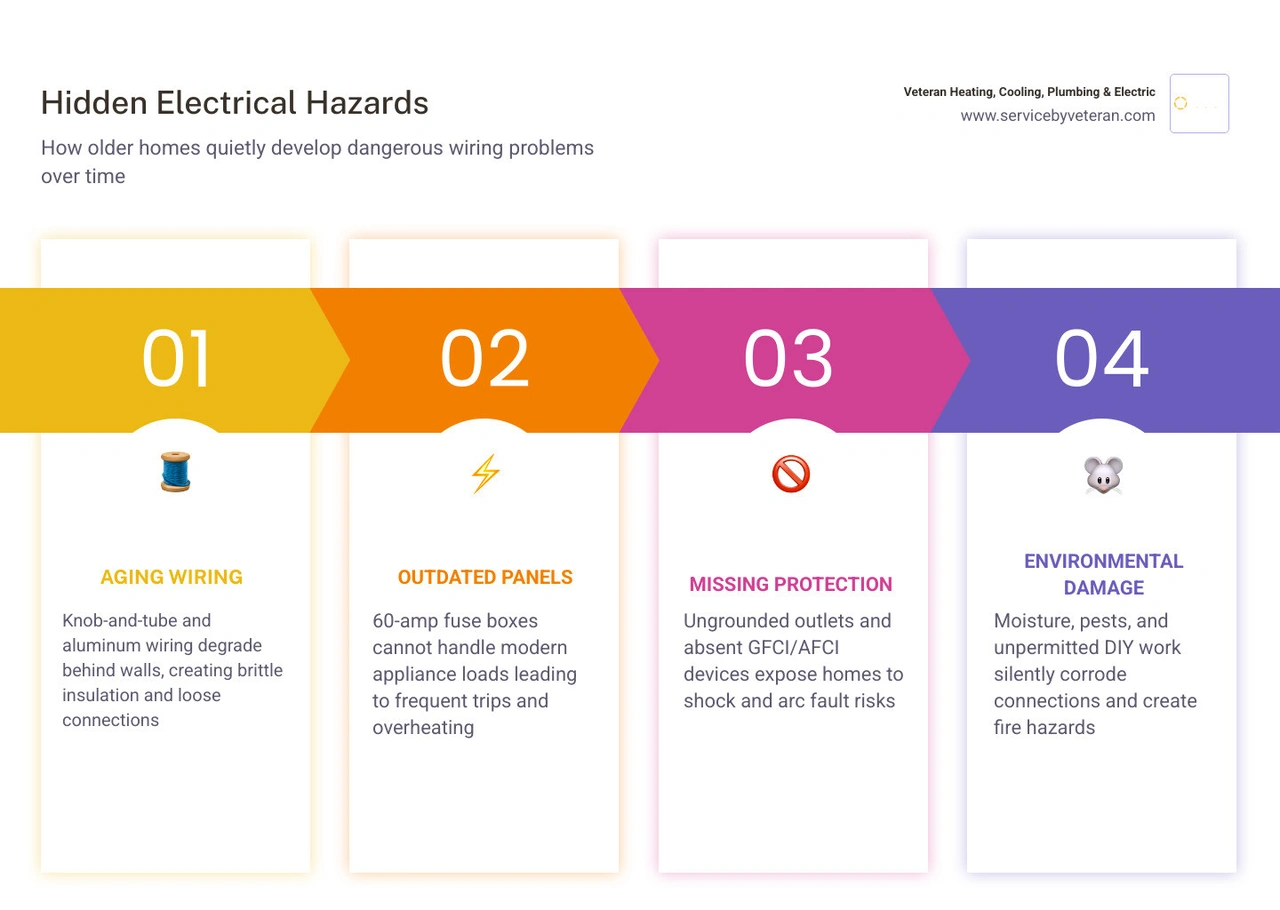
• Aged wiring insulation becomes brittle over decades, increasing the risk of shorts and electrical fires
• Outdated panels (60-amp fuse boxes vs. modern 200-amp breaker panels) cannot safely support today’s appliance loads
• Ungrounded outlets and missing GFCI/AFCI protection leave wet areas and living spaces exposed to shock and arc faults
• Unpermitted DIY modifications create improper splices, open junction boxes, and mixed wiring materials hidden behind walls
• Environmental factors like moisture, humidity, and pest damage silently deteriorate insulation and connections over time
• Gradual symptom patterns — flickering lights, warm outlets, frequent breaker trips — develop slowly enough that homeowners often overlook them until damage occurs
What makes this especially challenging is that most of these problems stay invisible. Your lights turn on. Your outlets work. Everything seems fine — right up until it isn’t.
I’m Mike Townsend, a U.S. Army veteran and the founder of Veteran Heating, Cooling, Plumbing & Electric, and I’ve seen how the hidden nature of aging electrical systems puts Denver Metro homeowners at serious risk without any obvious warning. My background in precision technical systems — from military service to decades in the home services industry — shapes exactly how our team approaches diagnosing how older homes develop hidden electrical problems before they become emergencies.
Key how older homes develop hidden electrical problems vocabulary:
• burning smell from outlets causes and solutions
• circuit breaker tripping frequently what to check
• signs your home needs electrical repair
Outdated Wiring Systems: The Foundation of Hidden Hazards
When we step into a classic mid-century ranch in Lakewood or a historic property in Littleton, we are often admiring the craftsmanship of a bygone era. However, the electrical engineering of that same era operates on entirely different safety and capacity assumptions. The most fundamental way how older homes develop hidden electrical problems is through the sheer presence of obsolete wiring materials.
Before modern plastic-sheathed copper wire (commonly known as Romex) became the industry standard, builders relied on several generations of wiring technologies that have not aged well:
• Knob-and-Tube Wiring (Common pre-1950): This system consists of single insulated copper conductors run through ceramic insulating tubes (the “tubes”) and supported by porcelain support blocks (the “knobs”). It is a two-wire system completely lacking a safety ground.
• Cloth-Insulated Wiring (Common 1950s–1960s): These systems utilized copper conductors insulated with rubber and wrapped in a woven cotton or cloth jacket. Over time, the rubber under-layer dries out and the cloth exterior unravels, leaving bare, hot wires exposed.
• Aluminum Branch Circuit Wiring (Common late 1960s–mid-1970s): Due to high copper prices, builders temporarily substituted aluminum for branch circuit wiring. Aluminum is highly susceptible to galvanic corrosion, oxidation, and extreme thermal expansion, making it a severe fire hazard at connection points.
To help you visualize the differences and associated risks, we have put together this comparison table:
• Knob-and-Tube — Typical Era: Pre-1950 — Conductor Material: Copper — Safety Ground Present?: No — Main Hazard Point: Brittle insulation, no ground, overheating when covered by modern insulation — Fire Risk Level: Extremely High
• Cloth-Insulated — Typical Era: 1950s–1960s — Conductor Material: Copper — Safety Ground Present?: No (or weak) — Main Hazard Point: Crumbling rubber/fabric sheathing, bare wire exposure — Fire Risk Level: High
• Aluminum Wiring — Typical Era: Late 1960s–1970s — Conductor Material: Aluminum — Safety Ground Present?: Yes (usually) — Main Hazard Point: Loose connections due to high thermal expansion, oxidation — Fire Risk Level: Extremely High
• Modern Romex — Typical Era: 1970s–Present — Conductor Material: Copper — Safety Ground Present?: Yes — Main Hazard Point: Improper physical damage or poor installation only — Fire Risk Level: Very Low
If you suspect your property still relies on these older materials, reviewing our Electrical Safety Checklist for Older Homes is an excellent first step toward identifying active vulnerabilities.
How Older Homes Develop Hidden Electrical Problems Through Aging Materials
The physical degradation of wiring is not a sudden event; it is a slow, chemical, and mechanical breakdown driven by decades of daily use. This process is heavily accelerated by a phenomenon known as thermal cycling.
Every time electricity flows through a wire, the metal experiences resistance, which generates heat. When you turn off the appliance, the wire cools down. Over fifty or sixty years, this constant expansion and contraction takes a massive toll:
1. Embrittlement of Rubber and Cloth: In older cloth-insulated systems, the rubber insulation beneath the woven fabric jacket is baked by decades of thermal cycles. It loses its plasticizers, dries out, and becomes as brittle as eggshells. Simply plugging in an appliance or vibrating a wall can cause this brittle insulation to flake off inside the outlet box, leaving bare wires to touch and arc.
2. The Aluminum Dilemma: Aluminum expands and contracts at a significantly higher rate than copper when heated by electrical current. When aluminum wire is terminated under standard brass or steel screws on older outlets, this thermal expansion causes the wire to slowly squeeze itself out from under the terminal screw. Once the connection loosens, electrical resistance increases dramatically, leading to glowing hot connections that can ignite surrounding wood and drywall without ever tripping a breaker.
3. Insulation Degradation via Environmental Exposure: Attics in the Denver Metro area can reach extreme temperatures in the summer and sub-zero temperatures in the winter. This extreme temperature swing accelerates the breakdown of early thermoplastic and rubber sheathing, leaving the wiring highly vulnerable to cracking.
Modern Power Demands vs. Legacy Electrical Capacity
Consider the sheer volume of electrical equipment we rely on today compared to the mid-20th century. In 1950, a home’s electrical system supported a few lightbulbs, a radio, a refrigerator, and perhaps a small television. Today, we expect our homes to effortlessly power high-draw HVAC systems, double ovens, electric vehicle (EV) chargers, hot tubs, computers, space heaters, and air fryers.
Many older homes in Arvada or Aurora were originally built with a 60-amp or 100-amp electrical service. Trying to run a modern household on a 60-amp panel is the electrical equivalent of trying to power a commercial fire hydrant through a garden hose. The system is forced to operate continuously at or near its maximum capacity, causing systemic overheating.
When a legacy system is pushed past its limits, you will notice distinct signs of capacity strain:
• Breakers that trip frequently when you run the microwave and a hair dryer simultaneously.
• Lights that dim or flicker momentarily when the refrigerator or central air conditioner kicks on.
• Outlets or switch plates that feel warm to the touch.
To understand why upgrading this foundational component is so critical to both safety and modern convenience, check out our guide on Electrical Panel Upgrade Benefits for Homeowners.
The Danger of Outdated Panels and Overloaded Circuits
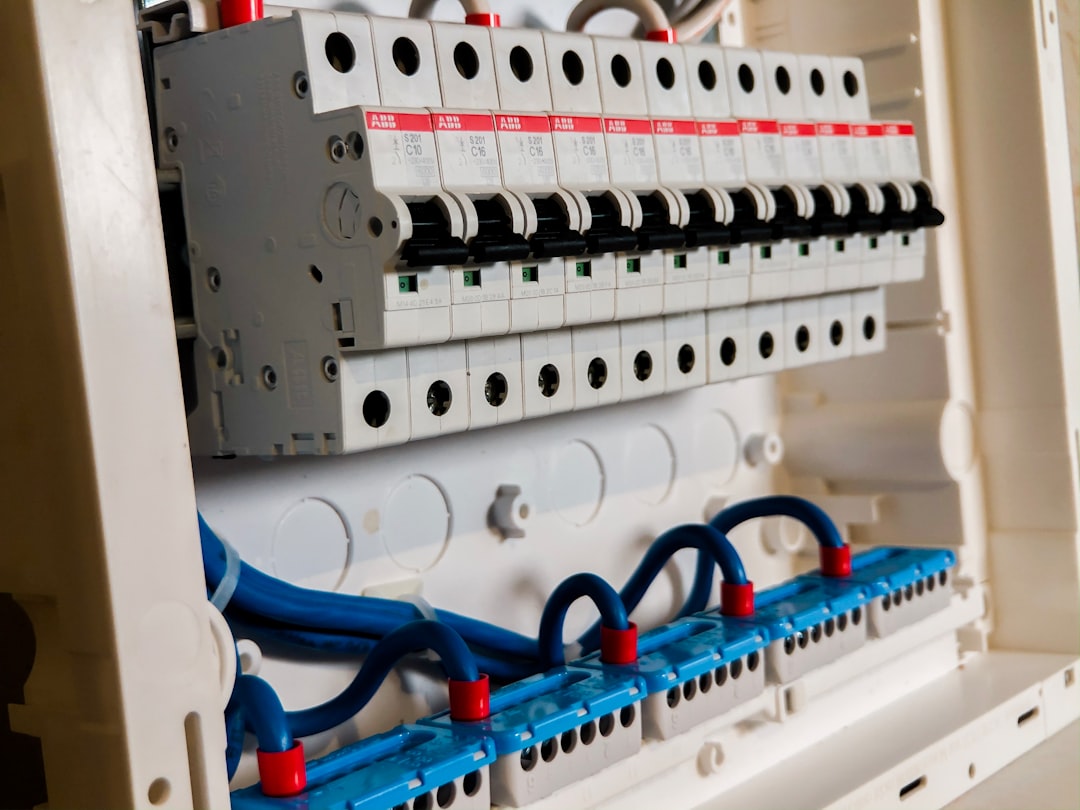
The heart of your home’s electrical safety is the service panel. Its primary job is to cut off power instantly if a circuit draws more current than the wire can safely handle. However, older homes often rely on outdated panel brands or old-fashioned fuse boxes that fail to provide this basic protection.
If your home still has a fuse box, it is likely running on ceramic screw-in fuses. While fuses are technically reliable when used correctly, they are highly susceptible to dangerous homeowner workarounds. For instance, if a 15-amp fuse keeps blowing because the circuit is overloaded, a homeowner might screw in a 30-amp fuse instead. This stops the fuse from blowing, but it allows 30 amps of current to rush through wires only rated for 15 amps, turning the wiring inside your walls into an active heating element.
Even worse are specific legacy circuit breaker panels that have been proven to fail under load:
• Federal Pacific Electric (FPE) Stab-Lok Panels: These panels were installed in millions of homes between the 1950s and 1980s. Their internal breakers have an extremely high rate of failing to trip when overloaded—sometimes up to 60% of the time. When a breaker refuses to trip, the current continues to flow, melting the wires and starting structural fires.
• Zinsco Panels: Popular in the 1970s, Zinsco panels feature design flaws where the breakers melt directly to the copper bus bar. Once melted, the breaker can never trip, turning an ordinary short circuit into a catastrophic fire hazard.
Replacing these ticking time bombs is not just a cosmetic upgrade; it is a vital safety measure. Learn more about the replacement process through our detailed resource on Electrical Panel Replacement.
How Older Homes Develop Hidden Electrical Problems Behind the Walls
The most frustrating aspect of how older homes develop hidden electrical problems is that the vast majority of the system is completely inaccessible. It is buried behind plaster, drywall, and structural framing. Over decades, these hidden spaces become the stage for a variety of mechanical and environmental hazards.
A major contributor to behind-the-wall hazards is the legacy of unpermitted DIY work. Over fifty or sixty years, a home passes through many hands. Well-meaning previous owners, looking to finish a basement in Broomfield or add a garage outlet in Golden, often perform their own electrical work without pulling permits or understanding code requirements.
Common DIY hazards hidden behind walls include:
• Improper Splices: Joining two wires together by twisting them and wrapping them in electrical tape, rather than using proper wire connectors inside an approved junction box.
• Open Junction Boxes: Splicing wires inside walls or attics without a protective box cover, allowing any potential sparks or arcing to directly contact building insulation or wood framing.
• Mixed Wire Generations: Splicing modern Romex directly onto old knob-and-tube or aluminum wiring using unapproved connectors, leading to rapid galvanic corrosion and high-resistance connections.
If you suspect your home’s previous owners took shortcuts, it is critical to recognize the Signs Your Home Needs Rewiring before a hidden defect causes structural damage.
Environmental Deterioration and Pest Damage
Even if your home’s original wiring was installed perfectly and never touched by a DIYer, nature has a way of breaking down man-made systems over time.
• Pest Infestations: Mice, rats, and squirrels love to nest in crawl spaces and attics. For reasons scientists still debate, these rodents are highly drawn to chewing on electrical insulation. In older homes with cloth-insulated or early plastic wiring, a single rodent can easily strip several feet of wire bare, leaving live conductors exposed to wood joists, paper-backed insulation, or other wires.
• Moisture and Corrosion: Colorado’s climate may be semi-arid, but crawl spaces and attics are still subject to moisture intrusion from roof leaks, gutter overflows, and high seasonal humidity. Moisture causes rapid oxidation of copper and aluminum connections. This oxidation creates a layer of high resistance, which generates localized heat whenever current flows through the connection.
• Attic Heat: Attics in the Denver Metro area can easily exceed 130°F during hot summer days. This intense heat, combined with the heat naturally generated by loaded wires, bakes the sheathing of attic run wiring, causing it to crack and crumble prematurely.
Safety Risks of Ungrounded Outlets and Missing Protection
If you look at the outlets in an older home, you will often find two-prong receptacles. These outlets lack the round, third opening found on modern three-prong outlets, indicating that the circuit does not have an electrical ground.
A grounding system is your home’s primary defense against electrical shocks. It provides a safe, low-resistance path for stray electrical current to return to the earth in the event of a wiring failure. If an internal wire in your metal-bodied toaster or washing machine comes loose and touches the metal casing, a grounded system will safely divert that current, trip the breaker, and cut the power.
In an ungrounded system, that metal casing remains energized. The moment you touch the appliance while standing on a damp floor or touching a grounded metal pipe, you become the ground path, resulting in a severe or fatal electrical shock.
Correcting these grounding issues requires specialized knowledge and proper code-compliant techniques. Discover how we handle these safety upgrades by visiting our Electrical Installation Service page.
How Older Homes Develop Hidden Electrical Problems Without GFCI and AFCI Devices
Modern electrical codes require two specific types of safety devices that were completely nonexistent when older homes were built:
1. Ground Fault Circuit Interrupters (GFCIs): These devices monitor the balance of current between the hot and neutral wires. If they detect an imbalance as small as 4 to 6 milliamperes—indicating that current is leaking (perhaps through water or a human body)—they cut the power in milliseconds. Older homes typically lack GFCI protection in highly vulnerable “wet” areas like kitchens, bathrooms, laundry rooms, garages, and outdoor spaces.
2. Arc Fault Circuit Interrupters (AFCIs): While standard breakers protect against overloads, AFCI breakers use advanced microprocessors to detect the specific electrical signature of “arcing”—which is essentially a continuous spark jumping between loose connections or damaged wires. Arcing is the primary cause of electrical forest fires inside walls, yet older panels do not have the capability to detect or stop it.
Retrofitting an older home with GFCI and AFCI protection is one of the most cost-effective and immediate ways to dramatically reduce your risk of electrical shocks and house fires.
Professional Diagnostics and When to Upgrade
Because the vast majority of your electrical system is hidden, standard visual inspections by a homeowner can only catch a tiny fraction of active hazards. To truly understand the health of your home’s wiring, professional diagnostic methods are required.
If you experience any of the following warning signs, you should immediately contact a licensed electrician:
• Flickering or dimming lights that occur consistently.
• Outlets or switches that feel warm, exhibit discoloration, or produce a buzzing sound.
• A faint, persistent plastic-burning smell that you cannot locate.
• Circuit breakers that trip repeatedly or fuses that blow frequently.
• A mild shock or tingle when touching metal appliances.
Ignoring these signs can lead to severe safety hazards, denial of home insurance claims, and a drop in your property’s value. When you are ready to ensure your home is fully protected, our Electrical Repair Service Complete Guide details the exact steps we take to restore safety and reliability.
Diagnostic Methods Used by Licensed Electricians
When our background-checked, EPA-certified technicians inspect an older home in the Denver Metro area, we utilize advanced diagnostic tools to “see” behind your walls without causing damage:
• Infrared Thermal Imaging: We use high-resolution thermal cameras to scan your walls, outlets, switches, and electrical panel under load. This allows us to instantly identify hidden hot spots caused by loose connections, overloaded wires, or failing splices before they can ignite a fire.
• Megohmmeter (Megger) Testing: This tool applies a safe, high-voltage signal to your home’s wiring to measure the electrical resistance of the insulation. If the insulation is brittle, cracked, or degraded, the megohmmeter will detect the leakage, telling us exactly which circuits are at risk of shorting out.
• Circuit Load Testing: We simulate real-world usage by placing a controlled electrical load on your circuits. This allows us to measure voltage drops and identify weak connections or undersized conductors that fail under stress.
If your diagnostic tests reveal systemic failures, upgrading your electrical infrastructure is the only permanent solution. Learn how we execute these seamless modernizations on our Electrical Service Upgrade page.
Frequently Asked Questions about Older Home Electrical Systems
Is knob-and-tube wiring safe if it still works?
The short answer is no, not by modern standards. While knob-and-tube wiring was a highly engineered system for its time, it has several critical safety flaws that make it hazardous today. First, it completely lacks a safety ground, leaving your modern electronics and family vulnerable to shocks. Second, knob-and-tube relies on free-air cooling to dissipate heat. Over the years, homeowners often blow modern fiberglass or cellulose insulation directly over knob-and-tube wiring in attics and walls. This traps the heat, causing the wires to bake and eventually ignite surrounding materials. Finally, because of these inherent fire risks, most home insurance companies will flatly deny coverage or charge exorbitant premiums for homes with active knob-and-tube wiring.
Why do my lights flicker when I turn on a major appliance?
Flickering lights are a classic symptom of a significant voltage drop within your system. When a high-draw appliance like a vacuum cleaner, refrigerator, or air conditioner starts up, it requires a massive initial surge of electrical current. If your home’s service panel is undersized (such as an old 60-amp or 100-amp panel) or if the branch circuits are overloaded, the system cannot supply this surge without temporarily starving the rest of the circuit. This causes the voltage to drop, which you see as dimming or flickering lights. In older Centennial homes, this is a clear warning sign that your electrical system is operating at or near its safe capacity limit. To address this safely, check out our solutions for Electrical Lighting Centennial.
Can I replace a two-prong outlet with a three-prong outlet myself?
No, you should never simply swap out a two-prong outlet for a three-prong outlet without establishing a proper grounding path. Simply screwing a three-prong receptacle into an ungrounded box creates what electricians call a “false ground” or “open ground.” It tricks you into thinking your devices are safe, but if a ground fault occurs, there is no path for the current to escape, creating a massive shock hazard.
To safely and legally upgrade a two-prong outlet under the National Electrical Code (NEC), you have two primary options:
1. Run a completely new, grounded three-wire circuit back to the panel.
2. Install a GFCI outlet at the beginning of the circuit. The NEC allows this because the GFCI will still trip and protect you from shocks, even without a ground wire. However, you must label the outlet “No Equipment Ground,” and it will not provide surge protection for sensitive electronics. This type of technical retrofitting should always be handled by a licensed professional to avoid dangerous code violations.
Conclusion
Understanding how older homes develop hidden electrical problems is the first step toward safeguarding your family, your property, and your peace of mind. Aging materials, outdated panels, legacy capacity limits, and decades of unpermitted modifications can quietly create severe hazards behind the walls of even the most charming historic homes.
At Veteran Heating, Cooling, Plumbing & Electric, we bring military-grade integrity, precision, and dedication to every home service we provide across the Denver Metro Colorado area—including Arvada, Aurora, Centennial, Lakewood, and Littleton. As a veteran-owned and operated company led by a U.S. Army veteran with over 30 years of industry experience, we stand firmly behind our work with a lifetime warranty on all parts and labor, a complete satisfaction guarantee, and a 10% discount for veterans, seniors, and first responders.
Whether you need a comprehensive safety inspection, a targeted repair, or a complete system overhaul, our EPA-certified, background-checked technicians are available 24/7 with no dispatch or trip fees. Don’t leave your home’s safety to chance. Partner with a trusted Electrical Panel Contractor to modernize your system.
Ready to secure your home’s electrical system? Contact us today at Veteran Heating, Cooling, Plumbing & Electric to schedule your professional electrical diagnostic inspection.
ABOUT Veteran Heating, Cooling, Plumbing & Electric
Veteran Heating, Cooling, Plumbing & Electric was founded on the belief that service should be personal, honest, and community-focused. Our team is built around integrity, professionalism, and a true commitment to your home’s comfort and safety.
Led by a U.S. Army veteran with over 30 years of industry experience, we’re proud to remain locally owned and operated. Every technician, plumber, and electrician is EPA-certified, background checked, and driven to exceed expectations.
- 24/7 ServiceWe offer weekend & 24/7 emergency service. We’re here whenever you need us—day, night, or weekend, no exceptions.
- $0 Trip FeesNo dispatch or trip fees. You’ll never pay just for us to show up—service starts when the work does.
OUR SERVICES
AIR CONDITIONING
.jpg)
We offer specialty and seasonal services like indoor air quality upgrades, pre-winter furnace checks, and summer AC tune-ups to keep your home prepared year-round.
Our Primary Air Conditioning Services Include:
Don't see the service you need? Call our Team today!
PLUMBING
From leaks to full system installs, our plumbing services cover everything you need for a safe, reliable home water system, 24/7.
Our Primary Plumbing Include:
- Water Heater Replacement
- Water Heater Repair
- Trenchless Sewer Line
- Water Filtration
- Slab Leak
- Sewer Line Repair
Don't see the service you need? Call our Team today!
ELECTRICAL

Our electrical services ensure your home stays safe and powered, from routine fixes to complete system upgrades.
Our Primary Electrical Services Include:
- House Rewiring
- Electrician
- Electric Panel Upgrade
- Electric Panel Replacement
- EV Chargers
- Whole House Generator
Don't see the service you need? Call our Team today!
HEATING
.jpg)
We install, repair, and maintain heating & furnace systems with expert care to keep your Colorado home comfortable and energy-efficient year-round.
Our Primary Heating Services Include:
- Heating Installation
- Heating Replacement
- Heating Maintenance
- Heating Repair
- Heating Service
- Heating Tune-Up
Don't see the service you need? Call our Team today!