Why Denver Homeowners Can't Afford to Ignore Water Heater Problems

When you're looking for the best water heater repair in Denver, CO, you need to know what to look for and how to make the right choice. Here's what sets top-rated services apart:
• Licensed and certified technicians with proven expertise in both tank and tankless systems
• Fast response times for emergency repairs, especially during Denver's harsh winters
• Strong warranties that protect your investment in parts and labor
• Local expertise with knowledge of Denver's unique water quality and building codes
• Verified customer reviews from real Denver homeowners who've experienced reliable service
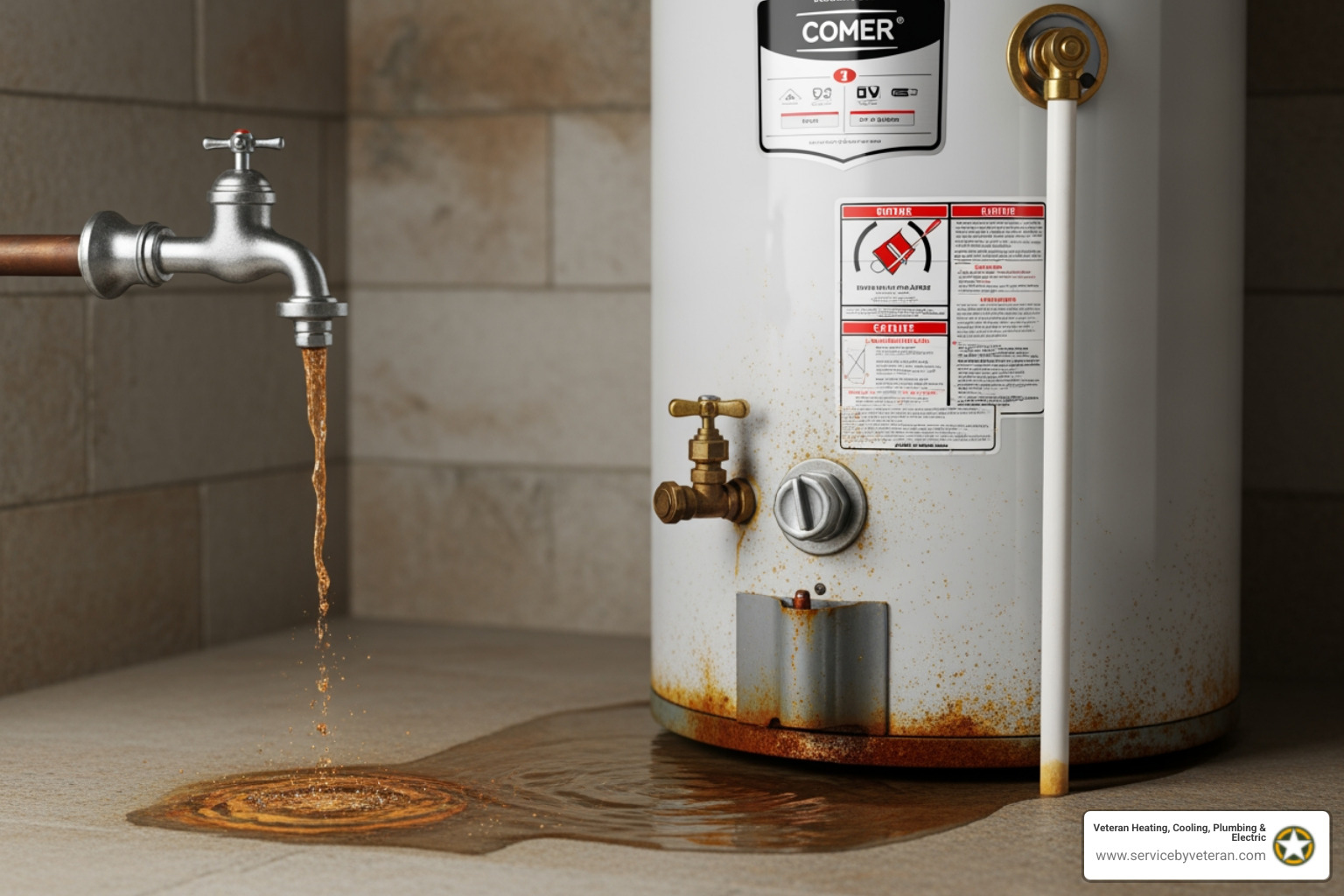
Cold showers in the middle of a Colorado winter aren't just uncomfortable—they're a sign that your water heater is failing. Whether it's a minor repair or a full replacement, Denver homeowners face unique challenges from our hard water, fluctuating temperatures, and the age of many local homes. The difference between a quick fix and a major emergency often comes down to choosing the right repair service and catching problems early.
If you need expert water heater repair services, understanding your options helps you make confident decisions. For urgent situations, don't hesitate to contact a trusted Denver plumbing professional who can diagnose and resolve your water heater issues quickly.
I'm Mike Townsend, and my background includes eight years in the U.S. Army managing precision cooling systems, which taught me the importance of reliable home comfort equipment. That experience guides how we approach finding the best water heater repair in Denver, CO—with discipline, integrity, and a commitment to keeping families comfortable year-round.
1. Telltale Signs Your Denver Water Heater Needs Professional Attention
Your water heater works hard behind the scenes, often unnoticed until it decides to take a vacation. But when it starts acting up, it's usually not subtle. Recognizing the early warning signs can save you from a cold shower surprise and potentially prevent more extensive damage to your Denver home.
Here are some common indicators that your water heater is crying out for professional help:
• No hot water or inconsistent temperatures: This is arguably the most frustrating sign. If you're getting no hot water at all, or if your hot water supply runs out quickly or fluctuates wildly, your water heater is definitely having a bad day. It could be a thermostat issue, a failing heating element, or even significant sediment buildup.
• Discolored water: If the hot water coming from your taps is rusty, discolored, or has a metallic taste, it often points to corrosion inside your water heater tank. This is a serious sign that your unit is nearing the end of its life.
• Strange noises: Loud rumbling, popping, banging, clanging, gurgling, or whining sounds coming from your water heater tank are not normal. These noises are typically caused by sediment buildup at the bottom of the tank, which hardens over time. This makes your water heater work harder, reduces its efficiency, and can shorten its lifespan.
• Leaks: Any visible moisture or puddles around the base of your water heater is a red flag. Leaks can range from minor drips from connections to serious tank breaches, and they almost always require immediate attention.
• Low water pressure: If your hot water pressure has significantly decreased while cold water pressure remains normal, it could indicate an issue within the water heater, possibly due to sediment accumulation restricting flow.
When these signs appear, it's time to call in the professionals. For more detailed information on various issues, check out our Water Heater Repair page.
What a Leaking Water Heater Means
A leaking water heater can be one of the most alarming problems a homeowner faces. The immediate steps you take can significantly impact potential water damage to your home. First things first: if you see a leak, try to locate the source. Is it coming from a pipe fitting, the temperature and pressure relief (T&P) valve, or directly from the tank itself?
If water is leaking from the bottom of the tank, it's often a sign that the tank's lining has corroded and is compromised. Unfortunately, this kind of leak is generally not repairable and means you're looking at a full water heater replacement. This is a critical situation because a compromised tank can quickly lead to a much larger, messier, and more damaging flood.
To prevent further water damage, immediately turn off the water supply to the water heater (usually a valve on the cold water inlet pipe) and, if it's a gas unit, turn off the gas supply. For electric units, switch off the power at your home's electrical panel. Then, call a professional without delay. We understand that emergencies happen, and our team is ready to respond. Find out more about our Emergency Plumbing Denver CO services.
Decoding Strange Noises
That rumbling, popping, or banging sound emanating from your water heater isn't just trying to get your attention—it's telling a story about what's happening inside. Often, these noises are a direct result of thermal expansion caused by sediment buildup. Over time, minerals in Denver's water (which can be quite hard!) settle at the bottom of your tank, forming a layer of sediment.
When the heating element tries to heat the water, it has to heat through this sediment layer first. This trapped water within the sediment boils, causing popping and rumbling sounds as the steam bubbles escape. This process makes your water heater work much harder than it should, drastically reducing its efficiency and wasting energy. More importantly, this constant stress and overheating can shorten the life of your tank and its components.
If you're hearing these sounds, it's a clear signal that your water heater needs attention. A professional can often flush the tank to remove sediment, restoring efficiency and potentially extending the unit's life.
2. Repair or Replace? Making the Right Call for Your Denver Home
Deciding whether to repair or replace your water heater is a common dilemma for Denver homeowners. It's a balance between the unit's current condition, its efficiency, and its expected lifespan. While we always aim for the most practical solution, sometimes replacement is the smarter, long-term choice.
Here's a quick guide to help you weigh your options:
• Minor component failure — Signs Favoring Replacement: Tank is leaking
• Unit is less than 10 years old — Signs Favoring Replacement: Unit is over 10-15 years old
• Infrequent breakdowns — Signs Favoring Replacement: Frequent breakdowns
• No visible rust or corrosion on tank exterior — Signs Favoring Replacement: Visible rust and corrosion on tank
• Satisfactory energy efficiency — Signs Favoring Replacement: Significant drop in energy efficiency (wasted energy)
The average lifespan of a traditional tank water heater is about 10 years, while tankless models can last 10 to 20 years. If your unit is approaching or has exceeded these age markers, replacement becomes a more viable option. For a full range of services, including expert advice on this decision, explore our general Plumbing Services.
When to Opt for Water Heater Repair
Many water heater issues can be effectively repaired, especially if your unit is relatively young and well-maintained. We often recommend repair when the problem lies with an isolated component rather than the entire system. Common repairs include:
• Minor component failure: If only a small part, like a faulty thermocouple (for gas units) or a worn-out dip tube, is causing the problem, a repair can quickly get your hot water flowing again.
• Thermostat issues: A malfunctioning thermostat can lead to inconsistent water temperatures or no hot water at all. Replacing it is usually a straightforward repair.
• Heating element replacement: For electric water heaters, a burnt-out heating element is a common culprit for lack of hot water. These can be replaced individually.
• Pressure relief valve problems: If your T&P valve is leaking, it might just need to be replaced to ensure safe operation.
• Anode rod replacement: The anode rod is crucial for preventing tank corrosion. Replacing a depleted anode rod can significantly extend your tank's life.
When Replacement is the Smartest Choice for the Best Water Heater Repair in Denver, CO
While repairs are often feasible, there are clear situations where replacing your water heater is the most sensible decision for your Denver home. Our goal is to provide you with reliable, long-lasting solutions, and sometimes that means investing in a new unit.
Consider replacement if:
• The tank is leaking: As we mentioned, if water is leaking directly from the tank itself (not from connections or valves), it's a sign of internal corrosion. This is irreparable, and the tank needs to be replaced immediately to prevent significant water damage.
• The unit is over 10-15 years old: Most traditional tank water heaters have an average lifespan of about 10 years. If your unit is older than this, especially over 15 years, it's living on borrowed time. The risk of catastrophic failure increases dramatically, and its efficiency will have significantly declined.
• It's inefficient: If your unit is outdated, it may not be as energy-efficient as newer models. Replacing it with a high-efficiency model can improve performance and reduce energy waste.
• You're experiencing frequent breakdowns: If your water heater constantly needs repairs, it may be more practical to invest in a reliable new system rather than continuing with frequent service calls.
• There's visible rust and corrosion on the tank: While some exterior rust might be superficial, widespread rust on the tank's exterior, particularly near connections or the bottom, signals internal problems. This often indicates the integrity of the tank is compromised, and failure is imminent.
3. Understanding Water Heater Options for Denver Residences
Choosing the right water heater for your Denver home involves understanding the different types available and how they align with your household's hot water needs and energy preferences. The good news is, we have more efficient and effective options than ever before!
When we help you select a new water heater, we'll consider several factors:
• Tank vs. Tankless: This is the primary decision point, impacting both upfront installation and long-term operation.
• Gas vs. Electric: Your home's existing fuel sources will be a key factor in this decision. Both types have their own unique installation and operational considerations.
• Energy efficiency: Modern units are designed for improved energy efficiency.
• Household size and hot water demand: A large family with multiple bathrooms will have different needs than a single individual. We'll assess your home's specific requirements to ensure you never run out of hot water.
For those interested in exploring on-demand hot water solutions, our Tankless Water Heater Denver CO page offers more insights.
Traditional Tank Water Heaters
Traditional tank water heaters are what most people picture when they think of a water heater. These units store a large volume of hot water, typically ranging from 20 to 80 gallons, with 40-gallon tanks being very common in residential homes. They continuously heat this stored water, so it's ready for immediate use whenever you turn on a hot water tap.
Benefits of traditional tank water heaters include:
• Familiar technology: They are a common and straightforward choice for many homes, with a simpler installation process compared to some other systems.
• High-demand suitability: For households with high, simultaneous hot water demands (e.g., multiple showers running at once), a tank heater can often meet these needs more readily due to its stored supply.
• Continuous hot water supply: As long as the tank isn't completely depleted, you have a consistent supply of hot water.
While they might take up more space and can be less energy-efficient than tankless models, traditional tank water heaters remain a reliable and popular choice for many Denver homes, especially those with high hot water usage.
Modern Tankless Water Heaters
Tankless water heaters, often called "on-demand" water heaters, represent a significant leap in water heating technology. Instead of storing hot water in a tank, these compact units heat water only when you need it, as it flows through the system.
Key advantages of modern tankless water heaters:
• On-demand heating: You get an endless supply of hot water, as it's heated instantly. No more running out during a long shower!
• Improved energy efficiency: Because they only heat water when it's needed, tankless units can be significantly more energy-efficient than traditional tanks, which constantly use energy to keep water hot.
• Longer lifespan: Tankless water heaters typically last longer than their tank counterparts, often 10 to 20 years or more, thanks to their design and the absence of a large tank prone to corrosion.
• Space-saving design: Their compact size allows for installation in smaller spaces, even on a wall, freeing up valuable utility room floor space.
While the installation for a tankless system can be more complex, the long-term efficiency and extended lifespan often make them a worthwhile investment.
4. The Critical Factors for Choosing the Best Water Heater Repair in Denver, CO
When it comes to something as essential as your home's hot water, you don't want to cut corners. Choosing the right service for the best water heater repair in Denver, CO, goes beyond a simple search. It's about ensuring safety, efficiency, and peace of mind.
Here's why selecting a qualified professional is paramount:
• Professional installation: Water heaters involve complex connections to your home's water, gas (if applicable), and electrical systems. Improper installation can lead to dangerous leaks, gas hazards, or electrical malfunctions.
• Safety risks: Attempting DIY water heater repairs or installation without expertise carries significant risks, including electrocution, gas leaks, and severe water damage. It's simply not worth the danger.
• Local expertise: A local Denver company understands the unique challenges of our region, from specific building codes to the effects of our hard water on appliances.
• Maintenance benefits: Regular, professional maintenance can significantly extend the life of your water heater, improve its efficiency, and prevent major breakdowns.
For comprehensive information on our services, including expert water heater solutions, please visit our Water Heater Repair Denver CO page.
The Importance of Professional Installation and Maintenance
We cannot stress enough the importance of professional installation and ongoing maintenance for your water heater. It's not just about getting hot water; it's about the safety and longevity of your entire plumbing system.
• Proper venting, gas line safety, and electrical connections: These are not DIY projects. Gas water heaters require precise gas line connections and proper venting to prevent carbon monoxide buildup. Electric units demand accurate electrical wiring to avoid fire hazards. Our technicians are trained to handle these critical connections safely and effectively.
• Code compliance: Water heater installations must adhere to local building codes, such as the 2021 International Plumbing Code. Professionals ensure your installation meets these standards, which can be crucial for insurance purposes and home resale value.
• Extending unit lifespan: Regular maintenance, performed by a certified professional, is key to maximizing your water heater's life. This includes flushing the tank, checking the anode rod, and inspecting for wear and tear.
Our team consists of highly skilled and certified technicians. This demonstrates our commitment to rigorous training and expertise across all our services, ensuring our plumbers are also exceptionally skilled in their field.
The Benefits of Choosing a Local Pro for the Best Water Heater Repair in Denver, CO
When you need best water heater repair in Denver, CO, choosing a local company makes all the difference. As a veteran-led, locally owned business, we are deeply invested in the communities we serve, including Denver, Greenwood Village, Arvada, Aurora, Broomfield, Castle Rock, Centennial, Columbine, Golden, Highlands Ranch, Lakewood, and Littleton.
Here's why local expertise is invaluable:
• Community focus: We're your neighbors, and we treat every home with the respect and care we'd give our own. Our business thrives on trust and reputation within the community.
• Understanding local codes: We are intimately familiar with Denver's specific building codes and regulations, ensuring every installation and repair is compliant.
• Familiarity with Denver water quality: Denver's water can present unique challenges for water heaters. Our local technicians understand these specific issues and can recommend solutions custom to our region.
• Faster response times: When your water heater breaks down, especially in the dead of winter, you don't have time to wait. A local company can typically offer faster response times for emergency situations.
• Accountability: Local businesses rely heavily on positive word-of-mouth and customer satisfaction. We stand by our work and are committed to providing exceptional service because our reputation is built right here, in your community.
Frequently Asked Questions about Denver Water Heater Services
We know you have questions, and we're here to provide clear, straightforward answers. Here are some of the most common inquiries we receive from Denver homeowners regarding their water heaters.
How does Denver's water pressure affect my water heater's longevity?
Denver's water pressure can, indeed, have a significant impact on your water heater and your entire plumbing system. High water pressure, typically anything consistently above 80 psi, is notorious for damaging not only water heaters but also pipes, faucets, and other appliances. This constant strain can accelerate wear and tear, leading to premature failure of components and even leaks.
If we find that your home is operating with high water pressure, we'll recommend installing a pressure-reducing valve (PRV). This device helps to regulate the incoming water pressure, protecting your water heater and plumbing system from undue stress. Installing a PRV is a relatively simple solution that can significantly extend the life of your water heater and prevent extensive repairs down the road.
What are the safety risks of a poorly maintained water heater?
A poorly maintained or aging water heater can pose several serious safety risks to your household. We believe in proactive maintenance not just for comfort, but for the safety of your family.
Potential hazards include:
• Gas leaks: For gas water heaters, improper installation, poor maintenance, or component failure can lead to dangerous gas leaks.
• Carbon monoxide poisoning: A gas water heater with a faulty or blocked vent can release carbon monoxide, an odorless and colorless gas, into your home. This is a life-threatening risk.
• Risk of explosion: While rare, an unchecked T&P (temperature and pressure relief) valve can fail, allowing pressure to build to dangerous levels, potentially leading to an explosion.
• Scalding temperatures: If your water heater's thermostat is set too high or malfunctions, it can produce water exceeding 125°F, posing a serious risk of burns, especially to children and the elderly.
• Electrical hazards: For electric water heaters, frayed wiring or faulty components can create electrical hazards, including the risk of fire or electrocution.
Regular inspections and maintenance are crucial to identify and mitigate these risks before they become critical.
How can regular maintenance extend the life of my water heater?
Just like your car needs regular oil changes, your water heater benefits from routine maintenance. This proactive approach can significantly extend its lifespan, improve its efficiency, and help you avoid unexpected breakdowns.
Here are key maintenance tasks that contribute to a longer-lasting water heater:
• Flushing the tank: This is perhaps the most important task. Flushing your water heater helps prevent mineral deposits and sediment from collecting at the bottom of the tank. Sediment acts as an insulator, making your water heater work harder and less efficiently. We recommend flushing your water heater once a year, or even twice a year if you have particularly hard water in your Denver home.
• Checking the anode rod: The anode rod is a sacrificial metal rod inside your tank that corrodes instead of the tank lining. Regularly checking and replacing a depleted anode rod can prevent internal tank corrosion and leaks.
• Testing the T&P valve: The temperature and pressure relief valve is a critical safety device. Testing it periodically ensures it's working correctly and will release excess pressure or temperature if needed, preventing dangerous situations.
• Preventing sediment buildup: Beyond flushing, addressing hard water issues can help minimize sediment in the first place, further protecting your water heater.
• Improving efficiency: A well-maintained water heater operates more efficiently, consuming less energy to heat your water. This not only extends its life but also reduces energy waste.
By investing in regular professional maintenance, you're not just fixing problems; you're preventing them, ensuring your water heater provides reliable hot water for years to come.
Your Trusted Partner for Denver Water Heater Solutions
In Denver, we understand that reliable hot water isn't a luxury—it's a necessity, especially during our brisk winters. At Veteran Heating, Cooling, Plumbing & Electric, we're committed to providing the best water heater repair in Denver, CO, and the surrounding areas. We combine our veteran-led discipline with a deep understanding of home comfort systems to ensure your peace of mind.
We pride ourselves on personal, honest, and community-focused service. That's why we stand behind our work with a lifetime warranty on parts and labor and a money-back guarantee. When you choose us, you're choosing a partner dedicated to your home's comfort and safety.
Don't let a failing water heater leave you in the cold. Let us bring our expertise and commitment to your home. Schedule your water heater repair in Denver, CO today!
ABOUT Veteran Heating, Cooling, Plumbing & Electric
Veteran Heating, Cooling, Plumbing & Electric was founded on the belief that service should be personal, honest, and community-focused. Our team is built around integrity, professionalism, and a true commitment to your home’s comfort and safety.
Led by a U.S. Army veteran with over 30 years of industry experience, we’re proud to remain locally owned and operated. Every technician, plumber, and electrician is EPA-certified, background checked, and driven to exceed expectations.
- 24/7 ServiceWe offer weekend & 24/7 emergency service. We’re here whenever you need us—day, night, or weekend, no exceptions.
- $0 Trip FeesNo dispatch or trip fees. You’ll never pay just for us to show up—service starts when the work does.
OUR SERVICES
AIR CONDITIONING
.jpg)
We offer specialty and seasonal services like indoor air quality upgrades, pre-winter furnace checks, and summer AC tune-ups to keep your home prepared year-round.
Our Primary Air Conditioning Services Include:
Don't see the service you need? Call our Team today!
PLUMBING
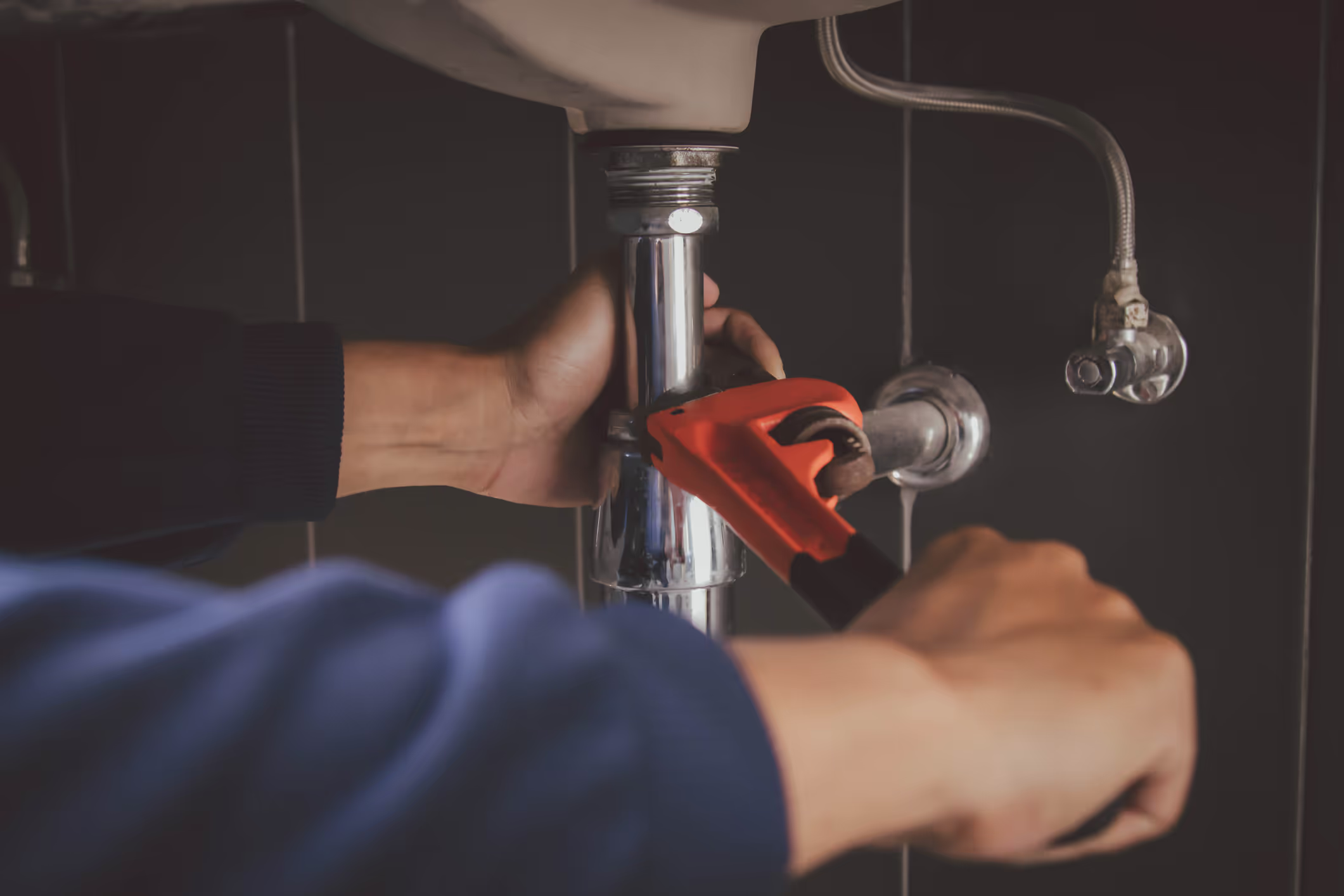
From leaks to full system installs, our plumbing services cover everything you need for a safe, reliable home water system, 24/7.
Our Primary Plumbing Include:
- Water Heater Replacement
- Water Heater Repair
- Trenchless Sewer Line
- Water Filtration
- Slab Leak
- Sewer Line Repair
Don't see the service you need? Call our Team today!
ELECTRICAL

Our electrical services ensure your home stays safe and powered, from routine fixes to complete system upgrades.
Our Primary Electrical Services Include:
- House Rewiring
- Electrician
- Electric Panel Upgrade
- Electric Panel Replacement
- EV Chargers
- Whole House Generator
Don't see the service you need? Call our Team today!
HEATING
.jpg)
We install, repair, and maintain heating & furnace systems with expert care to keep your Colorado home comfortable and energy-efficient year-round.
Our Primary Heating Services Include:
- Heating Installation
- Heating Replacement
- Heating Maintenance
- Heating Repair
- Heating Service
- Heating Tune-Up
Don't see the service you need? Call our Team today!