
When Freezing Nights Reveal Failing Furnaces
You turn on the heat during the first freezing nights of the year, but the house still feels stubbornly cold, revealing that a basic seasonal home maintenance checklist isn't enough to save a failing furnace. That strange, rattling noise coming from the basement isn't going away on its own, and the thermostat reading simply refuses to match the actual temperature in your living room. At Veteran Heating, Cooling, Plumbing & Electric, our team typically sees a massive spike in emergency calls during these early November cold snaps in the Denver metro area, as these freezing nights act as a harsh stress test for aging heating systems. Homeowners quickly discover whether their equipment is ready for the long winter ahead or if it is already operating on borrowed time.
When your heating system struggles this early in the season, you face a difficult decision point. Do you pay for yet another temporary patch-up on an aging unit, or do you proactively upgrade before deep winter emergency conditions arrive? Making that choice requires more than guesswork. It requires a disciplined, methodology-driven evaluation of your equipment's actual systemic health.
As a veteran-owned heating and air conditioning company, the team at Veteran Heating, Cooling, Plumbing & Electric removes the uncertainty from this process. We rely on strict diagnostic criteria rather than high-pressure sales tactics. This guide outlines the exact expert framework we use when evaluating system reliability, helping you understand the true condition of your furnace or heat pump before the harshest winter weather sets in.
The Military Precision Approach to Winter Home Preparation
Standard fall preparation guides often stop at reminding you to swap out an air filter and check the batteries in your thermostat. While those steps are necessary, they fall dangerously short of true winter readiness. In our years of experience preparing homes across the region, we apply a military precision approach to HVAC maintenance. This means executing a disciplined, proactive risk-mitigation strategy designed to catch systemic vulnerabilities before they cause total equipment failure.
Working with our veteran-owned company means you get the same level of discipline and accountability that military service demands. Our "Service to Heroes" dedication ensures a thorough, no-corners-cut evaluation of every single heating component. We do not just look at the surface; we assess the underlying health of the blower motor, the integrity of the heat exchanger, and the efficiency of the electrical draw.
Our core diagnostic methodology includes:
1. Comprehensive Component Stress Testing: We evaluate how the system handles rapid cycling, ensuring internal mechanisms can withstand sustained operation.
2. Airflow and Ventilation Verification: We measure static pressure to confirm that ductwork and blowers are delivering heat efficiently without choking the system.
3. Safety and Combustion Analysis: For gas furnaces, we rigorously test for carbon monoxide leaks, proper ignition, and clean burner operation to guarantee your family's safety.
4. Long-Term Reliability Forecasting: We look at wear patterns to predict which parts are likely to fail during peak winter usage.
Beyond the Basic Filter Change
Denver's rapid evening temperature drops in November uniquely stress aging, inefficient heating systems. When the sun goes down, the temperature plummets, forcing your furnace to transition from idle to maximum output in a matter of minutes. This thermal shock exposes hairline cracks in heat exchangers and strains weakening blower motors. A simple filter change cannot reverse years of mechanical fatigue. True winter preparation requires a deep, first-person methodology that focuses on long-term reliability rather than reactive emergency patching.
Evaluating Your Aging Heating System: The Repair vs. Replace Framework
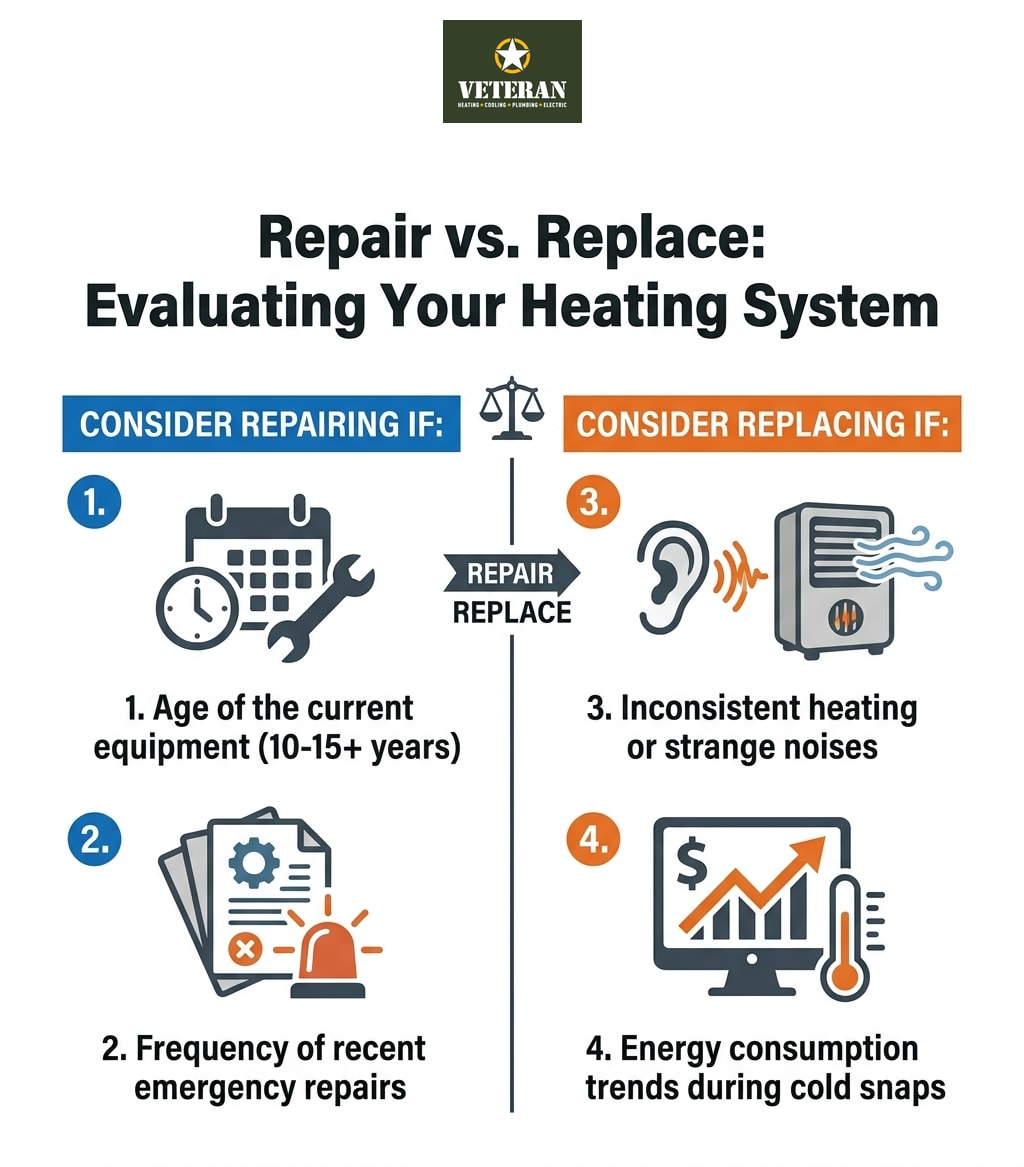
Knowing exactly when to stop repairing an old unit and start planning for a replacement is one of the most stressful parts of homeownership. Without clear criteria, it is easy to throw good money after bad. We use a specific framework to assess whether a struggling furnace will survive the November pre-winter cold snaps or if it is on the verge of a catastrophic breakdown.
The signs of impending failure are usually clear if you know what to look for. Unusual grinding or squealing noises point to failing motor bearings. Inconsistent heating—where one room is sweltering while another is freezing—often indicates a loss of blower capacity or a failing compressor. Frequent, short cycling means the system is overheating and shutting itself down to prevent a fire hazard.
We weigh the cumulative costs of frequent repairs, the age of the equipment, and the risk of a mid-winter failure to give homeowners a transparent assessment. One Denver homeowner our technicians at Veteran Heating, Cooling, Plumbing & Electric worked with this past spring struggled with a failing system for months before deciding to upgrade. After the installation, our team provided a prompt, courteous, and detailed explanation of the new equipment's operation. The customer finally fully understood how to operate their new HVAC system efficiently, gaining the peace of mind they had been missing all winter.
When to Patch and When to Pivot
Assessing the age and repair history of your current equipment is critical. An HVAC system that is over 12 years old and requires frequent interventions is a liability. Relying on a compromised system during peak winter puts your home at risk of frozen pipes and severe discomfort.
• Equipment Age — Repair Strategy (Patch): Under 10 years old with a solid maintenance history. — Replacement Strategy (Pivot): Over 12-15 years old, nearing the end of its designed lifespan.
• Repair Frequency — Repair Strategy (Patch): First minor breakdown in several years. — Replacement Strategy (Pivot): Multiple service calls required over the last two heating seasons.
• Heating Consistency — Repair Strategy (Patch): Even temperatures throughout the house after a minor tune-up. — Replacement Strategy (Pivot): Persistent cold spots and a system that runs constantly without reaching the set temperature.
• Energy Consumption — Repair Strategy (Patch): Utility bills remain stable and predictable. — Replacement Strategy (Pivot): Spiking energy usage during early cold snaps despite normal thermostat settings.
Why November is the Critical Window for Heat Pump Upgrades
November is the final strategic window for proactive upgrades before emergency calls flood the schedule. Once the deep winter freezes arrive, supply chain realities and scheduling bottlenecks become major obstacles. Waiting until your furnace completely dies in late December means you may have to wait days for specific parts or available installation crews.
Last winter, a local customer experienced a sudden heating failure and reached out to our dispatchers for an urgent same-day service call. A Veteran Heating, Cooling, Plumbing & Electric technician arrived that same afternoon and handled the problem efficiently with great customer service. However, navigating a total breakdown in freezing temperatures is highly stressful. Proactive scheduling prevents these emergency decisions and allows you to carefully select the best equipment for your home.
Upgrading to a high-efficiency heat pump right now offers massive benefits for winter energy reduction. As a certified Midea Elite dealer, we see firsthand how modern systems outperform older technology. If you are curious about transitioning away from traditional fossil fuels, understanding how a heat pump works in a four-season climate is the first step toward achieving year-round climate readiness.
Navigating Supply and Scheduling Realities
The operational advantages of completing major installations before deep snow arrives cannot be overstated. Technicians can work more safely and efficiently when the ground is clear, and outdoor units can be leveled and secured without battling ice accumulation. Securing your spot on the schedule in November guarantees that your home is fully equipped to handle whatever the winter season brings.
Homeowner Maintenance: What You Can Safely Check Before Winter
While deep system diagnostics require a professional, there are several vital tasks homeowners should complete as part of their seasonal routine. Addressing these simple maintenance items helps your system breathe easier and prevents unnecessary strain on the equipment.
A pattern we see often following heavy fall storms in the Denver metro area is autumn debris like leaves, pine needles, and small branches frequently getting sucked into outdoor heat pump and AC units. Clearing this debris is a safe, highly effective way to protect your system's airflow.
Your safe pre-winter checklist should include:
• Clearing outdoor debris: Remove leaves, dirt, and overgrown vegetation from a two-foot radius around your outdoor unit to ensure unobstructed airflow.
• Sealing home drafts: Check windows and exterior doors for worn weatherstripping. Sealing these gaps prevents your heating system from working overtime to replace lost warm air.
• Testing safety detectors: Press the test buttons on all smoke and carbon monoxide detectors, replacing batteries immediately if they fail to sound loudly.
• Unblocking indoor vents: Walk through every room to ensure rugs, furniture, and curtains are not blocking supply registers or return grilles.
• Replacing standard air filters: Check your HVAC filter monthly and replace it the moment it appears visibly grey or clogged with dust.
When to Call the Professionals
It is crucial to strictly delineate between safe DIY tasks and professional requirements. Never attempt DIY repairs on gas lines, electrical components, or internal furnace mechanisms. Modern HVAC systems utilize high-voltage electricity and highly pressurized refrigerants. Ignoring early warning signs or attempting to bypass safety switches can result in catastrophic equipment damage, severe injury, or dangerous gas leaks. Routine professional maintenance prevents the vast majority of unexpected winter breakdowns and ensures all complex components are handled safely.
The Long-Term Value of High-Efficiency Heating Upgrades
Transitioning from an aging, inefficient furnace to a modern, high-efficiency system fundamentally changes how your home consumes energy. Modern heat pumps operate by transferring heat rather than generating it through combustion, which significantly reduces winter energy consumption. This technology has advanced rapidly, allowing it to extract ambient heat from the air even during freezing nights.
As a designated Midea Elite dealer, we adhere to rigorous standards required to represent top-tier manufacturing brands. This credential means our technicians undergo continuous, specialized training to ensure every installation maximizes the equipment's engineered efficiency. A premium system is only as good as the precision of its installation.
Furthermore, upgrading to high-efficiency equipment often qualifies homeowners for various financial incentives. Generic utility rebates and federal tax credits may apply to qualifying heat pump installations, making the initial investment much more accessible. We always advise readers to consult a tax professional or their local utility provider to verify current programs. Ultimately, proactive upgrades ensure a safer, more comfortable home environment while protecting you from the unpredictable costs of nursing a failing system.
Frequently Asked Questions About Winter HVAC Preparation
How do I know if my furnace will last the winter?
The clearest indicator is the system's performance during the first cold snaps of November. If the furnace struggles to reach the set temperature, makes unusual grinding or banging noises, or cycles on and off rapidly, it is showing signs of critical wear. Additionally, if the unit is over 12 years old and has required multiple repairs recently, its chances of surviving a harsh winter without intervention are low. A professional diagnostic evaluation is the only way to confirm the exact health of the internal components.
What is included in a fall HVAC maintenance checklist?
A comprehensive fall checklist goes far beyond just replacing the air filter. It includes verifying the integrity of the heat exchanger, testing the electrical draw of the blower motor, and calibrating the thermostat. For gas systems, it requires a strict combustion analysis to check for carbon monoxide leaks and ensure safe ignition. Homeowners can support this by clearing debris from outdoor units and ensuring all indoor vents are unblocked.
Should I replace my furnace before winter?
If your current system is aging, inefficient, and prone to breaking down, replacing it before deep winter hits is highly strategic. Proactive replacement in November allows you to avoid the stress of an emergency breakdown when scheduling and supply chains are tightest. It also gives you the time to research and select a high-efficiency heat pump rather than settling for whatever equipment is available on short notice. Upgrading now ensures uninterrupted comfort when the freezing temperatures arrive.
When is it better to repair rather than replace an aging heating system?
Repairing makes sense if the heating system is less than ten years old, has a history of reliable performance, and the required fix is a minor, inexpensive component. If the repair cost is less than a third of the price of a new system and the core components (like the heat exchanger and compressor) are in excellent shape, a patch-up is a sound decision. However, if repairing the unit feels like putting a band-aid on a much larger systemic failure, replacement is the more financially responsible choice.
How does a high-efficiency heat pump perform during freezing nights?
Modern high-efficiency heat pumps are engineered to handle freezing temperatures with remarkable effectiveness. Unlike older models that struggled in the cold, advanced systems utilize variable-speed compressors and specialized refrigerants to extract ambient heat from the outside air even when temperatures dip well below freezing. They provide consistent, even heating while using significantly less energy than traditional electric resistance heaters or older gas furnaces.
What maintenance tasks can homeowners safely perform on their HVAC systems?
Homeowners can safely manage tasks that involve external airflow and general home readiness. This includes replacing the indoor air filters regularly, clearing leaves and branches away from the outdoor condenser unit, and ensuring furniture does not block indoor air registers. You can also safely seal window drafts and test your home's smoke and carbon monoxide detectors. However, any task involving the system's electrical wiring, gas lines, or internal mechanical parts must be left to a licensed professional.
Secure Your Winter Comfort with Expert Evaluation
Evaluating your heating system's reliability before deep winter sets in is the most important step you can take for your home's comfort and safety. Ignoring the warning signs of a failing furnace only leads to rushed, high-stress emergency decisions in the middle of a freezing night. By taking a disciplined approach to winter preparation, you can accurately weigh the strategic advantages of proactive replacement over reactive patching.
As a trusted Midea Elite dealer, the team at Veteran Heating, Cooling, Plumbing & Electric brings military precision to every diagnostic assessment, providing you with the clear, expert criteria you need to make an informed decision. Do not wait for a total breakdown to find out if your equipment is ready. Schedule a comprehensive inspection with a disciplined local expert today, and secure the peace of mind that comes from knowing your home is fully prepared for the season.
ABOUT Veteran Heating, Cooling, Plumbing & Electric
Veteran Heating, Cooling, Plumbing & Electric was founded on the belief that service should be personal, honest, and community-focused. Our team is built around integrity, professionalism, and a true commitment to your home’s comfort and safety.
Led by a U.S. Army veteran with over 30 years of industry experience, we’re proud to remain locally owned and operated. Every technician, plumber, and electrician is EPA-certified, background checked, and driven to exceed expectations.
- 24/7 ServiceWe offer weekend & 24/7 emergency service. We’re here whenever you need us—day, night, or weekend, no exceptions.
- $0 Trip FeesNo dispatch or trip fees. You’ll never pay just for us to show up—service starts when the work does.
OUR SERVICES
AIR CONDITIONING

We offer specialty and seasonal services like indoor air quality upgrades, pre-winter furnace checks, and summer AC tune-ups to keep your home prepared year-round.
Our Primary Air Conditioning Services Include:
Don't see the service you need? Call our Team today!
PLUMBING
From leaks to full system installs, our plumbing services cover everything you need for a safe, reliable home water system, 24/7.
Our Primary Plumbing Include:
- Water Heater Replacement
- Water Heater Repair
- Trenchless Sewer Line
- Water Filtration
- Slab Leak
- Sewer Line Repair
Don't see the service you need? Call our Team today!
ELECTRICAL

Our electrical services ensure your home stays safe and powered, from routine fixes to complete system upgrades.
Our Primary Electrical Services Include:
- House Rewiring
- Electrician
- Electric Panel Upgrade
- Electric Panel Replacement
- EV Chargers
- Whole House Generator
Don't see the service you need? Call our Team today!
HEATING

We install, repair, and maintain heating & furnace systems with expert care to keep your Colorado home comfortable and energy-efficient year-round.
Our Primary Heating Services Include:
- Heating Installation
- Heating Replacement
- Heating Maintenance
- Heating Repair
- Heating Service
- Heating Tune-Up
Don't see the service you need? Call our Team today!