
Facing a Failing Heating System Before the Winter Freeze
Your aging heating system is struggling to keep up, and looking at options comparisons for homeowners is the first step toward securing your comfort before the severe weather hits. That strange noise coming from your utility room is not going away on its own, and ignoring it will only lead to a complete breakdown at the worst possible time. It is a stressful situation when you realize your current equipment might not survive another season. In our years of servicing homes across Denver, Colorado, we've seen firsthand how rapid, extreme temperature swings can cause mild fall afternoons to plummet into freezing November nights in a matter of hours. This November pre-winter readiness window is the critical time to make a confident decision about your home's future.
When your system is on its last legs, you face a core decision: do you replace your failing unit with another traditional gas furnace, or do you upgrade to a modern cold-climate heat pump? At Veteran Heating, Cooling, Plumbing & Electric, we bring our "Service to Heroes" mentality directly to your home. We approach your family's safety and comfort with the exact same rigorous standards and discipline we learned in the military. We do not rely on generic manufacturer claims or high-pressure sales tactics. Instead, we rely on real-world system performance and strict, objective technical evaluations. In our experience, understanding exactly how these different systems handle the deep freeze is the only way to make a smart, long-term investment for your property.
The Veteran-Owned Difference in HVAC Diagnostics
Finding a reliable home services company can feel overwhelming, especially when you are facing a major mechanical failure. Our military background instills a profound commitment to precision, integrity, and doing the job right the first time. We do not guess when it comes to your home's heating requirements. Our team typically sees the consequences of guesswork from other contractors, which is why, as a certified Midea Elite dealer, our diagnostic methodology is rooted in exact science. We measure static pressure, evaluate your existing ductwork, calculate heat loss, and assess the specific thermal envelope of your home before we ever make a recommendation.
This disciplined framework is absolutely essential when evaluating whether an existing system can safely survive another winter or if it requires immediate replacement. Many companies rely on visual inspections or "rule of thumb" estimates, which often lead to oversized equipment and wasted energy. We contrast those generic marketing promises with objective, technical field evaluations. Our technicians are trained to look at the entire HVAC ecosystem, identifying underlying issues that might cause a new system to fail prematurely if left unaddressed.
Integrity in System Evaluation
Our evaluation process prioritizes transparency and honest assessments of your equipment's remaining lifespan. We walk you through every measurement and finding, ensuring you understand exactly what is happening inside your utility room. By prioritizing homeowner safety and long-term reliability over quick fixes, we ensure that any investment you make is built to last. We believe that an informed homeowner is an empowered homeowner, and our strict diagnostic standards reflect that commitment.
Evaluating Traditional Gas Furnaces for Winter Reliability
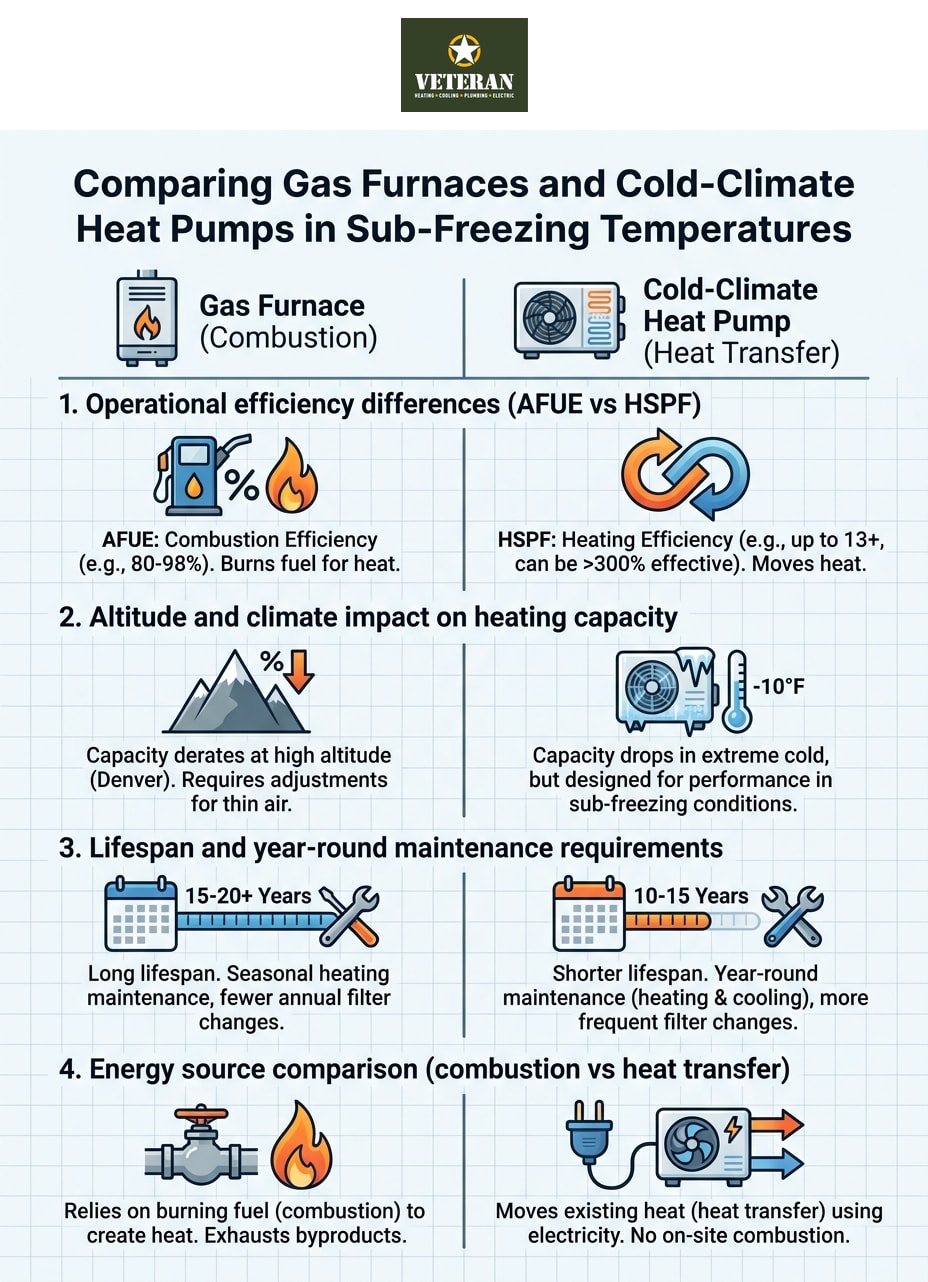
Traditional gas furnaces have been the standard in home heating for decades, and for good reason. Understanding the basic operational mechanics of modern combustion furnaces compared to older, failing models is crucial. A gas furnace operates by burning fuel in a heat exchanger; the resulting heat is then transferred to the air circulating through your home's ductwork. Modern units utilize secondary heat exchangers to capture exhaust gases, significantly boosting their Annual Fuel Utilization Efficiency (AFUE) ratings compared to units built just ten or fifteen years ago.
During extreme, prolonged cold snaps, the reliability factors of a properly sized gas furnace are well documented. They produce high-temperature heat quickly, which is highly effective at recovering indoor temperatures after a deep freeze. However, when our dispatch board lights up during a Denver cold snap, a pattern we see often is older gas furnaces exhibiting common signs of unexpected malfunction that require prompt, professional dispatch. Symptoms like yellow burner flames, soot buildup, or frequent cycling often point to serious safety concerns, including cracked heat exchangers.
When we assess an existing furnace's AFUE rating and safety components during our November pre-winter readiness checks, we prioritize your family's well-being. Evaluating these older systems often brings up homeowners' frustration with standard industry fees and a lack of guarantees. One local customer recently highlighted how our approach—eliminating trip fees, offering lifetime warranties on parts and labor, and providing a satisfaction guarantee—created a refreshingly honest, customer-first experience. We bring this exact level of transparency to every furnace evaluation, ensuring you know exactly where your system stands before the harsh weather arrives.
Precision Engineering: How Modern Cold-Climate Heat Pumps Perform
If you are considering moving away from combustion heating, it is time to understand the incredible advancements in modern heat pump technology. Older generations of heat pumps struggled when temperatures dropped below freezing, leading to a persistent myth that they are unsuitable for harsh winters. Today, that is simply no longer true. The operational shift from combustion heating to heat transfer is a massive leap forward in precision engineering. Instead of burning fuel to create heat, a heat pump extracts ambient thermal energy from the outside air and moves it inside your home.
Modern systems are engineered to extract ambient heat even when temperatures drop well below freezing. Through advanced inverter-driven compressors and enhanced vapor injection technology, these units maintain their heating capacity in extreme weather. In our experience installing these systems throughout the Denver metro area, we've found they handle our unique semi-arid, high-altitude winters flawlessly, maintaining critical heating capacity during deep freezes without relying on expensive electric resistance backup heat. As a Midea Elite dealer, we install high-tier Midea cold-climate heat pumps that deliver exceptional Heating Seasonal Performance Factor (HSPF) ratings. If you want to dive deeper into the mechanics of this technology, you can learn more about how a heat pump works in a four-season climate.
Breaking Down Sub-Freezing Operation
The secret to sub-freezing operation lies in the advanced compressor technology that adapts continuously to extreme temperature drops. Unlike traditional single-stage furnaces that blast on at full capacity and then shut off, an inverter-driven heat pump ramps up and down smoothly, providing exactly the amount of heat needed to maintain a consistent temperature. However, practitioner-led installation is absolutely critical to unlocking these advanced capabilities. If the refrigerant charge is off by even a few ounces, or if the airflow is restricted, the system will not perform efficiently in the cold.
Furnace vs. Heat Pump: A Practitioner-Led Comparison (Options Comparisons for Homeowners)
Based on our extensive field experience retrofitting Denver homes, we often see that comparing the upfront installation complexity versus the long-term operational efficiency of both systems is the best teacher. Traditional furnaces are generally more straightforward to swap out if the existing gas lines and venting are up to code. Heat pumps, on the other hand, require a more complex initial setup, especially when integrating them into older ductwork or upgrading electrical panels to handle the new load. However, we recommend Midea cold-climate heat pumps for many homeowners because their long-term operational efficiency often offsets that initial complexity through significant energy savings.
Lifespan and maintenance requirements also differ significantly. A gas furnace sits idle for half the year, while a heat pump operates year-round, providing both heating in the winter and air conditioning in the summer. Because it runs continuously, a heat pump requires disciplined, biannual upkeep to ensure the outdoor coils remain clean and the refrigerant levels stay perfectly balanced. When evaluating how each system responds to rapid temperature swings—from mild afternoons to freezing nights—heat pumps excel at maintaining a steady baseline, while furnaces excel at rapid temperature recovery.
Here is our boots-on-the-ground comparison of the two systems:
• Energy Source — Modern Gas Furnace: Combustion (Natural Gas or Propane) — Cold-Climate Heat Pump: Heat Transfer (Electricity)
• Efficiency Metric — Modern Gas Furnace: AFUE (Up to 98% efficient) — Cold-Climate Heat Pump: HSPF (Can exceed 300% efficiency)
• Climate Response — Modern Gas Furnace: Rapid heat recovery during deep freezes — Cold-Climate Heat Pump: Steady, continuous temperature maintenance
• Maintenance Needs — Modern Gas Furnace: Annual safety and combustion checks — Cold-Climate Heat Pump: Biannual checks (runs year-round)
• Installation Complexity — Modern Gas Furnace: Moderate (requires proper gas venting) — Cold-Climate Heat Pump: High (requires precise refrigerant charging)
The Critical Role of Precision Load Calculations
Choosing the right equipment brand is only half the battle; rigorous installation standards dictate how that equipment will actually perform. A critical step in our process is performing a precise HVAC load calculation. A load calculation, often referred to as a Manual J, measures the exact amount of heating and cooling your specific home requires. It factors in your square footage, insulation levels, window types, and the direction your house faces. Guessing system size based on the old unit's nameplate inevitably leads to premature mechanical failure and poor comfort.
Because we operate at Denver's mile-high elevation, our team knows that our specific regional climate requires strict adjustments in these capacity calculations. High elevation specifically impacts air density, which directly reduces the mass of air moving over the heat exchanger. Thinner air holds less heat, meaning a system that works perfectly at sea level will underperform here if not properly calibrated. If a system is oversized, it will short-cycle—turning on and off rapidly—which destroys blower motors and heat exchangers. If a heat pump is undersized, it will fail to provide adequate heating during a harsh cold snap.
As a Midea Elite dealer, our military precision leaves absolutely no room for "rule of thumb" sizing. We rely on exact math and disciplined execution. We measure the static pressure of your ductwork to ensure it can handle the airflow requirements of a new, high-efficiency system. If the ductwork is too small, installing a powerful new blower motor will only create excessive noise and strain the equipment. We evaluate the entire system as a complete ecosystem, ensuring every component works in perfect harmony.
Navigating High-Efficiency Upgrades and Complex Installations
Upgrading your home's heating infrastructure is a significant project, but navigating the process does not have to be stressful. There is general availability of federal tax credits and local utility incentive programs designed to encourage high-efficiency upgrades. These programs frequently reward the installation of qualifying heat pumps and top-tier gas furnaces. Because these programs change frequently, we always advise readers to verify current incentives with their utility providers or a qualified tax professional to maximize their benefits.
The installation of a complex heat pump or a high-efficiency furnace requires a meticulous process. From the moment we provide a transparent, detailed quote to the final system handover, our process is highly structured. On installation day, our technicians arrive on time, protect your flooring, and systematically remove the old equipment. We take the time to properly braze refrigerant lines with nitrogen, pull a deep vacuum to remove moisture, and dial in the precise gas pressure for combustion units.
We reassure every homeowner that our dedicated, disciplined team ensures the home is respected and the system operates flawlessly. After the physical installation is complete, we run the system through a rigorous commissioning sequence. We test the temperature drop, verify the electrical draw on the compressor, and ensure the thermostat is communicating perfectly with the equipment. We do not leave your property until we have proven that the system meets our strict operational standards.
Making a Confident Heating Choice for Your Home
The choice between a traditional gas furnace and a modern cold-climate heat pump ultimately comes down to proper evaluation, precise sizing, and expert installation. Both systems have distinct advantages, but neither will perform efficiently if they are installed poorly or sized incorrectly. By relying on exact measurements rather than guesswork, you can secure a system that delivers reliable comfort through the harshest weather conditions.
Our practitioner-led experience provides the clarity you need to cut through the marketing noise and focus on what actually works in the field. We understand the unique challenges of our climate, and we know exactly how to engineer a system that meets those demands head-on. Securing your November pre-winter readiness is our top priority, ensuring you are not left out in the cold when the first major storm hits.
We encourage you to schedule a rigorous system evaluation before the severe winter weather arrives. By reviewing these options comparisons for homeowners with a disciplined professional, you can make a confident, informed decision that protects your home, lowers your energy consumption, and provides total peace of mind for years to come.
Frequently Asked Questions
Is a heat pump better than a furnace in Colorado?
Neither system is universally "better"; it depends entirely on your home's specific thermal envelope and existing ductwork. Modern cold-climate heat pumps provide exceptional, highly efficient year-round comfort and handle our temperature swings beautifully. However, traditional gas furnaces remain a powerful, reliable option for homes that require rapid heat recovery during extreme, prolonged deep freezes.
At what temperature does a cold-climate heat pump stop working?
Modern inverter-driven cold-climate heat pumps do not simply stop working when the temperature drops. High-tier systems are engineered to extract ambient heat and operate efficiently at temperatures well below zero degrees Fahrenheit. While their total heating capacity decreases as it gets colder, proper sizing and installation ensure they maintain comfortable indoor temperatures during severe weather.
What are the best heating options for replacing a failing furnace?
The best options generally fall into two categories: upgrading to a high-efficiency condensing gas furnace (which offers AFUE ratings up to 98%) or transitioning to a cold-climate air-source heat pump. The right choice requires a strict load calculation to match the equipment to your home's exact heat loss profile. We always evaluate your existing electrical panel capacity and gas lines before recommending a specific path.
Should I switch from a gas furnace to a heat pump?
Switching to a heat pump is a smart strategy if you are looking to improve your home's overall energy efficiency and want the benefit of both heating and cooling from a single system. It is also an excellent choice if your current air conditioning unit is aging and needs replacement alongside the furnace. We perform a detailed technical evaluation to ensure your ductwork and electrical service can support the transition seamlessly.
How does a veteran-owned HVAC company differ in its installation process?
A veteran-owned company applies military discipline, strict accountability, and rigorous technical standards to every single job. We do not rely on "rule of thumb" guesswork; we use exact math, thorough load calculations, and strict commissioning checklists. This "Service to Heroes" mentality ensures your home is treated with the utmost respect and the installation is done right the first time.
Do high-efficiency heat pumps qualify for utility rebates or tax credits?
Yes, many high-efficiency heat pumps and top-tier gas furnaces qualify for various incentives designed to promote energy conservation. Federal tax credits and local utility rebate programs are frequently available for systems that meet specific performance criteria. We always recommend consulting with your utility provider or a tax professional to verify current program availability and specific qualification requirements.
ABOUT Veteran Heating, Cooling, Plumbing & Electric
Veteran Heating, Cooling, Plumbing & Electric was founded on the belief that service should be personal, honest, and community-focused. Our team is built around integrity, professionalism, and a true commitment to your home’s comfort and safety.
Led by a U.S. Army veteran with over 30 years of industry experience, we’re proud to remain locally owned and operated. Every technician, plumber, and electrician is EPA-certified, background checked, and driven to exceed expectations.
- 24/7 ServiceWe offer weekend & 24/7 emergency service. We’re here whenever you need us—day, night, or weekend, no exceptions.
- $0 Trip FeesNo dispatch or trip fees. You’ll never pay just for us to show up—service starts when the work does.
OUR SERVICES
AIR CONDITIONING

We offer specialty and seasonal services like indoor air quality upgrades, pre-winter furnace checks, and summer AC tune-ups to keep your home prepared year-round.
Our Primary Air Conditioning Services Include:
Don't see the service you need? Call our Team today!
PLUMBING
From leaks to full system installs, our plumbing services cover everything you need for a safe, reliable home water system, 24/7.
Our Primary Plumbing Include:
- Water Heater Replacement
- Water Heater Repair
- Trenchless Sewer Line
- Water Filtration
- Slab Leak
- Sewer Line Repair
Don't see the service you need? Call our Team today!
ELECTRICAL

Our electrical services ensure your home stays safe and powered, from routine fixes to complete system upgrades.
Our Primary Electrical Services Include:
- House Rewiring
- Electrician
- Electric Panel Upgrade
- Electric Panel Replacement
- EV Chargers
- Whole House Generator
Don't see the service you need? Call our Team today!
HEATING

We install, repair, and maintain heating & furnace systems with expert care to keep your Colorado home comfortable and energy-efficient year-round.
Our Primary Heating Services Include:
- Heating Installation
- Heating Replacement
- Heating Maintenance
- Heating Repair
- Heating Service
- Heating Tune-Up
Don't see the service you need? Call our Team today!