When a Sewer Backup Demands Immediate Attention
Emergency sewer line repair in denver, co is critical when raw sewage backs up into your home, creating health hazards and property damage. If you’re facing a sewer emergency, here’s what to do:
Immediate Actions for a Sewer Emergency:
1. Shut off your main water valve to stop additional sewage flow
2. Turn off electricity in affected areas to prevent shock hazards
3. Evacuate people and pets from contaminated zones
4. Avoid all contact with sewage-contaminated water
5. Call a licensed emergency plumber immediately for 24/7 response
Common Emergency Signs:
• Sewage backing up through drains, toilets, or floor drains
• Multiple fixtures clogging simultaneously
• Strong sewer gas odors inside your house
• Gurgling sounds from pipes
• Standing water or soggy areas in your yard
Need guidance on your plumbing needs? Visit our Denver plumbing services page or contact us for immediate emergency assistance.
Denver’s unique conditions—freeze-thaw cycles, expansive clay soils, and high altitude—create vulnerabilities for your sewer system. A gurgling toilet might seem minor, but it can signal a developing blockage in your main sewer line. Tree roots, shifting soil, or temperature extremes can turn a small issue into an emergency. Understanding how to respond can save you thousands in water damage and protect your family’s health.
I’m Mike Townsend. My U.S. Army background taught me that attention to detail matters when infrastructure fails. That discipline guides how we approach emergency sewer line repair in denver, co, ensuring our team responds quickly with the right tools and methods to restore your home’s safety.
Your Immediate Action Plan for a Sewer Emergency
When a sewer emergency strikes, it’s natural to feel overwhelmed. Raw sewage in your home is a serious health risk and can cause extensive property damage. Knowing what to do immediately can reduce the impact and make the cleanup and repair process smoother. Our first priority is always safety and containment.
What To Do Right Now
If you suspect a sewer line emergency, these steps are crucial:
• Shut off main water valve: This is the most critical action. Turning off your home’s main water supply prevents more water from entering the system, minimizing the backup. This simple step can prevent far greater damage.
• Turn off electrical breakers in affected areas: If water has spread to areas with electrical outlets, it creates a severe electrocution risk. Turn off the electricity to those areas at your breaker panel. If unsure, shut off the main power to your home.
• Open windows for ventilation: Sewer gas contains dangerous components like methane and hydrogen sulfide. Ventilating the area by opening windows helps dissipate these gases and reduce odors.
• Avoid using any plumbing fixtures: Do not flush toilets, run sinks, or use showers. Any water sent down a drain will contribute to the backup.
• Keep people and pets away from the contaminated area: Raw sewage contains bacteria, viruses, and pathogens that cause serious illnesses. Isolate the affected area and prevent contact with contaminated water or surfaces.
Taking these actions helps protect your family and property while you await professional help. We understand the stress of these situations and are ready to respond with urgency.
Recognizing the Red Flags: Is It a Sewer Line Emergency?
Sometimes, a sewer problem starts subtly, but knowing the difference between a minor issue and a sewer emergency is key to preventing widespread damage. A sewer emergency requires immediate professional help to prevent property damage, health risks, or environmental contamination.
What Constitutes a Sewer Emergency in Denver
In Denver, issues that escalate to emergencies include:
• Severe blockages: If multiple drains are backing up or draining slowly, it indicates a main sewer line blockage, which can quickly lead to sewage in your home.
• Sewage backing up into the home: This is the most unmistakable sign of an emergency. Raw sewage inside your living space poses a severe health risk from harmful bacteria and pathogens.
• Collapsed or broken pipes: A sudden pipe collapse can cause immediate flooding in your basement, a wet spot in your yard with foul odors, or a complete drainage failure.
• Flooding in yard or basement: Unexplained standing water in your yard, especially if it smells like sewage, could indicate a broken sewer pipe. Water pooling in your basement without an obvious source also points to a sewer line issue.
• Health hazards from raw sewage: The presence of raw sewage creates an unsanitary environment that can contaminate water supplies and pose serious health risks. Prompt repair is essential.
Key Warning Signs You Need Emergency Sewer Line Repair in Denver, CO
Catching a problem early can prevent a full-blown emergency. Look for these signs:
• Persistent clogs in multiple drains: If you’re constantly dealing with clogs in more than one fixture, it suggests a deeper problem in the main line.
• Gurgling sounds from toilets and sinks: This often indicates trapped air in your plumbing caused by a blockage preventing proper water flow.
• Unpleasant sewer gas odor: A persistent smell of sewage inside your home or in your yard is a clear indicator that sewer gases are escaping from a crack or blockage.
• Water pooling around floor drains: Water collecting around a basement floor drain can be a sign of a main sewer line backup.
• Slow draining fixtures throughout the house: If all your fixtures are draining sluggishly, it points to a problem with your main sewer line.
If you observe any of these signs, especially in combination, call us for an assessment. Early intervention can prevent a stressful and costly emergency.
Why Is This Happening? Common Causes of Sewer Line Failure in Denver
Understanding the root causes of sewer line failures can help Denver homeowners take preventative measures. Many factors contribute to these issues, some unique to our local environment.
How Denver’s Climate Impacts Your Pipes
Denver’s climate presents specific challenges for underground sewer lines.
• Freeze-thaw cycles: Frequent temperature fluctuations in winter cause the ground to expand and contract, stressing buried pipes and leading to cracks and disconnected joints.
• Expansive clay soil (Bentonite): The soil in the Denver metro area, including communities like Greenwood Village, Arvada, and Littleton, contains expansive clay. This soil expands when wet and shrinks when dry, causing pipes to shift, crack, or collapse.
• High altitude effects: High altitude conditions can indirectly affect pipe materials over long periods, amplifying environmental stresses.
• Heavy snowmelt runoff: Rapid snowmelt can saturate the ground, exacerbating the effects of expansive soils and placing additional pressure on pipes.
For more information about our local conditions, visit our Denver CO page.
Other common causes of sewer line failure include:
• Tree root intrusion: Tree roots are drawn to the water in sewer pipes and can penetrate through tiny cracks, causing blockages and fracturing the pipe.
• Aging pipes: Older homes in Denver may have cast iron or clay sewer lines that are prone to corrosion, cracking, and deterioration.
• Improper disposal of items: Flushing items like wet wipes, paper towels, or grease can lead to severe blockages.
• Construction damage: Landscaping or excavation can accidentally rupture or disconnect a sewer line.
The Dangers of Delaying Repairs
Delaying sewer line repairs can turn a manageable problem into a disaster.
• Property damage: Sewage backups can cause extensive damage to floors, walls, and furniture, resulting in costly repairs.
• Structural integrity risks: Persistent leaks can saturate the soil around your foundation, leading to shifting, cracking, and structural instability.
• Health hazards: Raw sewage is a biohazard containing harmful bacteria and viruses that can cause severe illnesses. Exposure puts your family’s health at risk.
• Mold growth: Lingering moisture after a backup can lead to mold growth within 24-48 hours, causing respiratory issues and further damage.
• Water supply contamination: A leaking sewer line can contaminate surrounding soil and groundwater, posing a risk to local water sources.
Given these risks, prompt attention is paramount. For immediate concerns, see our Emergency Plumbing Denver CO page. We address these emergencies with the speed needed to protect your home.
The Repair Process: What to Expect from Emergency Sewer Line Repair in Denver, CO
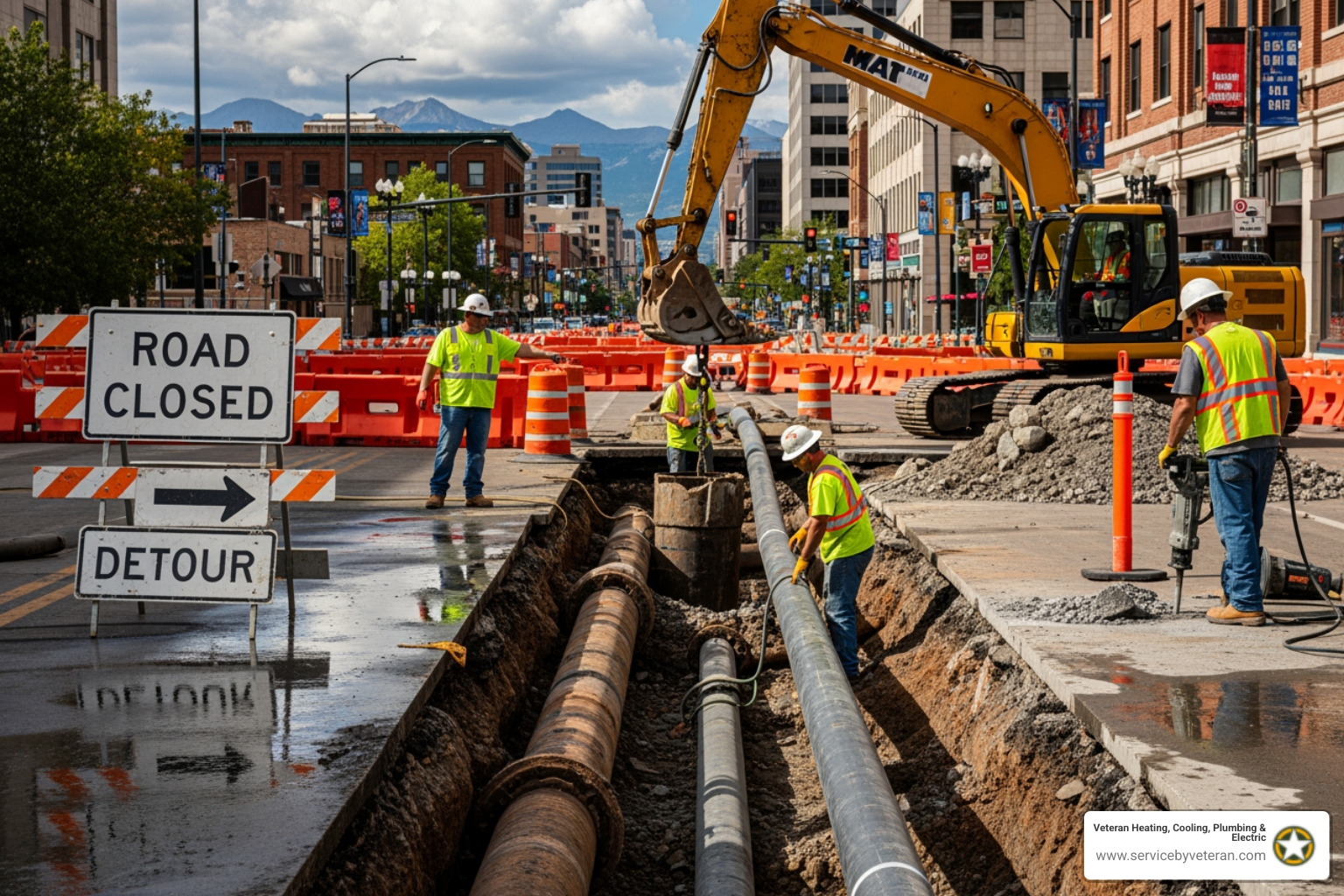
When we arrive for an emergency sewer line repair in denver, co, our goal is to quickly diagnose the problem and implement the most effective solution with minimal disruption. We use state-of-the-art technology and proven methods to get the job done right.
• Traditional — Disruption Level: High — Time to Complete: Days — Yard Impact: Extensive excavation, landscape damage — Typical Use Cases: Severely collapsed pipes, large sections needing replacement, specific pipe materials not suitable for trenchless
• Trenchless — Disruption Level: Low — Time to Complete: Hours to 1-2 Days — Yard Impact: Minimal, small access points — Typical Use Cases: Cracks, root intrusion, minor collapses, aging pipes, preventative lining
Diagnosing the Problem with a Sewer Camera Inspection
Accurate diagnosis is crucial. A professional sewer camera inspection is often the first step.
• Pinpointing the location: A high-resolution camera on a flexible rod is guided through your sewer line, providing a live video feed. This lets us see the precise location of the blockage or damage.
• Assessing pipe condition: The inspection reveals the overall health of your sewer line, including signs of aging, corrosion, or weak points. This helps us recommend a durable, long-term solution.
• Determining the best repair method: A clear view of the problem helps us determine if a simple clearing is enough or if a more extensive repair is needed, such as traditional excavation or trenchless methods.
This diagnostic step saves time and prevents unnecessary digging. For more details, visit our Sewer Camera Inspection Denver CO page.
Choosing Your Repair Method: Traditional vs. Trenchless
We offer both traditional and trenchless methods and will discuss the best options for your situation.
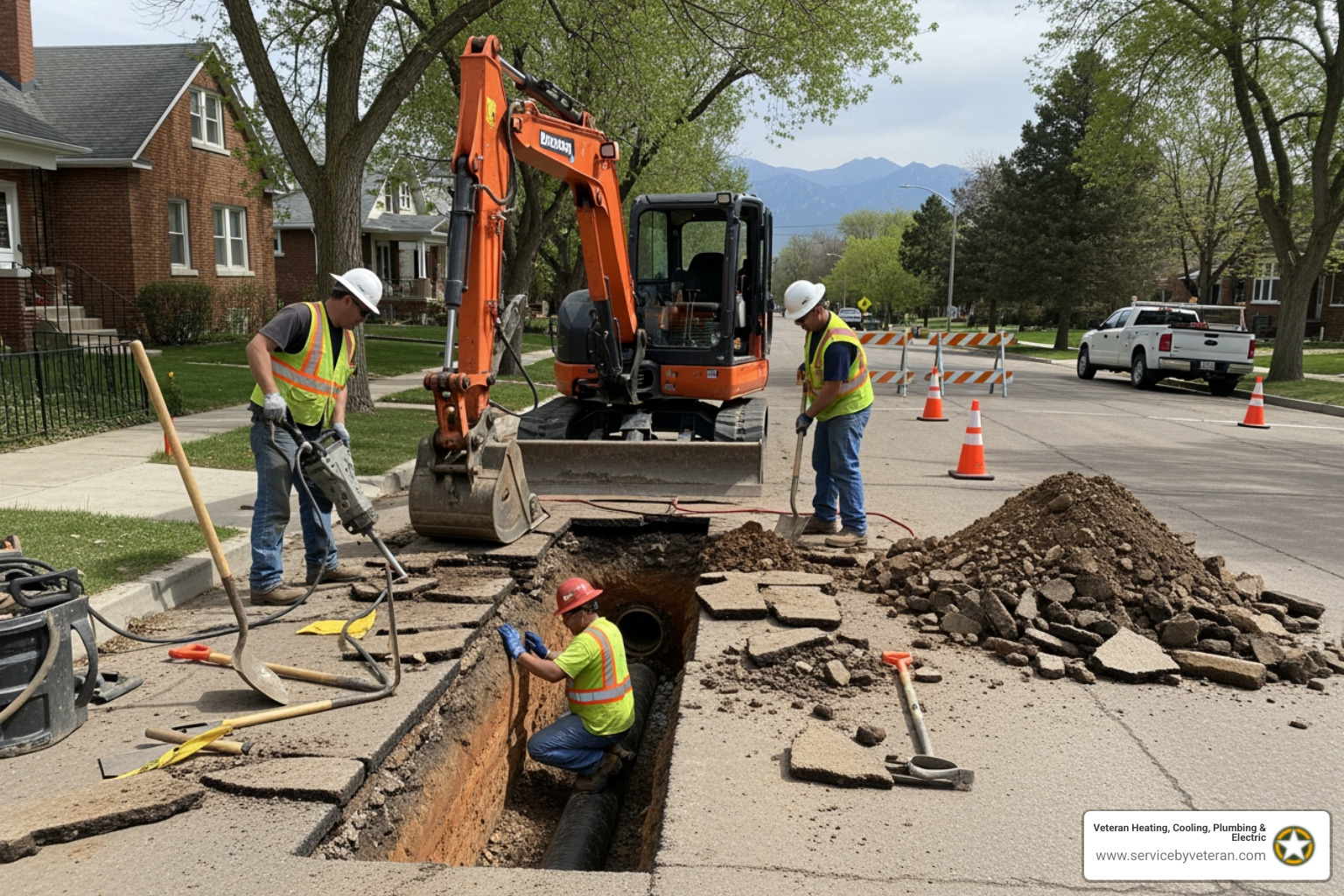
Traditional Excavation and Replacement:This method involves digging a trench to expose and replace the damaged pipe section. While disruptive to your yard, it’s sometimes necessary for:
• Severely collapsed or damaged pipes.
• Pipes with significant sags that hinder drainage.
• Pipe materials unsuitable for trenchless techniques.
Trenchless Repair Methods:These advanced techniques repair or replace your sewer line with minimal digging.
• Pipe bursting: A new pipe is pulled through the old one, fracturing the old pipe and replacing it without a long trench. This is excellent for full pipe replacement.
• Pipe lining (CIPP): A flexible, resin-coated tube is inserted into the damaged pipe. It’s inflated and cured, forming a new “pipe within a pipe.” This is ideal for repairing cracks, leaks, and root intrusion.
• Spot repairs: For localized damage, we can perform a targeted repair on only the compromised section.
• Landscape preservation: The primary benefit of trenchless methods is preserving your lawn, garden, and driveway, as only small access points are needed.
We’ll explain the pros and cons of each approach to help you make an informed decision. Our goal is a durable solution that restores your sewer system’s integrity.
How to Prevent a Future Sewer Line Catastrophe
An ounce of prevention is worth a pound of cure for your sewer line. While some emergencies are unavoidable, many can be prevented with regular maintenance and mindful habits.
Proactive Steps for Healthy Sewer Lines
Taking these steps can significantly reduce your risk of needing an emergency sewer line repair in denver, co:
• Schedule regular inspections: Your sewer line benefits from periodic professional inspections. For homes over 20 years old or with recurring issues, we recommend a sewer camera inspection every 1-2 years to catch minor problems before they escalate.
• Avoid harsh chemical drain cleaners: Chemical drain cleaners can corrode and damage your pipes over time, especially older ones. They also create hazardous fumes. It’s better to call us for professional drain cleaning.
• Know your pipe locations before digging: Before any project that involves digging, call 811 (the national “Call Before You Dig” hotline). Knowing your sewer line’s location can prevent accidental damage.
• Mindful flushing: Only flush human waste and toilet paper. Items like “flushable” wipes, paper towels, and feminine hygiene products don’t break down and cause blockages.
• Proper grease disposal: Never pour cooking grease or oils down your drain. They solidify and create stubborn clogs. Collect grease in a container and throw it in the trash.
• Professional drain cleaning: Regular professional drain cleaning can prevent buildup from becoming a major blockage. We use hydro jetting, which uses high-pressure water to scour pipes clean.
• Landscaping awareness: When planting trees, consider their mature root systems. Plant them a safe distance from your sewer line to prevent root damage.
For a deeper dive into maintaining your plumbing, check out our Plumbing Repair Lakewood Ultimate Guide. Being proactive helps ensure your sewer system remains healthy for years.
Frequently Asked Questions about Emergency Sewer Repair in Denver
When facing a sewer emergency, you have questions. Here are answers to common concerns from Denver homeowners.
What qualifications should a Denver sewer repair company have?
Choosing the right company for an emergency is vital. Look for:
• Licensed Master Plumbers: This ensures a high level of experience and adherence to professional standards.
• Fully insured and bonded: This protects you from liability in case of accidents or damage during the repair.
• Positive local reviews: Check reviews from other Denver homeowners to gauge reliability and quality of work.
• Experience with Denver’s climate and soil: A company familiar with local challenges like expansive clay soil will provide more durable repairs.
• 24/7 availability: Emergencies require a company that offers round-the-clock service and can dispatch a team any time.
We pride ourselves on meeting all these qualifications to provide expert, reliable service.
How quickly can a professional respond to a sewer emergency in Denver?
When raw sewage is backing up, every minute counts.
• Immediate response is key: Reputable companies offering emergency sewer line repair in denver, co prioritize these calls due to the risk of escalating damage and health hazards.
• 24/7 dispatch: Our team operates 24/7, including holidays, with technicians on standby to respond when disaster strikes.
• Same-day service: Our goal for emergencies is always same-day service. We work to get a technician to your property as quickly as possible to assess the situation and begin mitigation.
A swift response helps prevent further property damage and minimizes health hazards.
What services are included in an emergency sewer line repair call?
An emergency call includes a comprehensive approach to resolve your issue efficiently:
• Initial assessment: Our technician performs a rapid visual assessment of the damage.
• Video camera inspection: We use a camera to pinpoint the exact location and nature of the problem in your sewer line.
• Diagnosis of the problem: We provide a clear explanation of what’s causing the emergency.
• Presenting repair options: We discuss the most effective methods (trenchless vs. traditional) and recommend the best course of action.
• Performing the repair: Once you approve, our team proceeds with the chosen repair method.
• Cleanup and restoration support: We can advise on necessary cleanup and restoration for affected areas.
Our aim is a complete solution, from diagnosis to repair, to minimize stress and disruption.
Get Your Home Back to Normal with Professional Sewer Repair
Sewer line emergencies are among the most stressful problems a homeowner can face. From gurgling drains to a full sewage backup, the signs demand immediate action. These situations can escalate quickly, leading to significant property damage and health risks if not addressed promptly.
Understanding the warning signs and knowing how to react is crucial, especially given Denver’s unique environmental factors like freeze-thaw cycles and expansive soils that make sewer lines vulnerable. Delaying repairs can turn a manageable issue into a catastrophe, impacting your home and family.
When disaster strikes, you need a reliable team. As a veteran-led, locally owned company, Veteran Heating, Cooling, Plumbing & Electric brings discipline to every emergency sewer line repair in denver, co. We use advanced diagnostic tools and offer both traditional and trenchless repair methods to find the most effective, least disruptive solution.
We believe in proactive maintenance but are here for you when the unexpected happens. We stand by our work with a lifetime warranty on parts/labor and a money-back guarantee, because your peace of mind is our priority.
Don’t let a sewer emergency overwhelm you. If you suspect a problem, trust our expertise to get your home back to normal safely and efficiently. Contact us today for reliable Sewer Line Repair Denver CO services. We’ve got your back.
ABOUT Veteran Heating, Cooling, Plumbing & Electric
Veteran Heating, Cooling, Plumbing & Electric was founded on the belief that service should be personal, honest, and community-focused. Our team is built around integrity, professionalism, and a true commitment to your home’s comfort and safety.
Led by a U.S. Army veteran with over 30 years of industry experience, we’re proud to remain locally owned and operated. Every technician, plumber, and electrician is EPA-certified, background checked, and driven to exceed expectations.
- 24/7 ServiceWe offer weekend & 24/7 emergency service. We’re here whenever you need us—day, night, or weekend, no exceptions.
- $0 Trip FeesNo dispatch or trip fees. You’ll never pay just for us to show up—service starts when the work does.
OUR SERVICES
AIR CONDITIONING
.jpg)
We offer specialty and seasonal services like indoor air quality upgrades, pre-winter furnace checks, and summer AC tune-ups to keep your home prepared year-round.
Our Primary Air Conditioning Services Include:
Don't see the service you need? Call our Team today!
PLUMBING
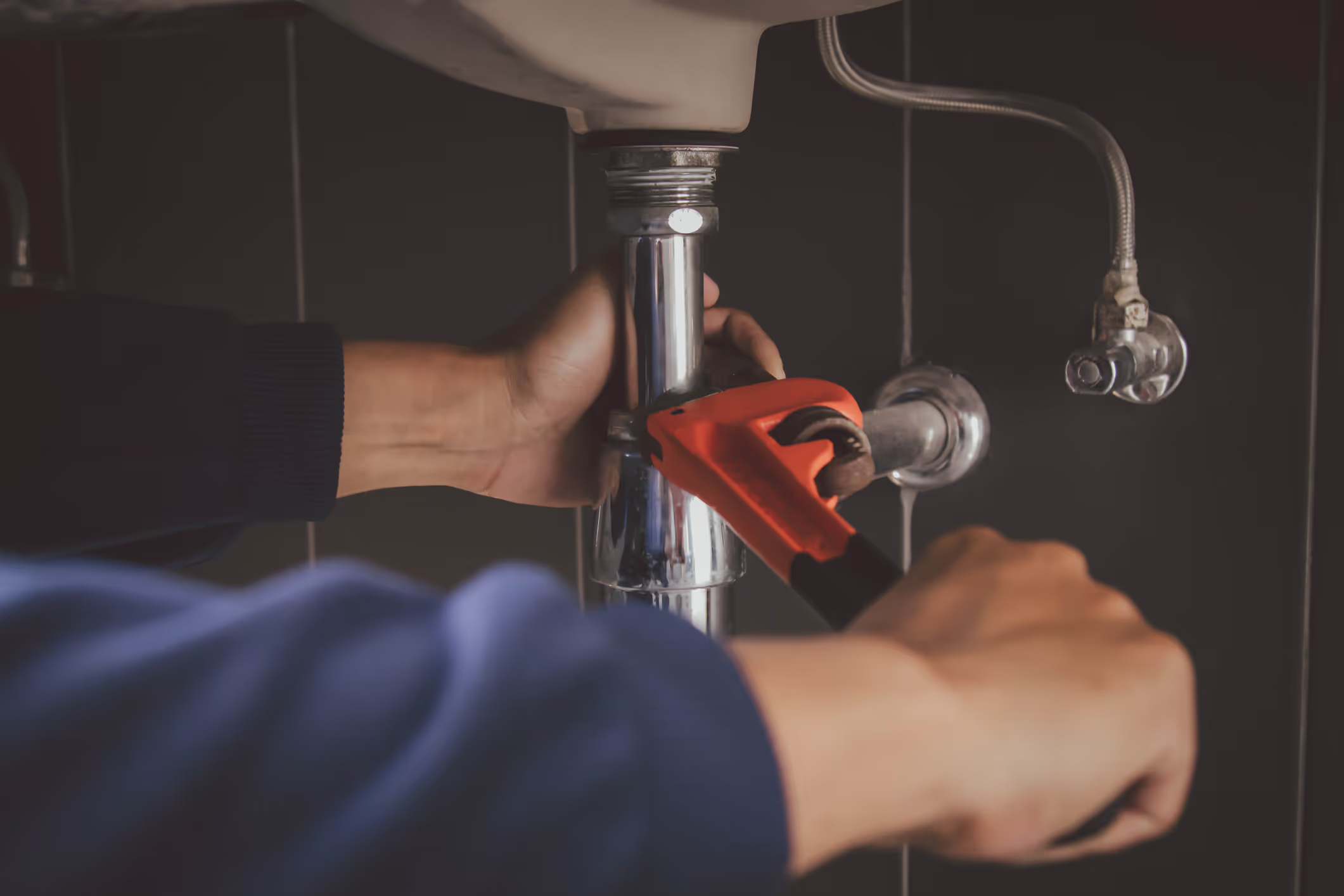
From leaks to full system installs, our plumbing services cover everything you need for a safe, reliable home water system, 24/7.
Our Primary Plumbing Include:
- Water Heater Replacement
- Water Heater Repair
- Trenchless Sewer Line
- Water Filtration
- Slab Leak
- Sewer Line Repair
Don't see the service you need? Call our Team today!
ELECTRICAL

Our electrical services ensure your home stays safe and powered, from routine fixes to complete system upgrades.
Our Primary Electrical Services Include:
- House Rewiring
- Electrician
- Electric Panel Upgrade
- Electric Panel Replacement
- EV Chargers
- Whole House Generator
Don't see the service you need? Call our Team today!
HEATING
.jpg)
We install, repair, and maintain heating & furnace systems with expert care to keep your Colorado home comfortable and energy-efficient year-round.
Our Primary Heating Services Include:
- Heating Installation
- Heating Replacement
- Heating Maintenance
- Heating Repair
- Heating Service
- Heating Tune-Up
Don't see the service you need? Call our Team today!