
The Hidden Hurdle in Your Fall Heating Upgrade
As you work through your home maintenance tips and troubleshooting for the season, you might hit a massive, unexpected roadblock. You are trying to be proactive about your home's comfort before the winter chill sets in. You decide to upgrade your aging furnace to a highly efficient modern heat pump. But during the initial assessment, the technician delivers frustrating news: your home's existing electrical panel lacks the capacity to safely support the new system's load.
This is a concrete problem our technicians at Veteran Heating, Cooling, Plumbing & Electric see constantly during mid-fall pre-winter inspection visits across the Denver area. Homeowners are suddenly forced into a critical decision point. Do you delay the heating upgrade and risk a mid-winter breakdown, or do you proactively upgrade the electrical panel concurrently with the HVAC installation? In our experience, tackling both the mechanical and electrical upgrades at the same time is the safest, most reliable way to prevent winter heating interruptions. When you unify these two projects, you ensure your home is fully prepared for whatever the colder months bring.
Why Cold-Climate Heating Systems Demand Dedicated Power
Modern cold-climate heat pumps are incredible pieces of engineering, but they demand serious electrical infrastructure. To operate safely and efficiently, these units require dedicated 220V-240V circuits. While these systems are highly energy-efficient overall, their peak electrical demand changes drastically when the weather turns harsh.
When our team dispatches to homes during Denver's freezing winter cold snaps, we see the immense stress placed on heating equipment. When extreme temperature fluctuations hit, your heat pump has to work significantly harder to pull ambient heat from the freezing air. During these severe cold periods, two specific functions activate that cause a massive spike in amperage draw. First, the outdoor unit runs frequent defrost cycles to melt accumulated ice off the condenser coils. Second, auxiliary heat strips activate to supplement the heating process. These resistive heat strips draw a heavy electrical load, which can easily overwhelm an older, undersized electrical panel. If you want to understand the year-round mechanics of this process, you can read more about how a heat pump works in a four-season climate.
The Anatomy of Cold-Weather Electrical Draw
To fully grasp why your electrical panel matters so much, you have to look at how power is consumed during a heating cycle. Everyday appliances draw a relatively steady amount of power. Heating systems, however, have dynamic power needs.
• Compressor startup surges: Every time your heat pump turns on, the compressor requires a sudden, massive jolt of electricity to start spinning. This is known as Locked Rotor Amps (LRA).
• Continuous running loads: Once the system is running, it settles into a lower, steady draw called Rated Load Amps (RLA).
• Auxiliary activation: When the emergency heat strips kick on during a blizzard, the system essentially acts like a giant toaster oven, demanding maximum continuous amperage.
Older electrical panels simply were not designed to handle these sudden surges combined with heavy continuous loads. Without the right infrastructure, you risk tripped breakers, damaged equipment, or even electrical fires.
Evaluating Your Home's Current Electrical Capacity
Many older homes were built with 100-amp electrical service panels. Decades ago, before the era of multiple large electric appliances, home offices, and advanced HVAC equipment, 100 amps provided plenty of power. Today, the landscape is entirely different. Adding a robust, modern system like the latest Midea heat pump systems alongside your electric oven, dryer, and other modern appliances usually pushes a 100-amp panel far past safe National Electrical Code (NEC) limits.
Before we install any advanced equipment, our master electricians perform a mandatory, professional load calculation. In our years of upgrading Denver's aging housing stock, we've found that you cannot simply guess or assume your panel has enough room just because there is an empty slot. This calculation adds up the total continuous and non-continuous electrical loads in your home to determine exactly how much capacity you have left.
Signs Your Panel Needs an Upgrade
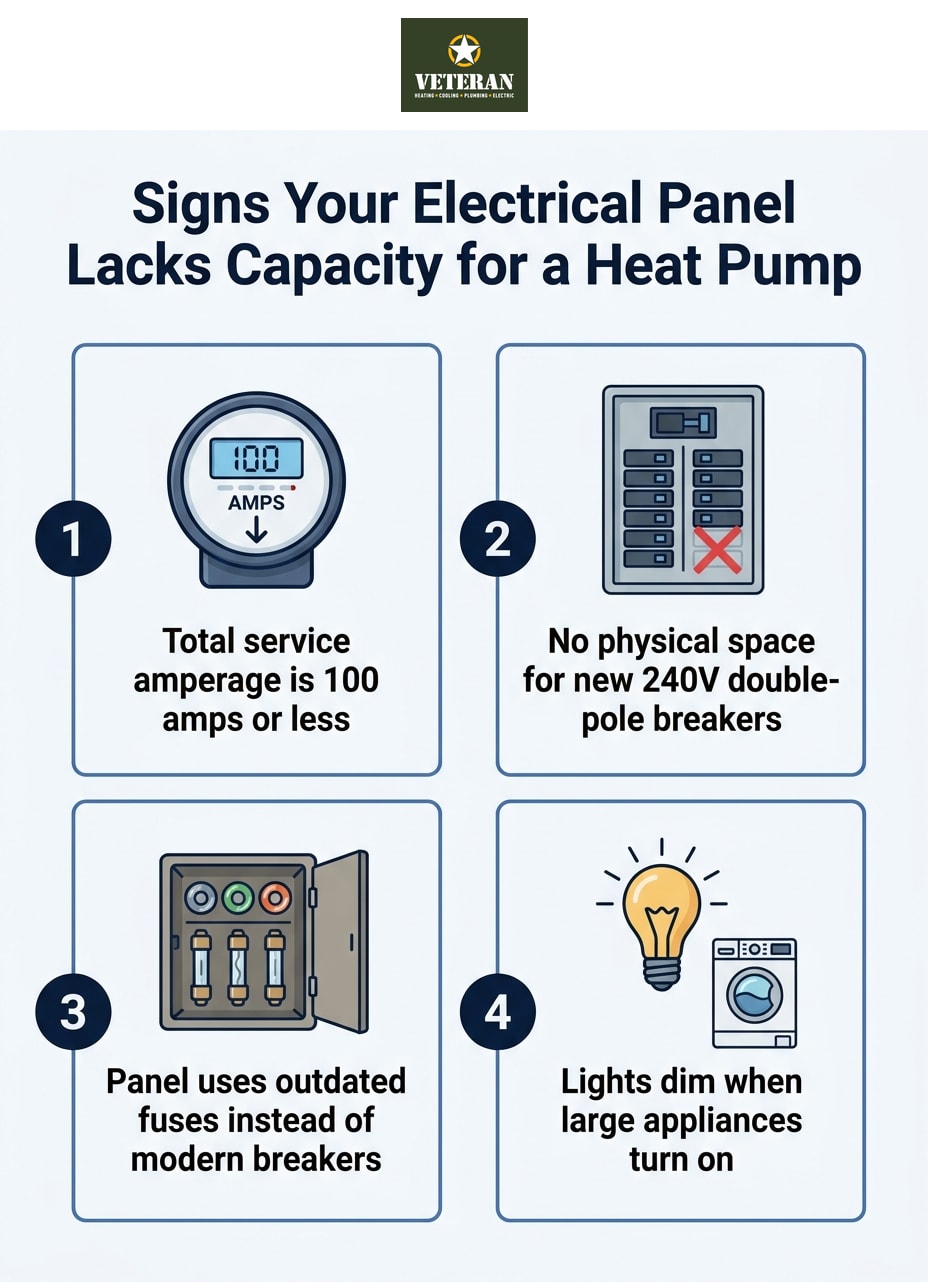
1. No available breaker slots: A dedicated 240V circuit requires a double-pole breaker, which takes up two full vertical slots in your panel. If your panel is physically full, you have a bottleneck.
2. Total service is 100 amps or less: You can usually find the main service amperage printed on the main breaker switch at the very top of your panel. If it says 100 or 60, an upgrade is almost certainly required for a new heat pump.
3. Outdated technology: If your home still relies on glass fuses rather than modern circuit breakers, or if you have a known obsolete panel brand, the system is no longer safe for modern high-draw HVAC equipment.
4. Flickering lights: If your interior lights dim or flicker when the refrigerator or air conditioner kicks on, your system is already struggling to handle startup surges.
Maximizing High-Altitude Efficiency Safely
High-altitude environments present unique challenges for mechanical equipment. Up here, the air is thinner. Thinner air means your heat pump has to move a higher volume of air over its coils to achieve the exact same heat transfer you would get at sea level. This high-altitude efficiency drop forces the compressor and blower motors to work longer, more demanding cycles.
To overcome this altitude challenge, your properly sized heat pump must have a flawless, uninterrupted electrical supply. High-efficiency units have highly specific electrical parameters that must be met to function optimally. If the voltage drops because the electrical panel is overtaxed, the compressor motors run hotter, which significantly degrades the equipment over time.
Thorough technicians understand this delicate balance. One Denver homeowner reached out to us during a recent mid-fall pre-winter inspection when they wanted to proactively install a new heat pump. Because of the specific demands of their older home, our Veteran Heating, Cooling, Plumbing & Electric team went above and beyond to complete the installation, ensuring the electrical parameters were perfectly dialed in and taking the time to answer all of the homeowner's questions about the new system's operation. The new heat pump was successfully installed to the customer's complete satisfaction.
When you invest in premium equipment like Midea heat pump systems, cutting corners on the electrical side compromises the mechanical lifespan of the unit. The mechanical and electrical systems are permanently linked; one cannot thrive if the other is struggling.
The Risks of Fragmented HVAC and Electrical Installations
A major content gap we see in home maintenance advice is the failure to address the logistics of cross-trade installations. When you discover you need an electrical panel upgrade to support your new heat pump, the traditional route is to hire an HVAC company for the unit and a separate electrical contractor for the panel. During a time-sensitive fall install, this fragmented approach is highly risky.
Relying on separate subcontractors often leads to severe miscommunication. The HVAC team might mount the unit, only to tell you they cannot turn it on until the electrician arrives. If the electrician is booked out for two weeks, you are left sitting in a freezing house with a brand-new, unusable heating system on your wall.
Working with a veteran-owned company like Veteran Heating, Cooling, Plumbing & Electric means you benefit from military-grade discipline and accountability. We handle both trades in-house, ensuring precision and eliminating subcontractor delays. A unified team completes complex, multi-day cross-trade projects rapidly. Because the mechanical and electrical technicians operate under the same roof, they coordinate the load calculations, the wiring pulls, and the final startup sequence seamlessly.
Fragmented vs. Unified Installation
• Scheduling — Separate Subcontractors: High risk of delays; coordinating two distinct company calendars. — Unified In-House Team: Seamless overlap; electrical and mechanical work happens concurrently.
• Accountability — Separate Subcontractors: Finger-pointing if the system fails to start up correctly. — Unified In-House Team: One company takes full responsibility for the entire system's operation.
• Load Calculations — Separate Subcontractors: Electrician may not know the exact startup surges of the specific HVAC unit. — Unified In-House Team: Electrical team knows the exact specifications of the equipment being installed.
• Winter Safety — Separate Subcontractors: High risk of spending days without heat between installation phases. — Unified In-House Team: System is powered, tested, and heating your home before the team leaves.
As a verified Midea Elite dealer, we know exactly what these specific systems draw and how to configure the panel to support them flawlessly.
Navigating Energy Incentives for Your System Upgrade
Upgrading your home's heating infrastructure is a major investment, but there are programs designed to help offset the burden. Federal tax credits may apply to qualifying high-efficiency heat pump installations. What many homeowners do not realize is that the related electrical panel upgrades required to support that new heat pump may also qualify for these same incentives.
Because the government recognizes that older electrical panels are a bottleneck to home electrification, upgrading your main service panel to accommodate a new heat pump often falls under the umbrella of eligible energy improvements.
Certified dealers can help you identify which high-efficiency equipment meets the strict criteria for these programs. By choosing a unified team that handles both the HVAC and the electrical panel, you ensure all the documentation for the complete project is streamlined and cohesive. We always advise our readers to verify all current programs, specific eligibility requirements, and deadlines with their local utility provider or a qualified tax professional before beginning the project.
Frequently Asked Questions About Heat Pumps and Electrical Loads
Why does a heat pump require an electrical panel upgrade?
A heat pump requires an electrical panel upgrade because it draws significant amperage, especially when auxiliary heat strips activate during freezing weather. Older 100-amp panels usually lack the physical space for the required double-pole breakers and do not have the total capacity to handle the heat pump alongside modern appliances. Upgrading ensures the system operates safely without overloading your home's electrical grid.
How many amps does a new heat pump use?
A new heat pump generally requires a dedicated 220V-240V circuit ranging from 30 to 60 amps, depending on the size of the unit and the climate. During mild weather, the running amperage is quite low and highly efficient. However, the requirement spikes significantly when the system initiates a defrost cycle or activates emergency resistive heating strips.
Can my current electrical panel handle a heat pump?
Your current electrical panel can handle a heat pump only if a professional load calculation proves there is sufficient continuous and non-continuous capacity available. If you have a modern 200-amp panel with available double-pole slots, you are likely in good shape. If your home has an older 100-amp service, you will almost certainly need an upgrade to safely power the new equipment.
What maintenance does a heat pump need in fall?
Fall maintenance for a heat pump includes inspecting the electrical connections, testing the defrost cycle, and ensuring the auxiliary heat strips are fully functional before winter arrives. A professional technician will also clean the outdoor coils, check the refrigerant charge, and verify that the system is communicating perfectly with the thermostat. This preparation is vital for surviving sudden winter cold snaps.
What is the advantage of using one company for HVAC and electrical work?
Using one company for both HVAC and electrical work eliminates scheduling delays, prevents miscommunication between trades, and ensures total accountability for the project. When the same team sizes the heat pump and upgrades the panel, the electrical infrastructure perfectly matches the mechanical requirements. This unified approach guarantees your system is up and running faster, keeping your home warm without interruption.
Secure Your Home's Winter Comfort Today
A safe, reliable heating upgrade requires deep expertise in both mechanical airflow and electrical infrastructure. You cannot afford to treat these as two separate projects when the freezing weather is closing in. By tackling both the HVAC installation and the electrical panel upgrade together with a unified, cross-trade team, you ensure your home remains safe and warm all season long. If you are reviewing your home maintenance tips and troubleshooting checklist, do not ignore your electrical panel. Schedule a comprehensive mid-fall pre-winter inspection with a local expert who understands these complex requirements, and secure your family's winter comfort today.
ABOUT Veteran Heating, Cooling, Plumbing & Electric
Veteran Heating, Cooling, Plumbing & Electric was founded on the belief that service should be personal, honest, and community-focused. Our team is built around integrity, professionalism, and a true commitment to your home’s comfort and safety.
Led by a U.S. Army veteran with over 30 years of industry experience, we’re proud to remain locally owned and operated. Every technician, plumber, and electrician is EPA-certified, background checked, and driven to exceed expectations.
- 24/7 ServiceWe offer weekend & 24/7 emergency service. We’re here whenever you need us—day, night, or weekend, no exceptions.
- $0 Trip FeesNo dispatch or trip fees. You’ll never pay just for us to show up—service starts when the work does.
OUR SERVICES
AIR CONDITIONING

We offer specialty and seasonal services like indoor air quality upgrades, pre-winter furnace checks, and summer AC tune-ups to keep your home prepared year-round.
Our Primary Air Conditioning Services Include:
Don't see the service you need? Call our Team today!
PLUMBING
From leaks to full system installs, our plumbing services cover everything you need for a safe, reliable home water system, 24/7.
Our Primary Plumbing Include:
- Water Heater Replacement
- Water Heater Repair
- Trenchless Sewer Line
- Water Filtration
- Slab Leak
- Sewer Line Repair
Don't see the service you need? Call our Team today!
ELECTRICAL

Our electrical services ensure your home stays safe and powered, from routine fixes to complete system upgrades.
Our Primary Electrical Services Include:
- House Rewiring
- Electrician
- Electric Panel Upgrade
- Electric Panel Replacement
- EV Chargers
- Whole House Generator
Don't see the service you need? Call our Team today!
HEATING

We install, repair, and maintain heating & furnace systems with expert care to keep your Colorado home comfortable and energy-efficient year-round.
Our Primary Heating Services Include:
- Heating Installation
- Heating Replacement
- Heating Maintenance
- Heating Repair
- Heating Service
- Heating Tune-Up
Don't see the service you need? Call our Team today!