
Facing the October Cold Snap: When to Worry About Your Heating System
When the first mid-fall October cold snap hits and your furnace refuses to wake up quietly, you might find yourself frantically searching for home maintenance tips and troubleshooting just to get through the night. Your thermostat is set, you hear the system click on, but instead of warm air, you are greeted by a strange burning odor or a loud, unsettling clank. It is a stressful moment for any homeowner. After sitting dormant for months, heating equipment often reacts unpredictably to being suddenly powered on. With sudden temperature drops across the region, you need immediate heating reliability, leaving absolutely no room for guesswork. The critical decision you face right now is determining whether these initial quirks will pass on their own, or if they signal a looming mid-winter breakdown. By applying disciplined, expert criteria to evaluate your system's health, you can make the right call before the deep freezes arrive.
The Science of System Dormancy
Heating systems are complex networks of mechanical, electrical, and combustible components. When a furnace or heat pump sits idle from late spring until mid-fall, several environmental changes occur inside the cabinet. Dust settles on internal components, lubricants in moving parts can pool or thicken, and electrical contacts may develop microscopic layers of oxidation. When you suddenly demand high-capacity heating, the system experiences a shock. The sudden influx of electricity, rapid ignition of gas, and immediate thermal expansion force these dormant parts into high gear.
Understanding this transition is the first step in diagnosing your system. A typical pattern we see is homeowners panicking over perfectly normal startup behaviors, while simultaneously ignoring the subtle warning signs that actually require professional attention. The goal is to separate the harmless symptoms of a system "waking up" from the mechanical red flags that indicate a part is actively failing.
Decoding Furnace Odors During Initial Fall Startup
One of the most common reasons homeowners throughout the Denver metro area call for support in early fall is a distinct burning smell coming from their vents. While any burning odor inside a home is cause for alertness, the context of the first seasonal heating cycle usually points to a completely harmless mechanical process.
The "Burning Dust" Phenomenon
Your furnace contains a component called a heat exchanger. This is a series of metal tubes or coils that get incredibly hot—transferring heat to the air blowing through your ductwork. Over the summer, normal household dust, pet dander, and airborne particles settle on the surface of this heat exchanger. When the burners ignite for the very first time in months, the metal rapidly reaches high temperatures, instantly incinerating that thin layer of settled debris.
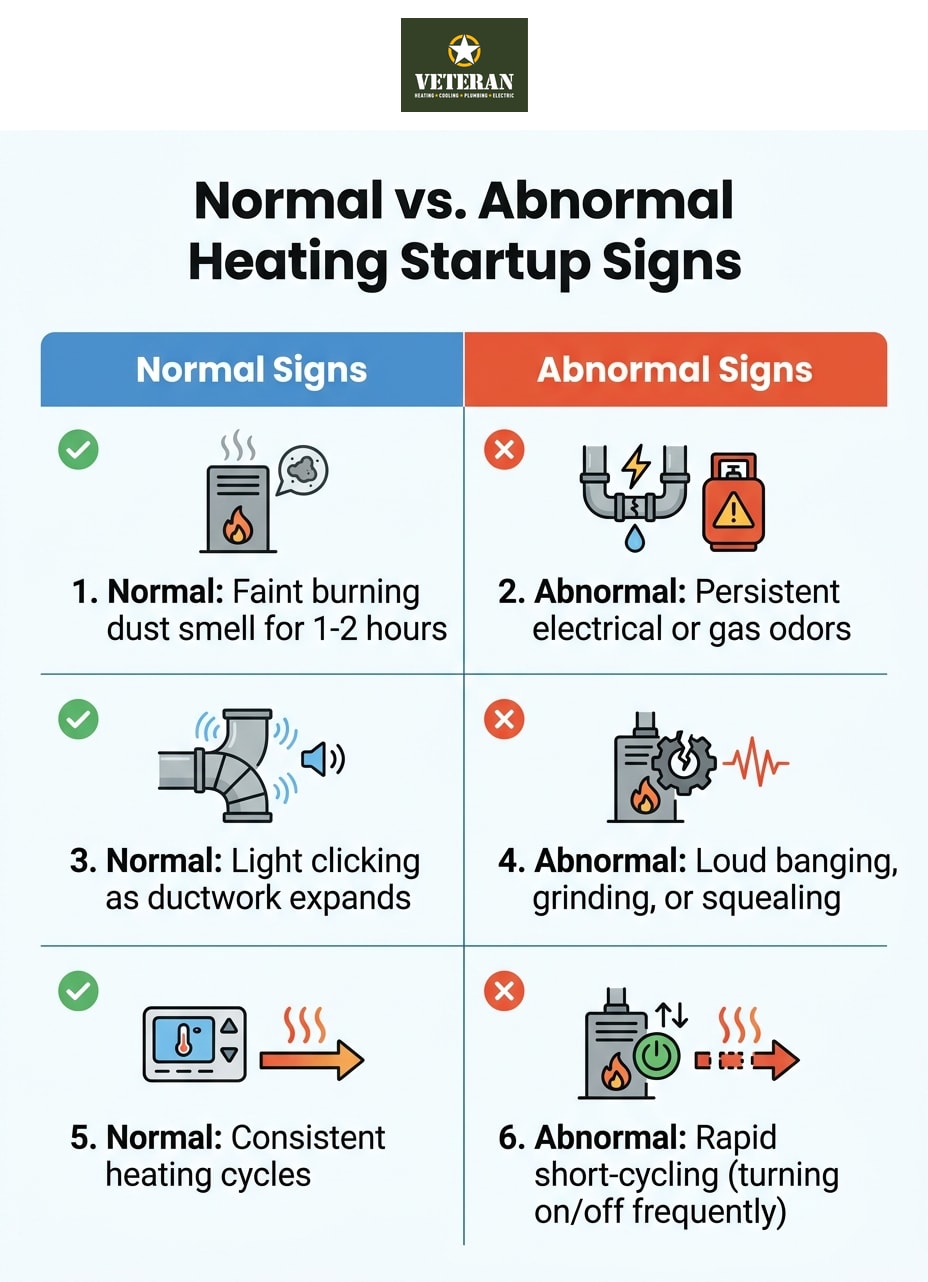
This creates a distinct, slightly acrid "burning dust" odor that will circulate through your vents. The quick fix: Simply open a few windows to ventilate the house. This smell is entirely normal and should dissipate completely within one to three hours of continuous operation.
When Odors Indicate Danger
While dust burn-off is harmless, other smells are urgent warning signs that require you to shut down the system immediately at the thermostat and call a professional.
• Faint Burning Dust — Likely Cause: Summer debris incinerating on the heat exchanger. — Required Action: Normal operation. Ventilate the home and monitor for 1-3 hours.
• Electrical or Ozone — Likely Cause: Overheating blower motor, melting wire insulation, or failing capacitor. — Required Action: Shut off system immediately. Requires a licensed technician.
• Rotten Eggs (Sulfur) — Likely Cause: Natural gas leak near the furnace or gas valve. — Required Action: Evacuate the home, call the gas company, then call an HVAC pro.
• Metallic or Oil — Likely Cause: Failing bearings in the blower motor or inducer draft motor. — Required Action: Turn off the system to prevent permanent motor damage.
Never ignore persistent electrical, metallic, or gas odors. These are not startup quirks; they are active mechanical or safety failures that pose a severe risk to your property.
Normal Clicks vs. Warning Clanks: Analyzing Heating System Noises
As a Midea Elite dealer, we regularly field questions about the symphony of sounds a heating system produces during its initial fall cycles. Just like smells, noises fall into two distinct categories: harmless thermal dynamics and serious mechanical distress.
Thermal Expansion in Ductwork
When cold sheet metal ductwork is suddenly blasted with hot air, the metal expands. This physical change causes the joints and seams of the ducts to shift slightly, resulting in a series of light clicks, pops, or pings echoing through your walls or ceilings. This is standard thermal expansion. As the ductwork acclimates to the warmer temperature, these sounds will become less frequent and less noticeable.
Mechanical Warning Signs
Internal component noises are a completely different story. If you hear loud banging, grinding, or squealing coming directly from the furnace cabinet, you are listening to a mechanical failure in progress.
• Loud booming or banging on startup: This often indicates delayed ignition. Gas is pooling in the combustion chamber before the igniter successfully lights it, causing a miniature explosion. This can crack the heat exchanger over time.
• High-pitched squealing: Typically points to a failing blower motor belt (in older models) or dry, failing bearings in a direct-drive blower motor.
• Harsh grinding: Usually means the inducer draft motor (the fan that clears exhaust gases) is failing or unbalanced.
These mechanical noises will only worsen if left unaddressed during the early heating season. A failing bearing generates extreme friction, which leads to overheating, which eventually burns out the entire motor. Internal component inspections are strictly for licensed professionals. Opening the cabinet to investigate moving parts or combustion chambers exposes you to high-voltage electricity and dangerous gases.
Why Your Furnace or Heat Pump is Short-Cycling This Fall
One of the most frustrating behaviors a heating system can exhibit is short-cycling. This occurs when the system turns on, runs for just a few minutes, and shuts down before the home has actually reached the target temperature on the thermostat. It will then wait a brief period and repeat the process, turning on and off rapidly.
The Stress of Extreme Temperature Swings
Extreme temperature swings from summer to fall place immediate stress on dormant heating equipment. During a sudden cold snap, the system is asked to run long cycles to overcome the ambient chill in the house. If the system is short-cycling instead, it is usually because a built-in safety mechanism is intentionally shutting the equipment down to prevent catastrophic damage.
Common Culprits of Short-Cycling
Before assuming the equipment is broken, homeowners should check for non-technical airflow restrictions. The furnace contains a high-limit switch designed to measure internal temperatures. If the air cannot flow freely through the system, the heat builds up inside the cabinet. The limit switch detects this dangerous overheating and cuts the power to the burners.
1. Clogged air filters: A filter packed with summer dust and pet hair acts like a solid wall, choking the system of return air and causing immediate overheating.
2. Blocked supply registers: Furniture, rugs, or boxes placed over floor vents prevent hot air from escaping the ductwork.
3. Closed return vents: Closing doors to unused rooms or shutting off return grilles disrupts the precise pressure balance the blower motor needs to function.
If you have verified that your filters are clean and your vents are completely unobstructed, the short-cycling is likely caused by a failing flame sensor, a malfunctioning thermostat, or a refrigerant issue. For those utilizing dual-fuel setups, understanding how a heat pump works in a four-season climate is critical, as short-cycling in these units often points to defrost board issues or low refrigerant levels that only a certified technician can resolve.
The Hidden Cost of Ignoring Early Heating Warning Signs
It is incredibly tempting to ignore a strange noise or a brief short-cycling episode if the house eventually gets warm. However, what we see preparing homes for winter is that the majority of mid-winter emergency no-heat calls originate from these exact ignored fall warning signs.
How Small Issues Compound
Heating systems are highly interconnected. A minor issue with one component forces other components to work harder to compensate. For example, a slightly dirty flame sensor might cause the system to occasionally misfire in mid-fall October. It seems like a minor annoyance. But as the winter progresses and the system runs constantly, that sensor fails completely, locking out the entire furnace on the coldest night of the year.
Similarly, a failing capacitor might cause the blower motor to draw slightly more amperage than normal. Over a few weeks, this excessive electrical load burns out the motor entirely, turning a simple part replacement into a major, costly repair.
Real-World Consequences
One Denver homeowner, referred to us by a friend during a bitter winter freeze, needed trustworthy home service professionals for a sudden system failure. Our technicians arrived promptly, wore shoe covers at the front door, and worked honestly to diagnose the problem. The job was done affordably and honestly, earning a strong recommendation from the homeowner, but the diagnostic revealed a hard truth: the failure had started weeks earlier as a minor, ignored mechanical noise. Catching that noise during an early fall check would have prevented the emergency breakdown entirely.
Taking a proactive, preventative approach to home maintenance stops the compounding effect of mechanical failures. The true value of addressing these issues early is the confidence of knowing your system is verified safe before the deep freezes arrive.
DIY Observation vs. Professional Annual Heating Checks
Homeownership requires a balance of active observation and knowing when to call in certified expertise. Establishing clear boundaries between safe homeowner maintenance and necessary licensed professional service keeps your family safe and your warranty intact.
Safe Homeowner Maintenance Tasks
Your role in heating maintenance revolves around airflow and observation. You are the first line of defense in keeping the system breathing easily.
• Replacing air filters: This should be done every 30 to 90 days, depending on filter thickness and household factors like pets.
• Checking thermostat settings: Ensure the thermostat is set to "Heat" and the fan is set to "Auto." Replace the batteries if the display is fading.
• Clearing the perimeter: Keep all flammable materials, boxes, and clutter at least three feet away from the furnace cabinet.
• Outdoor unit care: For heat pumps, clear away fall leaves, branches, and debris from the outdoor compressor unit to ensure proper airflow.
The Scope of a Professional Annual Heating Check
As a Midea Elite dealer, we adhere to strict diagnostic protocols. An annual heating check is not a quick visual glance; it is a comprehensive safety and performance evaluation.
A licensed professional will test the gas pressure to ensure the burners are not over-firing or under-firing. They will perform a combustion analysis to guarantee dangerous carbon monoxide is venting safely out of the home. They will inspect the heat exchanger for microscopic cracks that could leak exhaust gases. Finally, they will check the electrical loads on all motors and capacitors to predict and prevent mid-winter failures. Safety and compliance require this level of certified expertise—these are not tasks that can be learned from a weekend tutorial.
Military Precision in HVAC Maintenance: The Veteran-Owned Advantage
When homeowners search for reliable service, they are looking for more than just technical knowledge; they are looking for discipline, integrity, and transparency. Working with a veteran-owned company brings a distinct operational advantage to your home maintenance.
Checklist-Driven Diagnostics
Military discipline translates directly to rigorous, checklist-driven HVAC maintenance procedures. In our experience, skipping steps during a diagnostic leads to missed warning signs. By applying a structured, methodical approach to every annual heating check, technicians ensure that no component is overlooked. Every wire, every motor, and every safety switch is tested against exact manufacturer specifications.
Integrity in Home Services
Connecting the search for veteran owned hvac companies near me with a desire for reliable service makes perfect sense. Transparency in diagnosing heating issues means you receive the unvarnished truth about your system's health. If a part is failing, you will know exactly why and how it impacts your home. If a system just needs a simple adjustment, that is exactly what will be recommended.
This commitment extends beyond the technical work. Through initiatives like the Service to Heroes program, veteran ownership means staying deeply rooted in the community, providing military precision to home services while giving back to local heroes who have served.
Frequently Asked Questions About Fall Heating Startup
Is it normal for my heater to smell when I first turn it on?
Yes, a brief burning dust smell is completely normal during the first cycle of the season. As dust settles on the heat exchanger over the summer, it burns off rapidly when the system ignites. However, if the air smells like gas, electrical burning, or the dust odor lasts more than a few hours, turn the system off immediately and call a professional.
Why is my furnace making a loud noise on startup?
Minor ticking or popping is normal thermal expansion as cold ductwork reacts to hot air. Conversely, loud banging, booming, or squealing indicates mechanical distress or ignition delays requiring immediate repair. Never ignore grinding or banging sounds, as they often precede major component failures.
Why is my furnace short cycling in the fall?
Short-cycling is often caused by dirty air filters restricting airflow, which forces the system to overheat and shut down for safety. It can also be triggered by a malfunctioning thermostat or blocked vents. If replacing the filter does not resolve the rapid on-and-off cycles, a technician must evaluate the limit switch and internal sensors.
What maintenance does a heat pump need before winter?
A heat pump requires clearing outdoor debris, checking refrigerant levels, and testing the defrost cycle to handle freezing precipitation. Because heat pumps operate year-round, the transition from summer cooling to winter heating places heavy wear on the compressor. An annual professional check is strongly recommended to ensure peak efficiency.
When should I schedule fall HVAC maintenance?
You should ideally schedule your annual heating check before the first major freeze hits the region. Early fall scheduling ensures your system is verified safe and ready for heavy use. It also helps you avoid the peak emergency wait times that occur when the first deep freeze causes widespread system failures across the city.
Secure Your Comfort Before the Deep Freeze Hits
The transition from mild fall weather to freezing temperatures is the most critical time for your home's mechanical systems. True peace of mind comes from knowing your equipment has been professionally verified, tested, and secured for the long months ahead. Do not ignore the small warning signs like strange odors, unusual clanks, or short, erratic heating cycles. As a Midea Elite dealer, we encourage you to talk to an expert and schedule an annual heating check today. Catching minor issues now ensures your home remains a warm, reliable sanctuary no matter how cold it gets outside.
ABOUT Veteran Heating, Cooling, Plumbing & Electric
Veteran Heating, Cooling, Plumbing & Electric was founded on the belief that service should be personal, honest, and community-focused. Our team is built around integrity, professionalism, and a true commitment to your home’s comfort and safety.
Led by a U.S. Army veteran with over 30 years of industry experience, we’re proud to remain locally owned and operated. Every technician, plumber, and electrician is EPA-certified, background checked, and driven to exceed expectations.
- 24/7 ServiceWe offer weekend & 24/7 emergency service. We’re here whenever you need us—day, night, or weekend, no exceptions.
- $0 Trip FeesNo dispatch or trip fees. You’ll never pay just for us to show up—service starts when the work does.
OUR SERVICES
AIR CONDITIONING

We offer specialty and seasonal services like indoor air quality upgrades, pre-winter furnace checks, and summer AC tune-ups to keep your home prepared year-round.
Our Primary Air Conditioning Services Include:
Don't see the service you need? Call our Team today!
PLUMBING
From leaks to full system installs, our plumbing services cover everything you need for a safe, reliable home water system, 24/7.
Our Primary Plumbing Include:
- Water Heater Replacement
- Water Heater Repair
- Trenchless Sewer Line
- Water Filtration
- Slab Leak
- Sewer Line Repair
Don't see the service you need? Call our Team today!
ELECTRICAL

Our electrical services ensure your home stays safe and powered, from routine fixes to complete system upgrades.
Our Primary Electrical Services Include:
- House Rewiring
- Electrician
- Electric Panel Upgrade
- Electric Panel Replacement
- EV Chargers
- Whole House Generator
Don't see the service you need? Call our Team today!
HEATING

We install, repair, and maintain heating & furnace systems with expert care to keep your Colorado home comfortable and energy-efficient year-round.
Our Primary Heating Services Include:
- Heating Installation
- Heating Replacement
- Heating Maintenance
- Heating Repair
- Heating Service
- Heating Tune-Up
Don't see the service you need? Call our Team today!