How to Decide Between AC Repair and Replacement: A Quick Answer First
Knowing how to decide between AC repair and replacement can save you from either overspending on a dying system or replacing one that just needs a simple fix. Here is a fast-reference guide before we go deeper:
Use these quick checks to decide:
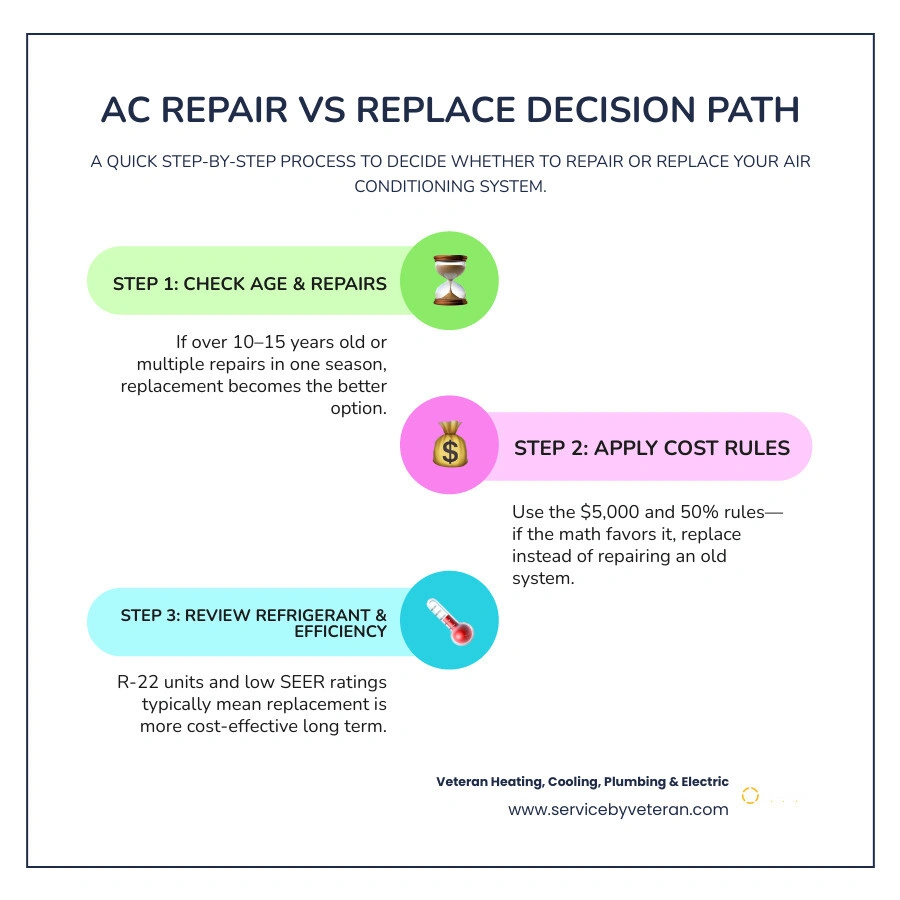
1. Check the age — If your AC is 10–15 years old, replacement is worth serious consideration.
2. Apply the $5,000 Rule — Multiply your unit's age by the estimated repair cost. If the result exceeds $5,000, replacement typically makes more financial sense.
3. Apply the 50% Rule — If the repair cost is 50% or more of what a new system would cost, lean toward replacement.
4. Check the refrigerant type — Units using R-22 refrigerant (phased out in 2020) are rarely worth repairing in 2026.
5. Count recent repairs — Two or more repairs in a single season is a strong signal the system is declining.
6. Review your energy bills — A spike of 15% or more year-over-year without a change in usage often means the system is losing efficiency.
7. Note the problem type — Minor, isolated issues on a newer unit favor repair. Major component failures on an older unit favor replacement.
When your air conditioning system starts struggling in the middle of a Denver summer, the stakes feel high and the clock feels short. Weak airflow, uneven temperatures, strange noises, or a climbing electric bill — these are the moments that force a decision most homeowners would rather avoid. The challenge is that neither choice is obviously right without knowing the full picture of your system's age, condition, repair history, and efficiency.
This guide walks you through every factor that matters, in plain language, so you can make a confident and well-informed call — whether that means a straightforward repair or investing in a new system that will serve your home for the next decade or more.
I'm Mike Townsend, a U.S. Army veteran and the founder of Veteran Heating, Cooling, Plumbing & Electric, and my background — which includes managing precision cooling systems for military equipment — gives me a grounded, no-guesswork perspective on how to decide between AC repair and replacement for Denver Metro homeowners. Let's walk through it step by step.
How to Decide Between AC Repair and Replacement
The right choice usually comes down to six things:
• System age
• Repair frequency
• Efficiency decline
• Refrigerant type
• Warranty status
• Overall comfort in the home
No single factor tells the whole story. A 7-year-old unit with one bad capacitor is a very different situation from a 13-year-old system with weak airflow, uneven cooling, and a refrigerant leak. That is why we recommend looking at the whole pattern, not just the latest breakdown.

Start With the Age and Expected Lifespan of Your AC
For most homes in Denver, Greenwood Village, Arvada, Aurora, Broomfield, Castle Rock, Centennial, Columbine, Golden, Highlands Ranch, Lakewood, and Littleton, a central AC system typically lasts about 10 to 15 years. Some make it longer with excellent maintenance and ideal operating conditions. Others wear out sooner from heavy seasonal use, poor installation, airflow issues, or deferred maintenance.
A simple way to think about age:
• Under 8 years old: repair is often reasonable if the issue is isolated
• Around 10 years old: start comparing repair value more carefully
• 10 to 15 years old: replacement becomes more likely if major issues appear
• Over 15 years old: replacement is usually the smarter long-term move
Age matters because it predicts future reliability, not just current condition. Even if we can fix one part, the rest of the system may be approaching the same stage of wear. Older units also tend to be less efficient than modern equipment, so you may be paying more every month just to keep an aging system limping along.
Use the $5,000 Rule and 50% Rule Without Relying on Guesswork
Two popular rules can help remove emotion from the decision.
The $5,000 Rule
Multiply the age of the unit by the repair cost estimate.
• If the total is below $5,000, repair may still be reasonable
• If the total is above $5,000, replacement often makes more sense
Example:
• 12-year-old AC
• Repair estimate for a major issue
• 12 x repair amount = if that total exceeds $5,000, replacement deserves serious consideration
This rule is not magic, but it is useful because it combines age and repair expense in one quick test.
The 50% Rule
If the repair is 50% or more of the cost of a new system, replacement is usually the better value, especially on older equipment.
This rule is especially helpful for major component failures like:
• Compressor problems
• Evaporator coil leaks
• Condenser coil damage
• Repeated refrigerant-related repairs
The key is not to use these rules blindly. They work best alongside a professional evaluation of system condition, performance, and remaining lifespan.
Check Whether the Problem Is Minor, Isolated, or a Sign of Bigger Wear
Not every breakdown means the system is finished. Some AC problems are annoying but repair-friendly.
Minor or isolated issues often include:
• Capacitor failure
• Thermostat problems
• Clogged condensate drain
• Dirty coil
• Blown fuse or contactor issue
These are often worth fixing if the system is otherwise in good shape.
Replacement becomes more likely when the issue points to broader system wear, such as:
• Compressor failure on an older unit
• Refrigerant leaks from corroded coils
• Repeated electrical failures
• Multiple repairs in the same cooling season
• Poor cooling even after repairs
That is the difference between a one-off fix and a system that is waving a tiny white flag.
Signs It’s Time to Replace Instead of Repair
Some warning signs tell us the problem is bigger than one bad part. If several of these are happening at once, replacement usually deserves the front seat in the conversation.
• Newer system — Replacement warning signs: Older system nearing or past expected lifespan
• One isolated issue — Replacement warning signs: Frequent breakdowns
• Strong airflow and cooling otherwise — Replacement warning signs: Weak airflow or uneven temperatures
• Stable utility bills — Replacement warning signs: Rising energy use without lifestyle changes
• Current refrigerant and available parts — Replacement warning signs: R-22 refrigerant or hard-to-source parts
• Active warranty coverage — Replacement warning signs: Expired warranty and major wear
• Good comfort between service calls — Replacement warning signs: Short cycling, humidity issues, noisy operation
How to Decide Between AC Repair and Replacement When Bills Keep Climbing
A rising electric bill is one of the clearest clues that an AC system is losing efficiency. Research consistently shows older systems can use significantly more energy than modern high-efficiency equipment. In many homes, a jump of 15% or more year over year without a clear change in usage is worth investigating.
Why this happens:
• The system runs longer to hit the same temperature
• Coils or internal parts are wearing down
• Airflow problems force the unit to work harder
• Older equipment has lower efficiency ratings to begin with
If your house feels less comfortable while your bills rise, that is a double warning sign. You are paying more and getting less. That is rarely a good long-term arrangement.
For Denver Metro homes, efficiency issues can show up fast during hot stretches when the system has to run for long periods. If your AC struggles to maintain temperature during peak summer afternoons, replacement may offer both lower energy use and better comfort.
When Refrigerant Type and Efficiency Ratings Push the Decision Toward Replacement
Refrigerant matters more than many homeowners realize.
If your system uses R-22 refrigerant, that is a major factor in 2026. R-22 was phased out years ago, and because it is no longer produced for new use in the U.S., repairs involving leaks or recharging are often hard to justify. In plain English: if an older R-22 system develops a refrigerant problem, replacement is usually the more practical path.
Efficiency ratings matter too.
Older systems may have much lower SEER ratings than current equipment. Newer systems use SEER2 ratings, which reflect updated testing standards. High-efficiency replacements, especially ENERGY STAR certified models, can reduce cooling energy use substantially compared with aging equipment. Research commonly shows potential savings in the 20% range, and in some cases more, when replacing very old low-efficiency units.
Replacement deserves serious attention when:
• The unit uses R-22
• The system is over 10 years old and inefficient
• It has a low legacy SEER rating
• It struggles to cool consistently
• Parts availability is becoming an issue
Red Flags That Usually Mean Replacement Makes More Sense
Some situations push the decision strongly toward replacement:
• You have needed multiple repairs in the last year
• The unit is over 10 years old and losing performance
• A major component has failed
• The warranty has expired
• The indoor and outdoor equipment are mismatched
• Certain rooms stay hot while others freeze
• Humidity control is getting worse
• The system short cycles or turns on and off constantly
• It makes new loud noises or vibrates excessively
• It no longer gives you confidence during peak summer weather
Reliability matters. If you are spending every July wondering whether your AC will survive the weekend, that stress is part of the decision too.
When Repairing Your AC Still Makes Sense
We do not believe every AC problem should end in replacement. In many cases, a repair is absolutely the right move.
Repair is often the better option when:
• The system is under 10 years old
• The issue is minor and isolated
• The unit has been well maintained
• Cooling performance has otherwise been strong
• Your energy bills have stayed stable
• Warranty coverage still applies
• You are planning to move soon and only need a practical short-term fix
Best Cases for Repairing Instead of Replacing
A repair usually makes sense when the AC still has useful life left and the problem is not part of a bigger pattern.
Good repair candidates usually look like this:
• The AC is newer
• This is the first major service call
• Airflow is still strong
• Temperatures are consistent throughout the home
• Humidity control is normal
• The repair is straightforward
• The refrigerant is current and parts are available
For example, if a 6-year-old system needs a thermostat repair or capacitor replacement, there is usually no reason to rush into replacement. The smarter move is often to fix the part, verify system performance, and keep maintaining it.
Questions to Ask Before Approving a Repair
Before saying yes to a repair, ask a few practical questions:
• How much life is likely left in this system?
• Is this a one-time issue or a sign of wider wear?
• Have there been repeated repairs on major components?
• Are replacement parts readily available?
• Is the refrigerant current or obsolete?
• Is the airflow correct?
• Has anyone checked system sizing or load calculation if comfort has always been poor?
• Will this repair restore normal performance, or only buy limited time?
Those questions help you avoid the sunk-cost trap. Just because you repaired it last year does not mean you should keep feeding the same problem forever.
What You Gain With a New AC System
Replacement is not only about avoiding repairs. It is also about what modern equipment can do that older systems simply cannot.
Today’s systems can offer:
• More consistent temperatures
• Better humidity control
• Quieter operation
• Lower energy use
• Improved airflow
• Better compatibility with smart thermostats
• Variable-speed performance
• Zoning options in some homes
• Improved indoor air quality support
And yes, once many homeowners experience truly even, quiet cooling, they wonder how they lived with the old system for so long.
How Modern Features Improve Comfort and Efficiency
Modern AC technology has changed a lot.
Variable-speed systems
Instead of running full blast all the time, variable-speed equipment can operate at lower levels for longer periods. That helps with:
• More even temperatures
• Better dehumidification
• Lower energy waste
• Less wear from constant start-stop cycling
• Quieter day-to-day operation
Smart thermostat compatibility
New systems often work seamlessly with smart controls that let you:
• Adjust settings remotely
• Build schedules around your routine
• Track energy use
• Reduce unnecessary runtime
Zoning options
In some homes, zoning allows different parts of the house to be cooled independently. That can help if one floor always feels hotter or if some rooms are rarely used.
Better airflow and comfort
Modern systems are often better at maintaining steady indoor conditions instead of swinging from too warm to too cold. That means fewer hot spots, fewer thermostat battles, and less family debate over whether 72 feels "arctic."
Incentives, Rebates, and Tax Credits Homeowners Should Check in 2026
If you are replacing an older system, it is smart to check for available incentives before making a final decision.
In 2026, homeowners may be able to explore:
• Federal tax credits for qualifying high-efficiency equipment
• Utility rebates for eligible ENERGY STAR systems
• Local energy-efficiency incentives
• Manufacturer promotions when available
Programs change, and eligibility depends on the equipment installed and current rules. The best approach is to ask your installer which options apply to your home and equipment choice. We always recommend checking before installation so nothing gets missed.
Frequently Asked Questions About AC Repair vs. Replacement
What is the typical lifespan of a residential air conditioning system?
Most residential air conditioning systems last about 10 to 15 years. Some can last longer with regular maintenance, proper installation, and balanced airflow. In homes with heavy summer use or neglected maintenance, the useful lifespan may be closer to the lower end of that range.
Age alone does not decide everything, but once a system moves past the 10-year mark, we usually recommend taking a closer look at repair value, efficiency, and reliability.
When should you replace an AC unit because of R-22 or low efficiency?
If your system uses R-22 refrigerant and develops a leak or needs major refrigerant-related work, replacement is often the smarter choice in 2026. R-22 is phased out, harder to source, and much less practical for ongoing service.
Low efficiency can also push the decision toward replacement, especially when:
• The system is older than 10 years
• Bills are rising
• Cooling is inconsistent
• The unit has a very low legacy SEER rating
• Repairs will not solve the underlying efficiency problem
A newer ENERGY STAR qualified system can often provide major improvement in both operating efficiency and comfort.
Can a new AC really lower energy use and improve comfort?
Yes. Research commonly shows meaningful reductions in cooling energy use when homeowners replace an old low-efficiency system with modern high-efficiency equipment. In some cases, upgrading from an older 10-SEER unit to a modern higher-efficiency system can reduce cooling costs by around 20% or more, depending on installation quality, usage patterns, and home conditions.
Comfort often improves too, thanks to:
• More even cooling
• Better humidity control
• Quieter operation
• Better thermostat integration
• More reliable performance during hot weather
Conclusion
If you are still deciding, use this simple checklist:
• How old is the system?
• Is this a one-time repair or part of a pattern?
• Does it use R-22 refrigerant?
• Are your energy bills climbing?
• Is comfort getting worse?
• Are major components starting to fail?
• Do the $5,000 Rule and 50% Rule point toward replacement?
That process will usually make the answer much clearer.
When you want a professional second opinion, we are here to help. At Veteran Heating, Cooling, Plumbing & Electric, we believe homeowners deserve honest guidance, clear recommendations, and no pressure. We serve homeowners across the Denver Metro area, including Denver, Greenwood Village, Arvada, Aurora, Broomfield, Castle Rock, Centennial, Columbine, Golden, Highlands Ranch, Lakewood, and Littleton.
If you want help evaluating whether your system should be repaired or replaced, learn more about our air conditioning services.
ABOUT Veteran Heating, Cooling, Plumbing & Electric
Veteran Heating, Cooling, Plumbing & Electric was founded on the belief that service should be personal, honest, and community-focused. Our team is built around integrity, professionalism, and a true commitment to your home’s comfort and safety.
Led by a U.S. Army veteran with over 30 years of industry experience, we’re proud to remain locally owned and operated. Every technician, plumber, and electrician is EPA-certified, background checked, and driven to exceed expectations.
- 24/7 ServiceWe offer weekend & 24/7 emergency service. We’re here whenever you need us—day, night, or weekend, no exceptions.
- $0 Trip FeesNo dispatch or trip fees. You’ll never pay just for us to show up—service starts when the work does.
OUR SERVICES
AIR CONDITIONING
.jpg)
We offer specialty and seasonal services like indoor air quality upgrades, pre-winter furnace checks, and summer AC tune-ups to keep your home prepared year-round.
Our Primary Air Conditioning Services Include:
Don't see the service you need? Call our Team today!
PLUMBING
From leaks to full system installs, our plumbing services cover everything you need for a safe, reliable home water system, 24/7.
Our Primary Plumbing Include:
- Water Heater Replacement
- Water Heater Repair
- Trenchless Sewer Line
- Water Filtration
- Slab Leak
- Sewer Line Repair
Don't see the service you need? Call our Team today!
ELECTRICAL

Our electrical services ensure your home stays safe and powered, from routine fixes to complete system upgrades.
Our Primary Electrical Services Include:
- House Rewiring
- Electrician
- Electric Panel Upgrade
- Electric Panel Replacement
- EV Chargers
- Whole House Generator
Don't see the service you need? Call our Team today!
HEATING
.jpg)
We install, repair, and maintain heating & furnace systems with expert care to keep your Colorado home comfortable and energy-efficient year-round.
Our Primary Heating Services Include:
- Heating Installation
- Heating Replacement
- Heating Maintenance
- Heating Repair
- Heating Service
- Heating Tune-Up
Don't see the service you need? Call our Team today!