The Hidden Toll of July Heatwaves on Your Cooling System
With August just around the corner, our team at Veteran Heating, Cooling, Plumbing & Electric knows firsthand that assessing the toll of continuous July heat on your Denver AC's compressor before school starts is the most important step you can take for your home's comfort. Summer in the Valley is only weeks away from transitioning into the busy fall season, but your air conditioning system has been running a relentless marathon. Throughout July, your cooling equipment has been forced to operate non-stop just to maintain a baseline level of indoor comfort. This continuous operation places an immense, often invisible strain on the mechanical components of your system.
The compressor acts as the beating heart of your air conditioning unit. Located in the outdoor cabinet, its sole job is to pump chemical refrigerant through the system, pressurizing it so it can absorb heat from inside your house and release it outside. Because it is a heavy-duty mechanical pump with moving parts, motors, and pressurized valves, it bears the absolute brunt of this non-stop summer operation.
Right now, you are facing a critical decision point. You might be hearing new, unusual mechanical sounds coming from the outdoor unit, or noticing that the system runs for hours without shutting off. You can choose to ignore these warning signs and hope the equipment survives the rest of the season, or you can schedule a proactive professional diagnostic with our technicians. Addressing these symptoms now is vital, because a complete compressor failure during the chaotic August back-to-school transition will leave your family sweating through the hottest part of the late summer.
Why Denver's Climate Creates the Perfect Storm for Compressor Strain
Most homeowners do not realize that where you live fundamentally changes how hard your air conditioner has to work. As a local Denver business, we see every day how our metro area presents a unique set of environmental challenges that accelerate mechanical wear and tear far faster than in sea-level cities.
The Science of High-Altitude Cooling
Denver's famous 5,280-foot elevation means that the air surrounding your home is significantly thinner. High-altitude environments inherently reduce air density, which means there are fewer air molecules packed into every cubic foot of atmosphere. While this thinner air might feel pleasant on a hike, it creates a massive mechanical disadvantage for your air conditioning system.
How Thinner Air Impacts Heat Transfer
Your outdoor condenser coil relies on a fan pulling air over its aluminum fins to carry heat away from the refrigerant. Because the air in Denver is less dense, it simply cannot carry away as much heat per minute as denser, sea-level air. This phenomenon decreases the efficiency of heat transfer at the outdoor condenser coil. To compensate for this inefficiency, the compressor is forced to run longer, pump harder, and operate at higher internal temperatures just to achieve the exact same cooling effect inside your living room.
The Cumulative Impact of 90-Degree Days
In our years of servicing Denver homes, we've seen how combining this high-altitude inefficiency with the continuous, 90-plus degree days of a typical July heatwave creates the perfect storm for mechanical degradation. The compressor rarely gets a chance to cool down. This continuous, high-load operation means that by the time August arrives, your system has accumulated months' worth of wear and tear in a matter of weeks. The metal components expand, the electrical draw remains constantly high, and the internal environment of the compressor reaches a state of severe thermal stress.
Cumulative Mechanical Wear: Inside Your AC Unit
To understand why these systems fail, it helps to look inside the steel shell of the compressor itself. This component is a marvel of modern engineering, but it is not invincible.
The Heart of the System
The compressor's primary role is to maintain exact pressure differentials between the indoor and outdoor AC units. It takes low-pressure, warm refrigerant gas coming from your indoor evaporator coil and squeezes it into a high-pressure, incredibly hot gas. This compression is what allows the refrigerant to release its heat outside. Doing this requires an internal electric motor spinning at thousands of revolutions per minute, driving pistons or scrolls to compress the gas.
Thermal Fatigue and Lubrication Breakdown
Inside the compressor casing, there is a specific type of refrigerant oil designed to keep all those moving metal parts lubricated. Under normal conditions, this oil flows smoothly. However, the constant thermal load of continuous July operation begins to degrade this internal lubrication. High heat causes the oil to break down, lose its viscosity, or even vaporize slightly. When lubrication fails, metal-on-metal friction increases exponentially.
Simultaneously, the electrical motor windings inside the compressor generate their own heat. These windings are coated in a thin layer of protective insulation. Constant operation in extreme heat causes this insulation to become brittle and degrade, setting the stage for electrical shorts.
The Late-Summer Breaking Point
This transition from normal operation to mechanical struggle happens slowly, making it a hidden danger. The components fatigue progressively, and our technicians often find that the cumulative damage remains out of sight until late summer. Eventually, the friction, heat, and electrical stress reach a breaking point, turning a quietly struggling system into a loud, failing one.
Auditory Warning Signs: Decoding Your Compressor's Cries for Help
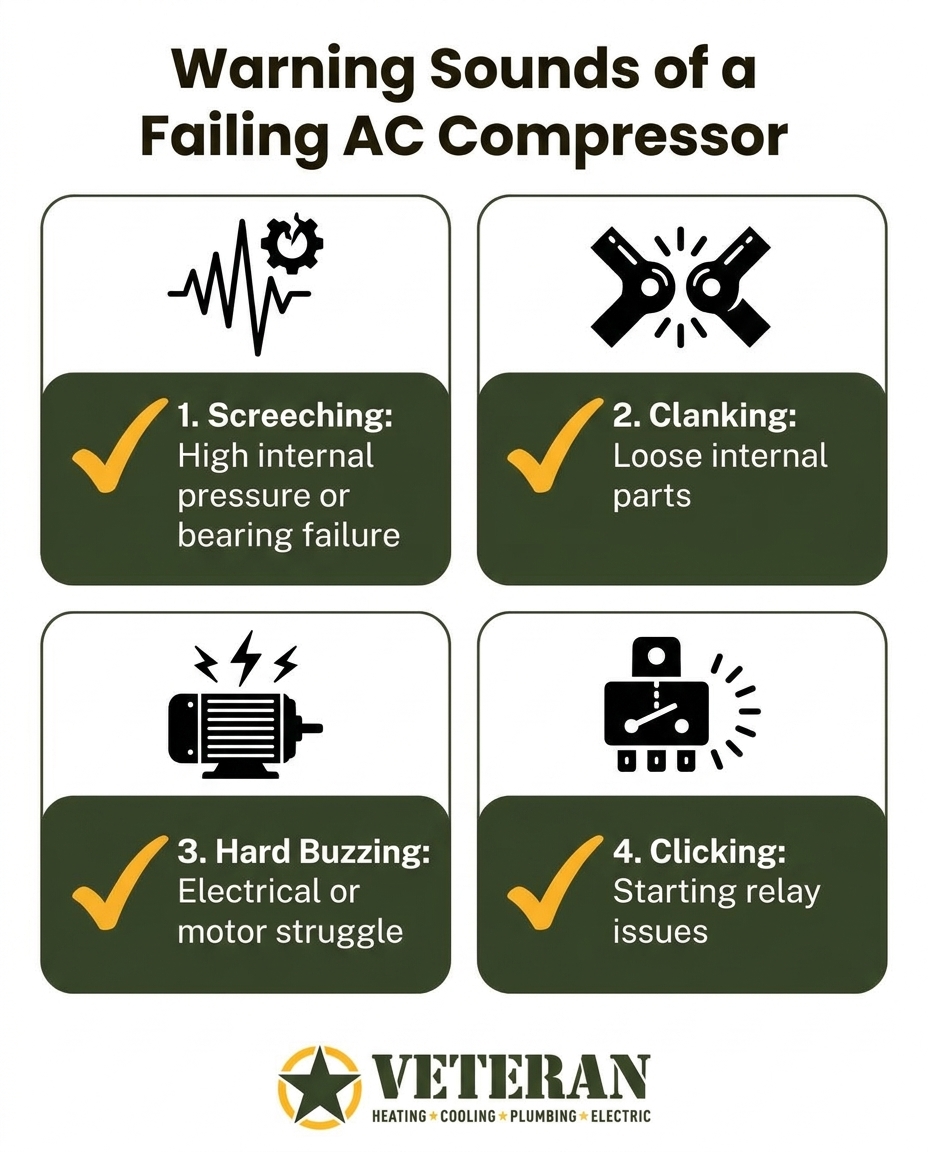
If you notice strange noises coming from your outdoor cabinet, that usually means the internal wear has reached a critical stage. Your compressor will literally tell you it is dying if you know what to listen for. Based on the countless service calls our team handles, here are the specific auditory warning signs that indicate imminent failure:
• Screeching or squealing: A high-pitched, piercing screech often indicates a dangerous internal pressure build-up within the compressor housing. It can also point to failing motor bearings that have completely lost their lubrication and are grinding metal on metal.
• Clanking or banging: This is a strong sign of catastrophic internal damage. A heavy clanking sound usually means there are loose internal parts, a broken connecting rod, or a piston that has detached inside the hermetically sealed shell.
• Hard buzzing: A loud, aggressive electrical buzz points to a motor that is struggling to start. This is frequently tied to an electrical issue, such as a failing run capacitor that can no longer provide the necessary torque to get the compressor motor spinning.
• Clicking: Rapid clicking at the outdoor unit suggests the starting relay is attempting to engage, but failing to actually turn the compressor on. It is the sound of an electrical command being sent, but the mechanical component refusing to respond.
Setting the Threshold: Normal Operation vs. Immediate Diagnostics
Knowing the difference between the standard sounds of your air conditioner working hard and the red-flag sounds of a system destroying itself is vital for protecting your home.
Learning to Listen to Your System
Every air conditioner makes noise. The fan blades cut through the air, the compressor hums as it runs, and the contactor makes a distinct click when the system turns on. However, there is a clear threshold where a sound crosses the line from normal late-summer operation to requiring a professional.
• A smooth, steady hum from the outdoor unit. — Red Flag Compressor Sounds: A harsh, stuttering buzz that shakes the cabinet.
• A single click when the thermostat calls for cooling. — Red Flag Compressor Sounds: Rapid, repeated clicking without the unit starting.
• The whoosh of air moving through the top fan. — Red Flag Compressor Sounds: Metallic clanking or grinding over the sound of the fan.
• Brief, quiet gurgling of refrigerant in the lines. — Red Flag Compressor Sounds: High-pitched screaming or squealing from the metal casing.
The Domino Effect of Ignoring Warning Signs
The risks of allowing a struggling compressor to continue running are severe. If a compressor is pulling too much electrical current because it is mechanically binding up, it will overheat the wires and potentially melt the electrical contactors. This electrical damage can cascade backward into your home's breaker panel. Furthermore, if the compressor fails violently, it can send metal shrapnel and acidic, burnt oil pumping through your entire refrigerant line set, ruining the indoor evaporator coil as well.
Our team cannot overstate the importance of acting on these auditory red flags immediately. Waiting for the system to start blowing warm air means you have waited too long. Tying up these loose ends now prevents a catastrophic breakdown during the busy August back-to-school transition, when your family's schedule is already stretched thin.
Getting an Honest Assessment Before the Chaos Begins
Many homeowners hesitate to call a professional for strange noises because they fear being pressured into buying a whole new system. Getting a truthful, disciplined evaluation of your equipment's health should never feel like a high-pressure sales pitch.
The Value of Military Discipline in Diagnostics
Working with a veteran-owned company like ours means you are getting the same level of discipline and accountability that military service demands. This translates directly into how we perform our diagnostics. Instead of jumping to conclusions, our disciplined technicians follow a strict protocol to uncover the exact root cause of the sound, assuring you receive an honest assessment of the compressor's health rather than a rushed upsell.
Real-World Reliability
This commitment to integrity plays out in neighborhoods across the region every day. During a recent summer heatwave, our team responded to a Denver metro homeowner whose equipment was acting up. We dispatched a technician punctually, provided a highly knowledgeable assessment of the struggling system, and took the time to explain the entire diagnostic process step-by-step. The service was completed with top-tier workmanship and absolute integrity, leaving the customer confident in the health of their system.
What a Professional Diagnostic Actually Involves
A thorough evaluation by our team goes far beyond just listening to the noise. We use a multimeter to check the exact amp draw of the compressor motor, comparing it to the manufacturer's maximum ratings. We test the microfarad reading of the dual run capacitor to ensure the motor is getting the right electrical support. We also gauge the refrigerant pressures to ensure the compressor isn't fighting against a restriction or a low charge. Understanding this exact health data allows you to make informed decisions about repairs versus replacement on your own terms.
Secure Your Home's Comfort for the School Year: Assessing the Toll of Continuous July Heat on Your Denver AC's Compressor Before School Starts
Recognizing the warning sounds of a struggling system early is the single best way to prevent a complete mechanical failure. The relentless heat has already put your equipment to the test, and those strange noises are a clear signal that the internal components are reaching their limit.
Do not wait for the system to shut down completely during the August back-to-school transition. You deserve the peace of mind that comes with a professional, honest evaluation of your equipment. Schedule a comprehensive diagnostic with our team today to catch these mechanical issues early, ensuring your home remains reliably cool and comfortable through the rest of the season.
Frequently Asked Questions
What does a dying AC compressor sound like?
A dying AC compressor typically makes loud, disruptive noises that stand out from its normal hum. You might hear a harsh screeching sound, which indicates dangerous internal pressure or failing bearings. Clanking or banging noises suggest that internal metal parts have broken loose and are rattling inside the sealed shell. A loud, aggressive buzzing usually points to an electrical failure where the motor is trying to start but cannot turn over.
Why is my AC making a loud buzzing noise outside?
A loud buzzing noise outside is almost always related to an electrical struggle within the system. The most common culprit we find is a failing run capacitor, which fails to send the necessary electrical jolt to get the compressor motor spinning. When the motor receives power but cannot physically turn, it creates a loud, vibrating electrical hum. This requires immediate attention to prevent the motor from burning out completely.
How do I know if my AC compressor is failing?
Beyond strange noises, a failing compressor will often cause your system to blow warm or room-temperature air from the vents. You might notice the outdoor unit shaking violently when it turns on, or the system frequently tripping your home's circuit breaker due to pulling excessive electrical current. If your air conditioner runs constantly but the house never cools down, the compressor is likely failing to pressurize the refrigerant properly.
Can a stressed AC compressor be saved?
It depends entirely on the root cause of the stress and how quickly you catch it. If the compressor is struggling because of a bad capacitor, a dirty condenser coil, or low refrigerant, fixing those underlying issues promptly can save the compressor from permanent damage. However, if the internal mechanical parts have already begun grinding or breaking apart, the compressor itself cannot be repaired and must be replaced.
Does Denver's high altitude affect how my air conditioner sounds?
Yes, the high altitude in the Denver metro area forces your air conditioner to work significantly harder. Because the air is thinner, the outdoor fan and compressor must run longer to dissipate heat effectively. While the altitude itself doesn't directly change the pitch of the motor, the continuous, extended runtimes lead to faster mechanical wear. This accelerated wear is what eventually causes the loud clanking, buzzing, or screeching noises associated with high-altitude thermal fatigue.
ABOUT Veteran Heating, Cooling, Plumbing & Electric
Veteran Heating, Cooling, Plumbing & Electric was founded on the belief that service should be personal, honest, and community-focused. Our team is built around integrity, professionalism, and a true commitment to your home’s comfort and safety.
Led by a U.S. Army veteran with over 30 years of industry experience, we’re proud to remain locally owned and operated. Every technician, plumber, and electrician is EPA-certified, background checked, and driven to exceed expectations.
- 24/7 ServiceWe offer weekend & 24/7 emergency service. We’re here whenever you need us—day, night, or weekend, no exceptions.
- $0 Trip FeesNo dispatch or trip fees. You’ll never pay just for us to show up—service starts when the work does.
OUR SERVICES
AIR CONDITIONING
.jpg)
We offer specialty and seasonal services like indoor air quality upgrades, pre-winter furnace checks, and summer AC tune-ups to keep your home prepared year-round.
Our Primary Air Conditioning Services Include:
Don't see the service you need? Call our Team today!
PLUMBING
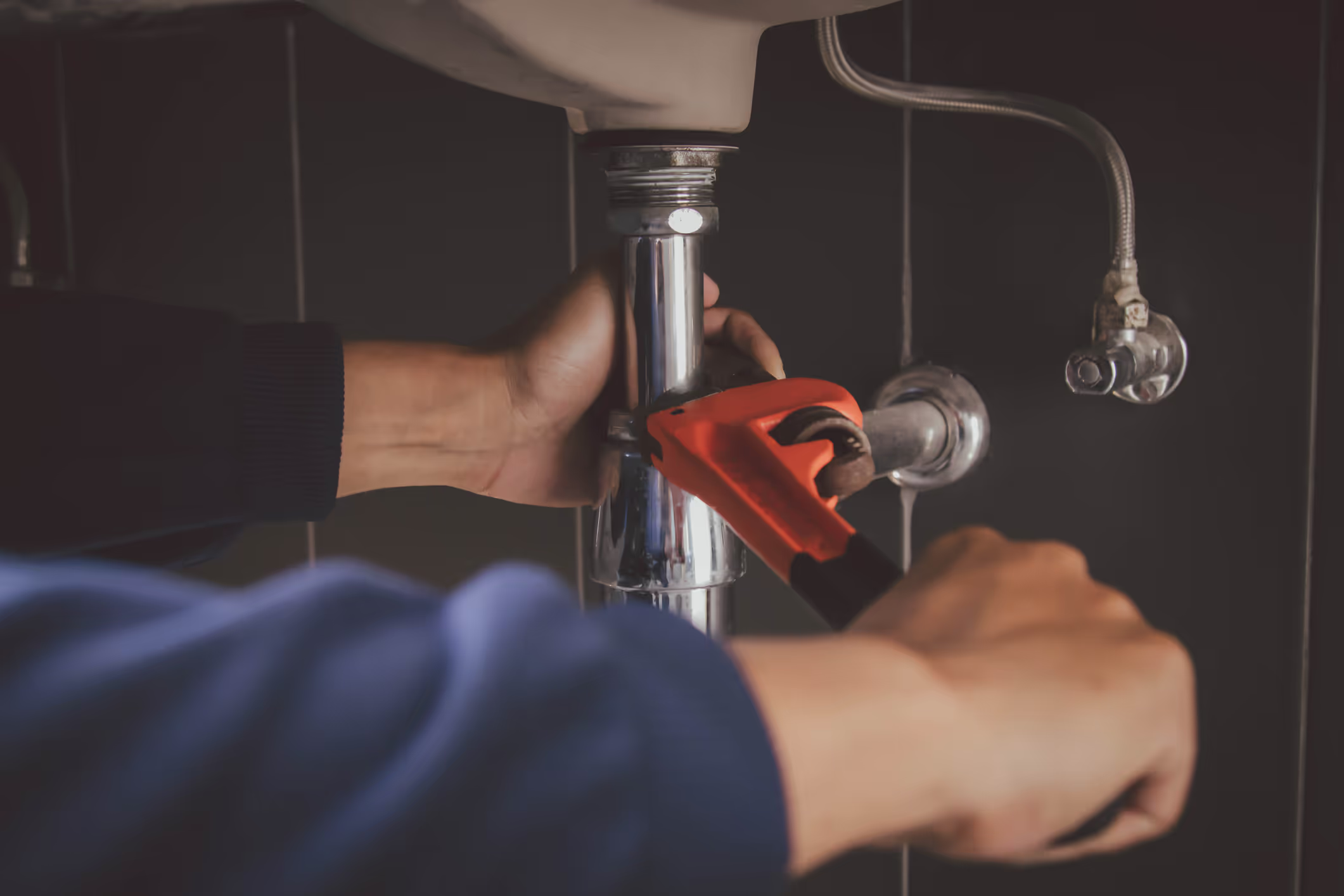
From leaks to full system installs, our plumbing services cover everything you need for a safe, reliable home water system, 24/7.
Our Primary Plumbing Include:
- Water Heater Replacement
- Water Heater Repair
- Trenchless Sewer Line
- Water Filtration
- Slab Leak
- Sewer Line Repair
Don't see the service you need? Call our Team today!
ELECTRICAL

Our electrical services ensure your home stays safe and powered, from routine fixes to complete system upgrades.
Our Primary Electrical Services Include:
- House Rewiring
- Electrician
- Electric Panel Upgrade
- Electric Panel Replacement
- EV Chargers
- Whole House Generator
Don't see the service you need? Call our Team today!
HEATING
.jpg)
We install, repair, and maintain heating & furnace systems with expert care to keep your Colorado home comfortable and energy-efficient year-round.
Our Primary Heating Services Include:
- Heating Installation
- Heating Replacement
- Heating Maintenance
- Heating Repair
- Heating Service
- Heating Tune-Up
Don't see the service you need? Call our Team today!