Are Radiant Floors the Best Way to Heat Your Denver Home This Winter?
Is your current heating system struggling to keep up with the freezing winter temperatures we see here in Denver? In our years of keeping local homes comfortable, we've seen firsthand how the dry climate and high altitude take their toll on older furnaces, prompting many homeowners to start looking for better ways to stay warm without the constant blast of dry air. If you are reading through home maintenance tips and troubleshooting guides online, you have likely run into the debate between installing radiant floor heating and upgrading to a modern heat pump. Both options promise consistent, draft-free warmth, but they require entirely different installation processes.
For many Denver homeowners, the core dilemma is deciding whether a massive floor retrofit is actually worth the disruption compared to upgrading to a high-efficiency heat pump system. Upgrading an existing home's heating infrastructure is a major decision that requires evaluating both your HVAC capabilities and your home's electrical capacity. The reality is that modernizing your heating system often uncovers hidden hurdles, particularly in your electrical panel. Before you commit to tearing up your floors or installing new equipment, it is important to objectively compare the invasive nature of radiant retrofits against the streamlined performance of modern heat pump upgrades.
Understanding Radiant Floor Heating: Comfort vs. Retrofit Reality
Radiant floor heating works by warming the physical floor of your home, which then radiates heat upward into the living space. Unlike forced-air furnaces that blow heated air through ductwork, radiant systems provide a deeply consistent, draft-free warmth. Because the heat rises evenly from the ground up, there are no cold spots in the corners of the room, and the system does not circulate dust or allergens. This makes radiant heating an incredibly appealing concept for homeowners who want to avoid the dry, circulating air often associated with traditional winter heating.
However, our team typically warns that the reality of retrofitting a radiant system into an existing Denver home is highly invasive. To install hydronic (water-based) or electric radiant mats, the existing flooring must be completely removed. Tearing up flooring means ripping out hardwood, tile, or carpet right down to the subfloor. Once the radiant tubing or wiring is laid out, a layer of gypcrete or a similar leveling compound is often poured over the top to encase the system. This process physically raises the height of your floor. Consequently, you are suddenly faced with altering baseboards, trimming the bottoms of interior doors so they can swing freely, and adjusting transition strips between rooms.
The timeline required for this type of home renovation is extensive. A radiant floor retrofit is not a quick weekend project; it is a major construction event that can displace your family for weeks. You are coordinating demolition crews, heating installers, and flooring specialists. While the resulting comfort is undoubtedly high, these logistical hurdles often make it completely impractical for mid-fall upgrades when you need your heating system operational quickly. The structural considerations and sheer disruption lead many homeowners to seek out less invasive alternatives that can deliver similar levels of comfort.
The High-Performance Alternative: Cold-Climate Heat Pumps
If tearing up your entire house sounds overwhelming, modern heat pumps offer a less invasive, highly effective alternative that delivers consistent warmth without the structural disruption. In the past, early heat pump models struggled to extract heat from the air when temperatures dropped below freezing. Today, that narrative has completely changed. Modern heat pump technology has evolved dramatically, featuring advanced refrigerants and variable-speed compressors designed specifically to handle freezing temperatures efficiently.
Because high-altitude, freezing Denver winters require specific cold-climate technology to function effectively, standard units simply will not cut it. This is where Midea heat pump systems shine. These advanced units are engineered to pull ambient heat from the outdoor air even when the thermometer dips well below freezing, compressing that heat and transferring it inside your home. They provide a steady, reliable stream of warmth that avoids the massive structural disruption of radiant floor retrofits. Instead of rebuilding your floors, technicians either connect the new heat pump to your existing ductwork or install sleek, ductless mini-split heads in targeted zones.
Heat pumps also offer incredible flexibility. They can be zoned or configured to meet specific room needs, offering customized comfort solutions for different areas of your house. If you are comparing mini splits to baseboard heaters for a drafty master bedroom or a finished basement, a zoned heat pump approach allows you to control the temperature exactly where you need it, without wasting energy heating unoccupied rooms.
Consistent Warmth Without the Renovation
One of the biggest complaints about older forced-air furnaces is the harsh "blast" of dry, hot air followed by a sudden drop in temperature when the cycle ends. Modern cold-climate heat pumps solve this issue using variable-speed compressors. Instead of turning on at 100% capacity and shutting off completely, a variable-speed system runs continuously at lower speeds, gently maintaining your desired temperature. This eliminates the harsh temperature swings and provides a consistent, draft-free feel that rivals radiant heating.
Furthermore, we recommend heat pumps over radiant floors because the speed of installation is a massive advantage. While a whole-home floor replacement can take weeks of messy construction, a heat pump upgrade can often be completed in a matter of days. You get the benefit of advanced, efficient heating technology without turning your living room into a construction zone.
The Hidden Hurdle: Why Your Electrical Panel Matters for HVAC Upgrades
The Problem: A pattern we see often during our pre-winter inspections is homeowners deciding to upgrade their heating system, choosing the perfect high-efficiency heat pump, and scheduling the installation—only to find out their home's electrical infrastructure cannot support the new equipment. Modernizing a home's heating system often requires electrical panel upgrades, which is a major roadblock that many people overlook during the planning phase.
The Cause: Modern, high-efficiency heat pumps typically require a dedicated 220-240V circuit to operate safely and effectively. The issue is that many older Denver homes still operate on outdated 100-amp service panels. When you attempt to add the substantial electrical load of a modern HVAC system alongside your refrigerator, electric oven, washer, dryer, and everyday electronics, a 100-amp panel simply maxes out. It does not have the physical space for new dual-pole breakers, nor does it have the overall capacity to safely draw that much power from the utility grid without tripping the main breaker or causing a fire hazard.
The Solution: Evaluating your electrical panel must be the very first step in any HVAC upgrade. There are several clear signs that an electrical panel might need an upgrade before a new heating system can be installed. If your lights flicker when large appliances turn on, if you frequently trip circuit breakers, or if you look inside your panel and see "double-tapped" breakers (where two wires are crammed into a single breaker slot), your system is already stressed. Upgrading to a 200-amp panel ensures your new heat pump has the robust, uninterrupted power it needs to keep you warm during a deep freeze. Additionally, generic utility rebates or federal tax credits may apply to both qualifying heat pump installations and the necessary electrical upgrades, making the modernization process more accessible.
Side-by-Side Comparison: Radiant Retrofits vs. Heat Pump Upgrades
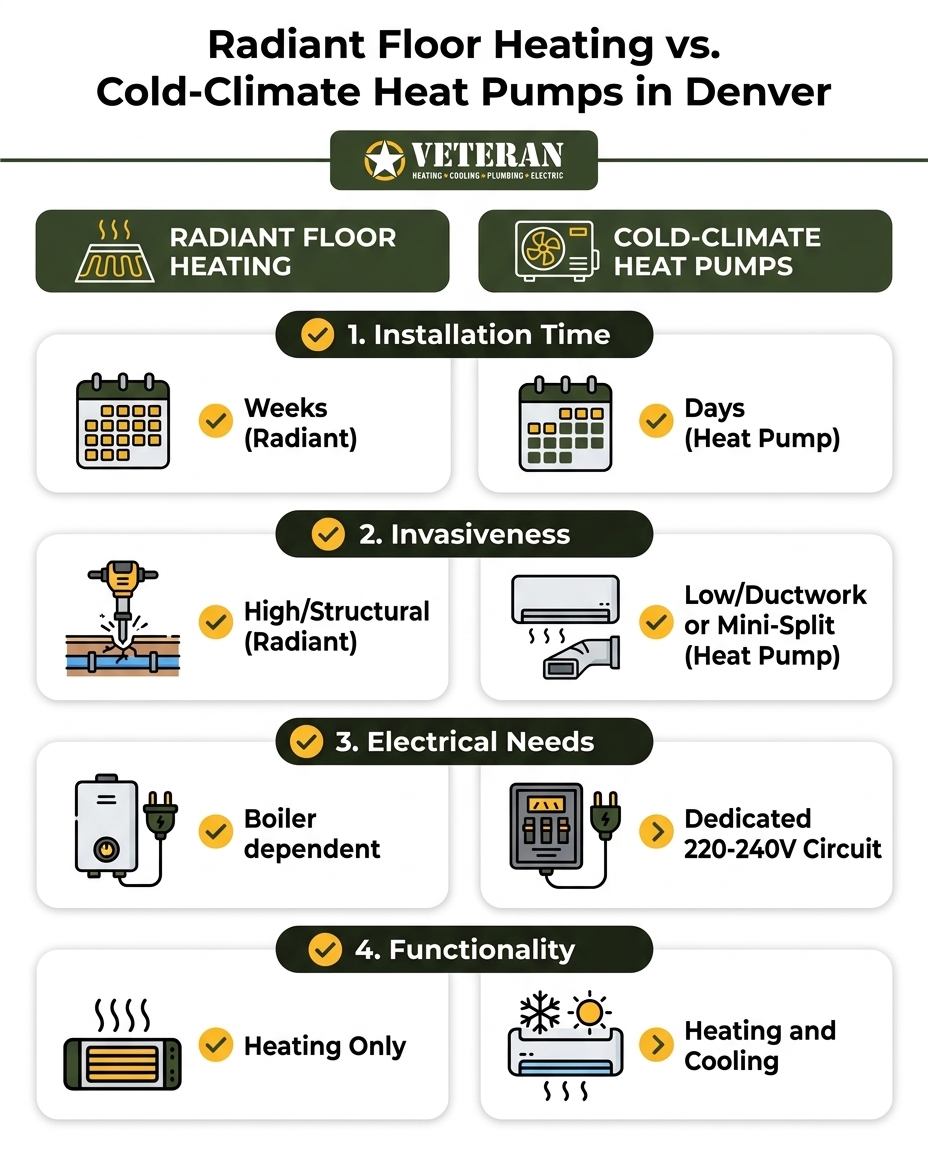
When you are weighing the decision between these two heating methods, it helps to look at the raw facts side-by-side. Both systems will keep you warm, but the path to getting them installed—and what they offer you year-round—differs significantly. Here is a clear, objective comparison of the two upgrade paths to help you make an informed decision for your Denver home.
• Installation Timeline — Radiant Floor Retrofit: Weeks of invasive structural work, demolition, and flooring replacement. — Cold-Climate Heat Pump Upgrade: Streamlined equipment installation, typically completed in a few days.
• Infrastructure Needs — Radiant Floor Retrofit: Requires subfloor alterations, baseboard adjustments, and often a dedicated boiler. — Cold-Climate Heat Pump Upgrade: Requires ductwork or mini-split integration, plus a dedicated 220-240V electrical circuit.
• Invasiveness — Radiant Floor Retrofit: Extremely high. Requires moving furniture and vacating rooms during construction. — Cold-Climate Heat Pump Upgrade: Low to moderate. Work is mostly confined to utility areas, exterior walls, and ductwork.
• Versatility — Radiant Floor Retrofit: Heating only. You will still need a separate system for summer cooling. — Cold-Climate Heat Pump Upgrade: Dual function. Provides both high-efficiency winter heating and summer cooling.
• Best Use Case — Radiant Floor Retrofit: New home builds or complete down-to-the-studs whole-house remodels. — Cold-Climate Heat Pump Upgrade: Existing home retrofits looking for efficient, year-round comfort without major demolition.
For an existing home retrofit, a modern heat pump almost always makes the most sense. It provides the consistent warmth you are looking for while offering the added benefit of summer cooling, all without the need to tear up your beautiful hardwood floors.
The Dual-Trade Advantage: Coordinating HVAC and Electrical Work
One of the most stressful parts of upgrading your home's infrastructure is managing the contractors. If you hire a standard heating company to install a heat pump, they will often inspect your electrical panel, realize it is undersized, and tell you to call an electrician. This creates a logistical nightmare. You are suddenly forced to hire separate HVAC and electrical contractors for a single project, trying to align their schedules, manage multiple permits, and act as the middleman between two different companies who may not communicate well.
This is where the dual-trade advantage becomes critical. Having an in-house team evaluate the whole system ensures the electrical panel is perfectly sized for the specific HVAC equipment being installed. At Veteran Heating, Cooling, Plumbing & Electric, our veteran-led team applies military-grade precision to seamlessly handle both the HVAC installation and the complex electrical retrofits in-house. We do not pass the buck or leave you scrambling to find an available electrician before the snow flies.
One local customer reached out last winter needing detailed guidance on a new heating system. Because they were deciding between several high-efficiency options, our representative sat down to clearly explain all the features, benefits, and generic discount programs available. The outcome was full clarity on their system options—and the peace of mind that comes from knowing the electrical load was already factored into the plan from day one.
Furthermore, working with a certified Midea Elite dealer means your installation team deeply understands the specific power draws and technical requirements of the equipment. When one unified team handles the job, communication is clear, the system features are fully understood, and the transition from electrical rough-in to final HVAC startup is seamless.
Timing Your Heating Upgrade: Why Mid-Fall is the Critical Window
When it comes to complex home upgrades, timing is everything. In our experience serving the Denver metro area, we always remind homeowners how quickly the weather turns from a mild, sunny fall afternoon to a freezing winter blizzard. Waiting until the first deep freeze to discover your old furnace is dead—and that your electrical panel cannot support a new heat pump—is a bad strategy. When temperatures plummet, emergency demand spikes across the city, making it incredibly difficult to schedule multi-day retrofits on short notice.
This makes mid-fall pre-winter preparation the ideal time to schedule comprehensive system upgrades. October provides the critical action window you need. Proactive scheduling ensures smoother installations, better equipment availability, and gives your installation team the time needed to pull permits and perform thorough electrical safety checks without the pressure of a freezing house.
One homeowner realized this last summer when they needed a brand new heat pump system installed properly before the weather shifted. Our team went above and beyond to install the heat pump efficiently while answering all their questions about the new electrical connections, resulting in a successfully installed system and a highly satisfied customer long before the first freeze arrived. Complex, multi-day installations can absolutely be executed efficiently when they are planned correctly. Getting ahead of the winter rush ensures you are not left shivering while waiting for a panel upgrade.
Make a Confident Choice for Your Denver Home's Comfort
Upgrading your home's heating system is a significant investment in your family's comfort and safety. While radiant floors sound appealing in theory, the structural disruption makes them a tough sell for existing homes. Modern cold-climate heat pumps offer a much more practical, versatile upgrade, delivering exceptional winter warmth and summer cooling without tearing up your living space.
Remember that evaluating the electrical panel is the vital first step to any major HVAC modernization. Do not let an outdated 100-amp panel stand between you and a warm, comfortable winter. We strongly encourage you to seek out a comprehensive, dual-trade evaluation before the deep freeze hits. By addressing both your heating and electrical needs simultaneously, you can skip the generic home maintenance tips and troubleshooting, and step confidently into a warmer, more efficient home this season.
Frequently Asked Questions
Does a heat pump require a new electrical panel?
It often does, especially in older homes. Most modern heat pumps require a dedicated 220-240V circuit to operate properly. If your home currently relies on an older 100-amp service panel, it likely lacks the capacity to support the new HVAC load alongside your other major appliances, making a panel upgrade necessary.
What electrical work is needed for a heat pump?
Installing a heat pump requires running new, heavy-duty wiring from your main electrical panel to both the outdoor compressor and the indoor air handler. The electrician must install properly sized dual-pole breakers to handle the voltage requirements. In many cases, a service upgrade is also required to increase the total amperage coming into the home from the utility grid.
Can my current electrical panel handle a new HVAC system?
That depends entirely on your panel's total amperage and available physical space. A licensed professional must perform a load calculation to determine if your current panel can safely handle the additional draw. Warning signs that your panel is already maxed out include flickering lights, frequently tripped breakers, or the presence of double-tapped breakers.
How many amps does a heat pump use?
The exact amperage depends on the size and efficiency rating of the specific unit. However, most residential cold-climate heat pumps require a dedicated circuit ranging from 30 to 50 amps for the outdoor unit, plus additional amperage for the indoor air handler or backup heat strips. This substantial draw is why proper electrical planning is so critical.
Is it better to retrofit radiant floor heating or install a heat pump in an older home?
For the vast majority of older homes, installing a heat pump is the better option. Retrofitting radiant heat requires tearing out all existing flooring, altering doors, and essentially turning your home into a major construction zone. A heat pump provides excellent, draft-free comfort with far less structural disruption and installs in a fraction of the time.
Why should I hire a contractor who does both HVAC and electrical work?
Hiring a dual-trade contractor eliminates the headache of coordinating multiple companies for a single project. Because heat pump installations rely so heavily on electrical upgrades, having one team handle both aspects ensures the panel is sized correctly for the specific HVAC equipment. It streamlines the permitting process, speeds up the installation timeline, and guarantees a seamless startup.
ABOUT Veteran Heating, Cooling, Plumbing & Electric
Veteran Heating, Cooling, Plumbing & Electric was founded on the belief that service should be personal, honest, and community-focused. Our team is built around integrity, professionalism, and a true commitment to your home’s comfort and safety.
Led by a U.S. Army veteran with over 30 years of industry experience, we’re proud to remain locally owned and operated. Every technician, plumber, and electrician is EPA-certified, background checked, and driven to exceed expectations.
- 24/7 ServiceWe offer weekend & 24/7 emergency service. We’re here whenever you need us—day, night, or weekend, no exceptions.
- $0 Trip FeesNo dispatch or trip fees. You’ll never pay just for us to show up—service starts when the work does.
OUR SERVICES
AIR CONDITIONING

We offer specialty and seasonal services like indoor air quality upgrades, pre-winter furnace checks, and summer AC tune-ups to keep your home prepared year-round.
Our Primary Air Conditioning Services Include:
Don't see the service you need? Call our Team today!
PLUMBING
From leaks to full system installs, our plumbing services cover everything you need for a safe, reliable home water system, 24/7.
Our Primary Plumbing Include:
- Water Heater Replacement
- Water Heater Repair
- Trenchless Sewer Line
- Water Filtration
- Slab Leak
- Sewer Line Repair
Don't see the service you need? Call our Team today!
ELECTRICAL

Our electrical services ensure your home stays safe and powered, from routine fixes to complete system upgrades.
Our Primary Electrical Services Include:
- House Rewiring
- Electrician
- Electric Panel Upgrade
- Electric Panel Replacement
- EV Chargers
- Whole House Generator
Don't see the service you need? Call our Team today!
HEATING

We install, repair, and maintain heating & furnace systems with expert care to keep your Colorado home comfortable and energy-efficient year-round.
Our Primary Heating Services Include:
- Heating Installation
- Heating Replacement
- Heating Maintenance
- Heating Repair
- Heating Service
- Heating Tune-Up
Don't see the service you need? Call our Team today!