The Myth of Cheap Heating for Cold Rooms
Buying the cheapest heater on the hardware store shelf does not mean you are getting the most affordable heating solution for your home. If you are choosing between a 1-zone mini split and baseboard heaters for a drafty Denver bedroom, you might assume the unit with the lowest upfront tag is the smartest buy. Here is the reality: the cheapest heater to buy is rarely the cheapest heater to operate over the long haul. In our years serving the Denver area, our team at Veteran Heating, Cooling, Plumbing & Electric often sees homeowners focus entirely on the initial purchase and installation effort, completely overlooking the punishing utility bills that follow when an inefficient unit runs continuously to combat a cold draft.
This dynamic is especially true when you are trying to heat notoriously cold spaces like Denver home additions or older bedrooms with poor insulation. These rooms constantly bleed heat through exterior walls and aging windows. If you rely on a system that generates heat inefficiently, it will run non-stop just to maintain a baseline temperature. Taking action during the September pre-heating season is critical. Making this decision now, before the severe winter weather arrives, gives you the time to evaluate your options based on long-term comfort and energy consumption, rather than panicking during the first major freeze.
How Denver's Winter Climate Impacts Supplemental Heating
Your local environment dictates how hard your heating equipment has to work. In a mild climate, a basic space heater might suffice for an occasionally chilly evening. However, the unique weather patterns and elevation of the Front Range rapidly expose inefficient heating systems. When evaluating solutions for Denver home additions or isolated bedrooms, we always remind our customers that they must account for the specific environmental demands placed on the equipment.
Key local climate factors affecting your heating choices:
1. Prolonged freezing temperatures: Average winter lows frequently dip into the teens. This is not a temporary overnight chill; it is a sustained freeze that requires robust, continuous heating capacity to keep a drafty room habitable.
2. High-altitude air density: At a mile above sea level, the air is thinner. Thinner air holds less heat, meaning your system has to work harder to warm the ambient air and circulate it effectively throughout the room.
3. Early arrival of the first freeze: The average first freeze typically hits in early to mid-October. This creates a very tight window for proactive upgrades. Waiting until November means you are already fighting an uphill battle against the cold.
4. Rapid temperature swings: It is not uncommon to see a 40-degree temperature drop in a single afternoon. Your supplemental heating system must be responsive enough to ramp up quickly when a cold front moves in suddenly.
5. Continuous heat loss in drafty spaces: A room with poor insulation or leaky windows does not just get cold once; it constantly loses heat to the outside. Your heating system must have the endurance to provide sustained, reliable output without causing your utility bills to skyrocket.
Framing your decision around long-term comfort rather than just a quick, temporary fix is the only way to ensure your bedroom remains comfortable through the harshest months of the year.
Electric Baseboard Heaters: The Short-Term Fix
Electric baseboard heaters are often the first solution homeowners consider for a cold room because they are familiar and relatively simple to source. To make an informed decision, you need a fair, objective breakdown of how they operate and what they cost to run over time.
How Electric Resistance Heating Works
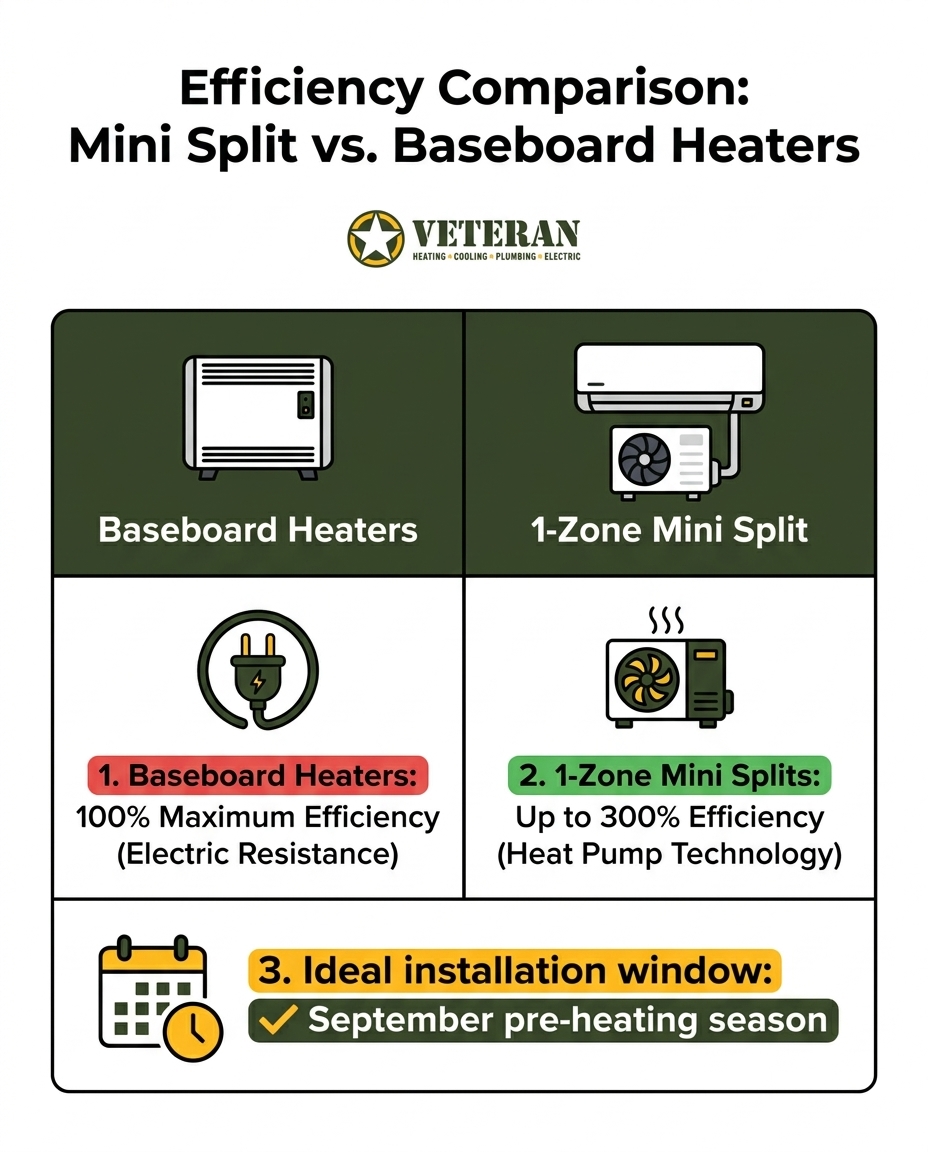
Baseboard heaters rely on a technology called electric resistance. Inside the metal housing, electric current passes through a series of heating elements. As the electricity encounters resistance in the metal, it generates heat. The warm air then rises out of the top of the unit, pulling cooler air in from the bottom. Because they create heat directly from electricity, they operate at a maximum of 100% efficiency. Every unit of electrical energy consumed produces exactly one unit of heat energy. While that sounds perfectly efficient, it is actually the absolute floor for modern heating technology.
• The primary benefit: Lower upfront installation effort and a smaller footprint. They do not require ductwork or exterior equipment, making the initial setup straightforward.
• The heavy electrical draw: These units require a tremendous amount of continuous electrical amperage to generate heat. Running a baseboard heater in a drafty room is like leaving a large hair dryer running 24 hours a day.
• Punitive operating costs: Because they max out at 100% efficiency and draw high amperage, the cost to operate them over a full winter is exceptionally high. What you save on the initial purchase, you quickly pay back to your utility provider.
• Safety and aesthetic concerns: Baseboard heaters get incredibly hot to the touch. They require strict clearance from curtains, bedding, and furniture to prevent fire hazards. Additionally, they take up valuable wall and floor space, limiting how you can arrange your bedroom.
For Denver home additions that need continuous heating, our technicians find that baseboards are an easy short-term fix that almost always leads to long-term frustration when the monthly bills arrive.
1-Zone Mini Splits: The High-Efficiency Heat Pump Solution
If electric baseboards represent the old way of heating a single room, ductless mini splits represent the modern, high-efficiency alternative. These systems use heat pump technology, which fundamentally changes the math on your energy consumption.
The Mechanics of Heat Transfer
Instead of generating heat from scratch using electric resistance, a heat pump moves heat from one place to another. Even when the outside air is freezing, there is still ambient thermal energy present. The outdoor compressor extracts this heat, concentrates it using refrigerant, and pumps it into the indoor wall unit. Because they are merely transferring existing heat rather than creating it, modern mini splits can operate at up to 300% efficiency. This means for every single unit of electricity the system consumes, it can deliver up to three units of heat energy into your bedroom.
Installation and Zoned Comfort
The installation process for a mini split requires professional setup. A technician mounts a sleek, high-wall indoor air handler and connects it to a compact outdoor compressor via a small conduit containing the refrigerant lines and electrical wiring. While the initial setup is more involved than screwing a baseboard heater to the wall, it offers a clean, unobtrusive aesthetic that does not dictate your furniture placement. Proper professional installation also ensures that all electrical and safety codes are met. If you are curious about the administrative side of this process, you can review the permits needed for mini split installation to understand what a professional team handles for you.
One of the greatest advantages of a 1-zone system is true zoned temperature control. You can keep your drafty bedroom at a cozy 72 degrees while allowing the main home thermostat to rest at a lower temperature. This targeted approach prevents your central furnace from overworking just to compensate for one stubborn room.
Real-world execution matters when upgrading your home. Recently, our team at Veteran Heating, Cooling, Plumbing & Electric helped a local homeowner who needed a new heat pump installed before the fall weather shifted. A crew of our technicians handled the installation, going above and beyond to ensure the system was perfectly calibrated and the workspace was left spotless. The homeowners were thrilled with the seamless integration and the immediate improvement in their zoned comfort.
Comparing Winter Operating Efficiency and Energy Consumption
To truly understand the difference between these two systems, you have to look at the long-term energy consumption. Energy efficiency is the single most critical factor for a space that is naturally drafty and hard to keep warm. A room that constantly loses heat requires a system that can run continuously without draining your wallet.
Denver's specific altitude and freezing winter nights make electric resistance heating punitively expensive over a full season. When the temperature drops into the teens, a baseboard heater will run at full capacity for hours on end. Because it is capped at 100% efficiency, every minute it runs is a direct, heavy draw on your electrical panel. In contrast, the superior efficiency of a mini split quickly offsets its higher initial installation effort. By operating at up to 300% efficiency, the heat pump drastically reduces the electrical load required to maintain the exact same room temperature.
• Maximum Efficiency — Electric Baseboard Heaters: 100% (Electric Resistance) — 1-Zone Mini Split (Heat Pump): Up to 300% (Heat Transfer)
• Winter Operating Cost — Electric Baseboard Heaters: High (Continuous heavy electrical draw) — 1-Zone Mini Split (Heat Pump): Low (Inverter technology uses minimal power)
• Installation Effort — Electric Baseboard Heaters: Lower upfront effort — 1-Zone Mini Split (Heat Pump): Requires professional installation
• Safety & Clearance — Electric Baseboard Heaters: High surface heat; requires clear space — 1-Zone Mini Split (Heat Pump): High-wall mount; cool to the touch
• Temperature Control — Electric Baseboard Heaters: Basic dial thermostat, often inaccurate — 1-Zone Mini Split (Heat Pump): Precise digital zoning and remote control
When you map out the energy consumption over a five- or ten-year period, the continuous electric resistance heating of a baseboard leads to massive utility bill spikes during prolonged freezes. The mini split, utilizing advanced inverter technology to smoothly ramp up and down as needed, maintains a consistent temperature while consuming a fraction of the electricity.
Generic Tax Incentives and Long-Term Value
Beyond the monthly savings on your utility bills, choosing high-efficiency technology can often unlock additional financial benefits. Government agencies and local utility providers are actively encouraging homeowners to transition away from heavy-draw electric resistance heating and toward energy-efficient heat pumps.
While evaluating your options during the September pre-heating season, it is wise to look into the broader financial picture. These incentives further tilt the long-term value in favor of mini splits, helping to offset the initial professional installation requirements.
• Federal Tax Credits: Qualifying mini split installations may be eligible for generic federal tax credits designed to promote energy-efficient home upgrades. These credits are applied when you file your annual taxes.
• Local Utility Rebates: Many regional utility providers offer rebate programs that reward homeowners who upgrade from outdated electric resistance systems to modern heat pump technology. These programs are intended to reduce the overall strain on the local power grid during peak winter months.
• Total Cost of Ownership: When you combine the drastically lower monthly operating costs with potential generic incentives, the total cost of owning a mini split over a 10- to 15-year lifespan is often significantly lower than running baseboard heaters.
We always advise readers to consult with a qualified tax professional or their local utility provider for current, specific program details and eligibility requirements before making a final decision.
Navigating these choices requires reliable guidance. When a local homeowner recently reached out to us for HVAC service, they were highly impressed by our team's punctuality and respectfulness. Our technicians provided honest advice and top-tier workmanship while clearly explaining the maintenance process—exactly the kind of transparent, disciplined guidance we strive to deliver when you are evaluating long-term heating investments for your property.
Frequently Asked Questions About Heating Drafty Bedrooms
Are mini splits cheaper to run than baseboard heaters?
Yes, mini splits are significantly cheaper to operate on a monthly basis. This is because they transfer existing heat from the outside air rather than creating it from scratch via electric resistance. As a result, a modern heat pump can operate at up to 300% efficiency, compared to the strict 100% maximum efficiency of a baseboard heater. Over a long winter, this difference translates to substantial energy savings.
Can a mini split heat a whole house in Colorado?
A properly sized multi-zone mini split system can absolutely heat an entire home in Colorado. Modern cold-climate heat pumps are engineered to extract heat even when outdoor temperatures plummet well below freezing. However, for a single drafty bedroom or addition, a 1-zone system is specifically designed to handle that isolated space without requiring a whole-house overhaul.
Do baseboard heaters use a lot of electricity?
Baseboard heaters use a massive amount of electricity because they rely entirely on electrical resistance to generate heat. Every single watt of heat they produce requires an equal watt of electricity drawn from your panel. When installed in a drafty room that constantly loses warmth, the heater is forced to run continuously, leading to very high electrical consumption and spiked utility bills.
What is the best way to heat a drafty room?
The best long-term approach is a two-step process: first, improve the room's insulation and seal any obvious window drafts, and second, install a high-efficiency 1-zone mini split. The mini split provides consistent, targeted heat without overworking your main central furnace. It offers precise digital temperature control and operates efficiently enough to overcome the natural heat loss of the room.
Are mini splits better than baseboard heaters for cold rooms?
Mini splits are vastly superior for cold rooms due to their efficiency, safety, and airflow mechanics. While a baseboard heater relies on passive radiant heat that slowly rises from the floor, a mini split actively circulates warm air throughout the entire space. Additionally, mini splits are mounted high on the wall, eliminating the burn hazards and furniture clearance issues associated with hot baseboards.
How efficient are mini splits in Colorado winters?
Mini splits remain highly efficient during Colorado winters thanks to advanced inverter-driven compressors. Modern cold-climate models are specifically designed to extract thermal energy from the air even in sub-freezing temperatures. They provide reliable, efficient heating well below freezing, making them an ideal and resilient match for the demanding local climate.
Get an Honest Assessment for Your Home Addition Today
While electric baseboards might seem like an easy short-term fix, 1-zone mini splits provide the sustained comfort and high efficiency required to properly heat drafty rooms. Denver home additions demand systems that can handle prolonged freezes and high altitude without sending your monthly energy consumption through the roof. Acting proactively before the severe winter weather sets in ensures you have the right system in place when you need it most.
Working with our veteran-owned team means you receive disciplined, honest assessments of your heating needs without having to navigate high-pressure sales tactics. We believe in providing the facts so you can make the best choice for your property. Schedule a professional evaluation with Veteran Heating, Cooling, Plumbing & Electric today to determine the most effective, long-term heating solution for your specific space.
ABOUT Veteran Heating, Cooling, Plumbing & Electric
Veteran Heating, Cooling, Plumbing & Electric was founded on the belief that service should be personal, honest, and community-focused. Our team is built around integrity, professionalism, and a true commitment to your home’s comfort and safety.
Led by a U.S. Army veteran with over 30 years of industry experience, we’re proud to remain locally owned and operated. Every technician, plumber, and electrician is EPA-certified, background checked, and driven to exceed expectations.
- 24/7 ServiceWe offer weekend & 24/7 emergency service. We’re here whenever you need us—day, night, or weekend, no exceptions.
- $0 Trip FeesNo dispatch or trip fees. You’ll never pay just for us to show up—service starts when the work does.
OUR SERVICES
AIR CONDITIONING
.jpg)
We offer specialty and seasonal services like indoor air quality upgrades, pre-winter furnace checks, and summer AC tune-ups to keep your home prepared year-round.
Our Primary Air Conditioning Services Include:
Don't see the service you need? Call our Team today!
PLUMBING
From leaks to full system installs, our plumbing services cover everything you need for a safe, reliable home water system, 24/7.
Our Primary Plumbing Include:
- Water Heater Replacement
- Water Heater Repair
- Trenchless Sewer Line
- Water Filtration
- Slab Leak
- Sewer Line Repair
Don't see the service you need? Call our Team today!
ELECTRICAL

Our electrical services ensure your home stays safe and powered, from routine fixes to complete system upgrades.
Our Primary Electrical Services Include:
- House Rewiring
- Electrician
- Electric Panel Upgrade
- Electric Panel Replacement
- EV Chargers
- Whole House Generator
Don't see the service you need? Call our Team today!
HEATING
.jpg)
We install, repair, and maintain heating & furnace systems with expert care to keep your Colorado home comfortable and energy-efficient year-round.
Our Primary Heating Services Include:
- Heating Installation
- Heating Replacement
- Heating Maintenance
- Heating Repair
- Heating Service
- Heating Tune-Up
Don't see the service you need? Call our Team today!