Understanding When Your Aurora Home Needs New Pipes
If you're experiencing frequent leaks, discolored water, or frustratingly low water pressure, repiping aurora co homes might be the solution you need. Your home's plumbing system is the hidden network that keeps water flowing reliably every single day, but when those pipes begin to fail, the problems can quickly escalate from annoying to expensive. Many Aurora homes were built decades ago with materials like galvanized steel or polybutylene pipes that simply weren't designed to last forever.
Quick Answer: Do You Need Repiping?
Consider repiping your Aurora home if you notice:
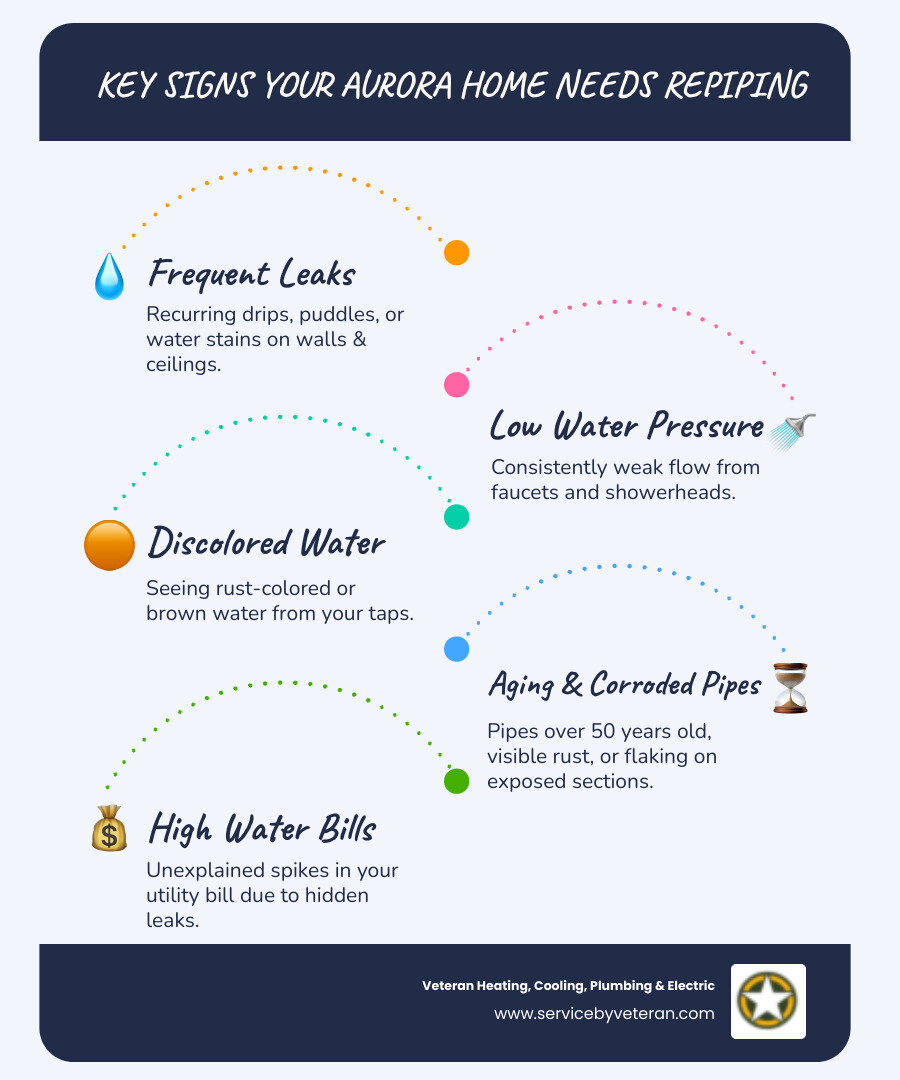
• Frequent leaks - Multiple pipe failures in different locations
• Low water pressure - Consistently weak flow throughout the house
• Discolored water - Rust-colored or brown water from taps
• Pipes over 50 years old - Especially galvanized steel or polybutylene
• Visible corrosion - Rust, flaking, or deterioration on exposed pipes
• High water bills - Unexplained increases suggesting hidden leaks
Repiping typically takes a few days to a week depending on your home's size, and modern materials like copper (lasting 50-70 years) or PEX (lasting 25-40 years) provide long-term reliability and improved water quality.
I'm Mike Townsend, and my experience managing precision cooling systems in the U.S. Army taught me that reliable infrastructure starts with quality materials and expert installation—principles that directly apply to repiping aurora co homes. Whether your home's pipes are showing their age or you're dealing with recurring problems, understanding your options helps you make the right decision for your family's comfort and your property's value.
Is Your Plumbing Past Its Prime? Signs You Need to Repipe
Nobody wants to deal with a plumbing emergency, especially not in our Aurora homes. So, how can you tell if your pipes are trying to tell you something? There are several tell-tale signs that indicate your plumbing system might be ready for an upgrade, moving beyond simple repairs to the more comprehensive solution of repiping.
One of the most immediate indicators is frequent leaks. If you're constantly patching up drips, noticing water stains on ceilings or walls, or finding puddles under sinks, it's a strong signal that your pipes are failing systematically, not just in isolated spots. A single leak might be a quick fix, but recurring leaks often point to a widespread issue that calls for a full repipe.
Another frustrating sign is low water pressure, especially if it's a consistent problem throughout your home. This isn't just about a weak shower; it can mean mineral buildup or corrosion is constricting the inside of your pipes, reducing water flow to a trickle. Imagine trying to wash dishes or take a decent shower with barely any water coming out – not exactly ideal, is it?
Then there's the unsettling sight of discolored water. If your tap water comes out rusty, brown, or even takes on a metallic taste, it's almost certainly due to corrosion inside your pipes. This isn't just unappealing; it can indicate rust particles making their way into your drinking and washing water.
Have you ever heard strange noises from your pipes? Banging, clanging, or gurgling sounds can be more than just annoying; they can signify loose pipes, water hammer, or even air in the lines, often related to aging or corroding plumbing.
Finally, an unexpected rise in your water bills without a change in usage could be silently screaming "hidden leak!" Even small, undetected leaks can waste a significant amount of water over time, costing you money and potentially leading to water damage within your home's structure. For more general homeowner resources regarding water troubleshooting and repairs, you can visit the Aurora city website.
When Your Pipes Show Their Age
Just like anything else, pipes don't last forever. The age of your plumbing system is a critical factor in determining if repiping is necessary. If your pipes are more than 50 years old, it's definitely time to consider replacement, even if you haven't noticed severe issues yet. Many homes in Aurora, especially those built before the 1970s, might have outdated pipe materials that are prone to problems.
One common culprit is galvanized steel pipes. These pipes were once popular, but their lifespan is typically around 20-50 years, although some sources suggest they can last 50-75 years. The catch? They often need replacement much sooner. Galvanized pipes are made of steel coated with zinc to prevent corrosion. Over time, this zinc coating wears off, exposing the steel to water. This leads to rust and corrosion, which can cause significant issues like reduced water flow, discolored water, and eventually, leaks. The mechanical strength of iron isn't usually needed for indoor plumbing, so when that protective zinc layer is gone, these pipes become a liability.
Another problematic material is polybutylene pipes, which were used from the late 1970s to the mid-1990s. While flexible and inexpensive, polybutylene is notorious for premature failure and can lead to widespread leaks. If your home has polybutylene pipes, replacing them should be a high priority to prevent future damage.
You might also encounter cast iron pipes, often used for main drain and sewer lines in older homes. While they can last anywhere from 50-100 years with proper maintenance, they are susceptible to corrosion and can be affected by tree root intrusion, leading to persistent clogs and backups.
Beyond these specific materials, simply seeing visible corrosion on any exposed pipes—like rust, flaking, or deterioration—is a clear sign of aging plumbing. These signs of outdated plumbing materials indicate that your system is actively degrading and could be a ticking time bomb for future problems.
Repair vs. Repipe: Making the Right Call
When faced with plumbing issues, homeowners often wonder: should we just repair it, or is it time for a full repipe? The decision hinges on the nature and frequency of the problems.
Pipe repair is generally appropriate for isolated leaks or minor issues. If you have a single, localized leak caused by a faulty fitting or a small crack, a repair can be a quick and effective solution. It's like patching a small hole in a tire; it fixes the immediate problem without replacing the whole thing.
However, if you're dealing with widespread problems—multiple leaks in different areas, consistently low water pressure throughout the house, or persistent discolored water—then repiping often becomes the more sensible and long-term cost-effective option. When a pipe system starts to have problems frequently, the cumulative cost and disruption of ongoing repairs can quickly outweigh the investment in a full replacement. We've seen homeowners spend a lot of money on numerous small fixes, only to face another problem a few months later. At some point, the band-aids just aren't enough.
Repiping addresses the root cause of these systemic issues by replacing the entire plumbing system, giving you a fresh start. It solves major plumbing problems like constantly recurring leaks, reduced water pressure and flow, and persistent pipe noises.
Here's a quick comparison to help illustrate the difference:
• Scope — Pipe Repair: Fixes a specific, localized issue — Whole-Home Repiping: Replaces all or most of the home's pipes
• Appropriate For — Pipe Repair: Isolated leaks, minor damage — Whole-Home Repiping: Frequent leaks, low pressure, discolored water, old pipes
• Longevity — Pipe Repair: Temporary fix for systemic issues — Whole-Home Repiping: Long-term solution, new pipe lifespan
• Disruption — Pipe Repair: Minimal, usually quick — Whole-Home Repiping: More extensive, but planned
• Cost — Pipe Repair: Lower per incident — Whole-Home Repiping: Higher initial investment, but prevents future costs
• Benefits — Pipe Repair: Immediate fix for a single problem — Whole-Home Repiping: Improved water quality, pressure, home value, peace of mind
Our goal is to identify the most cost-effective and least invasive solution for your home. We'll always assess whether repairs can effectively resolve the problem before recommending repiping, ensuring your plumbing system's longevity and reliability.
The Modern Materials of Repiping in Aurora, CO
When we talk about repiping, we're not just replacing old with new; we're upgrading to superior, modern materials that offer better performance and longevity. Gone are the days of problematic galvanized steel and polybutylene. Today, homeowners in Aurora have excellent choices for durable, code-compliant plumbing systems.
The primary materials we typically use for repiping projects are copper and PEX (cross-linked polyethylene). While PVC and CPVC are common for drainage, waste, and vent (DWV) systems, copper and PEX are the stars for fresh water supply lines.
The Pros and Cons of Copper
Copper has been a trusted plumbing material for decades, and for good reason. It offers significant advantages for repiping Aurora homes:
Pros:
• Durability and Longevity: Copper pipes are incredibly robust and can last anywhere from 50 to 70 years, often exceeding galvanized steel's lifespan. With proper maintenance, they can truly stand the test of time.
• Biostatic Properties: Copper naturally resists bacterial growth, contributing to cleaner drinking water.
• Natural Material: It's a natural, recyclable material that many homeowners prefer.
• Corrosion Resistance: Compared to galvanized steel, copper is far more resistant to corrosion, meaning fewer issues with rust-colored water or pipe degradation.
• Suitable for Aurora Homes: Copper handles a wide range of temperatures and pressures, making it an excellent choice for our climate.
Cons:
• Cost: Copper is generally more expensive than PEX, both in material and installation labor due to the need for soldering.
• Pinhole Leaks: Over many decades, copper can sometimes develop pinhole leaks, especially in areas with certain water chemistries.
• Rigidity: Copper is less flexible than PEX, which can make installation more complex in tight spaces and may require more wall openings.
Why PEX is a Popular Choice for Repiping in Aurora, CO
PEX piping has rapidly gained popularity as a modern, long-lasting solution for repiping projects, and it's a fantastic option for homeowners in Aurora. It's a type of plastic material that offers a host of benefits:
Pros:
• Flexibility: PEX is incredibly flexible, allowing it to be snaked through walls and around obstacles with fewer connections. This often means less invasive installation and fewer holes cut into your walls.
• Corrosion Resistance: Unlike metallic pipes, PEX does not corrode, eliminating concerns about rust-colored water or metallic tastes. This leads to cleaner drinking water.
• Freeze Resistance: PEX can expand and contract, making it more resistant to freezing and bursting compared to rigid pipes like copper, a significant advantage in our Colorado winters.
• Faster Installation: Its flexibility and fewer connection points can lead to a quicker and more efficient installation process.
• Increased Water Pressure: Because PEX doesn't corrode or accumulate mineral buildup, it helps maintain consistent water pressure throughout your home.
• Lifespan: PEX pipes can last anywhere from 25-40 years with proper installation and maintenance, providing a long period of reliable service. Modern technology UPONOR PEX pipes are particularly noted for their quality.
Cons:
• UV Sensitivity: PEX can be damaged by prolonged exposure to ultraviolet light, so it's not suitable for outdoor, exposed applications.
• Rodent Damage: In rare cases, rodents can chew through PEX, although this is uncommon in indoor, protected environments.
• Fittings: While PEX itself is affordable, the specialized fittings can sometimes add to the overall material cost.
Both copper and PEX are excellent choices, and we can discuss which material best suits your home's specific needs, your budget, and your preferences during our initial assessment.
The Repiping Process: What to Expect for Your Repiping Aurora CO Project
Understanding what happens during a repiping project can ease any concerns you might have. We know that the idea of replacing all your home's pipes can sound daunting, but our process is designed to be as smooth and minimally disruptive as possible for homeowners in Aurora.
Our repiping journey begins with an initial assessment. A licensed plumber will thoroughly inspect your current plumbing system, diagnose the issues, and discuss your options. This isn't a one-size-fits-all approach; we'll create a customized solution that fits your home's specific needs and ensures a long-lasting fix.
Once we have a plan, we move to project planning. This involves mapping out the new pipe routes, determining the best access points, and scheduling the work to minimize inconvenience. We believe in clear communication, so you'll know exactly what to expect every step of the way.
One of our top priorities is minimizing disruption to your daily life. While repiping is a significant undertaking that can be invasive, potentially requiring access through walls and floors, we take every measure to make it as unobtrusive as possible. We work in sections, maintain clear communication about work schedules, and carefully cover furniture and flooring with drop cloths. Our team is dedicated to cleaning up at the end of each day, ensuring your home remains as tidy as possible.
Wall access and repair is a part of the process. To replace pipes hidden within walls, we will need to open small sections. However, we aim to make the impact as small as possible. Some companies, for example, even include finishing your walls to look like new as part of the repiping project, eliminating the need for a separate contractor. We strive for seamless execution, culminating in a final inspection to ensure everything is perfect and meets our high standards.
How Long Does Repiping Take?
The duration of a repiping project is a common question, and it's a valid one! We understand you want your home back to normal as quickly as possible.
The typical timeline for repiping in Aurora can range from a few days to a week, depending on several factors. The main considerations are the size of your home and the complexity of the project. A smaller home with easily accessible plumbing might be completed in just a few days, while a larger, multi-story home with intricate plumbing runs could take closer to a week.
Our team works efficiently to execute the work as quickly as possible, striving to make the process smooth and stress-free. We communicate openly about timelines and any necessary preparations, so you're always informed. Our goal is to complete the repiping efficiently, allowing you to return to your routine with an improved plumbing system.
What to Know About Local Codes and Permits
Any significant plumbing work, including repiping, in Aurora must adhere to local regulations. Understanding Aurora building codes and obtaining the necessary permits is crucial for ensuring the safety, functionality, and legality of your new plumbing system.
In Aurora, as in many parts of Colorado, plumbing work must comply with adopted codes such as the International Plumbing Code, International Residential Code, and International Fuel Gas Code. These codes are in place to protect homeowners and ensure that all installations meet stringent safety and quality standards.
This is where the importance of licensed plumbers comes in. A reputable, licensed plumbing company serving Aurora will be fully knowledgeable about all local codes and will handle the permit handling process for you. This means we'll secure the required permits from the city, ensuring that your repiping project passes all necessary inspections. This meticulous attention to detail ensures compliance and safety, giving you peace of mind that your new plumbing system is installed correctly and legally. It also protects your home's value and ensures you won't face issues if you decide to sell in the future.
Long-Term Benefits and Finding a Pro
Investing in repiping your Aurora home offers a wealth of long-term benefits that extend far beyond simply fixing leaks. It's an investment in your home's future, your comfort, and your peace of mind.
One of the most immediate and enjoyable benefits is improved water pressure. No more trickling showers or slow-filling tubs! With new, clean pipes free from corrosion and buildup, water can flow freely, giving you the strong, consistent pressure you deserve.
You'll also notice significantly better water quality. Say goodbye to discolored, rusty water or metallic tastes. New pipes, especially PEX or copper, mean cleaner drinking water and better water for all your household needs. This also prevents the spread of rust throughout your system.
Perhaps most importantly, repiping prevents future leaks and the severe damage they can cause. By replacing aging, deteriorating pipes, you eliminate the constant worry of burst pipes, water damage, and the expensive repairs that come with them. This proactive approach protects your home's structure and your belongings.
Repiping can also lead to an increased home value. A modern, reliable plumbing system is a major selling point and a significant asset, making your home more attractive to potential buyers. It demonstrates that you've maintained your property diligently.
These benefits culminate in lasting peace of mind. Knowing that your home's plumbing is sound, efficient, and reliable allows you to focus on enjoying your Aurora home without the constant stress of potential plumbing disasters.
How to Find a Reputable Company for Repiping in Aurora, CO
Choosing the right partner for your repiping project in Aurora is crucial. Here's what we recommend looking for to ensure you find a reputable and reliable company:
1. Check Licenses and Insurance: Always verify that the company and its plumbers are fully licensed and insured. This protects you from liability and ensures the work is done by qualified professionals. Our master plumbing license, for example, is PC.0001109 MP.03000239.
2. Read Customer Reviews: Online reviews and testimonials offer invaluable insights into a company's reputation, customer service, and quality of work. Look for patterns of positive experiences.
3. Ask About Experience: Repiping is a specialized skill. Inquire about the company's experience with similar projects. We've been serving the Denver and Aurora area since 1999, with over 25 years of experience in home services, and have successfully completed thousands of repiping projects. This level of expertise ensures your project is in capable hands.
4. Inquire About Warranties and Guarantees: A reputable company stands behind its work. Ask if they offer any warranties on parts and labor. We, for instance, offer a lifetime warranty on parts/labor and a money-back guarantee, because we're committed to your satisfaction.
5. Look for Local Expertise: Choose a company that understands Aurora's specific building codes and regulations. This ensures your project will be compliant and hassle-free.
6. Prioritize Customer Service: Look for a team that emphasizes clear communication, honesty, fairness, and a customer-focused approach. You want partners who treat your home as if it were their own.
By following these tips, you can feel confident in choosing a trusted local provider for your repiping aurora co project.
Conclusion: Secure Your Home's Future with Professional Repiping
Your home is your sanctuary, and its plumbing system is its lifeblood. When that system shows signs of age, corrosion, or persistent leaks, it's not just an inconvenience—it's a call to action. Repiping your Aurora home is more than just a repair; it's a comprehensive upgrade that eliminates ongoing headaches, improves your daily comfort, and safeguards your property's value.
We've explored the clear signs that indicate a need for repiping, from discolored water and low pressure to frequent leaks and outdated pipe materials like galvanized steel or polybutylene. We've also highlighted the benefits of modern materials like durable copper and flexible, corrosion-resistant PEX, and walked you through what to expect during the repiping process, including our commitment to minimizing disruption and adhering to local codes.
The long-term benefits are undeniable: robust water pressure, pristine water quality, elimination of future leak worries, and an increase in your home's overall value. Repiping is a smart investment that brings lasting peace of mind.
At Veteran Heating, Cooling, Plumbing & Electric, we bring a veteran's commitment to precision, integrity, and service to every repiping project in Aurora. We're dedicated to providing honest solutions and exceptional workmanship, ensuring your plumbing system is reliable for decades to come.
Ready to turn your pipe dreams into a reality? Secure your home's future with professional repiping.
ABOUT Veteran Heating, Cooling, Plumbing & Electric
Veteran Heating, Cooling, Plumbing & Electric was founded on the belief that service should be personal, honest, and community-focused. Our team is built around integrity, professionalism, and a true commitment to your home’s comfort and safety.
Led by a U.S. Army veteran with over 30 years of industry experience, we’re proud to remain locally owned and operated. Every technician, plumber, and electrician is EPA-certified, background checked, and driven to exceed expectations.
- 24/7 ServiceWe offer weekend & 24/7 emergency service. We’re here whenever you need us—day, night, or weekend, no exceptions.
- $0 Trip FeesNo dispatch or trip fees. You’ll never pay just for us to show up—service starts when the work does.
OUR SERVICES
AIR CONDITIONING
.jpg)
We offer specialty and seasonal services like indoor air quality upgrades, pre-winter furnace checks, and summer AC tune-ups to keep your home prepared year-round.
Our Primary Air Conditioning Services Include:
Don't see the service you need? Call our Team today!
PLUMBING
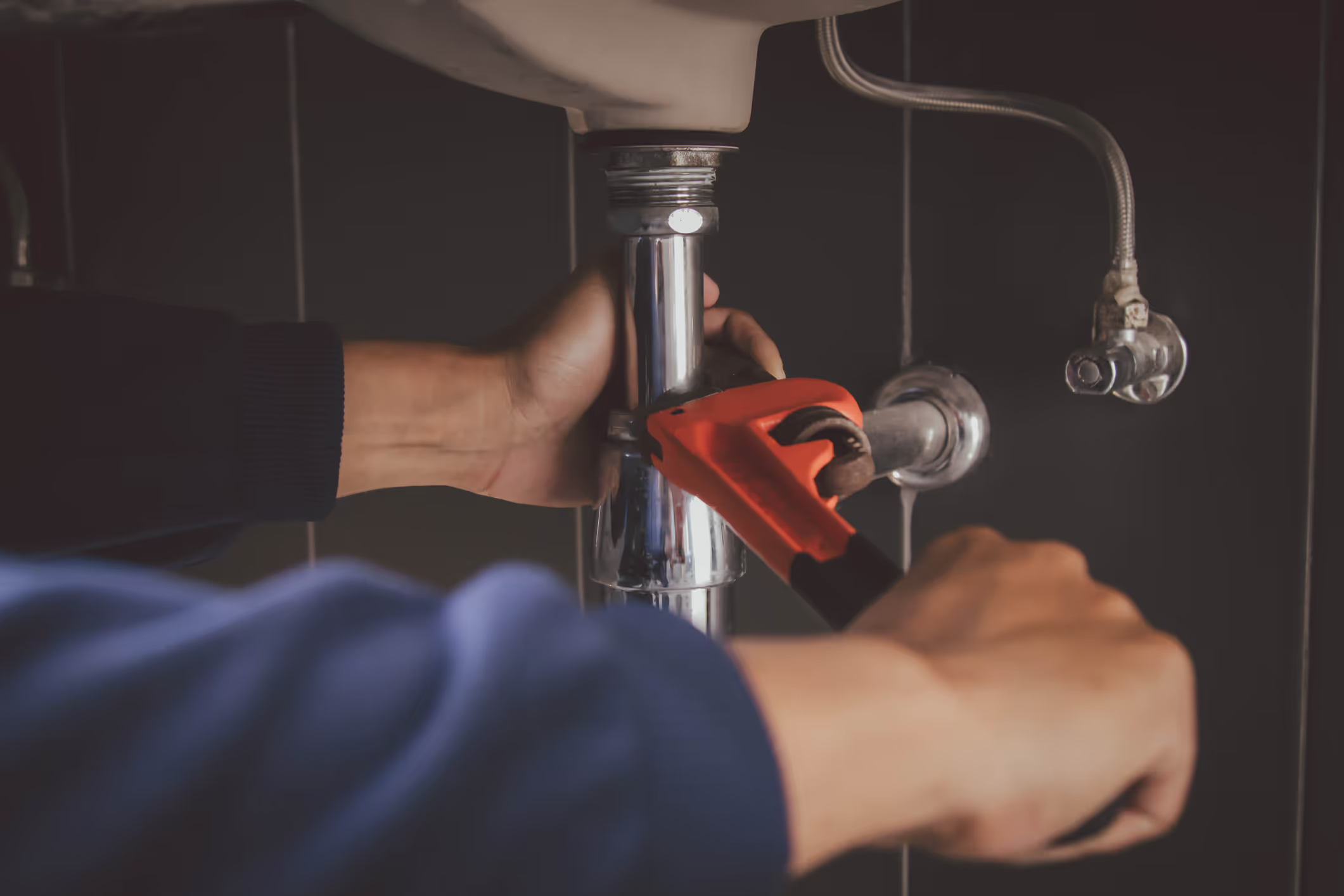
From leaks to full system installs, our plumbing services cover everything you need for a safe, reliable home water system, 24/7.
Our Primary Plumbing Include:
- Water Heater Replacement
- Water Heater Repair
- Trenchless Sewer Line
- Water Filtration
- Slab Leak
- Sewer Line Repair
Don't see the service you need? Call our Team today!
ELECTRICAL

Our electrical services ensure your home stays safe and powered, from routine fixes to complete system upgrades.
Our Primary Electrical Services Include:
- House Rewiring
- Electrician
- Electric Panel Upgrade
- Electric Panel Replacement
- EV Chargers
- Whole House Generator
Don't see the service you need? Call our Team today!
HEATING
.jpg)
We install, repair, and maintain heating & furnace systems with expert care to keep your Colorado home comfortable and energy-efficient year-round.
Our Primary Heating Services Include:
- Heating Installation
- Heating Replacement
- Heating Maintenance
- Heating Repair
- Heating Service
- Heating Tune-Up
Don't see the service you need? Call our Team today!