Why Your Sewer Line Deserves Immediate Attention in Denver
Sewer line repair in denver, co is one of those home maintenance issues that homeowners hope to never face, but many eventually will. When your sewer line fails, the consequences can be severe—sewage backups in your home, foul odors, property damage, and even health hazards. Whether it's caused by tree root intrusion, Denver's challenging freeze-thaw cycles, or aging cast iron pipes common in older neighborhoods, a failing sewer line demands swift, professional attention.
If you're searching for trusted sewer line repair services in Denver, here's what you need to know:
• Top warning signs: Slow drains throughout your home, gurgling sounds from toilets, sewage odors, backups, unusually green lawn patches, or foundation cracks
• Repair options: Traditional excavation for complete pipe replacement or trenchless methods (pipe lining, pipe bursting) for minimal property disruption
• Denver-specific challenges: Expansive clay soils that shift and crack pipes, deep frost lines requiring proper burial depth, and mature trees whose roots seek moisture in sewer lines
• Who handles repairs: Homeowners are responsible for the private lateral line from their home to the main sewer; the city handles the main line itself
• Expected timeline: Trenchless repairs typically take 1-2 days; traditional excavation may take several days to a week depending on scope
For comprehensive plumbing solutions beyond sewer lines, visit our main plumbing services page, or if you're ready to schedule an inspection or repair, contact our team directly.
I'm Mike Townsend, a U.S. Army veteran who spent years managing precision cooling systems during my military service—work that required the same attention to detail essential for sewer line repair in denver, co. That background in critical infrastructure now guides how our veteran-led team approaches every plumbing challenge, ensuring homeowners receive reliable, professional service backed by military-grade precision and integrity.
Recognizing Sewer Line Distress: Key Warning Signs for Denver Homeowners
A healthy sewer line operates silently and efficiently, out of sight and out of mind. However, when problems begin to brew beneath the surface, your home will often send out subtle—and sometimes not-so-subtle—distress signals. Recognizing these warning signs early is crucial for Denver homeowners, as prompt action can prevent minor issues from escalating into costly and unsanitary disasters.
Here are the common signs that your sewer line might be in trouble:
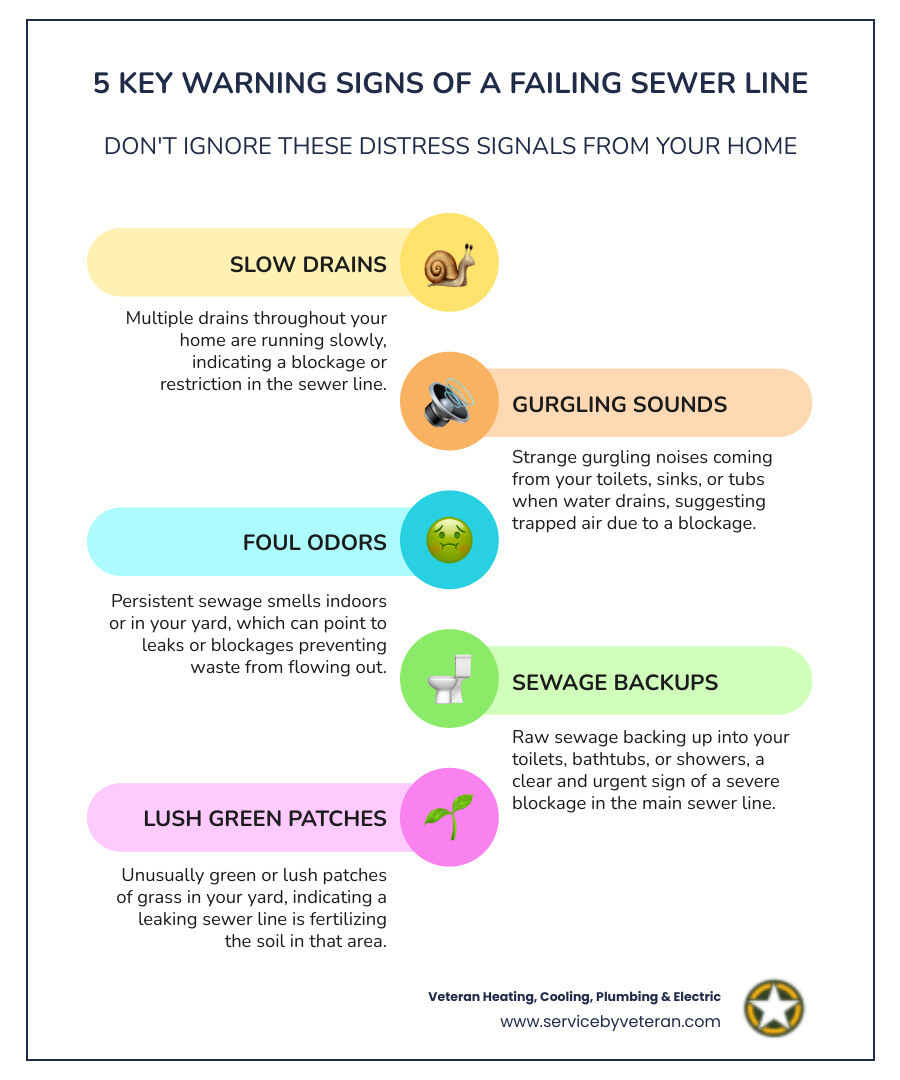
• Slow Drains: Are your sinks, showers, or tubs draining much slower than usual? While an isolated slow drain might indicate a simple clog in that fixture, if you notice multiple drains throughout your home struggling to clear, it's a strong indicator of a blockage or restriction in your main sewer line.
• Gurgling Noises: Hearing strange gurgling sounds coming from your toilets, especially after flushing another fixture or using a sink, is a classic sign of trapped air in your plumbing system. This often points to a partial blockage in the sewer line, where wastewater struggles to pass, creating air bubbles.
• Foul Sewage Odors: The smell of raw sewage is unmistakable and deeply unpleasant. If you detect persistent sewage odors inside your home, particularly around drains, or even in your yard, it could signal a leak in your sewer line or a blockage causing sewage to back up and release gases. Sewage water contains harmful bacteria and viruses, posing a significant health risk.
• Backups in Toilets or Tubs: This is perhaps the most alarming and unsanitary sign. If flushing a toilet causes water to back up into your shower, tub, or another toilet, or if sewage overflows from any drain, your main sewer line is severely blocked or compromised. This demands immediate attention.
• Unusually Green Lawn Patches: While a lush lawn is usually a good thing, unusually green, moist, or soggy patches in your yard, especially when surrounding areas are drier, can indicate a leaking sewer line. The wastewater acts as a fertilizer, causing localized growth. Conversely, sunken spots in your lawn could suggest a broken pipe causing soil erosion.
• Foundation Cracks: A severely compromised sewer line can lead to shifting soil around your home's foundation. Over time, this soil movement can cause cracks in your foundation, walls, or even an uneven floor, leading to significant structural damage.
• Pest Infestations: An increase in rodents or insects, particularly those attracted to moisture and waste, can be another subtle clue. Leaks in your sewer line can create damp, accessible entry points for pests into your property.
Ignoring these warning signs carries significant risks. Beyond the unpleasantness, delaying sewer line repair in denver, co can lead to extensive water damage, mold growth, property devaluation, and serious health hazards from exposure to contaminated water.
We recommend considering a Sewer Camera Inspection Denver Co at the first sign of trouble. This proactive step allows us to get a clear picture of the problem, stopping it before it gets worse and potentially saving you from more expensive repairs down the line. It's also a highly recommended part of any home inspection when buying or selling a property.
Denver's Unique Challenges: How Climate and Soil Impact Your Sewer Lines
Denver, with its unique geographic and climatic conditions, presents specific challenges to the longevity and integrity of residential and commercial sewer lines. Understanding these local factors is key to effective sewer line repair in denver, co.
Here's how Denver's environment can affect your sewer system:
• Expansive Clay Soils: Much of the Denver metro area, including communities like Lakewood, Centennial, and Aurora, sits on bentonite clay soils. These "expansive" soils absorb water and swell significantly during wet periods, then contract and shrink during dry spells. This constant shifting exerts immense pressure on underground pipes, leading to cracks, misalignments, and even complete collapses over time.
• Freeze-Thaw Cycles: Denver experiences frequent and dramatic temperature fluctuations, particularly during winter and spring. The alternating freezing and thawing of the ground create significant movement and stress on buried sewer lines. Water expands when it freezes, and this expansion can exacerbate existing cracks or cause new ones, making pipes more susceptible to damage.
• Aging Infrastructure: Many homes in Denver and its surrounding older communities like Golden and Littleton were built decades ago. These properties often have sewer lines made from older materials such as cast iron or clay. While durable in their time, these materials are more prone to deterioration, corrosion, and cracking than modern PVC or HDPE pipes. Their age simply means they are approaching or have exceeded their expected lifespan.
• Mature Tree Root Systems: Denver is known for its beautiful, mature trees that line streets and adorn properties. While aesthetically pleasing, these trees can be a major culprit for sewer line damage. Tree roots are naturally drawn to sources of water and nutrients, and sewer lines, with their constant moisture, become irresistible targets. Even tiny cracks or loose joints in pipes can allow roots to penetrate, growing inside the line, causing blockages, and eventually crushing or breaking the pipe. This is a common issue we encounter across the Denver area, from Arvada to Highlands Ranch.
These combined factors mean that sewer lines in Denver are under constant environmental assault. Our local expertise allows us to accurately diagnose issues stemming from these specific conditions and implement durable solutions custom to the Denver environment.
Modern vs. Traditional: Understanding Your Sewer Line Repair Options
When facing a sewer line problem, homeowners in Denver have several repair methods available, each with its own advantages and considerations. We specialize in both traditional and modern techniques to ensure we can provide the best solution for your unique situation.
• Property Disruption — Traditional Excavation (Open-Trench): High (large trenches, significant landscape damage) — Trenchless Sewer Repair (Pipe Lining/Bursting): Minimal (small access points, preserves landscaping)
• Time to Complete — Traditional Excavation (Open-Trench): Longer (days to weeks, depending on scope) — Trenchless Sewer Repair (Pipe Lining/Bursting): Faster (typically 1-2 days)
• Application — Traditional Excavation (Open-Trench): Ideal for severely damaged/collapsed pipes, complex layouts, or when trenchless isn't feasible — Trenchless Sewer Repair (Pipe Lining/Bursting): Suitable for most pipe materials, minor to moderate damage, root intrusion
• Pipe Visibility — Traditional Excavation (Open-Trench): Full visibility of the pipe during repair/replacement — Trenchless Sewer Repair (Pipe Lining/Bursting): Internal inspection via camera, new pipe created within or replaces old
• New Pipe Material — Traditional Excavation (Open-Trench): Typically PVC, ABS, HDPE — Trenchless Sewer Repair (Pipe Lining/Bursting): Cured-in-Place Pipe (CIPP) liner, new HDPE pipe for bursting
• Longevity — Traditional Excavation (Open-Trench): 50-100+ years (new pipe) — Trenchless Sewer Repair (Pipe Lining/Bursting): 50+ years (new liner/pipe)
The Traditional Approach to Sewer Line Repair in Denver, CO: Excavation
The traditional method for sewer line repair in denver, co involves excavation, commonly known as the open-trench method. This technique requires digging a trench along the entire length of the damaged sewer line to expose it for repair or replacement.
Process: Our team uses excavators, mini-excavators, or backhoes, and sometimes even hand-digging, to create the necessary trench. Safety is paramount during this process, and we implement measures like trench shoring to prevent soil from caving in. Once the pipe is exposed, we can directly inspect, repair, or completely replace the damaged section. New sewer lines are typically laid in a bed of crushed granite or squeegee to prevent shifting and low spots.
Advantages:
• Full Pipe Visibility: This method allows for complete visual inspection of the entire pipe and surrounding soil, ensuring no hidden issues are missed.
• Complete Removal of Old Pipes: When replacing a line, traditional excavation allows for the thorough removal of old, broken, or compromised pipes, replacing them entirely with new, durable materials.
• Ideal for Certain Situations: While it can be more disruptive, traditional excavation is sometimes the most straightforward option for severely collapsed pipes, complex layouts, or if trenchless methods aren't feasible due to pipe material or configuration.
Disadvantages:
• Significant Property Disruption: The most notable drawback is the extensive disruption to your property. Lawns, landscaping, driveways, and sidewalks may need to be dug up, leading to considerable restoration work after the repair.
• Longer Completion Time: The excavation, repair, and backfilling process can take several days to a week or more, depending on the length and depth of the sewer line.
• Landscaping Impact: Re-landscaping may be required, and the time for your yard to heal can be substantial. We always take care to protect your landscaping by laying down plywood on grass where possible, but some impact is inevitable.
The No-Dig Solution: Trenchless Sewer Line Repair in Denver, CO
For homeowners seeking less invasive options for sewer line repair in denver, co, trenchless technology offers a modern and efficient alternative. This method minimizes digging, preserving your property's aesthetics and minimizing restoration needs.
Benefits of Trenchless Repair:
• Minimal Digging: Only small access points are needed, typically at the beginning and end of the sewer line, drastically reducing the impact on your yard, driveway, and landscaping.
• Preserving Landscape: This is a major advantage for properties with mature trees, intricate gardens, or intricate hardscaping, as it avoids tearing up these features.
• Faster Completion Time: Trenchless repairs can often be completed in one to two days, significantly faster than traditional excavation, which can take weeks.
• Long-Lasting Results: The new pipes or liners installed with trenchless methods are durable and designed to last for 50 years or more, providing a permanent fix.
We use advanced trenchless methods, including:
• Pipe Bursting: This technique involves pulling a new, high-density polyethylene (HDPE) pipe through the old, damaged one. A conical bursting head breaks apart the old pipe while simultaneously pulling the new pipe into its place. This method effectively replaces the entire damaged section with a seamless, durable new pipe.
• Cured-in-Place Pipe (CIPP) Lining: For pipes that are cracked or leaking but still structurally sound, CIPP lining is an excellent option. We insert a flexible, resin-impregnated liner into the existing damaged pipe. Once in place, the liner is inflated and cured (often with heat or steam), creating a new, seamless "pipe within a pipe" that is corrosion-resistant and seals off all leaks and cracks.
Our team is expert in Trenchless Sewer Line Denver solutions, offering a durable, low-impact solution for many common sewer line issues in the Denver metro area.
The Professional Repair Process for Sewer Line Repair in Denver, CO
When you call us for sewer line repair in denver, co, you can expect a systematic and professional approach designed to accurately diagnose the problem, implement an effective solution, and restore your plumbing system with minimal disruption.
Here’s a typical overview of our repair process:
1. Initial Diagnosis: The first step is to understand the symptoms you're experiencing. Our experienced technicians will ask detailed questions about the issues, such as slow drains, odors, or backups, to help narrow down the potential problem area.
2. Video Sewer Camera Inspection: This is the most crucial diagnostic tool we use. We insert a high-resolution, waterproof camera attached to a flexible rod into your sewer line. This camera transmits live video footage to a monitor, allowing us to see the exact condition of your pipes. We can pinpoint the precise location and nature of the problem—whether it's tree root intrusion, cracks, corrosion, blockages, or a collapsed section. This eliminates guesswork and ensures we recommend the most appropriate repair. We can even provide you with a copy of the inspection video and a detailed report.
3. Solution Proposal: Based on the camera inspection findings, we will explain the problem clearly and present you with the best repair options custom to your situation. This might include traditional excavation, trenchless pipe bursting, or CIPP lining. We believe in educating our customers so you can make an informed decision.
4. Permit Requirements: For any significant sewer line repair in denver, co, permits are typically required by the city. We will guide you through this process, handling the necessary paperwork and ensuring all work complies with local building codes and regulations. These permits often involve city inspections to ensure the work meets all safety and quality standards.
5. The Repair Work: Once the method is chosen and permits are secured, our skilled team will proceed with the repair. Whether it's carefully excavating to access and replace a damaged section or utilizing specialized equipment for trenchless methods, we perform the work with precision and efficiency. We take care to protect your property during the process, laying down protective barriers and minimizing disruption as much as possible.
6. Final Testing and Cleanup: After the repair is complete, we conduct thorough testing to ensure your sewer line is functioning perfectly, with proper flow and no leaks. We then backfill any excavated areas, restore the site as close to its original condition as possible, and ensure the work area is carefully cleaned, leaving nothing behind but a fully functional sewer system.
Our commitment to quality extends beyond the repair itself; we ensure peace of mind with a lifetime warranty on parts and labor, and a money-back guarantee, reflecting our confidence in the durability of our work.
Frequently Asked Questions About Denver Sewer Line Repair
Homeowners often have many questions when facing the prospect of sewer line repair in denver, co. We've compiled answers to some of the most common inquiries to help you better understand this critical home service.
How long can I expect my sewer pipes to last?
The lifespan of your sewer pipes can vary significantly depending on the material they are made from, installation quality, and environmental factors. Generally, sewer lines can last anywhere from 50 to 100 years.
• Pipe materials: Older homes in Denver often have cast iron or clay pipes, which might have a lifespan of 50-75 years before corrosion or cracks become prevalent. Modern PVC (polyvinyl chloride) pipes, on the other hand, are highly durable and can last 100 years or more under ideal conditions. HDPE (high-density polyethylene) pipes used in trenchless applications also boast a very long lifespan.
• Factors affecting longevity: Several elements can shorten a pipe's life. Tree root intrusion, the constant shifting of Denver's expansive clay soils, frequent freeze-thaw cycles, and even persistent blockages can all contribute to premature wear and tear. Regular maintenance and mindful usage can extend the life of your sewer line.
Who is responsible for sewer line repairs?
This is a common question, and the answer typically depends on where the problem occurs:
• Homeowner responsibility (private lateral line): In most municipalities, including Denver and its surrounding areas like Broomfield, Castle Rock, and Columbine, homeowners are responsible for the private sewer lateral line. This is the section of pipe that runs from your home's foundation to the city's main sewer line, often extending to the property line or even into the street. If the issue (e.g., a clog, crack, or collapse) is within this lateral line, the repair falls to the homeowner.
• Municipal responsibility (main sewer line): The city or local water authority is generally responsible for the main sewer line, which collects wastewater from multiple properties. If our camera inspection determines the problem lies within the main municipal line, we can help you understand the next steps for contacting the appropriate city department.
It's always best to contact a professional like us when you suspect a sewer line issue. Our Sewer Camera Inspection can accurately determine the exact location of the problem, clarifying responsibility.
How can I prevent future sewer line problems?
Preventative measures are your best defense against costly and inconvenient sewer line repair in denver, co. Taking a proactive approach can significantly extend the life of your sewer system and save you money in the long run.
• Regular maintenance: Schedule periodic professional Sewer Line Cleaning to remove buildup of grease, soap scum, hair, and other debris that can accumulate over time. This prevents minor obstructions from becoming major blockages.
• Mindful drain usage: Be conscious of what goes down your drains. Avoid pouring grease, cooking oils, coffee grounds, and fibrous food scraps down kitchen sinks. Install drain screens in showers and tubs to catch hair.
• Avoiding harsh chemicals: Steer clear of chemical drain cleaners. While they might offer a temporary fix, their corrosive nature can actually damage your pipes over time, especially older ones. They often only partially clear a clog, leaving behind residue that can attract more debris.
• Strategic landscaping: If you're planting new trees, be mindful of their mature root systems and plant them far away from your sewer lines. If you have existing large trees, consider regular root control treatments or professional inspections to monitor their proximity to your pipes.
• Professional inspections: Consider scheduling a sewer camera inspection every few years, especially if your home is older or you have mature trees. Early detection of small cracks or root intrusion allows for minor repairs before they escalate into major problems.
By following these preventative tips, you can significantly reduce the likelihood of needing emergency sewer line repair in denver, co and ensure your plumbing system continues to function smoothly for years to come.
Your Trusted Partner for Sewer Line Solutions
Dealing with a compromised sewer line is never pleasant, but with the right experts by your side, it doesn't have to be an overwhelming ordeal. Prompt action is always the best course when you notice any of the warning signs we've discussed. Ignoring a sewer line problem can lead to severe consequences, including extensive property damage, unsanitary conditions, and potential health hazards from exposure to harmful bacteria and viruses. These risks underscore the importance of entrusting your sewer line needs to a reputable, experienced, and locally knowledgeable company.
When seeking a company for sewer line repair in denver, co, look for a team that prioritizes:
• Expertise and Experience: Technicians who understand Denver's unique soil, climate, and infrastructure challenges.
• Advanced Technology: Companies that use state-of-the-art diagnostic tools like sewer cameras and offer modern repair methods like trenchless solutions.
• Transparent Communication: A team that clearly explains the problem, presents all viable solutions, and provides upfront information about the process.
• Customer-Focused Service: A commitment to professionalism, timeliness, and ensuring your satisfaction.
• Strong Guarantees: Reputable companies stand behind their work with warranties and guarantees.
At Veteran Heating, Cooling, Plumbing & Electric, we bring military-grade precision and integrity to every job. As a veteran-led, locally owned company, we are deeply committed to providing personal, honest, and community-focused service to our neighbors in Denver, Greenwood Village, Arvada, Aurora, Broomfield, Castle Rock, Centennial, Columbine, Golden, Highlands Ranch, Lakewood, and Littleton. We stand by our work with a lifetime warranty on parts and labor and a money-back guarantee, because your peace of mind is our highest priority.
For expert help with your Sewer Line Repair Denver Co, contact us today. Let our dedicated team restore the health and functionality of your home’s most critical plumbing system, ensuring your comfort and safety.
ABOUT Veteran Heating, Cooling, Plumbing & Electric
Veteran Heating, Cooling, Plumbing & Electric was founded on the belief that service should be personal, honest, and community-focused. Our team is built around integrity, professionalism, and a true commitment to your home’s comfort and safety.
Led by a U.S. Army veteran with over 30 years of industry experience, we’re proud to remain locally owned and operated. Every technician, plumber, and electrician is EPA-certified, background checked, and driven to exceed expectations.
- 24/7 ServiceWe offer weekend & 24/7 emergency service. We’re here whenever you need us—day, night, or weekend, no exceptions.
- $0 Trip FeesNo dispatch or trip fees. You’ll never pay just for us to show up—service starts when the work does.
OUR SERVICES
AIR CONDITIONING
.jpg)
We offer specialty and seasonal services like indoor air quality upgrades, pre-winter furnace checks, and summer AC tune-ups to keep your home prepared year-round.
Our Primary Air Conditioning Services Include:
Don't see the service you need? Call our Team today!
PLUMBING
From leaks to full system installs, our plumbing services cover everything you need for a safe, reliable home water system, 24/7.
Our Primary Plumbing Include:
- Water Heater Replacement
- Water Heater Repair
- Trenchless Sewer Line
- Water Filtration
- Slab Leak
- Sewer Line Repair
Don't see the service you need? Call our Team today!
ELECTRICAL

Our electrical services ensure your home stays safe and powered, from routine fixes to complete system upgrades.
Our Primary Electrical Services Include:
- House Rewiring
- Electrician
- Electric Panel Upgrade
- Electric Panel Replacement
- EV Chargers
- Whole House Generator
Don't see the service you need? Call our Team today!
HEATING
.jpg)
We install, repair, and maintain heating & furnace systems with expert care to keep your Colorado home comfortable and energy-efficient year-round.
Our Primary Heating Services Include:
- Heating Installation
- Heating Replacement
- Heating Maintenance
- Heating Repair
- Heating Service
- Heating Tune-Up
Don't see the service you need? Call our Team today!