The Hidden Danger Lurking in Dormant Heating Circuits
If you are wondering exactly why we check your electrical panel before firing up your furnace for the first time in months, the answer lies in a hidden problem that develops silently all summer long. You walk over to the thermostat as the house grows chilly, flip the switch to "heat," and wait for the familiar hum—but instead, you get dead silence, a sudden click from the basement, or worse, the smell of burning electronics. Homeowners eagerly turning on their heating systems at the first sign of cold weather often experience an immediate breakdown, assuming their furnace simply aged out overnight. However, the root cause of these sudden failures usually is not the HVAC unit itself, but hidden electrical faults that developed quietly during the off-season. At Veteran Heating, Cooling, Plumbing & Electric, our team sees this exact scenario play out across Denver every single fall.
During those long summer months when your heating equipment is completely powered down, the dedicated circuits supplying it with electricity are sitting dormant. This dormancy masks a variety of structural and electrical changes happening right inside your breaker box. By the time the September early fall cold snaps arrive, your system is expected to perform perfectly on a circuit that has not been tested in over half a year. This highlights a critical decision point for homeowners: a thorough pre-startup inspection must include the electrical panel before the furnace is ever powered on. When you book your annual furnace maintenance, ensuring that the electrical side of the equation is verified can save you from a catastrophic breakdown.
The real threat is voltage: Verifying circuit health prevents catastrophic voltage drops from frying your system's control board. If the power delivery is compromised, even a brand-new, high-efficiency furnace will fail to operate safely. By addressing the power source first, you protect the expensive components downstream.
The Science of Summer Electrical Degradation
To understand why your heating circuit becomes vulnerable, we have to look at the science of what happens inside your electrical panel during the hottest months of the year. Electrical panels are not static boxes; they are dynamic environments affected by temperature, humidity, and the overall electrical load of your home.
Micro-Expansions and Contractions
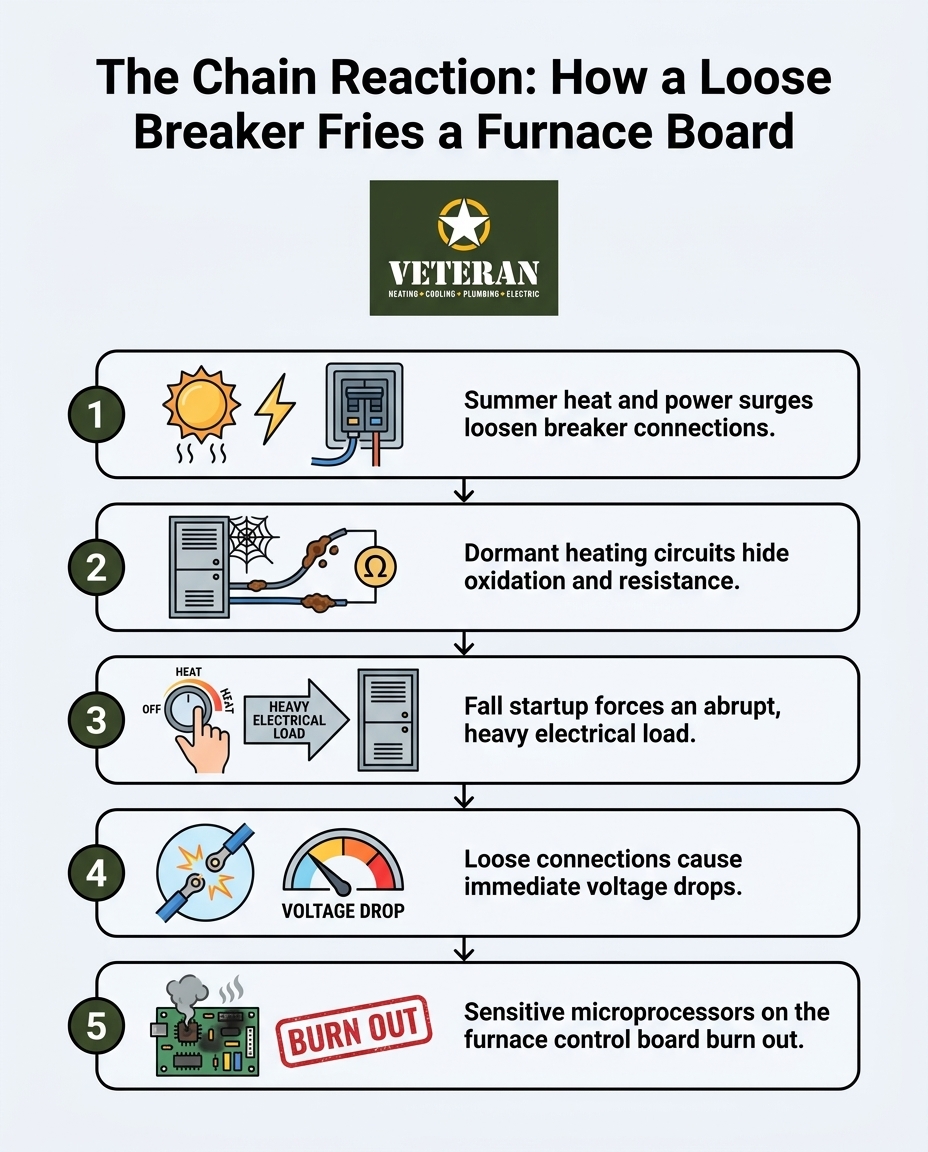
Throughout the summer, your home's electrical system works overtime to keep your air conditioning running. Summer power surges and consistently high ambient temperatures cause the metal components within your electrical panel to heat up. When metals heat up, they expand. When they cool down at night, they contract. These microscopic expansions and contractions happen daily, and over time, they can cause the physical connections securing your electrical wires to the breakers to loosen slightly.
The Threat of Oxidation and Resistance
Once a connection becomes even slightly loose, a new problem emerges: oxidation. Air enters the tiny gap between the wire and the breaker terminal, causing the metal surfaces to oxidize. This oxidation layer acts as an insulator, creating electrical resistance. As electrical resistance builds up in these loose breaker connections over time, the circuit loses its ability to deliver clean, consistent power.
Why you don't notice it: A circuit sitting dormant for months completely masks these issues. Because the furnace is off, no electricity is flowing through that specific breaker, meaning the homeowner has absolutely no warning signs—no flickering lights, no tripped breakers, and no strange smells—until a heavy load is suddenly applied. In our years of providing dual-trade services throughout the Denver metro area, we've found that older homes are particularly susceptible to these silent summer degradation issues because their aging electrical infrastructure is already operating near its maximum capacity. These hidden electrical problems often go unnoticed until the exact moment you need your heating system the most.
Why the First Cold Snap is the Ultimate Stress Test
When Denver's sudden temperature drops hit in early fall, our dispatch phones inevitably start ringing off the hook. Homeowners instinctively rush to their thermostats to turn on the heat, forcing dormant heating systems to activate suddenly and demanding instant performance from circuits that have been asleep for months. This moment of activation is the ultimate stress test for your electrical panel.
Furnaces and heat pumps are high-draw appliances. When the thermostat signals the system to turn on, the equipment requires a massive, immediate surge of electricity to start the blower motor, activate the draft inducer, and power the ignition sequence. This sudden demand for maximum amperage stresses the electrical panel instantly upon startup.
If the circuit has suffered from summer electrical degradation, the results are immediate. The previously discussed loose connections and accumulated oxidation restrict the flow of electricity, acting like a kink in a garden hose. When the furnace demands a massive surge of power, the restricted connection cannot deliver it, leading to a severe and immediate voltage drop. This sudden stress test exposes all the hidden electrical weaknesses that developed during the off-season in a fraction of a second.
• Breaker Connection — Summer Condition (Dormant): Loosens due to heat expansion; oxidation forms. — Fall Startup Reaction (Active Load): Creates high electrical resistance instantly.
• Wiring Integrity — Summer Condition (Dormant): Sits inactive, masking micro-gaps at terminals. — Fall Startup Reaction (Active Load): Heats up rapidly as it struggles to pull amperage.
• Voltage Delivery — Summer Condition (Dormant): Zero flow; appears completely normal. — Fall Startup Reaction (Active Load): Experiences a massive drop, starving the furnace.
The Vulnerability of Modern Furnace Control Boards
When that sudden voltage drop occurs, the component that suffers the most is the furnace control board. While older, simpler furnaces relied on basic mechanical relays, modern heating systems are highly sophisticated. Modern furnace control boards contain highly sensitive microprocessors, functioning much like a delicate computer brain that orchestrates every safety and operational phase of the heating cycle.
How Voltage Drops Cause Catastrophic Damage
These microprocessors require a steady, precise flow of voltage to operate correctly. When a compromised breaker connection causes a sudden voltage irregularity, spike, or drop, it forces the control board to pull more current to compensate. This excess current generates heat, which easily damages the sensitive electronics soldered to the board. The outcome is often a blown control board on day one of the heating season, leading to a completely non-functional furnace right when the temperatures plummet.
For example, a Denver homeowner reached out to us last September when their heating system failed on the very first chilly day of the season. Our technician, Jeff, arrived promptly and efficiently diagnosed a fried control board caused by a failing breaker. He replaced the damaged components to get their heat running reliably again. While our professional repair teams can resolve these sudden breakdowns quickly and get your home warm, preventing the board failure in the first place is always the ideal outcome. Replacing a fried control board is an avoidable frustration if the electrical panel is checked before the thermostat is ever switched to heat.
The Dangerous Gap in Standard Single-Trade Tune-Ups
Understanding the link between your electrical panel and your furnace highlights a dangerous gap in how the home service industry traditionally operates. Most homeowners diligently schedule a fall tune-up, believing they are fully protected. However, a standard HVAC tune-up typically covers only the mechanical components of the system: changing filters, calibrating the thermostat, testing the pilot light or ignition sensor, and cleaning the interior compartments.
The critical missing piece: Single-trade HVAC technicians generally do not possess the electrical licensing or specialized expertise required to open and inspect your home's main electrical panel safely. Checking the HVAC unit in isolation, without verifying the integrity of the power source supplying it, leaves the entire system vulnerable to the voltage drops we discussed earlier. You could have a perfectly clean, mechanically sound furnace that is still destroyed on day one because the breaker connection was failing.
This establishes the absolute necessity of cross-disciplinary expertise to ensure the entire system—from the breaker box to the blower motor—is safe to operate. As a veteran-owned, multi-trade company serving Denver, our team at Veteran Heating, Cooling, Plumbing & Electric possesses the Dual HVAC and Electrical service expertise required to spot these hidden electrical faults that single-trade companies simply cannot address. We look at your home as an interconnected system, ensuring that the power center is just as ready for winter as the heating equipment itself.
What a Proper Pre-Startup Electrical Inspection Entails
A true, holistic pre-season tune-up goes far beyond just wiping down the furnace cabinet. It involves a rigorous, professional assessment of the electrical infrastructure supporting your heating system. Because opening an electrical panel exposes live, high-voltage components, this process must only be performed by licensed professionals.
Here is what a proper pre-startup electrical inspection involves:
1. Verifying Dedicated Circuit Integrity: The technician begins at the main electrical panel, identifying the dedicated heating circuit and inspecting the physical condition of the breaker and surrounding bus bar for any signs of heat damage, scorching, or pitting.
2. Testing Breaker Connections: Using specialized, insulated tools, the professional tests the breaker connections for proper torque. If summer micro-expansions have loosened the lug, the technician will re-torque it to the manufacturer's exact specifications to eliminate resistance.
3. Identifying Hidden Oxidation: The technician inspects the exposed wire ends for signs of oxidation or corrosion that act as insulators, cleaning or safely re-terminating the connections if necessary to ensure optimal conductivity.
4. Measuring Voltage Drops Under Load: Using a professional multimeter, the technician measures the voltage delivery while the system is prompted to start. This ensures the circuit can safely handle the heavy load of a furnace startup without experiencing a dangerous voltage drop.
This holistic inspection guarantees that when your thermostat calls for heat, the electrical infrastructure can deliver clean, consistent power. If a circuit is found to be severely degraded or unsafe, this evaluation provides the perfect opportunity to explore home electric panel upgrades before the harsh winter weather sets in.
When to Consider Broader Electrical Updates for HVAC Safety
Sometimes, a thorough pre-startup check reveals issues that go beyond a single loose connection. During our fall tune-ups in older Denver metro area homes, our dual-trade experts frequently uncover that the panel itself is struggling to support modern, high-efficiency HVAC equipment. Today's variable-speed furnaces and advanced heat pumps require a stable, robust electrical supply that older panels simply were not designed to provide.
If your overall electrical infrastructure needs attention, you will often notice warning signs beyond just the heating system. Key indicators include:
• Frequent breaker tripping, especially when multiple appliances run simultaneously.
• Lights dimming or flickering momentarily when the furnace or AC kicks on.
• A buzzing or humming sound coming from the main breaker box.
• The presence of outdated, obsolete panel brands known for safety failures.
If these symptoms are present, you might need a full electric panel replacement. Upgrading the panel not only protects your expensive new furnace from voltage-related damage but ensures the safety and reliability of your entire home's electrical system. We always advise homeowners to consult with dual-trade experts to evaluate if their home's power center is truly ready for the heavy demands of the upcoming winter.
Frequently Asked Questions
What causes a furnace control board to burn out?
A furnace control board typically burns out due to severe voltage irregularities, such as sudden power surges or severe voltage drops. When loose electrical connections at the breaker panel restrict power flow, the board's sensitive microprocessors overheat as they struggle to pull enough current. Additionally, water damage or short circuits within the furnace cabinet can also fry the electronic components.
Can a bad circuit breaker damage my furnace?
Yes, a failing or loose circuit breaker can absolutely damage your furnace. If the breaker fails to deliver a consistent, clean supply of electricity, it causes voltage drops that force the furnace's motors and control board to work harder and run hotter. Over time, this inconsistent power delivery will prematurely wear out expensive internal components.
Why is my furnace tripping the circuit breaker?
Your furnace is tripping the circuit breaker because it is drawing more electrical current than the circuit is safely designed to handle. This usually indicates an overworked blower motor, a short circuit in the wiring, a clogged air filter forcing the system to strain, or a breaker that has simply grown weak and degraded over time. We always advise our Denver customers that you should never repeatedly reset a tripping breaker without having a professional diagnose the root cause.
Does a furnace need a dedicated electrical circuit?
Yes, modern electrical codes require a furnace to be installed on its own dedicated electrical circuit. Because heating systems draw a significant amount of power upon startup, sharing a circuit with other outlets or appliances would easily overload the breaker and create a serious fire hazard. A dedicated circuit ensures the furnace receives the uninterrupted power it needs to operate safely.
How often should a dormant heating circuit be inspected?
A dormant heating circuit should be inspected annually, ideally during your comprehensive pre-season fall tune-up. Having a licensed professional verify the integrity of the connections and test for voltage drops before you turn the system on for the first time prevents unexpected breakdowns and protects your equipment from electrical damage.
Ready for Winter?
Protecting your heating system starts at the power source. A clear, technical understanding of your electrical panel's health is the best way to ensure your furnace's survival through the winter. Schedule your comprehensive fall tune-up with a dual-trade expert to verify your circuits are safe, secure, and ready for the cold.
ABOUT Veteran Heating, Cooling, Plumbing & Electric
Veteran Heating, Cooling, Plumbing & Electric was founded on the belief that service should be personal, honest, and community-focused. Our team is built around integrity, professionalism, and a true commitment to your home’s comfort and safety.
Led by a U.S. Army veteran with over 30 years of industry experience, we’re proud to remain locally owned and operated. Every technician, plumber, and electrician is EPA-certified, background checked, and driven to exceed expectations.
- 24/7 ServiceWe offer weekend & 24/7 emergency service. We’re here whenever you need us—day, night, or weekend, no exceptions.
- $0 Trip FeesNo dispatch or trip fees. You’ll never pay just for us to show up—service starts when the work does.
OUR SERVICES
AIR CONDITIONING
.jpg)
We offer specialty and seasonal services like indoor air quality upgrades, pre-winter furnace checks, and summer AC tune-ups to keep your home prepared year-round.
Our Primary Air Conditioning Services Include:
Don't see the service you need? Call our Team today!
PLUMBING
From leaks to full system installs, our plumbing services cover everything you need for a safe, reliable home water system, 24/7.
Our Primary Plumbing Include:
- Water Heater Replacement
- Water Heater Repair
- Trenchless Sewer Line
- Water Filtration
- Slab Leak
- Sewer Line Repair
Don't see the service you need? Call our Team today!
ELECTRICAL

Our electrical services ensure your home stays safe and powered, from routine fixes to complete system upgrades.
Our Primary Electrical Services Include:
- House Rewiring
- Electrician
- Electric Panel Upgrade
- Electric Panel Replacement
- EV Chargers
- Whole House Generator
Don't see the service you need? Call our Team today!
HEATING
.jpg)
We install, repair, and maintain heating & furnace systems with expert care to keep your Colorado home comfortable and energy-efficient year-round.
Our Primary Heating Services Include:
- Heating Installation
- Heating Replacement
- Heating Maintenance
- Heating Repair
- Heating Service
- Heating Tune-Up
Don't see the service you need? Call our Team today!