The Hidden Vulnerabilities in Littleton's Oldest Neighborhoods
You love the architectural charm of your century-old property, but you are likely unaware of the unique plumbing challenges of winterizing historic homes in Littleton until a pipe bursts behind those beautiful plaster walls. Rapid fall temperature drops threaten vintage plumbing systems that are not adequately protected, and standard modern winterization checklists often fall dangerously short. In fact, applying generic advice to a home built eighty or a hundred years ago can actually cause more damage to rigid, aging pipes than the cold weather itself. Identifying and addressing these hidden plumbing vulnerabilities before the freezing weather sets in is the only way to protect your property's structural integrity.
Before you find yourself dealing with hidden plumbing problems that escalate into a midnight disaster, knowing what to look for can save you from needing emergency plumbing in Littleton.
The Colorado Front Range is famous for its unpredictable weather, especially the rapid, sudden temperature drops typical of early fall. A sunny, seventy-degree afternoon can easily plummet into a bitter, twenty-degree freeze overnight. This rapid fluctuation shocks older, uninsulated plumbing systems before they have any chance to acclimate. Modern homes are built with advanced insulation and flexible piping that can handle these rapid shifts, but Littleton's historic older neighborhoods were constructed long before these modern building codes existed. The intricate craftsmanship that makes these homes so desirable also makes their internal systems incredibly fragile.
Neglecting these unique systems carries severe consequences. A frozen pipe in a modern home is certainly a headache, but a ruptured pipe in a historic home often means water damage to original hardwood floors, custom millwork, and irreplaceable lath-and-plaster ceilings. You cannot treat a historic home like a new build. You need a meticulous, customized approach that respects the age and condition of the materials hidden behind your walls.
Why Standard Winterization Fails Century-Old Plumbing
If you search online for winterization tips, you will find countless checklists telling you to drain your hoses, wrap your pipes in foam, and keep your thermostat set to a minimum temperature. While this advice works perfectly for a home built in the last twenty years, it fundamentally fails when applied to century-old plumbing. Modern plumbing systems rely heavily on materials like PEX (cross-linked polyethylene) and copper. PEX is inherently flexible; if water freezes and expands inside a PEX line, the plastic stretches to accommodate the ice and shrinks back down once it thaws. Copper, while less flexible than PEX, still offers a degree of tolerance and is usually installed alongside modern, high-grade insulation.
Historic homes, on the other hand, rely on antique radiators and aged cast iron pipes. Cast iron is incredibly rigid and becomes increasingly brittle as it ages. It possesses zero flexibility. When water freezes and expands inside an eighty-year-old cast iron pipe, the metal simply snaps. Furthermore, applying modern pressure testing or standard chemical winterization treatments to these aging systems can eat away at fragile joints and cause catastrophic leaks.
The Danger of One-Size-Fits-All Advice
Standard winterization advice assumes your home has modern insulation levels holding the heat inside your wall cavities. Historic homes simply lack this barrier. Following generic online tutorials for complex, localized plumbing issues often lulls homeowners into a false sense of security.
• Pipe Material — Modern Home Assumption: Flexible PEX or modern copper that tolerates slight expansion. — Historic Home Reality: Rigid, brittle cast iron or galvanized steel that snaps under pressure.
• Wall Insulation — Modern Home Assumption: Thick fiberglass or spray foam keeping wall cavities warm. — Historic Home Reality: Empty wall cavities or degraded, minimal insulation allowing freezing drafts.
• Heating System — Modern Home Assumption: Forced air HVAC distributing dry heat evenly. — Historic Home Reality: Complex antique radiator systems requiring precise steam or hot water balancing.
• DIY Safety — Modern Home Assumption: Standard foam wraps and DIY blowout kits are generally safe. — Historic Home Reality: DIY pressure treatments can destroy fragile pipe joints and radiator valves.

The Fragility of Aged Cast Iron Pipes During a Sudden Freeze
To truly understand the risk to your historic home, you have to look at the material science of aged cast iron. When cast iron is first manufactured, it is incredibly strong and durable, which is why it was the standard for plumbing for decades. However, as decades pass, continuous exposure to water, soil acidity, and temperature fluctuations causes the metal to undergo microscopic structural changes. It oxidizes, scales, and becomes increasingly brittle. A pipe that could once withstand heavy impacts becomes fragile enough to crack under slight pressure shifts.
When the temperature drops below freezing, any standing water inside these pipes turns to ice. Ice expands by roughly nine percent of its liquid volume. Because aged cast iron has completely lost whatever microscopic flexibility it once had, that nine percent expansion has nowhere to go. The outward pressure builds rapidly against the interior walls of the pipe until the cast iron fractures, often splitting straight down the middle in a catastrophic failure. This is why antique radiators and aged cast iron pipes require a customized assessment to determine the appropriate pipe repair methods or winterization techniques before the cold weather arrives.
Identifying At-Risk Cast Iron Segments
Not all cast iron pipes in your home share the same level of risk. Pipes located in the center of the home, surrounded by heated rooms, are generally safer. The real danger lies in the segments exposed to the elements.
• Unfinished basements: Pipes running along exterior foundation walls are highly susceptible to frost penetration.
• Exterior wall cavities: Supply lines routed through uninsulated exterior walls receive the full brunt of the freezing temperatures.
• Visual signs of fatigue: Look for heavy rust scaling, orange discoloration on the pipe exterior, or a flaky, blistered appearance on the metal. If you see these signs, you need a professional evaluation immediately.
Uninsulated Crawlspaces: The Frontline of Freezing Drafts
One of the most defining architectural realities of Littleton's historic older neighborhoods is the way the foundations and crawlspaces were built. Homes constructed before modern building codes were not designed with airtight thermal envelopes in mind. In fact, many older crawlspaces were intentionally built to be drafty to provide ventilation for coal-burning furnaces and to prevent moisture buildup in the floor joists. While this airflow served a purpose a century ago, it creates a massive vulnerability for your plumbing today.
These uninsulated spaces act as literal wind tunnels during a Colorado winter storm. When the wind howls off the foothills, freezing air blasts directly through the foundation vents and sweeps across your exposed plumbing lines. The ambient temperature inside a historic crawlspace can easily drop below the outside air temperature due to the wind chill factor.
The inadequacy of standard foam: Many homeowners attempt to solve this by purchasing cheap foam pipe insulation from a local hardware store and wrapping their crawlspace pipes. Standard foam insulation is completely inadequate when dealing with severe, continuous freezing drafts. The foam might delay freezing by an hour or two, but it cannot generate heat. Once the cold penetrates the thin foam layer, the pipe will freeze just as solidly as if it were bare.
The need for professional weatherization: Protecting these pipes requires comprehensive, professional-grade crawlspace weatherization strategies. This involves identifying the specific draft pathways, sealing the perimeter appropriately without causing moisture issues, and installing heavy-duty, professional-grade pipe tracing or high-R-value insulation wraps that are rated for severe exposure.
Antique Radiators: Balancing Heating Efficiency with Winter Protection
Antique radiator systems are a beautiful and highly efficient way to heat a historic home, providing a gentle, radiant warmth that forced-air systems simply cannot replicate. However, they function entirely differently than modern HVAC systems, and that functional difference creates specific vulnerabilities during sudden fall temperature drops. Whether your home uses a steam boiler or a hot water radiator system, these units rely on a complex network of heavy metal pipes, delicate valves, and precise pressure balances to operate safely.
The primary vulnerability lies in the radiator valves, steam lines, and boiler connections. If a radiator system is not properly balanced, water can become trapped in the lines or inside the radiator bodies themselves. When a sudden freeze hits—especially if the heating system has not yet been turned on for the season—that trapped water can freeze and shatter the cast iron radiator fins or crack the supply valves. A cracked radiator is not just a water leak; it is a pressurized steam hazard that can destroy a room in minutes.
• Delicate supply valves: The knobs and valves on antique radiators are often decades old and easily stripped or broken if forced.
• Pitch and drainage: Steam radiators must be pitched at a precise angle to allow condensed water to drain back to the boiler. If the floor has settled over the last century, the radiator may hold water and freeze.
• Boiler feed lines: The pipes connecting the main water supply to the boiler are often located in cold basements and are highly susceptible to freezing.
Because of the pressurized nature of these systems and the fragility of the antique components, bleeding, balancing, or winterizing an antique radiator system requires a licensed professional. Attempting to force a stuck valve or drain a boiler without the proper training can result in severe scalding, property damage, or the complete destruction of a rare, irreplaceable historic radiator. You must rely on expert care to ensure the system is safely prepped for the winter workload.
The September Urgency: Preparing Before the First Hard Freeze
Timing is everything when it comes to protecting vintage plumbing in Colorado. The Denver and Littleton area's average first freeze typically occurs in early-to-mid October. This makes the September pre-heating season transition the absolute critical window for preventative plumbing action. If you wait until the forecast predicts snow, you are already too late.
During late summer, homeowners are usually focused on managing the lingering heat and navigating Littleton water restrictions to keep their lawns alive. However, as September arrives, your focus must shift immediately to freeze preparation. The unpredictability of early fall weather in the Front Range means that a hard freeze can arrive weeks ahead of schedule. A pleasant, sunny autumn day can drop into the teens overnight, catching homeowners completely off guard.
Beat the pre-heating rush: By late October, every home service company in the region is inundated with emergency calls for broken furnaces, shattered pipes, and flooded basements. Scheduling your historic home inspection in September ensures that you have the time to carefully evaluate your antique plumbing, order any specialized replacement parts that might be needed for vintage fixtures, and implement comprehensive protection strategies before the urgent pre-heating season rush begins.
Veteran-Led Precision for Delicate Historic Plumbing
Historic plumbing systems demand a custom, meticulous approach rather than a rushed, one-size-fits-all checklist. You cannot cut corners when dealing with century-old cast iron or delicate radiator valves. This is where the value of veteran-led precision and discipline truly shines. Protecting delicate historic plumbing requires a team that understands the gravity of the work, pays attention to the finest details, and executes the job with rigorous accountability.
Thorough, respectful inspections ensure that fragile, century-old plumbing systems are protected without causing unnecessary damage to your home's historic fabric. It means taking the time to carefully map out the pipe runs in a dark, cramped crawlspace, evaluating the oxidation levels on every visible joint, and explaining the findings clearly to homeowners who are rightfully protective of their historic properties.
One local customer needed same-day service during a winter chill; a technician named Jimi provided efficient, knowledgeable, and professional service with great customer care, ensuring their system was handled properly without cutting corners. That level of punctuality, respect for the home, and clear communication is exactly what Littleton's historic older neighborhoods require. When you are dealing with pipes that have survived for a hundred years, you need a team that has the discipline to ensure they survive for a hundred more.
Expert Answers on Historic Home Winterization in Littleton
Why are older homes more prone to frozen pipes?
Older homes are more prone to frozen pipes because they were built before modern insulation standards and often utilize rigid, aging materials. Homes built a century ago frequently feature uninsulated wall cavities and drafty crawlspaces that expose plumbing directly to freezing outside air. Furthermore, the antique radiators and aged cast iron pipes common in these homes lack the flexibility of modern plastics, making them highly susceptible to bursting when exposed to sudden temperature drops.
How do you protect cast iron pipes from freezing?
Protecting cast iron pipes requires eliminating their exposure to freezing drafts and insulating the surrounding environment. Because cast iron is brittle and unforgiving, you must seal foundation vents, weatherize uninsulated crawlspaces, and have a professional install high-grade, heavy-duty insulation or thermostatically controlled heat tracing along exposed segments. A licensed plumber should also inspect the pipes for signs of severe fatigue or micro-cracking before winter arrives.
How do you prepare antique radiators for winter?
Preparing antique radiators involves ensuring the system is properly balanced, pitched, and free of trapped water that could freeze and crack the cast iron. A licensed professional must inspect the boiler connections, check the function of all delicate supply valves, and bleed the system of trapped air. Because these are pressurized systems with fragile, irreplaceable components, homeowners should never attempt to force stuck valves or drain the lines themselves.
At what temperature do cast iron pipes freeze?
Cast iron pipes themselves do not freeze; the water inside them freezes when the ambient temperature around the pipe drops below 32 degrees Fahrenheit for a sustained period. However, because cast iron conducts cold rapidly and is often located in uninsulated, drafty areas of a historic home, the water inside can freeze much faster than water inside an insulated modern pipe. Even a brief overnight drop into the twenties can cause a rigid cast iron pipe to fracture.
How do you winterize plumbing in an old house?
Winterizing plumbing in an old house requires a comprehensive, custom inspection rather than a standard checklist. You must identify all exposed pipes in unheated basements, crawlspaces, and exterior walls, and have a professional apply appropriate weatherization and insulation. It also involves servicing antique heating systems and ensuring that any outdoor spigots connected to vintage interior lines are properly isolated and drained by a qualified technician.
What makes historic crawlspaces so vulnerable to winter drafts?
Historic crawlspaces are vulnerable because they were originally designed for ventilation rather than thermal efficiency. Builders a century ago intentionally left these spaces drafty to prevent moisture rot and vent fumes from early heating systems. Today, those same ventilation pathways act as wind tunnels, pulling freezing Colorado winter air directly across exposed plumbing lines and drastically lowering the temperature beneath the floorboards.
Secure Your Historic Home's Plumbing This Fall
There is a profound peace of mind that comes from knowing the unique vulnerabilities of your historic home are professionally protected. You do not have to spend the winter worrying every time the forecast predicts a sudden freeze. By taking proactive steps during the September pre-heating season transition, you can safeguard your vintage cast iron and delicate radiator systems against the harsh Colorado elements.
Dependable, honest, and reliable service is absolutely essential when caring for a century-old property. Another customer seeking general plumbing service noted that their technician worked diligently and went above and beyond to complete the job, highlighting the exact type of trustworthy, rigorous service necessary for older homes. Do not leave your property's safety to chance or rely on generic modern advice. Schedule a professional inspection today to ensure your plumbing is secure, and avoid the stress of emergency plumbing in Littleton when the first hard freeze finally hits.
ABOUT Veteran Heating, Cooling, Plumbing & Electric
Veteran Heating, Cooling, Plumbing & Electric was founded on the belief that service should be personal, honest, and community-focused. Our team is built around integrity, professionalism, and a true commitment to your home’s comfort and safety.
Led by a U.S. Army veteran with over 30 years of industry experience, we’re proud to remain locally owned and operated. Every technician, plumber, and electrician is EPA-certified, background checked, and driven to exceed expectations.
- 24/7 ServiceWe offer weekend & 24/7 emergency service. We’re here whenever you need us—day, night, or weekend, no exceptions.
- $0 Trip FeesNo dispatch or trip fees. You’ll never pay just for us to show up—service starts when the work does.
OUR SERVICES
AIR CONDITIONING
.jpg)
We offer specialty and seasonal services like indoor air quality upgrades, pre-winter furnace checks, and summer AC tune-ups to keep your home prepared year-round.
Our Primary Air Conditioning Services Include:
Don't see the service you need? Call our Team today!
PLUMBING
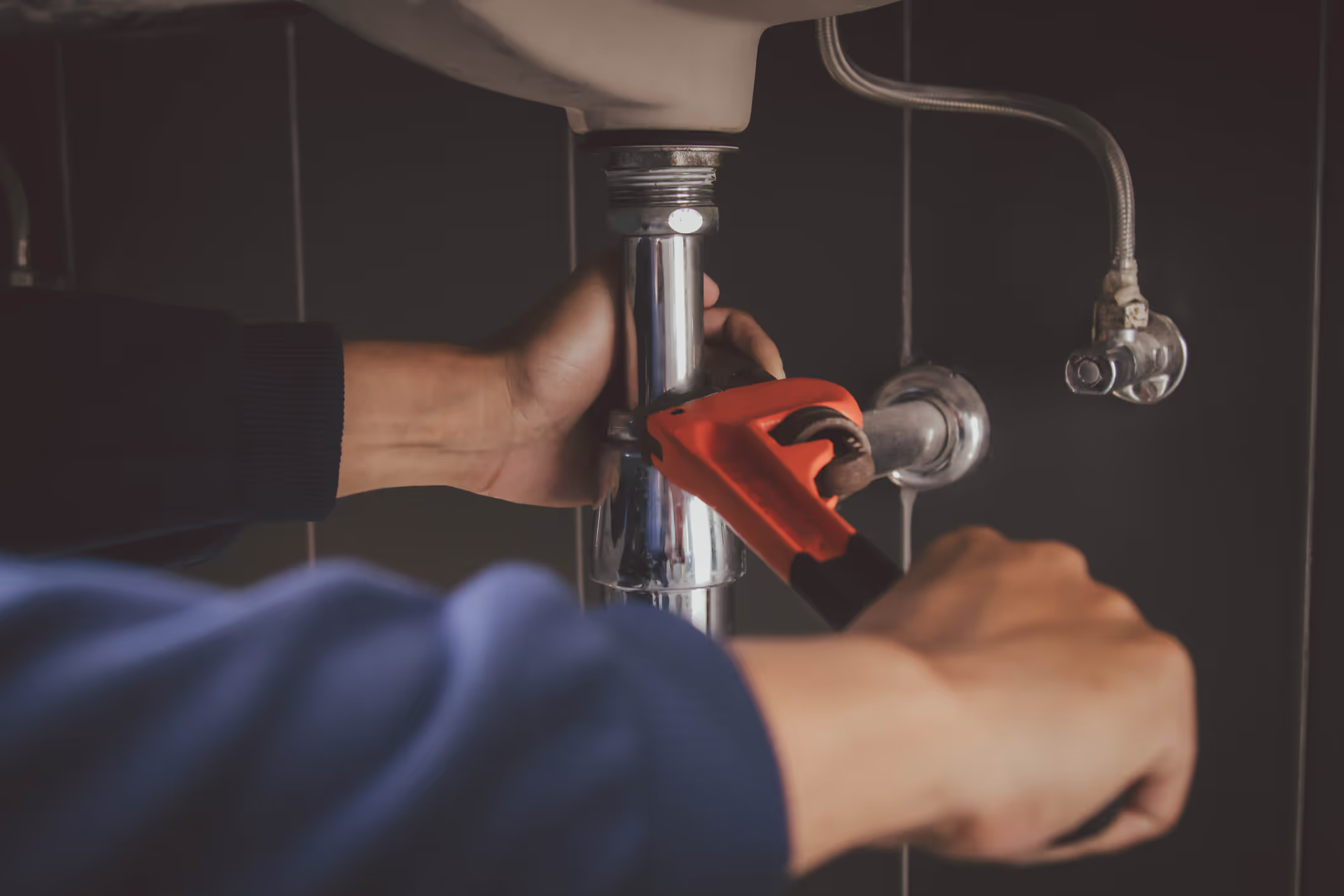
From leaks to full system installs, our plumbing services cover everything you need for a safe, reliable home water system, 24/7.
Our Primary Plumbing Include:
- Water Heater Replacement
- Water Heater Repair
- Trenchless Sewer Line
- Water Filtration
- Slab Leak
- Sewer Line Repair
Don't see the service you need? Call our Team today!
ELECTRICAL

Our electrical services ensure your home stays safe and powered, from routine fixes to complete system upgrades.
Our Primary Electrical Services Include:
- House Rewiring
- Electrician
- Electric Panel Upgrade
- Electric Panel Replacement
- EV Chargers
- Whole House Generator
Don't see the service you need? Call our Team today!
HEATING
.jpg)
We install, repair, and maintain heating & furnace systems with expert care to keep your Colorado home comfortable and energy-efficient year-round.
Our Primary Heating Services Include:
- Heating Installation
- Heating Replacement
- Heating Maintenance
- Heating Repair
- Heating Service
- Heating Tune-Up
Don't see the service you need? Call our Team today!