Identifying Common Hazards: The Electrical Safety Checklist for Older Homes
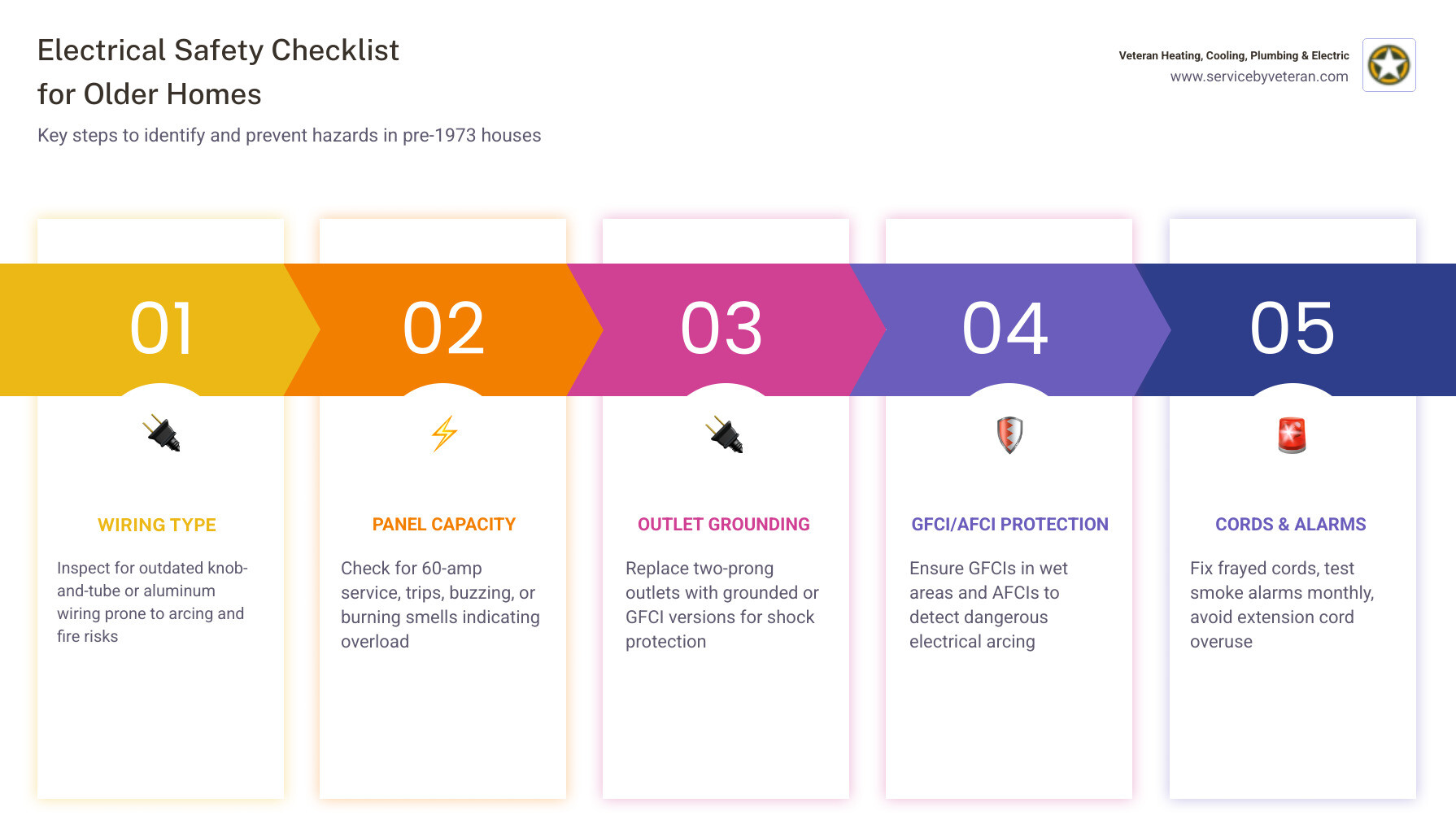
An electrical safety checklist for older homes is one of the most important steps a homeowner can take to prevent fires, shocks, and costly damage. If you live in an older Denver Metro home, here is a quick overview of what to check:
Essential Electrical Safety Checklist for Older Homes:
1. Wiring type - Look for knob-and-tube or aluminum wiring that needs evaluation or replacement
2. Electrical panel - Check for a 60-amp panel, frequent breaker trips, burning smells, or corrosion
3. Outlets - Identify two-pronged (ungrounded) outlets and replace with grounded or GFCI-protected versions
4. GFCI protection - Verify ground fault circuit interrupters are installed in kitchens, bathrooms, garages, and outdoors
5. AFCI breakers - Confirm arc-fault circuit interrupters are present to detect dangerous electrical arcing
6. Cords and appliances - Inspect for frayed cords, overloaded outlets, and incorrect bulb wattage
7. Smoke alarms - Test monthly and confirm placement on every level and outside sleeping areas
8. Space heaters and extension cords - Ensure safe use with proper clearance and no permanent reliance on extension cords
Half of all homes in the United States were built before 1973. That means millions of families are living in houses whose electrical systems were never designed to power today's appliances, devices, and smart home technology. Older homes were typically wired for no more than 60 amps — a fraction of the 200-amp standard used today. That gap between what your wiring was built for and what you are actually demanding from it every single day is where danger hides.
Home electrical problems account for an estimated 53,600 fires every year in the United States, causing more than 500 deaths, 1,400 injuries, and over $1.4 billion in property damage. Electrical arcing alone — the kind of invisible fault that older, degraded wiring is especially prone to — ignites more than 30,000 of those fires annually. The good news: most of these fires are preventable.
I'm Mike Townsend, a U.S. Army veteran and founder of Veteran Heating, Cooling, Plumbing & Electric, and helping Denver Metro homeowners stay safe through proactive home maintenance — including a thorough electrical safety checklist for older homes — is central to everything we do. My background in precision systems, from military-grade cooling equipment to residential electrical service, gives me a unique perspective on just how much the details matter when it comes to keeping your family safe.
When we walk into a classic Victorian in Denver or a mid-century ranch in Aurora, we aren't just looking at the charm; we’re looking at the "bones" of the electrical system. Many of these homes were built before the invention of the drip-type coffee maker, the hair dryer, or even the electric can opener. Today, we plug in multiple laptops, high-efficiency refrigerators, and EV chargers, all while expecting the original 1950s wiring to keep up.
The first step in any electrical safety checklist for older homes is identifying what kind of wire is actually running through your walls. If your home was built before 1950, there is a high probability of finding knob-and-tube wiring. Between the 1960s and mid-1970s, aluminum wiring became a popular, albeit problematic, substitute for copper.
If you aren't sure what you have, House Rewiring Aurora CO services can help identify these legacy systems. Many older homes also suffer from brittle cloth insulation. Over decades, the heat generated by electricity causes this cloth to become "crispy," eventually flaking off and leaving bare, energized wires exposed inside your walls. Furthermore, many of these systems are ungrounded, meaning they lack the third wire designed to whisk away excess electricity safely to the earth.
If your home is still running on a 60-amp service, you are essentially trying to sip a thick milkshake through a tiny cocktail straw. Modern standards demand at least 200-amp service to safely handle the load. For residents in the city center, House Rewiring Denver CO is often the only way to bring a historic property up to 2026 safety standards.
Why Knob-and-Tube and Aluminum Wiring are Red Flags
Knob-and-tube (K&T) wiring is unique because it uses two separate wires run independently, supported by white ceramic knobs and protected by ceramic tubes where they pass through wood. While it was innovative for its time, it is an air-cooled system. This means it was designed to have space around it to dissipate heat. When homeowners add modern fiberglass or spray-foam insulation over K&T wiring, they trap that heat, creating a major fire hazard.
Aluminum wiring presents a different set of risks. Aluminum expands and contracts much more than copper when it gets hot. This leads to "cold creep," where the wire eventually wiggles itself loose from the screw terminals on your outlets and switches. These loose connections create electrical arcing, which can reach temperatures hot enough to ignite a fire without ever tripping a standard breaker. If you suspect your home has these materials, seeking Electrical Services Arvada CO for a professional evaluation is a critical safety move.
The Danger of Two-Pronged Outlets and Lack of Grounding
We’ve all seen them: those narrow, two-slot outlets that won't accept a modern laptop charger or kitchen appliance. Many people "fix" this by using a three-prong adapter (those little grey "cheater" plugs), but this is a dangerous gamble. Without a dedicated ground wire, any surge or internal fault in your appliance has nowhere to go—except through you.
Ungrounded systems offer zero protection against power surges, which can fry your expensive electronics in an instant. Upgrading to three-prong outlets isn't just about convenience; it's about creating a path for electricity to escape safely during a fault. If you're in the southern Metro area, an Electrician Castle Rock CO can help you transition your home from a two-wire system to a modern, grounded three-wire system, ensuring both your family and your equipment remain protected.
Room-by-Room Inspection: From the Kitchen to the Backyard
A thorough electrical safety checklist for older homes requires a boots-on-the-ground approach. You need to look at every room because the risks change depending on whether you're near water or in a high-traffic living area.
• Primary Goal — GFCI (Ground Fault): Prevent electrocution/shocks — AFCI (Arc Fault): Prevent electrical fires
• How it Works — GFCI (Ground Fault): Shuts off if current leaks to ground — AFCI (Arc Fault): Shuts off if it detects "sparking"
• Required Areas — GFCI (Ground Fault): Kitchens, Baths, Outdoors, Garages — AFCI (Arc Fault): Bedrooms, Living Rooms, Closets
• Detection Speed — GFCI (Ground Fault): Milliseconds — AFCI (Arc Fault): Milliseconds
In the kitchen, the combination of high-wattage appliances and water is a recipe for disaster. Every outlet within six feet of a sink must be a GFCI (Ground Fault Circuit Interrupter). These devices monitor the flow of electricity and "trip" the moment they detect a leak, potentially saving you from a fatal shock. If your kitchen hasn't been updated in decades, our Electrical Services can retro-fit these life-saving devices into your existing footprint.
Don't forget the outdoors. Weatherproof covers are essential for any exterior outlet to prevent rain and snow from causing a short circuit. In the garage, modern power tools and shop vacs pull significant "inrush" current that can easily overwhelm older circuits.
Essential Kitchen and Bathroom Electrical Safety Checklist for Older Homes
Bathrooms are the highest-risk area for electrocution. You should test your GFCI outlets every single month. Simply press the "Test" button—the "Reset" button should pop out and the power should cut off. If it doesn't, the device is faulty and must be replaced immediately.
Another tip: unplug small appliances like toasters, hair dryers, and curling irons when they aren't in use. In an older home with questionable wiring, a plugged-in device is still "live" and can be a point of failure if a surge occurs. If you notice a "tingle" or a slight shock when touching an appliance, stop using it immediately and call an Electrician Denver CO to investigate. This is often a sign of a "floating ground" or a serious neutral wire issue.
Bedroom and Living Area Safety: Cords, Bulbs, and Heaters
In bedrooms and living rooms, the hazards are often more visible. Start by checking your light bulbs. Every fixture has a maximum wattage rating (usually 60W or 100W). If you put a 100W bulb in a 60W fixture, the excess heat can melt the socket and the wire insulation. When in doubt, switch to LEDs—they produce much more light with a fraction of the heat.
Next, inspect your cords. A frayed or cracked cord is a fire waiting to happen. Never run cords under rugs or pinch them behind furniture; this traps heat and can break the internal wire strands. Space heaters are another major concern in older, drafty homes. They should always be plugged directly into a wall outlet—never an extension cord—and kept at least three feet away from curtains or bedding.
Finally, ensure you have working smoke alarms on every level of the home. In older homes, we recommend interconnected alarms so that if a fire starts in the basement's old wiring, the alarm in your bedroom sounds immediately.
Signs Your Electrical Panel Can’t Keep Up with Modern Denver Life
The electrical panel is the heart of your home. In many older properties in Lakewood or Highlands Ranch, we still find fuse boxes or early circuit breaker panels that were only designed for 60 or 100 amps.
If your lights flicker when the refrigerator kicks on, or if you can't run the microwave and the vacuum at the same time without a trip to the basement, your panel is telling you it's overloaded. Frequent breaker trips aren't just an annoyance; they are a safety mechanism telling you that your system is at its limit. For those in the western suburbs, an Electric Panel Upgrade Lakewood CO can provide the capacity you need for modern life.
Other warning signs include:
• Burning smells: A "fishy" or ozone-like smell near the panel.
• Buzzing sounds: This indicates a loose connection or a breaker that is failing to trip.
• Corrosion: Rust on the panel indicates moisture, which can lead to catastrophic failure.
If you are experiencing these issues, Electric Panel Replacement Denver CO is often the safest path forward to ensure your home remains insurable and safe.
When to Call a Professional for an Electrical Service Upgrade
Many insurance companies in Colorado are now refusing to write policies for homes that don't have at least a 100-amp service. They recognize that 60-amp systems are statistically much more likely to cause a fire. An Electrical Service Upgrade isn't just a safety improvement; it's an investment in your home's value and insurability.
If you're planning a renovation, check out our Electrical Panel Installation Complete Guide to understand what the process looks like. Working with an experienced Electrical Panel Contractor ensures that all permits are pulled and the work meets the 2026 National Electrical Code standards.
Emergency Indicators in Aging Systems
Some signs require immediate action. If an outlet or switch plate feels hot to the touch, or if you see charred, discolored plastic on the faceplate, turn off the breaker for that circuit immediately. This is a sign of active overheating.
For those in Greenwood Village, our Emergency Electric Panel Replacement Guide Greenwood Village CO can help you navigate a sudden system failure. Similarly, if you see lights dimming significantly under load, it could indicate a failing main lug or service line. Residents in Highlands Ranch should consider an Electric Panel Upgrade Highlands Ranch CO if their original equipment is showing these signs of "tired" metallurgy.
Frequently Asked Questions about Electrical Safety in Aging Houses
How often should I have an electrical safety checklist for older homes performed by a pro?
While you should perform a DIY visual check every six months, the U.S. Consumer Product Safety Commission (CPSC) and industry experts recommend a professional inspection every 1-2 years for homes over 40 years old. Components in older systems degrade at an accelerated rate, and a pro can use thermal imaging to find "hot spots" hidden behind your walls. If your system is consistently failing, an Electric Panel Replacement might be the recommended long-term solution.
Will outdated wiring affect my Denver home insurance?
Yes. Many insurers now require a "four-point inspection" for older homes, which covers the roof, HVAC, plumbing, and electrical. If they find knob-and-tube wiring, aluminum wiring, or a panel with a history of fire risks (like certain recalled brands), they may deny coverage or significantly raise your premiums. Upgrading your system can often lead to insurance discounts.
What are the best childproofing measures for old outlets?
Those plastic "plug caps" are okay, but curious toddlers can often pull them out (and they become a choking hazard). The gold standard is installing Tamper-Resistant (TR) receptacles. These have built-in shutters that only open when equal pressure is applied to both slots simultaneously (like when you plug in a cord). They are inexpensive and can be installed during a routine outlet upgrade.
Conclusion: Protecting Your Historic Investment
Living in a historic Denver home is a point of pride, but it comes with the responsibility of stewardship. By following this electrical safety checklist for older homes, you are doing more than just preventing a fire; you are ensuring that your home remains a safe haven for the next generation.
At Veteran Heating, Cooling, Plumbing & Electric, we bring military-grade integrity to every job. Whether you are in Arvada, Castle Rock, or anywhere in the Denver Metro area, we are here to help you navigate the complexities of aging electrical systems. We offer a lifetime warranty on parts and labor, background-checked technicians, and a commitment to honest, community-focused service.
Don't wait for a flickering light to become a fire. Contact us today for comprehensive Electrical Services and let our veteran-led team give you the peace of mind you deserve. From our family to yours, we’re ready to serve.
ABOUT Veteran Heating, Cooling, Plumbing & Electric
Veteran Heating, Cooling, Plumbing & Electric was founded on the belief that service should be personal, honest, and community-focused. Our team is built around integrity, professionalism, and a true commitment to your home’s comfort and safety.
Led by a U.S. Army veteran with over 30 years of industry experience, we’re proud to remain locally owned and operated. Every technician, plumber, and electrician is EPA-certified, background checked, and driven to exceed expectations.
- 24/7 ServiceWe offer weekend & 24/7 emergency service. We’re here whenever you need us—day, night, or weekend, no exceptions.
- $0 Trip FeesNo dispatch or trip fees. You’ll never pay just for us to show up—service starts when the work does.
OUR SERVICES
AIR CONDITIONING
.jpg)
We offer specialty and seasonal services like indoor air quality upgrades, pre-winter furnace checks, and summer AC tune-ups to keep your home prepared year-round.
Our Primary Air Conditioning Services Include:
Don't see the service you need? Call our Team today!
PLUMBING
From leaks to full system installs, our plumbing services cover everything you need for a safe, reliable home water system, 24/7.
Our Primary Plumbing Include:
- Water Heater Replacement
- Water Heater Repair
- Trenchless Sewer Line
- Water Filtration
- Slab Leak
- Sewer Line Repair
Don't see the service you need? Call our Team today!
ELECTRICAL

Our electrical services ensure your home stays safe and powered, from routine fixes to complete system upgrades.
Our Primary Electrical Services Include:
- House Rewiring
- Electrician
- Electric Panel Upgrade
- Electric Panel Replacement
- EV Chargers
- Whole House Generator
Don't see the service you need? Call our Team today!
HEATING
.jpg)
We install, repair, and maintain heating & furnace systems with expert care to keep your Colorado home comfortable and energy-efficient year-round.
Our Primary Heating Services Include:
- Heating Installation
- Heating Replacement
- Heating Maintenance
- Heating Repair
- Heating Service
- Heating Tune-Up
Don't see the service you need? Call our Team today!