Why Knowing How to Clean Your Mini Split Filters Regularly Keeps Your Home Comfortable Year-Round
How to clean your mini split filters regularly is straightforward: power off the unit, open the front panel, slide out the mesh filters, vacuum off loose dust with a brush attachment, rinse with lukewarm water and mild detergent if needed, let them air dry completely for at least 4 to 6 hours, then reinstall. Most Denver Metro homeowners should do this every 2 to 4 weeks for the best results.
Quick steps to clean your mini split filters:
1. Turn off the unit using the remote or breaker before touching anything
2. Open the front panel by lifting along the side tabs or indentations
3. Slide out the mesh filters carefully, without shaking them
4. Vacuum both sides using a soft brush attachment on low suction
5. Rinse with lukewarm water and a small amount of mild detergent if visibly soiled
6. Air dry completely on a flat surface away from direct sunlight (at least 4 to 6 hours)
7. Reinstall the dry filters, close the panel, and restore power
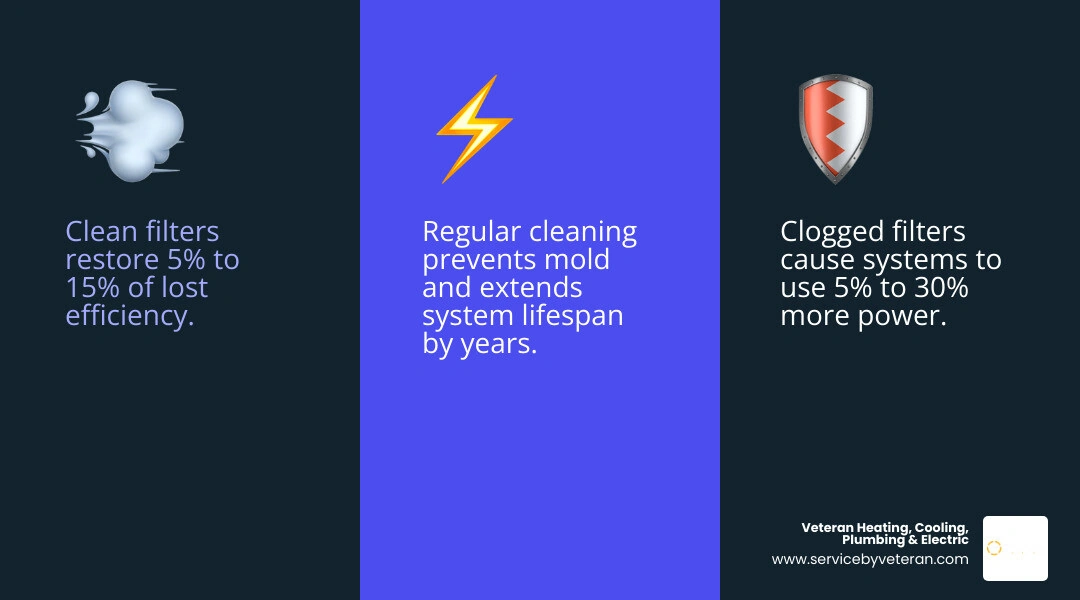
Dirty filters are the most common cause of reduced mini split performance. When filters get clogged, your system works harder, your energy bills climb, and your indoor air quality suffers. In fact, neglected units can lose up to 30% of their operating efficiency over time — and a clean filter alone can recover 5% to 15% of that lost efficiency. For homeowners in the Denver Metro area dealing with Colorado dust, wildfire smoke, and seasonal allergens, staying on top of this simple task makes a real difference in comfort and cost.
I’m Mike Townsend, a U.S. Army veteran and founder of Veteran Heating, Cooling, Plumbing & Electric, and my background managing precision cooling systems in the military taught me that consistent, detail-oriented maintenance is what separates a system that lasts from one that fails early. That same discipline shapes every tip I share about how to clean your mini split filters regularly, so you can protect your investment and breathe easier at home.
Why You Should Learn How to Clean Your Mini Split Filters Regularly
When we talk to our neighbors in Denver or Highlands Ranch, we often compare a mini split to a high-performance vehicle. You wouldn’t drive your truck for 50,000 miles without changing the oil, right? Your ductless system is no different. Learning how to clean your mini split filters regularly is the single most effective way to protect your investment.
Proper HVAC maintenance guarantees optimal performance. Statistics show that clean systems use 5% to 30% less power, which translates directly into savings on your monthly cooling and heating bills. Because mini splits pull air directly from the room they are in, they are highly susceptible to trapping local dust, hair, and allergens. If those filters remain clogged, the fan motor has to work double-time to pull air through the obstruction. This leads to premature wear and tear, potentially shortening the system’s 10 to 15-year lifespan.
Beyond the mechanical health of the unit, there is the issue of hygiene. A dirty filter can allow dust to bypass the screen and settle on the damp evaporator coils or the blower wheel. This creates a breeding ground for mold and “dirty sock syndrome” odors. By maintaining a strict cleaning routine, you optimize airflow and ensure the air your family breathes is crisp and clean. If you’ve already noticed a drop in performance, you might want to check out our Mini Split Repair Complete Guide to see if the issue has moved beyond a simple filter fix.
Factors That Affect How to Clean Your Mini Split Filters Regularly
Not every home in the Denver Metro area has the same maintenance needs. Several environmental factors in Colorado can accelerate how quickly your filters get dirty:
• Pet Dander: If you have a Golden Retriever or a couple of cats in your Arvada home, your filters will likely need cleaning every two weeks. Fur and dander are heavy and clog mesh screens much faster than standard dust.
• Colorado Dust and Wildfire Smoke: We love our semi-arid climate, but it is undeniably dusty. During wildfire seasons, fine particulate matter can settle into your filters, restricting airflow and trapping odors.
• High-Usage Seasons: In May 2026, as we transition into the heat of summer, your mini split will likely be running around the clock. The more air the unit moves, the more debris it captures.
• Location Specifics: Homes in high-traffic areas like Aurora or near construction sites in Castle Rock will naturally accumulate more outdoor pollutants that find their way inside.
Determining Your Maintenance Schedule in May 2026
As of May 2026, we recommend a “check-and-clean” approach. While some manufacturer guidelines suggest cleaning filters every 4 to 6 weeks, industry experts and our own experience in the field suggest that every 2 weeks is the “gold standard” for optimal performance, especially if you suffer from allergies.
Regularity is the key to preventing the double-digit energy efficiency penalties that come with neglected screens. If you are just starting with a new system, perhaps following a recent Mini Split Installation Littleton Guide, set a recurring reminder on your phone. It only takes about 10 to 20 minutes of your time, but it saves hours of frustration later.
Signs Your Filters Need Immediate Attention
If you’ve lost track of time, your mini split will usually tell you when it’s struggling. Watch for these “cries for help”:
1. Weak Airflow: If the air coming out of the louvers feels like a gentle breeze instead of a strong gust, the filter is likely choked with dust.
2. Unusual Odors: A musty or stale smell often indicates that organic material is trapped in the filter and reacting with humidity.
3. Ice Buildup: Believe it or not, dirty filters can cause the indoor coils to freeze. Restricted airflow prevents the refrigerant from absorbing heat, causing the temperature to drop below freezing and turning condensation into ice.
4. Rising Utility Bills: If your energy costs take a sudden jump without a change in usage, your system is working harder than it should.
5. Dust Gathering: If you see a “shadow” of dust on the wall around the unit or on the vents themselves, the filters are full.
Step-by-Step Guide to DIY Filter Care
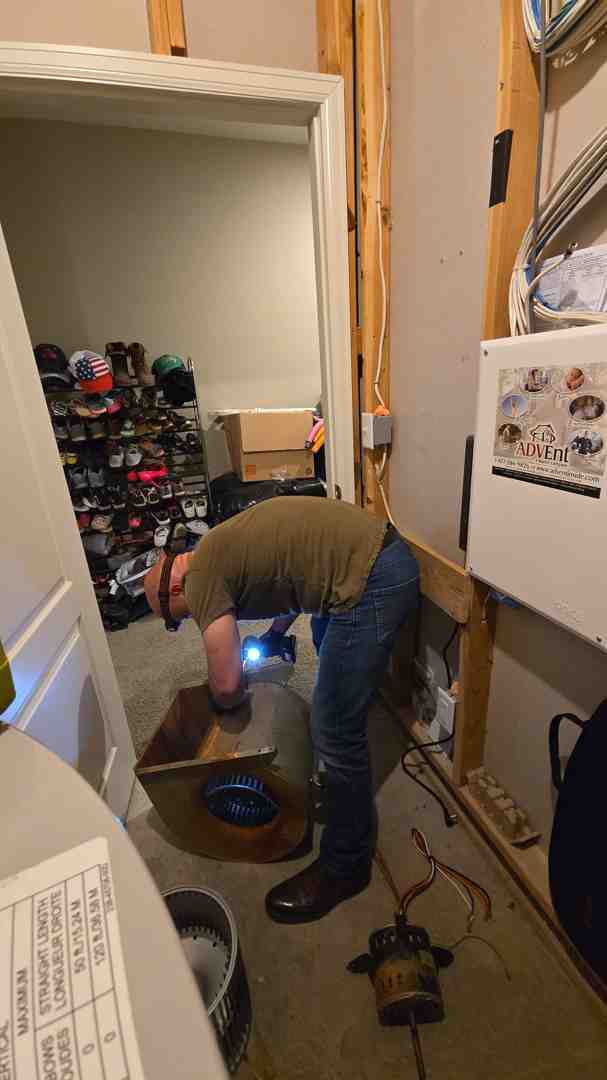
Ready to get to work? We’ve broken down how to clean your mini split filters regularly into a simple, sweat-free process. Before you begin, always refer to your specific owner’s manual for model-specific latch locations, but most units (like Mitsubishi or Daikin) follow a similar design. For more on the anatomy of your system, see our Mini Split Installation Complete Guide.
Step 1: Power Down for SafetyNever work on a live electrical component. Turn the unit off using your remote, then go a step further and turn off the power at the wall switch or the circuit breaker. This protects the sensitive electronic components and your own safety.
Step 2: Access the FiltersPlace your hands on the sides of the indoor head unit. You’ll usually find small indentations or tabs near the bottom or sides. Gently lift the front cover upward until it clicks into an open position. On some newer models, the filters may slide out from the top of the unit rather than the front.
Step 3: Remove the Mesh FiltersYou will see two (or more) plastic mesh filters. Gently push the bottom of the filter up to unhook it from its tabs, then slide it down and out of the grooved channels. Pro-tip: Do not shake the filter as you remove it; you don’t want to scatter all that captured Colorado dust back into your living room!
Essential Tools for How to Clean Your Mini Split Filters Regularly
You don’t need a specialized kit to do this right. Most of these items are already in your Broomfield or Centennial home:
• Vacuum Cleaner: A handheld or upright vacuum works fine.
• Soft Brush Attachment: This is crucial to avoid tearing the delicate mesh.
• Lukewarm Water: Hot water can warp the plastic frames.
• Mild Detergent: Basic dish soap is perfect for breaking down greasy residue, especially if the unit is near a kitchen.
• Microfiber Cloth: For wiping down the exterior of the unit.
• White Vinegar: Excellent for disinfecting and removing stubborn odors.
Washing and Drying Protocols
Once the filters are out, start by vacuuming both sides to remove the loose “fuzz.” If the filters still look gray or dingy, it’s time for a wash.
The Rinsing Technique:Always rinse the filter from the back side (the side that faces the inside of the machine). This allows the water pressure to push the dirt out the way it came in, rather than forcing it deeper into the mesh.
The Vinegar Soak:If you notice a lingering smell, mix a 10:1 ratio of water to white vinegar in a large sink or basin. Let the filters soak for about 10 minutes. This breaks down greasy films and kills any lingering mold spores without using harsh chemicals that could damage the filter coating.
The Drying Window:This is the most critical step. Filters must be 100% dry before they go back into the unit. We recommend a minimum of 4 to 6 hours of air drying on a flat surface. If you reinstall a damp filter, you are essentially inviting mold to grow inside your dark, humid air handler. Avoid direct sunlight, as the UV rays and heat can warp the plastic frames, making them impossible to reinstall correctly.
Common Mistakes to Avoid During DIY Maintenance
Even with the best intentions, it’s easy to make a mistake that could lead to a service call. Here is what not to do when learning how to clean your mini split filters regularly:
• Using High-Pressure Washers: Never use a pressure washer or a high-pressure hose on your filters or the indoor coils. The aluminum fins on the coils are paper-thin and bend easily, which permanently restricts airflow.
• Harsh Chemical Cleaners: Avoid bleach, abrasive scrubs, or scented sprays. These can degrade the mesh and leave behind fumes that will circulate through your home once the power is back on.
• Wet Reinstallation: As mentioned, moisture is the enemy. If the filter feels cool or “stiff” but slightly damp to the touch, wait another hour.
• Skipping the Power-Off: It might be tempting to just “pop the hood” while it’s running, but the suction can pull the filter into the blower wheel, causing mechanical damage.
• Bending the Fins: If you decide to wipe the coils behind the filters, be incredibly gentle. Use only a soft-bristle brush and move in the direction of the fins (usually vertically).
When to Call a Professional for Your Ductless System
While cleaning filters is a great DIY task, it isn’t a substitute for professional maintenance. There are parts of your system that you simply cannot reach safely. For instance, the blower wheel (the cylindrical fan inside the unit) can accumulate a film of dust that limits airflow even if your filters are spotless. This requires a professional deep clean, usually performed with a specialized “bib” kit to catch water runoff.
You should call us at Veteran Heating, Cooling, Plumbing & Electric if you notice:
• Refrigerant Leaks: If your unit isn’t cooling despite clean filters and coils.
• Electrical Issues: If you hear clicking sounds or the unit frequently trips the breaker.
• Deep Grime: If you shine a flashlight through the fins and cannot see through to the other side.
• Annual Tune-Ups: We recommend a professional inspection twice a year—once before the cooling season and once before the heating season—to check electrical connections, drain lines, and refrigerant levels.
Whether you’re in Lakewood or Centennial, our veteran-led team is ready to help. Check out our Mini Split Install Complete Guide to learn more about how we ensure your system is set up for long-term success.
Frequently Asked Questions about Mini Split Maintenance
Can I run my mini split without the filters for a few hours?
We strongly advise against this. The filters are the only line of defense for your evaporator coils. Running the unit without them, even for an hour, allows Colorado dust to cake onto the damp coils. Once that dust turns into “mud” on the fins, it is much harder to clean and can lead to system icing and leaks.
How do I know if my filters need to be replaced instead of cleaned?
Most mini split filters are designed to last for several years with proper care. However, you should replace them if you notice:
• Physical Damage: Any tears, holes, or fraying in the mesh.
• Brittle Plastic: If the frame becomes brittle or cracks.
• Permanent Staining: If a vinegar soak doesn’t remove heavy discoloration or odors.
• Specialty Filters: Some units have small “anti-allergen” or “catechin” inserts. These are usually not washable and must be replaced every 1 to 2 years per manufacturer guidelines.
Is it safe to use a vacuum on the delicate mesh?
Yes, but with caution. Always use a soft brush attachment and the lowest suction setting available. Never use the raw end of a vacuum hose, as the high suction can pull the mesh away from the frame or cause it to tear.
Conclusion
Taking the time to learn how to clean your mini split filters regularly is one of the smartest things you can do as a homeowner. It’s a small effort that pays off in lower bills, a longer-lasting system, and cleaner air for your family. By following a simple bi-weekly or monthly schedule, you can keep your home in Aurora, Littleton, or anywhere in the Denver Metro area perfectly comfortable without any “energy bill anxiety.”
At Veteran Heating, Cooling, Plumbing & Electric, we believe in the military values of integrity and service. We aren’t just here to fix things when they break; we’re here to help you maintain your home so they don’t break in the first place. We offer a lifetime warranty on parts and labor and a money-back guarantee because we stand behind our work 100%.
If you’ve cleaned your filters and your system still isn’t performing at its peak, or if it’s time for your annual professional deep clean, don’t hesitate to reach out. We provide honest, up-front pricing and expert service across the entire Denver Metro area. Schedule your professional mini split service today and let our family take care of yours.
ABOUT Veteran Heating, Cooling, Plumbing & Electric
Veteran Heating, Cooling, Plumbing & Electric was founded on the belief that service should be personal, honest, and community-focused. Our team is built around integrity, professionalism, and a true commitment to your home’s comfort and safety.
Led by a U.S. Army veteran with over 30 years of industry experience, we’re proud to remain locally owned and operated. Every technician, plumber, and electrician is EPA-certified, background checked, and driven to exceed expectations.
- 24/7 ServiceWe offer weekend & 24/7 emergency service. We’re here whenever you need us—day, night, or weekend, no exceptions.
- $0 Trip FeesNo dispatch or trip fees. You’ll never pay just for us to show up—service starts when the work does.
OUR SERVICES
AIR CONDITIONING
.jpg)
We offer specialty and seasonal services like indoor air quality upgrades, pre-winter furnace checks, and summer AC tune-ups to keep your home prepared year-round.
Our Primary Air Conditioning Services Include:
Don't see the service you need? Call our Team today!
PLUMBING
From leaks to full system installs, our plumbing services cover everything you need for a safe, reliable home water system, 24/7.
Our Primary Plumbing Include:
- Water Heater Replacement
- Water Heater Repair
- Trenchless Sewer Line
- Water Filtration
- Slab Leak
- Sewer Line Repair
Don't see the service you need? Call our Team today!
ELECTRICAL

Our electrical services ensure your home stays safe and powered, from routine fixes to complete system upgrades.
Our Primary Electrical Services Include:
- House Rewiring
- Electrician
- Electric Panel Upgrade
- Electric Panel Replacement
- EV Chargers
- Whole House Generator
Don't see the service you need? Call our Team today!
HEATING
.jpg)
We install, repair, and maintain heating & furnace systems with expert care to keep your Colorado home comfortable and energy-efficient year-round.
Our Primary Heating Services Include:
- Heating Installation
- Heating Replacement
- Heating Maintenance
- Heating Repair
- Heating Service
- Heating Tune-Up
Don't see the service you need? Call our Team today!