Is That Burning Smell Normal or a Heating Emergency?
When the first October freeze hits and you finally turn on your thermostat, getting hit with an alarming burning odor is one of the most common homeowner questions answered by the dispatch team here at Veteran Heating, Cooling, Plumbing & Electric. You expect a comforting rush of warm air, but instead, your house suddenly smells like something is on fire. This scenario instantly triggers anxiety, especially when your heating equipment has been sitting completely dormant since the spring. You are left wondering if you should immediately shut down the system, open all the windows, or simply wait it out.
The primary decision you face right now is distinguishing between a harmless seasonal dust burn-off and a dangerous mechanical malfunction. Both situations produce a distinct odor, but they require entirely different responses. Panicking or ignoring the problem are both risky reactions. A calm, systematic evaluation is the best approach before you shut down the house or assume the worst.
Here is the thing: understanding exactly what happens inside your equipment during that initial heating cycle gives you the confidence to make the right call. By learning how to identify the specific characteristics of different odors, you can safely determine whether your system is just shaking off the summer cobwebs or if you need to call our professional team for emergency repairs.
The Anatomy of a Fall Furnace Startup
To understand why your heater smells bad on the first chilly day, you have to look at what happens during the long summer off-season. While your air conditioner runs, your furnace sits completely idle. During this dormancy, the internal components become a landing pad for airborne particles. In the Denver metro area, our veteran-led team sees firsthand how our incredibly dry climate accelerates this process. Low humidity allows more particulate matter to circulate freely through your ductwork and settle directly onto the dormant heat exchanger and burners, making the initial burn-off smell much more pronounced than it might be in a more humid region.
A normal startup sequence follows a predictable timeline. Recognizing this timeline helps you set expectations for normal operation and prevents unnecessary panic.
1. The Thermostat Call: You set the temperature higher than the room temperature, sending an electrical signal to the control board.
2. The Draft Inducer: A small motor kicks on to clear residual gases out of the combustion chamber.
3. The Ignition: The igniter glows hot or sparks, and the gas valve opens to light the burners.
4. The Burn-Off: As the metal heat exchanger rapidly heats up, the accumulated summer dust instantly vaporizes.
5. The Blower Engagement: The main fan turns on, pushing the newly heated air—and the smell of vaporized dust—into your living space.
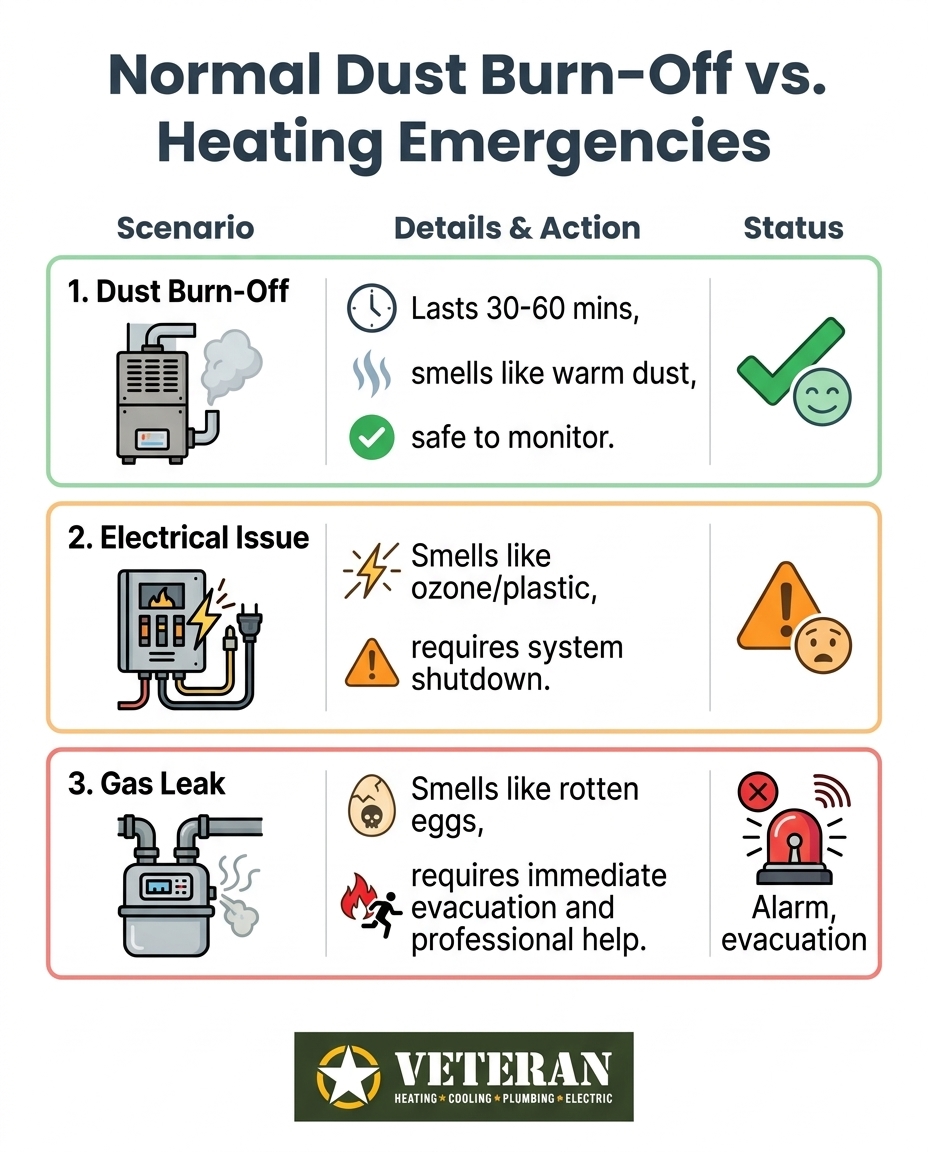
According to EPA Indoor Air Quality guidelines for standard household dust, this harmless burn-off process typically resolves within 30 to 60 minutes of the first heating cycle. Once the initial layer of debris is gone, the smell should completely dissipate.
Why Summer Dormancy Creates Fall Odors
The physical process of dust settling on the heat exchanger is unavoidable. Every time your indoor fan circulates air during the summer, microscopic skin cells, pet dander, and standard household dust bypass the filter and land on the cold metal surfaces inside your heating cabinet. When the system fires up in October, those metal surfaces reach several hundred degrees in a matter of seconds. The immediate vaporization of this debris creates an odor that smells remarkably like a hot hair dryer or a dusty space heater. This is a standard mechanical reality, not inherently a sign of failure.
Comparing Normal Odors vs. Dangerous Gas and Electrical Smells
While burning dust is normal, other odors serve as critical warning signs that something is severely wrong. You need a clear way to contrast the temporary "burning dust" smell with persistent, acrid odors that indicate a real threat to your property.
One local Denver homeowner reached out to us last fall when they noticed a persistent, unusual odor near their utility closet. Our technician, TJ, arrived and conducted a thorough evaluation, ultimately finding two separate gas leaks in the home. Because the homeowner took the smell seriously and called for help, TJ was able to explain everything, repair the leaks, and ensure the home was completely safe.
To help you evaluate your own situation, use this breakdown of common system smells we encounter in the field:
• Warm Dust — Description: Smells like a hot hair dryer or a dusty radiator. — Likely Cause: Normal accumulation of summer debris vaporizing on the heat exchanger. — Required Action: Monitor for 30 to 60 minutes. It should fade naturally.
• Electrical / Ozone — Description: Smells like melting plastic, fish, or an overheated wire. — Likely Cause: A failing blower motor, melted wire casing, or a seized bearing. — Required Action: Shut the system down immediately at the thermostat.
• Rotten Eggs — Description: A sharp, sulfur-like odor that is impossible to ignore. — Likely Cause: A natural gas leak from a cracked valve or loose pipe fitting. — Required Action: Evacuate the home and call your utility provider immediately.
• Chemical / Exhaust — Description: Smells like formaldehyde or car exhaust inside the house. — Likely Cause: A cracked heat exchanger allowing combustion gases to mix with breathing air. — Required Action: Shut the system down immediately and call a professional.
Any smell that lasts longer than a single heating cycle crosses the threshold from normal to suspicious. If the warm dust smell lingers for hours, or if it returns every time the heater kicks on, you are no longer dealing with seasonal burn-off.
When to Shut the System Down Immediately
Safety always prioritizes caution when dealing with combustible fuel systems. You should trigger an immediate system shutdown if you smell rotten eggs, notice visible smoke coming from your vents, or detect the distinct smell of melting plastic. Ignoring chemical or electrical odors can lead to severe property damage, electrical fires, or carbon monoxide exposure. If you experience any of these severe triggers, turn the thermostat to the "off" position and do not attempt to run the equipment again until it has been professionally evaluated.
Rattles, Bangs, and Squeals: Evaluating Furnace Noises
Odors are not the only warning signs that accompany the first fall startup. Auditory clues are just as important when diagnosing the health of your heating equipment. After months of sitting still, moving parts can become stiff, and metal components can react aggressively to sudden temperature changes.
The normal sounds of heating:
As your system pushes hot air through cold sheet metal ductwork, you will likely hear a series of popping or ticking noises. This is normal thermal expansion. The metal expands as it warms up and contracts as it cools down. While it can be annoying, ductwork popping is harmless and does not indicate a mechanical failure.
The dangerous sounds of delayed ignition:
If you hear a loud bang or boom immediately after the thermostat calls for heat, you are likely experiencing delayed ignition. This happens when the burners fail to light instantly. Gas continues to pool inside the combustion chamber until the igniter finally catches, resulting in a small, contained explosion. This is a serious safety hazard that places immense stress on the heat exchanger and can eventually cause it to crack.
The warning sounds of mechanical wear:
A pattern we see often on Denver service calls is a high-pitched squealing or grinding sound pointing directly to a failing blower motor. A squeal usually indicates a worn-out belt or a motor bearing that has lost its lubrication over the summer. Grinding sounds often mean metal is scraping against metal. These issues require professional lubrication or replacement before the motor burns out completely.
Listen closely during the first full cycle. Being able to accurately report whether a sound is a "bang" or a "squeal" helps our dispatchers understand exactly what kind of technician to send to your home.
What NOT to Do When You Suspect a Heating Issue
When your home is cold and you are worried about a strange smell, the temptation to grab a toolbox and investigate is strong. However, modern heating systems are complex, highly pressurized, and rely on combustible fuels. Establishing strict safety boundaries is critical.
In our years of restoring heat to Denver homes, we have found that attempting DIY inspections on these systems often creates far more dangerous situations than the original problem. If you suspect an issue, here are the absolute rules for what NOT to do:
• Do not attempt to visually inspect the heat exchanger: Cracks in a heat exchanger are often microscopic and invisible to the naked eye. They open up only when the metal gets hot. Checking this component requires specialized tools like a combustion analyzer.
• Do not touch or adjust the gas valves: Testing gas pressure or attempting to tighten a gas valve is strictly for licensed professionals. A small mistake here can cause a catastrophic leak.
• Do not bypass safety switches: If your system keeps shutting down after a few minutes, a safety switch is doing its job. Bypassing a flame sensor or a limit switch to force the system to run can lead to severe overheating or carbon monoxide exposure.
• Do not repeatedly reset a tripped breaker: If the electrical breaker connected to your heater trips, resetting it once is fine. If it trips again immediately, you have a hard short in the system. Forcing power back into a shorted wire is a major fire hazard.
Professional intervention is the only safe path for internal mechanical or gas-related diagnostics. Respect the complexity of the equipment and keep the cabinet doors firmly closed.
The Triage Process: Safely Evaluating Your System
At Veteran Heating, Cooling, Plumbing & Electric, working with a veteran-owned company means you are getting the same level of discipline and accountability that military service demands. We apply this military precision to our diagnostic process, and we encourage homeowners to use a disciplined triage approach before calling for repair. A systematic, calming checklist helps you evaluate your situation safely and ensures our team arrives fully prepared for your specific issue.
• Step 1: Check the air filter. A clogged air filter severely restricts airflow, causing the system to run hotter than normal. This excess heat bakes the dust on the heat exchanger even harder, worsening any burning smells. Swap out a dirty filter immediately.
• Step 2: Time the odor. Note exactly when the smell started. Set a timer on your phone for 30 to 60 minutes. If the smell is strictly warm dust, it will dissipate within this window as the system completes its first full cycle.
• Step 3: Document any accompanying noises or errors. Write down any strange sounds, take a picture of any error codes flashing on your thermostat, and note whether the air coming out of the vents is actually hot.
Gathering this specific information is incredibly helpful. When you call in, having these details ready helps our emergency team run through the questions our dispatchers ask about a dead furnace. By accurately assessing the urgency of the call, we can prioritize severe safety hazards and get your home secured faster.
Choosing a Reliable Professional for Furnace Repair Near Me
Once you determine that the smell or noise is not a harmless seasonal quirk, you need to bring in an expert. Last fall, one local homeowner experienced a sudden equipment failure right as temperatures dropped. Our technician, Jeff, arrived quickly, diagnosed the root cause professionally, and efficiently restored their heat. That fast, dependable response is critical when temperatures drop unexpectedly and your family's comfort is on the line.
When evaluating a trustworthy emergency HVAC service, look for transparent diagnostics. A reliable technician will not just tell you a part is broken; they will show you the readings on their multimeter or combustion analyzer. They will arrive promptly, respect your home by wearing shoe covers, and communicate clearly from the moment they step through the door.
You want to hire technicians who explain their findings thoroughly without using high-pressure sales tactics. Whether the root cause is a cracked heat exchanger that requires a full replacement—which may even qualify for generic federal tax credits or local utility incentive programs—or a failing blower motor that just needs a new capacitor, our disciplined team will efficiently diagnose the exact failure point and restore safe heating quickly.
Common Homeowner Questions Answered: Frequently Asked Questions About Furnace Startups
How long should a furnace smell when first turned on?
A normal dust burn-off smell typically lasts 30 to 60 minutes during the first full heating cycle of the season. As the heat exchanger reaches its operating temperature, the accumulated summer debris vaporizes quickly. If the smell persists for several hours or returns the next day, it is no longer normal burn-off and requires a professional look.
What does a dangerous furnace smell like?
Dangerous odors are sharp, acrid, and completely different from warm dust. You might smell rotten eggs, which indicates a natural gas leak. You might also notice an ozone or melting plastic smell, signaling an electrical short or a seized blower motor. Any chemical or exhaust-like odor inside the home means combustion gases are escaping the heat exchanger.
When is a furnace smell an emergency?
A smell becomes an emergency if it is accompanied by visible smoke, triggers your carbon monoxide detectors, or smells distinctly like gas. Additionally, if an electrical burning smell persists beyond the first cycle, you should turn the system off immediately. Safety dictates that you never force a system to run if you suspect a fuel or electrical failure.
Is it normal for a furnace to smell like burning dust?
Yes, smelling burning dust on the first chilly day is incredibly common. This is the standard burn-off of particulate matter, skin cells, and pet dander that settled onto the internal components over the long summer months. As long as the smell fades within an hour and your system produces warm air, there is usually no cause for concern.
What does a cracked heat exchanger smell like?
A cracked heat exchanger often produces an acrid, formaldehyde-like odor. You may also notice a smell similar to car exhaust fumes circulating through your living room vents. Because a crack allows toxic combustion gases to mix with the air you breathe, this odor is a severe warning sign that requires an immediate system shutdown.
Why do dry climates make startup smells worse?
Low humidity environments allow significantly more dust and particulate matter to remain airborne and circulate through your ductwork. Over the summer, this heavy volume of dry dust settles thickly on dormant heating equipment. When the system finally ignites in the fall, there is simply a larger volume of dust to burn off, creating a much stronger initial odor.
Secure Your Home's Comfort and Safety Today
Ultimately, securing your home's comfort and safety means knowing when to wait out a harmless dust smell and when to call in the experts. Having these common homeowner questions answered gives you the confidence to make the right call this fall. If you are dealing with a lingering odor, a loud bang on startup, or a system that just refuses to push warm air, expert help is available to resolve any lingering doubts. Contact our veteran-led team directly for a thorough, disciplined inspection, and let us ensure your heating system is completely safe for the long winter ahead.
ABOUT Veteran Heating, Cooling, Plumbing & Electric
Veteran Heating, Cooling, Plumbing & Electric was founded on the belief that service should be personal, honest, and community-focused. Our team is built around integrity, professionalism, and a true commitment to your home’s comfort and safety.
Led by a U.S. Army veteran with over 30 years of industry experience, we’re proud to remain locally owned and operated. Every technician, plumber, and electrician is EPA-certified, background checked, and driven to exceed expectations.
- 24/7 ServiceWe offer weekend & 24/7 emergency service. We’re here whenever you need us—day, night, or weekend, no exceptions.
- $0 Trip FeesNo dispatch or trip fees. You’ll never pay just for us to show up—service starts when the work does.
OUR SERVICES
AIR CONDITIONING
.jpg)
We offer specialty and seasonal services like indoor air quality upgrades, pre-winter furnace checks, and summer AC tune-ups to keep your home prepared year-round.
Our Primary Air Conditioning Services Include:
Don't see the service you need? Call our Team today!
PLUMBING
From leaks to full system installs, our plumbing services cover everything you need for a safe, reliable home water system, 24/7.
Our Primary Plumbing Include:
- Water Heater Replacement
- Water Heater Repair
- Trenchless Sewer Line
- Water Filtration
- Slab Leak
- Sewer Line Repair
Don't see the service you need? Call our Team today!
ELECTRICAL

Our electrical services ensure your home stays safe and powered, from routine fixes to complete system upgrades.
Our Primary Electrical Services Include:
- House Rewiring
- Electrician
- Electric Panel Upgrade
- Electric Panel Replacement
- EV Chargers
- Whole House Generator
Don't see the service you need? Call our Team today!
HEATING
.jpg)
We install, repair, and maintain heating & furnace systems with expert care to keep your Colorado home comfortable and energy-efficient year-round.
Our Primary Heating Services Include:
- Heating Installation
- Heating Replacement
- Heating Maintenance
- Heating Repair
- Heating Service
- Heating Tune-Up
Don't see the service you need? Call our Team today!