Is Your Heating System Ready for the First Fall Cold Snap?
Are you wondering if that strange smell coming from your vents is normal, or a sign of serious trouble? As we approach the October first freeze and pre-winter startup season, our team at Veteran Heating, Cooling, Plumbing & Electric sees homeowners actively seeking reliable home maintenance tips and troubleshooting advice before the real cold sets in. When you turn your thermostat to "heat" for the first time in months, your system might make unexpected noises or produce unfamiliar odors.
The challenge is knowing the difference between a harmless seasonal quirk—like burning off settled summer dust—and a mechanical failure that requires a professional assessment. Making the right call now can save you from waking up to a freezing house later in the year. If you notice unusual symptoms during your initial startup, it is time to evaluate whether a simple filter change will solve the problem, or if you need our experts to inspect the unit for failing components.
Normal Fall Quirks vs. Serious Startup Symptoms
The first time your heating equipment kicks on for the season, it goes through a specific sequence of operations. Because the unit has been sitting idle for months, some odd behaviors are entirely expected. However, other symptoms are immediate red flags.
What to Expect During Initial Startup
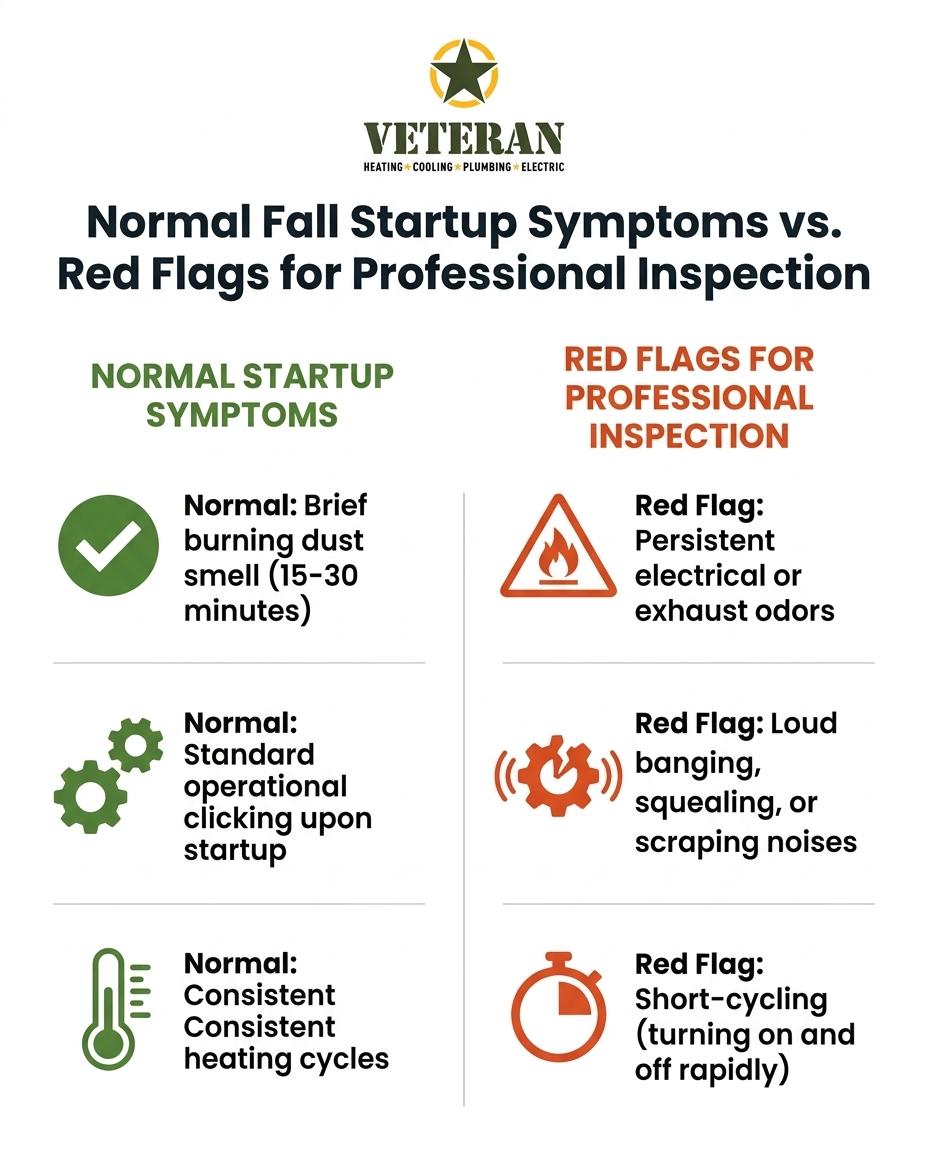
The brief burning smell: A faint odor of burning dust is the most common startup symptom we encounter. Over the summer, dust and debris settle on the heat exchanger. When the burners ignite for the first time, this dust burns off. This smell should dissipate within 15 to 30 minutes of continuous operation.
Standard operational clicks: Hearing a few clicks before the blower motor engages is normal. This is simply the sound of the ignition sequence and gas valve opening.
When to Call a Professional
Persistent or chemical odors: If you smell electrical burning, melting plastic, sulfur (rotten eggs), or heavy exhaust odors, shut the system down immediately. These are not normal seasonal quirks; they indicate electrical shorts, gas leaks, or venting failures.
Aggressive noises: Loud banging, squealing, or grinding sounds point to failing blower motors, broken belts, or delayed ignition problems.
Short-cycling: If your unit turns on, runs for two minutes, and shuts off repeatedly, it is short-cycling. This often means the system is overheating and tripping a safety switch.
• Odors — Normal Fall Quirk: Brief burning dust smell (15-30 mins) — Serious Red Flag: Persistent electrical, sulfur, or exhaust smells
• Sounds — Normal Fall Quirk: Standard clicks during the ignition sequence — Serious Red Flag: Loud banging, squealing, or metallic grinding
• Operation Cycles — Normal Fall Quirk: Consistent heating cycles until the set temperature is reached — Serious Red Flag: Short-cycling (turning on and off rapidly every few minutes)
• Airflow — Normal Fall Quirk: Steady stream of warm air from all vents — Serious Red Flag: Weak airflow or cold air blowing while the burner is running
In our experience serving the Denver metro area, ignoring severe symptoms during the first cold snap often leads to emergency breakdowns right in the middle of winter.
How High Altitude Impacts Aging Heating Equipment
Operating a gas furnace in a high-altitude environment presents unique engineering challenges. The air in the Denver metro area, at 5,280 feet above sea level, is significantly thinner than at sea level. This specific altitude makes proper combustion and venting critical safety factors that deteriorate as equipment ages.
The Challenge of Thinner Air
Gas heating systems require a precise mixture of fuel and oxygen to burn cleanly and efficiently. Because thinner air contains less oxygen by volume, furnaces installed at higher elevations must be specially calibrated to adjust the fuel-to-air ratio. Without this adjustment, the unit will run "rich," meaning there is too much gas and not enough oxygen.
Calibration and Combustion Issues
While a new system is properly adjusted during installation, older 15-to-20-year-old units gradually lose their precise calibration. As internal components wear down, they struggle more at elevation. Incomplete combustion occurs when the fuel doesn't burn entirely. This not only reduces the heating efficiency of your home but also leads to increased soot buildup and higher carbon monoxide production.
Venting and Safety Factors
Proper venting is just as critical. The exhaust gases produced by combustion must be drafted up and out of your home safely. In older systems operating in thinner air, draft inducer motors can weaken, and venting pathways can become compromised by corrosion or debris. When you combine an aging system with high-altitude combustion challenges, having a licensed professional check the draft and fuel mixture becomes a non-negotiable safety requirement before winter hits.
Safety First: Recognizing Carbon Monoxide Risks and Venting Failures
When evaluating an aging heating system, the most critical component our technicians inspect is the heat exchanger. This hidden metal shield separates the toxic combustion gases from the clean air that blows through your vents.
Understanding the Heat Exchanger
Every time your furnace runs, the heat exchanger gets incredibly hot, expanding the metal. When the cycle ends, the metal cools and contracts. After 15 or more years of constant thermal expansion and contraction, metal fatigue sets in. This stress eventually leads to microscopic cracks or rusted holes in the heat exchanger.
The Hidden Danger of Carbon Monoxide
If a heat exchanger cracks, the barrier is broken. Toxic exhaust gases—most notably carbon monoxide—can leak directly into the air circulating through your living spaces. Carbon monoxide is colorless, odorless, and tasteless, making it impossible to detect without specialized equipment or working CO alarms. Because of this severe safety hazard, a cracked heat exchanger is an automatic trigger for a replacement discussion. Industry safety standards dictate that a unit with a compromised heat exchanger must be shut down immediately to protect the household.
Rapid Response to Dangerous Symptoms
When scary symptoms arise during the October first freeze and pre-winter startup, prompt professional attention is required. Our team recently responded to a local homeowner who experienced a sudden, loud furnace problem during a recent fall season. One of our technicians arrived on-site, efficiently diagnosing the issue and fixing the furnace problem quickly. The homeowner was able to depend on our fast, professional resolution. Having a reliable expert evaluate your equipment ensures that any venting failures or CO risks are caught before they put your household in danger.
Evaluating the Cost-Benefit: Repairing vs. Furnace Replacement
Facing a major heating system failure forces a difficult decision: do you pay for an expensive repair, or invest that money into a brand-new system? Having a logical framework helps you weigh your options objectively.
The 50% Rule for HVAC Systems
A standard industry guideline we often share is the "50% rule." If the cost of repairing your current unit equals or exceeds half the value of a new system, and the unit is over 15 years old, replacement is usually the wiser financial choice. Pouring significant funds into a failing machine often just delays the inevitable, leaving you vulnerable to another breakdown later in the season.
Hidden Costs of Aging Equipment
Beyond the immediate repair bill, keeping an inefficient, aging system running comes with hidden costs. Older units lose their efficiency ratings over time, meaning they consume more fuel to produce the same amount of heat, driving up your monthly utility bills. They also require more frequent service calls and part replacements.
Weighing Your Upgrades
When deciding between fixing what you have or upgrading, consider these factors:
• Pros of repairing: Lower immediate upfront cost, keeps a familiar system running, and resolves the current isolated symptom.
• Cons of repairing: Does not reset the lifespan of the unit, leaves older components at risk of failing next, and maintains lower energy efficiency.
• Pros of replacing: Restores factory-level safety, drastically improves energy efficiency, provides consistent comfort, and includes long-term warranty coverage.
• Cons of replacing: Requires a larger initial investment and scheduling time for a full installation.
Sitting down with a professional to review all features and options takes the guesswork out of the process. For example, during a recent pre-winter service call, one of our specialists sat down with a local homeowner who needed more information about modern heating solutions. We professionally explained all the features and benefits, including available options and generally applicable utility incentives, giving the customer the detailed information they needed to make a confident, pressure-free choice for their Denver metro area home.
Exploring High-Efficiency Alternatives for Four-Season Climates
If you determine that an upgrade is the best path forward, you are no longer limited to the technology that was available 15 years ago. Heating technology has advanced significantly, offering better performance, enhanced safety, and lower operational costs.
Modern Heating Technology Advances
Today's high-efficiency gas furnaces use multi-stage gas valves and variable-speed blower motors. Instead of just running at full blast or being completely off, these systems adjust their output based on the exact temperature needs of your home. This eliminates cold spots, reduces operational noise, and maximizes fuel efficiency.
The Rise of Heat Pumps
For homeowners looking to move away from fossil fuels or seeking a highly efficient alternative, modern heat pumps are an excellent solution. Unlike traditional furnaces that burn fuel to create heat, heat pumps transfer ambient heat from the outside air into your home. Even in cold weather, advanced cold-climate heat pumps can extract enough thermal energy to keep your home warm.
Because they do not rely on combustion, heat pumps eliminate the carbon monoxide risks associated with older gas units. They also offer superior altitude performance, as they are not dependent on oxygen levels for fuel combustion. If you are curious about transitioning your home, understanding how heat pumps work in a four-season climate can help you decide if a standalone heat pump or a dual-fuel hybrid system is the right fit.
Rebates and Incentives
Upgrading to high-efficiency equipment often comes with financial perks. General energy rebates, local utility incentives, or federal tax credits may apply to qualifying high-efficiency upgrades. We always advise homeowners to verify current programs with their utility provider or a tax professional to maximize their savings during the October first freeze and pre-winter startup window.
Trusting the Diagnostics: A Disciplined Approach to HVAC Assessment
When your heating system starts making strange noises or emitting unusual odors, you need answers you can trust. There is a massive difference between a high-pressure sales pitch and a disciplined, evidence-based diagnostic assessment.
Honest Evaluation vs. High-Pressure Sales
A proper assessment relies on data, not scare tactics. A qualified technician will use specialized instruments to measure gas pressure, test draft inducer performance, and check for microscopic cracks in the heat exchanger using a combustion analyzer. This evidence-based approach ensures that you are educated on exactly what is failing, why it is failing, and what your options are.
Strict Safety Protocols
Evaluating combustion, venting, and heat exchanger integrity requires strict adherence to safety standards. Technicians must verify that the stoichiometric ratio (the balance of fuel and air) is correct for the Denver metro area's elevation. They must also ensure that the venting system is clear of obstructions and drafting properly to prevent exhaust gases from spilling back into the home.
The Veteran-Owned Difference
As a veteran-owned company, our team brings military-grade precision and a strict adherence to safety protocols to every home we visit. At Veteran Heating, Cooling, Plumbing & Electric, this commitment to core values translates directly into honest, trustworthy assessments. We give you the truth about your system's condition without aggressive upselling, ensuring that every recommendation is based entirely on the safety and comfort of your household.
Secure Your Comfort Before the Winter Deep Freeze
Peace of mind is paramount when dealing with aging heating equipment. You should never have to wonder if the strange smell coming from your vents is a harmless dust burn-off or a dangerous mechanical failure.
As the October first freeze and pre-winter startup season approaches, act now rather than waiting for an emergency breakdown in the dead of winter. Schedule a comprehensive diagnostic evaluation with our team to find out exactly where your system stands. If it is time for an upgrade, request a transparent estimate for a safe, modern replacement that will keep your home comfortable and secure all season long.
Frequently Asked Questions
How long is it normal for a heater to smell when first turned on?
A faint burning dust smell is completely normal during the first startup of the season and should dissipate within 15 to 30 minutes. This occurs as settled summer debris burns off the heat exchanger. If the smell persists longer than an hour, or smells like electrical burning or sulfur, shut the system down and call our team for an inspection.
What does a cracked heat exchanger sound like?
While a cracked heat exchanger doesn't always make a distinct sound, you might hear a rattling, scraping, or popping noise as the metal expands and contracts. Sometimes, the change in pressure causes a noticeable change in the way the burner flames sound. Because it is often silent, annual professional inspections with a combustion analyzer are the only definitive way to detect a crack.
When should you replace a furnace instead of repairing it?
A good rule of thumb we use is the 50% rule: if the repair costs half the price of a new unit and the system is over 15 years old, replacement is usually the better choice. Additionally, if the unit has a cracked heat exchanger, it must be replaced immediately due to severe safety risks. Frequent breakdowns and rising energy bills are also strong indicators that an upgrade is necessary.
Why is my heating system short cycling during the first cold snap?
Short-cycling happens when a unit turns on and off rapidly without completing a full heating cycle. This is usually caused by the system overheating due to a severely clogged air filter, restricted airflow, or a failing flame sensor. It is a protective measure to prevent the unit from catching fire, and it requires prompt professional troubleshooting to resolve.
How does high altitude affect my gas furnace's lifespan and safety?
At higher elevations, the thinner air provides less oxygen for combustion, meaning gas systems must be specially calibrated to burn fuel safely. As equipment ages, it can lose this precise calibration, leading to incomplete combustion, soot buildup, and increased carbon monoxide production. Regular maintenance is vital to ensure aging systems remain safe to operate in high-altitude environments like ours.
ABOUT Veteran Heating, Cooling, Plumbing & Electric
Veteran Heating, Cooling, Plumbing & Electric was founded on the belief that service should be personal, honest, and community-focused. Our team is built around integrity, professionalism, and a true commitment to your home’s comfort and safety.
Led by a U.S. Army veteran with over 30 years of industry experience, we’re proud to remain locally owned and operated. Every technician, plumber, and electrician is EPA-certified, background checked, and driven to exceed expectations.
- 24/7 ServiceWe offer weekend & 24/7 emergency service. We’re here whenever you need us—day, night, or weekend, no exceptions.
- $0 Trip FeesNo dispatch or trip fees. You’ll never pay just for us to show up—service starts when the work does.
OUR SERVICES
AIR CONDITIONING
.jpg)
We offer specialty and seasonal services like indoor air quality upgrades, pre-winter furnace checks, and summer AC tune-ups to keep your home prepared year-round.
Our Primary Air Conditioning Services Include:
Don't see the service you need? Call our Team today!
PLUMBING
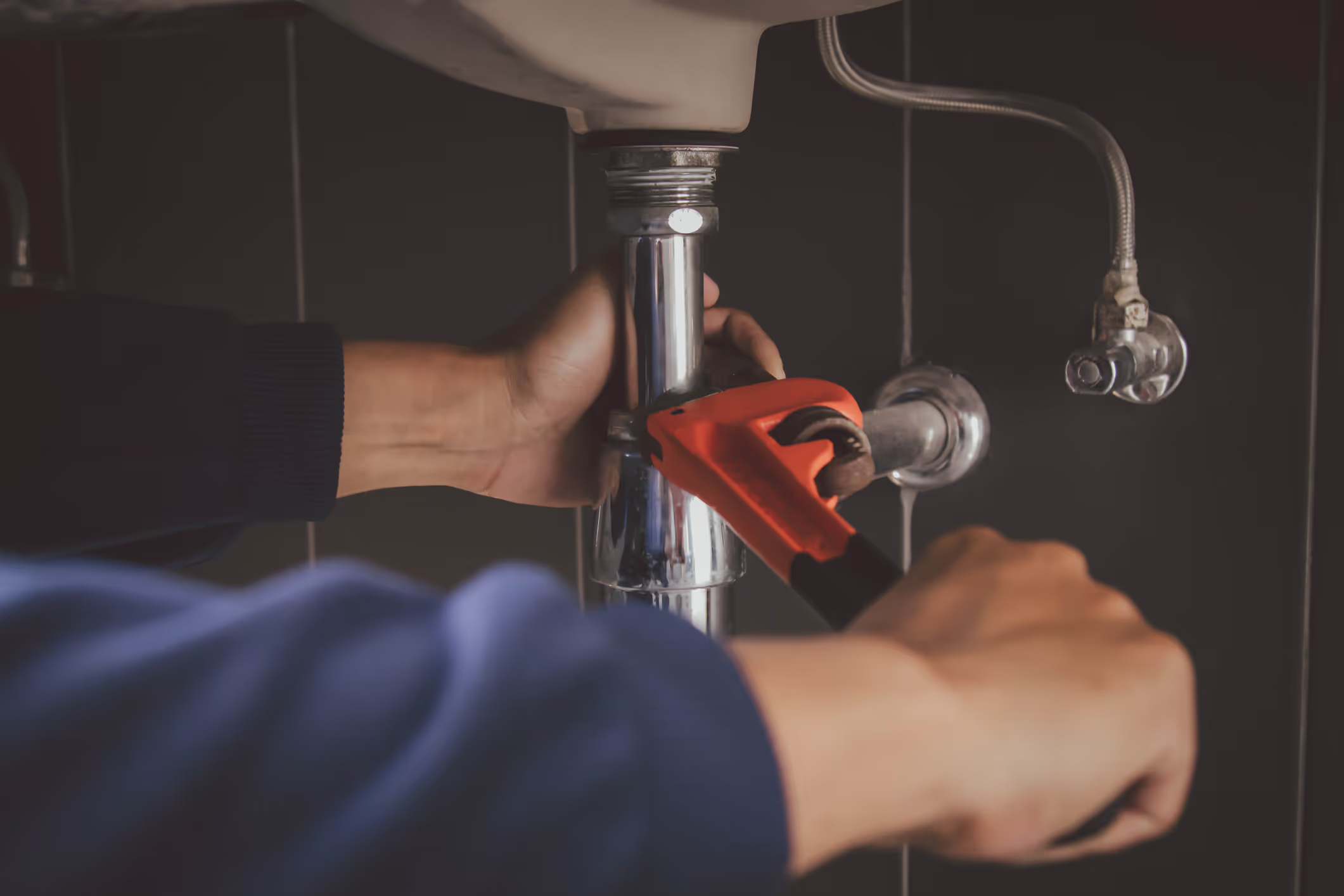
From leaks to full system installs, our plumbing services cover everything you need for a safe, reliable home water system, 24/7.
Our Primary Plumbing Include:
- Water Heater Replacement
- Water Heater Repair
- Trenchless Sewer Line
- Water Filtration
- Slab Leak
- Sewer Line Repair
Don't see the service you need? Call our Team today!
ELECTRICAL

Our electrical services ensure your home stays safe and powered, from routine fixes to complete system upgrades.
Our Primary Electrical Services Include:
- House Rewiring
- Electrician
- Electric Panel Upgrade
- Electric Panel Replacement
- EV Chargers
- Whole House Generator
Don't see the service you need? Call our Team today!
HEATING
.jpg)
We install, repair, and maintain heating & furnace systems with expert care to keep your Colorado home comfortable and energy-efficient year-round.
Our Primary Heating Services Include:
- Heating Installation
- Heating Replacement
- Heating Maintenance
- Heating Repair
- Heating Service
- Heating Tune-Up
Don't see the service you need? Call our Team today!