Why Colorado Expansive Soils Increase Slab Leak Risk in Denver Metro Homes
When we talk about the ground beneath our feet in the Denver Metro area, we aren't talking about static, solid rock. We are talking about bentonite clay. This specific type of soil acts like a sponge on a massive scale. In its dry state, it can be hard as a brick, but the moment it becomes saturated by Colorado’s spring snowmelts or heavy summer rains, it transforms.
The sheer power of this transformation is staggering. Research shows that bentonite clay can exert up to 30,000 pounds of pressure per square foot against concrete slabs. To put that in perspective, that is more than enough force to lift a house. When the soil expands by up to 20% in volume, it creates a phenomenon known as "heaving." This upward force doesn't just crack your basement floor; it places your underground plumbing in a literal vice.
If you suspect your home is being affected by these powerful geological forces, our team specializing in Slab Leak Denver Co can help identify if soil movement has compromised your system.
How Colorado expansive soils increase slab leak risk through differential settlement
The real danger to your plumbing isn't just the expansion itself; it’s the fact that it rarely happens evenly. This is called differential settlement. One side of your home might be near a flower bed that gets daily watering, while the other side stays dry. This causes one part of the slab to heave while the other remains stationary.
This movement creates shearing stress. Imagine a copper water line buried in the dirt and passing through a concrete slab. If the dirt moves two inches up but the concrete stays put, that pipe is going to kink, snap, or develop a friction-based leak. This structural distress is a leading cause of plumbing failure in the Front Range. Homeowners looking for a Slab Leak Broomfield Co expert often find that their leaks are the direct result of this uneven foundation movement.
The role of hydrostatic pressure in Denver and Castle Rock plumbing failures
In areas like Castle Rock, where the terrain can be hilly, hydrostatic pressure plays a major role. When clay soil becomes saturated, the water trapped within the soil exerts its own pressure against your plumbing. This can lead to erosion voids—hollow spaces created when water washes away the supporting soil beneath a pipe.
Without proper support, a heavy, water-filled pipe will sag. This vertical movement is particularly dangerous for sewer lines, which rely on a very specific "slope" or "grade" to move waste away from the home. A shift of just half an inch can cause a belly in the line, leading to clogs and eventual bursts. If you are noticing slow drains or damp spots in your yard, you may need a Slab Leak Castle Rock Co inspection to ensure your lines haven't shifted.
Identifying the Signs of a Slab Leak in Aurora and Highlands Ranch

Because slab leaks happen beneath layers of concrete and dirt, they are the "silent killers" of Colorado homes. However, they aren't completely invisible if you know what to look for. In cities like Aurora and Highlands Ranch, we often see homeowners ignore the early warning signs until the water bill arrives.
A minor pinhole leak, often no larger than the tip of a ballpoint pen, can waste more than 10,000 gallons of water in a single month. If you see your water meter spinning while every faucet in the house is turned off, you have a leak. Other common signs include:
• Warm spots on the floor: This usually indicates a leak in a hot water line.
• Hissing or rushing sounds: The sound of water running even when the house is silent.
• Unexplained dampness: Moisture at the base of your baseboards or under carpets.
If you notice these red flags, seeking professional help for a Slab Leak Aurora Co can prevent the leak from eroding the soil further and causing a foundation collapse.
Using non-invasive technology to find leaks without demolition
In the old days, plumbers had to play a guessing game, often jackhammering through a living room floor just to find a leak. At Veteran Heating, Cooling, Plumbing & Electric, we use high-tech, non-invasive methods to pinpoint the exact location of the break.
1. Acoustic Listening: We use sensitive microphones to "hear" the vibration of water escaping the pipe.
2. Thermal Imaging: Infrared cameras allow us to see the heat signature of hot water pooling under your slab.
3. Tracer Gas: We can pump a safe, lightweight gas into the lines and use sensors to detect where it escapes through the floor.
4. Electromagnetic Locators: These help us map the exact path of your pipes before we ever consider a repair.
For residents needing a Slab Leak Highlands Ranch Co, these technologies mean we can find the problem with surgical precision, saving you from unnecessary demolition.
Warning signs of foundation movement and plumbing distress
Sometimes the house tells you there is a plumbing problem before the pipes do. Because of how colorado expansive soils increase slab leak risk, foundation movement is often the first symptom. Watch for new cracks in your drywall, especially around door frames or in the corners of rooms. If doors that used to swing freely are now sticking, or if you notice a musty odor coming from your floorboards, the soil beneath you is likely saturated. Our Aurora Co Slab Leak Guide provides more in-depth details on how these structural signs correlate with plumbing health.
How Thermal Expansion and Soil Chemistry Accelerate Pipe Failure
While the soil movement is the physical "muscle" that breaks pipes, Colorado’s climate and water chemistry act as the "corrosion" that weakens them. In the Denver Metro area, it isn't uncommon to see daily temperature swings of 40 to 60 degrees. These swings affect your home's internal temperature and the temperature of the water entering your pipes.
This leads to thermal fatigue. As pipes heat up and cool down, they expand and contract. If a pipe is trapped tightly against a concrete slab by expansive soil, this constant movement creates friction. Over time, the concrete acts like sandpaper, wearing down the wall of the pipe until a pinhole leak forms. This is one reason why maintaining your home's systems is vital; check out our Denver Co Furnace Maintenance Guide to see how climate control impacts your entire home's health.
How Colorado expansive soils increase slab leak risk via electrolysis and hard water
The chemistry of the soil and water in Greenwood Village and surrounding areas is particularly aggressive. Colorado water often measures between 6-11 grains of hardness per gallon. This high mineral content can lead to internal scaling and pitting corrosion.
Furthermore, when copper pipes come into contact with the steel rebar used to reinforce concrete slabs—especially in damp, salty soil—a process called electrolysis occurs. This is essentially a tiny electrical current that eats away at the copper. This "dissimilar metals" reaction is a major reason why older homes in the area experience systemic pipe failure. If you are in this area, our experts in Slab Leak Greenwood Village Co can evaluate your pipe's condition.
The impact of thermal shock on hot water lines
Hot water lines are statistically more likely to fail than cold water lines in Colorado. This is due to thermal shock and higher expansion cycles. When you turn on the hot water, the pipe expands rapidly. If the expansive soil has shifted and "locked" the pipe in place, the joint stress can become unbearable. This often leads to leaks at the fittings or where the pipe transitions through the slab. For more on this, our Slab Leak Service Aurora Co Guide offers a deeper dive into hot water line vulnerabilities.
Protecting Your Foundation: Prevention Strategies for Colorado Homeowners
Prevention is always more cost-effective than repair. Since water is the "fuel" that makes expansive soil grow, the goal is to keep the soil around your foundation at a consistent moisture level.
• Gutter Maintenance: Ensure your gutters are clean and that downspouts discharge water at least 5 feet (ideally 10 feet) away from the foundation.
• Proper Grading: The ground should slope away from your home, preventing water from pooling against the slab.
• Consistent Watering: It sounds counterintuitive, but in the middle of a Colorado drought, you should lightly water the soil around your foundation to prevent it from shrinking and cracking, which creates paths for future heavy rains to flood the area.
• Downspout Extensions — Goal: Divert Roof Runoff — Benefit: Prevents localized soil saturation
• French Drains — Goal: Manage Groundwater — Benefit: Removes excess water from near the slab
• Root Barriers — Goal: Block Tree Roots — Benefit: Prevents roots from cracking pipes or drying soil
• Drip Irrigation — Goal: Consistent Moisture — Benefit: Stops the extreme shrink-swell cycle
Maintenance steps to reduce soil-related plumbing stress
Beyond landscaping, there are mechanical steps you can take. Installing a pressure-reducing valve (PRV) is essential if your home’s water pressure exceeds 80 psi, as high pressure puts even more strain on pipes already stressed by soil movement. Thermal expansion tanks on your water heater can also help absorb the pressure spikes that occur during heating cycles.
We recommend annual professional inspections to catch these issues before they become emergencies. Our Emergency Slab Leak Denver Guide explains what to do if a preventative measure fails and you find yourself facing a sudden flood.
Long-term solutions for aging Colorado plumbing systems
For older homes where the pipes were laid directly in the dirt, we often recommend more permanent solutions:
• Pipe Sleeving: Installing a protective sleeve around pipes where they pass through concrete.
• Trenchless Lining: Creating a new, "pipe-within-a-pipe" that is flexible enough to withstand soil movement.
• Modern Materials: Replacing old copper or galvanized steel with flexible PVC or High-Density Polyethylene (HDPE) which can flex without breaking.
Professional Solutions for Slab Leak Repair and Insurance Coverage
If a leak is detected, you generally have three options for repair. The right choice depends on the age of your plumbing and the extent of the soil movement.
1. Spot Repair: We jackhammer a small area of the slab and fix the specific section of the pipe. This is the most "direct" fix but doesn't protect against future leaks in the same line.
2. Pipe Rerouting: Instead of digging up your floor, we run new lines through your walls and attic. This is often the smartest move for older homes with systemic corrosion.
3. Trenchless Pipe Bursting: We pull a new pipe through the old one, breaking the old pipe outward. This is excellent for sewer lines.
Our team at Slab Leak Denver Co can help you weigh these options based on your home’s specific needs.
Understanding insurance coverage for slab repairs in Colorado
One of the biggest surprises for homeowners is how insurance handles slab leaks. Most standard Colorado homeowners insurance policies do not cover the repair of the pipe itself, as they consider a leaking pipe to be "gradual deterioration."
However, many policies do cover the "tear-out" and "put-back" costs. This means the insurance company may pay for the expensive process of jackhammering the floor and replacing the flooring/drywall, while you only pay for the actual plumbing repair. Because the rules vary, it’s vital to have a professional inspection and a detailed report to provide to your adjuster. We often assist with this in our Slab Leak Aurora Co services.
Why early detection is critical for foundation integrity
Waiting to fix a slab leak is dangerous. The water escaping from your pipe acts as a catalyst, causing the surrounding bentonite clay to swell even more. This creates a "feedback loop": the leak makes the soil expand, the expansion moves the slab, and the slab movement breaks the pipe further. This can lead to catastrophic heaving and permanent structural damage that can cost tens of thousands to fix with piers and foundation leveling.
Frequently Asked Questions About Colorado Slab Leaks
Will a slab leak eventually stop on its own?
No. A slab leak will never stop on its own. In fact, due to the high pressure of the water lines and the constant movement of Colorado's expansive soil, the leak will only grow larger. The longer you wait, the more soil becomes saturated, increasing the risk of major foundation heaving.
Is it better to patch the pipe or reroute it?
If your home is more than 20-30 years old, rerouting is often the better long-term investment. If one section of the pipe has failed due to corrosion or soil stress, the rest of the line is likely in a similar condition. Patching one spot often leads to another leak appearing just a few feet away a few months later.
Can I use liquid drain cleaners to fix a leak in my sewer line slab?
Absolutely not. Liquid drain cleaners are highly corrosive and are designed to eat through organic clogs, not seal holes. In fact, the heat generated by the chemical reaction can further damage weakened pipes and accelerate the leak.
Conclusion
At Veteran Heating, Cooling, Plumbing & Electric, we understand that your home is your most significant investment. We also know that the unique geology of the Denver Metro area requires a specialized approach to plumbing and foundation health. As a veteran-led, locally owned company, we bring the values of integrity, precision, and service to every job we do.
Whether you are in Arvada, Castle Rock, or anywhere in between, don't let the ground beneath you compromise your home's safety. We are available 24/7 for emergencies and offer a lifetime warranty on parts and labor to give you total peace of mind.
ABOUT Veteran Heating, Cooling, Plumbing & Electric
Veteran Heating, Cooling, Plumbing & Electric was founded on the belief that service should be personal, honest, and community-focused. Our team is built around integrity, professionalism, and a true commitment to your home’s comfort and safety.
Led by a U.S. Army veteran with over 30 years of industry experience, we’re proud to remain locally owned and operated. Every technician, plumber, and electrician is EPA-certified, background checked, and driven to exceed expectations.
- 24/7 ServiceWe offer weekend & 24/7 emergency service. We’re here whenever you need us—day, night, or weekend, no exceptions.
- $0 Trip FeesNo dispatch or trip fees. You’ll never pay just for us to show up—service starts when the work does.
OUR SERVICES
AIR CONDITIONING
.jpg)
We offer specialty and seasonal services like indoor air quality upgrades, pre-winter furnace checks, and summer AC tune-ups to keep your home prepared year-round.
Our Primary Air Conditioning Services Include:
Don't see the service you need? Call our Team today!
PLUMBING
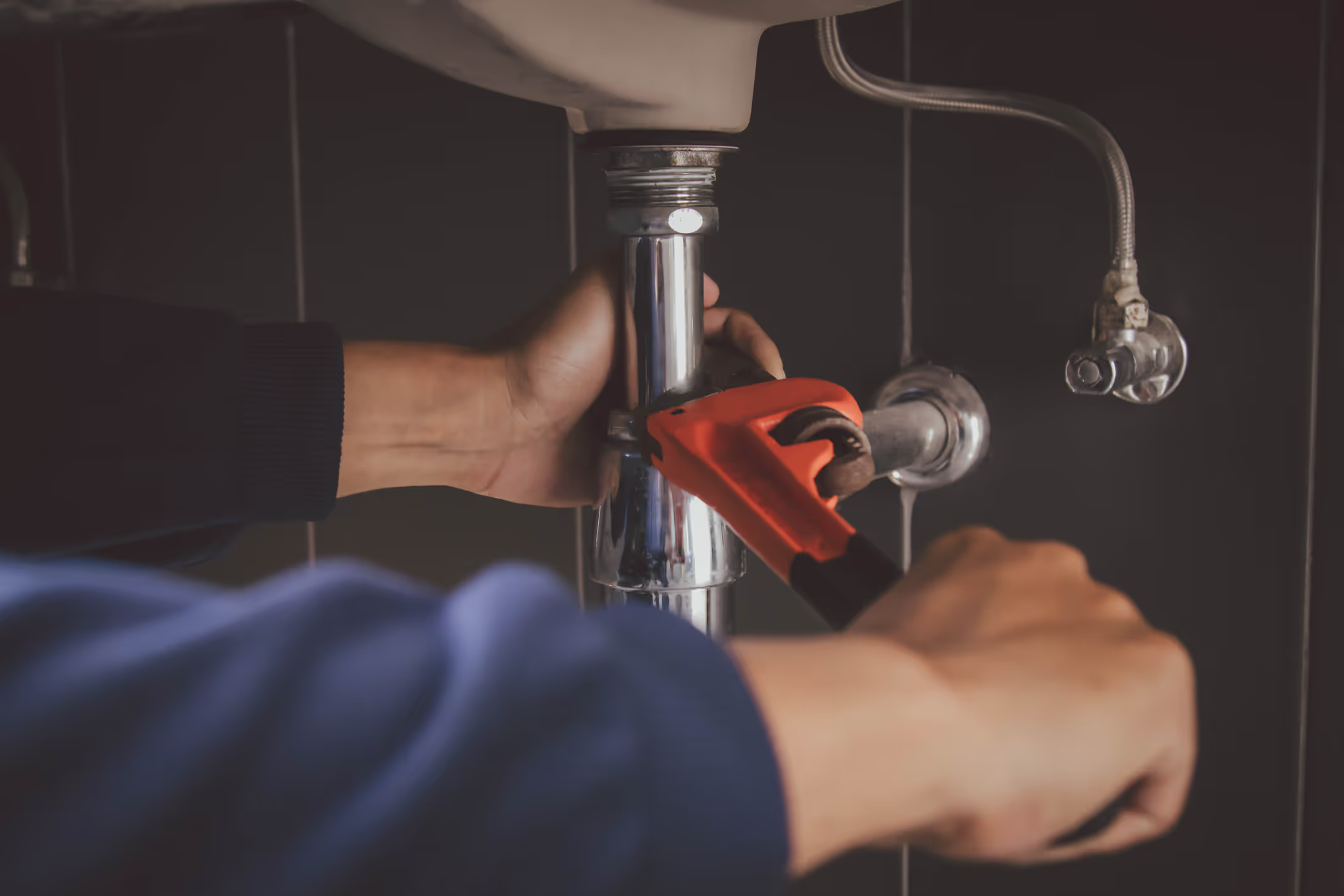
From leaks to full system installs, our plumbing services cover everything you need for a safe, reliable home water system, 24/7.
Our Primary Plumbing Include:
- Water Heater Replacement
- Water Heater Repair
- Trenchless Sewer Line
- Water Filtration
- Slab Leak
- Sewer Line Repair
Don't see the service you need? Call our Team today!
ELECTRICAL

Our electrical services ensure your home stays safe and powered, from routine fixes to complete system upgrades.
Our Primary Electrical Services Include:
- House Rewiring
- Electrician
- Electric Panel Upgrade
- Electric Panel Replacement
- EV Chargers
- Whole House Generator
Don't see the service you need? Call our Team today!
HEATING
.jpg)
We install, repair, and maintain heating & furnace systems with expert care to keep your Colorado home comfortable and energy-efficient year-round.
Our Primary Heating Services Include:
- Heating Installation
- Heating Replacement
- Heating Maintenance
- Heating Repair
- Heating Service
- Heating Tune-Up
Don't see the service you need? Call our Team today!