Navigating a Late-Summer AC Breakdown in Colorado
Is it worth fixing a major equipment failure when the hottest days of the year are almost behind us? At Veteran Heating, Cooling, Plumbing & Electric, we know that Deciding between patching a refrigerant leak or replacing your Aurora AC in late August requires looking past the immediate frustration and evaluating the long-term mechanical health of your equipment. Discovering that your air conditioner is blowing warm air just as the summer begins to wind down and the back-to-school transition starts is incredibly frustrating. You are suddenly faced with a significant choice: do you invest resources into a temporary patch just to get through the next few weeks, or do you upgrade the entire system now?
While the most intense summer heat is passing in Aurora, September can still bring uncomfortably warm days, making immediate indoor comfort a priority. However, rushing into a quick fix without considering the broader mechanical context often leads to repeated breakdowns. This guide provides the strictly objective, mechanical framework our technicians use in the field to help you make the right choice for your home, your comfort, and your long-term peace of mind.
For more detailed guidance, explore our resources on deciding between AC repair and replacement, or learn about your options for an Aurora AC replacement.
How the R-410A Phase-Out Impacts Older Systems
Our team is currently guiding homeowners through a massive regulatory shift in the HVAC industry that directly impacts how you should handle a refrigerant leak today. If your air conditioner was installed more than a few years ago, it likely relies on R-410A refrigerant. While this was the industry standard for over a decade, sweeping environmental regulations are changing its availability.
The EPA AIM Act mandates an 85% phasedown of hydrofluorocarbons (HFCs), including R-410A, by the year 2036. This phasedown is not a sudden ban, but rather a gradual reduction in production and import. As a result, maintaining older R-410A systems becomes a greater resource investment with each passing year. As the supply of this specific refrigerant shrinks, acquiring it for a system recharge becomes increasingly difficult and resource-intensive.
The Future of Refrigerants
Understanding this transition is a critical factor in the repair versus replace equation. Here is what we tell our customers about the current state of refrigerants:
• Diminishing returns: Repeatedly recharging a leaking system that uses a phased-out refrigerant is a poor long-term strategy. You are continually investing in a resource that is becoming obsolete.
• No simple conversions: You cannot simply drain R-410A and replace it with a newer, compliant refrigerant. The internal components, pressures, and oils are entirely different, meaning older units cannot be converted without a complete mechanical overhaul.
• Environmental impact: The transition to newer refrigerants (like R-454B or R-32) is driven by the goal of reducing Global Warming Potential (GWP). New systems are designed from the ground up to utilize these environmentally friendly alternatives safely and efficiently.
• Supply and demand: As manufacturers shift their production lines to new refrigerants, the existing stock of R-410A is reserved strictly for servicing existing units, which naturally alters availability.
The Mechanical Reality of Patching a Refrigerant Leak
Air conditioning systems are designed as closed loops. Unlike a car that consumes gas, an AC unit does not consume refrigerant. It simply circulates the exact same chemical charge back and forth between the indoor and outdoor components to absorb and release heat. Therefore, if your system is low on refrigerant, there is a physical breach in the copper lines, the evaporator coil, or the condenser coil. The refrigerant is escaping into the atmosphere.
Running a system with low refrigerant forces the compressor—the heart of your air conditioner—to overwork. The compressor relies on the cool refrigerant returning from the house to keep its own internal motor from overheating. When the charge is low, the compressor runs hotter and longer, risking catastrophic mechanical failure. Colorado's high altitude and dry air place unique, continuous strain on older AC compressors, making these efficiency losses and overheating risks even more pronounced—a pattern we see often during late-summer service calls across the Denver metro area.
Why Leaks Keep Coming Back
Understanding the root cause of the leak helps explain why patching is rarely a permanent solution. In our experience, the process usually follows a predictable pattern:
The Problem: Formicary Corrosion
Most indoor evaporator coils are made of copper. Over time, volatile organic compounds (VOCs) in your home's air—from cleaning supplies, paints, and building materials—mix with condensation on the coils. This creates a weak acid that slowly eats microscopic pinholes in the copper. This is known as formicary corrosion.
The Cause: System Wear and Tear
Because these pinholes are microscopic, finding them is incredibly difficult. Furthermore, high-pressure R-410A systems operate under immense stress. A leak is rarely an isolated incident; in our daily field diagnostics, we find it is usually a symptom of overall metal fatigue and degradation across the entire coil.
The Solution: Weighing the Fix
While a technician can sometimes locate a leak and apply a brazed patch or a chemical sealant, this is often a temporary measure. Patching one weak spot on a degraded coil simply forces the high-pressure refrigerant to find the next weakest point. Before long, a new leak develops. To truly understand how this pressure moves through the system, it helps to understand the connection between indoor and outdoor units.
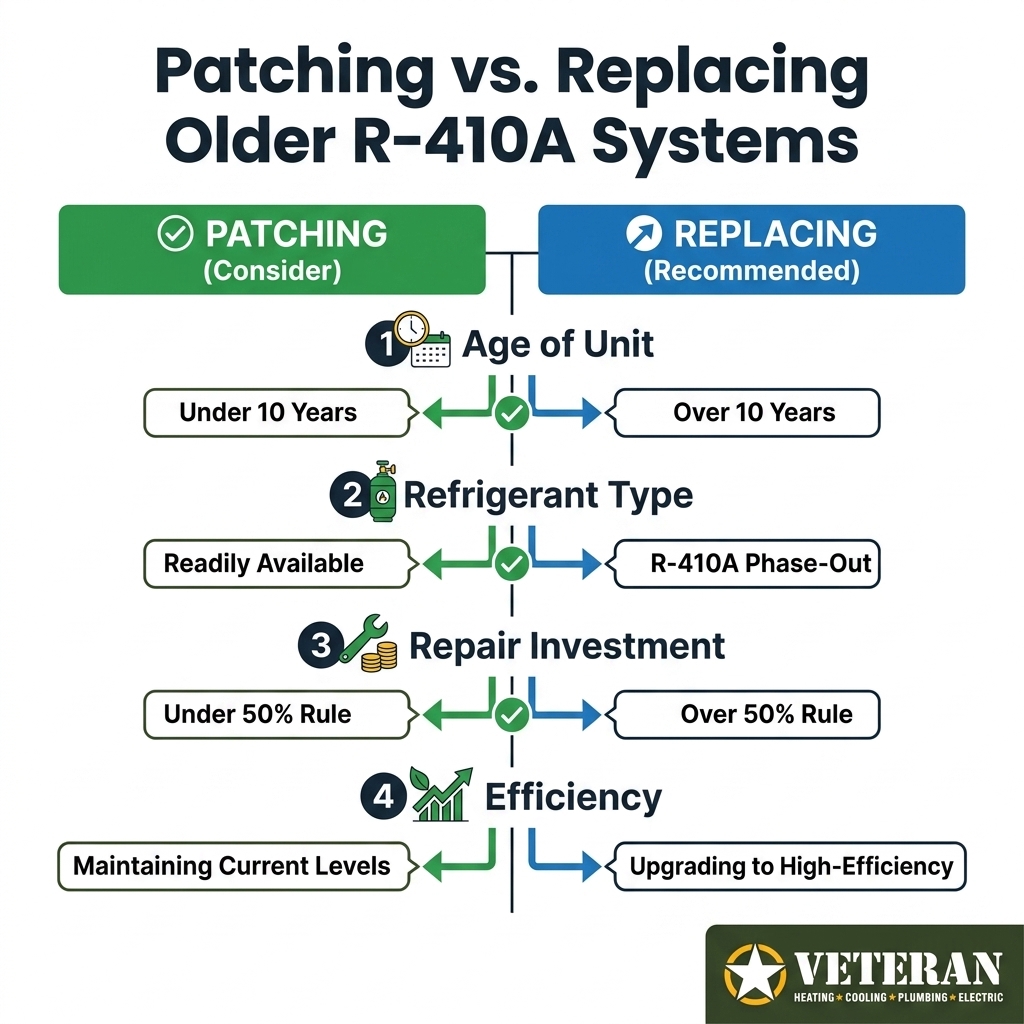
Applying the 50% Rule to End-of-Season Decisions
When faced with a major repair like a leaking evaporator coil and a full system recharge, our veteran-led team recommends a concrete framework to make a logical decision. HVAC professionals universally recommend the 50% rule: if the required fix requires an investment approaching half the value of a brand-new system, replacement is generally the wiser choice.
This rule becomes even more relevant when you factor in the age of the unit. Most central air conditioners have a functional lifespan of 10 to 15 years. If your system is 12 years old, the compressor and blower motor already have significant wear and tear. Investing heavily in patching a leak does not reset the clock on those other aging components.
Short-Term Fix vs. Long-Term Reliability
Strategic timing also plays a massive role in this decision. When you are relying on late-August end-of-season cooling, investing heavily in a repair primarily benefits the following summer. You are paying for a fix now, letting the unit sit dormant all winter, and hoping the patch holds when you turn it back on in June. Upgrading the system entirely provides a fresh start, a new warranty, and immediate peace of mind.
• Upfront Investment — Patching an Older R-410A Leak: Lower immediate resource requirement, but high risk of recurring issues. — Upgrading to a New System: Higher initial investment, but secures long-term home comfort.
• Warranty Coverage — Patching an Older R-410A Leak: None on the older existing parts; limited warranty on the patch itself. — Upgrading to a New System: Full manufacturer warranty (typically 10 years on parts).
• Energy Efficiency — Patching an Older R-410A Leak: System continues to operate at degraded, older efficiency levels. — Upgrading to a New System: Drastically improved SEER2 ratings, lowering monthly energy consumption.
• Refrigerant Status — Patching an Older R-410A Leak: Relies on R-410A, which is actively being phased out by the EPA. — Upgrading to a New System: Utilizes modern, compliant refrigerants with guaranteed future availability.
We always remind our customers that common AC repairs like replacing a capacitor or a contactor are minor and almost always worth doing. However, a compromised closed-loop system is a major structural failure.
Exploring High-Efficiency Replacement Options
If the 50% rule points you toward replacement, the conversation shifts from frustration to opportunity. Modern, high-efficiency cooling systems offer performance benefits that older units simply cannot match. Today's variable-speed compressors do not just blast cold air at a single speed; they adjust their output in tiny increments to maintain a precise indoor temperature while drawing significantly less electricity.
Furthermore, new systems use current, compliant refrigerants, completely eliminating any worries about the R-410A phase-out. You will have a system that is environmentally responsible and easy to service for decades to come. Many modern installations also qualify for generally applicable energy rebates, federal tax credits, and utility incentive programs designed to encourage the adoption of high-efficiency equipment. While specific programs vary, these incentives can offset a portion of the upgrade. Always consult with a professional and your tax advisor to understand all available features and benefits.
When a system fails unexpectedly, fast and reliable service is paramount. One local homeowner experienced this when they needed immediate assistance for a sudden HVAC issue; our technician Jimi arrived the same day, delivering professional service that restored their home's comfort efficiently. Whether you are looking at a traditional central air conditioner or exploring heat pump service in Aurora, having a dedicated team ready to respond makes all the difference.
Getting an Honest Assessment from Veteran Professionals
Navigating the complexities of refrigerants, coil leaks, and system lifespans requires working with technicians you can trust. You need an objective, straight-facts approach to mechanical diagnostics, not a high-pressure sales pitch. An honest assessment involves measuring static pressure, inspecting ductwork, checking the electrical draw of the compressor, and providing a clear explanation of what is failing and why.
Working with our veteran-owned company, Veteran Heating, Cooling, Plumbing & Electric, means you get the benefit of military discipline and honest assessments. Our goal is to give homeowners the straight facts on the R-410A phase-out without pushing unnecessary replacements. If a repair makes mechanical sense and falls well below the 50% rule threshold, that is exactly what we will recommend.
Transparency and top-tier workmanship are at the core of every service call we run. After a recent installation, for example, our technicians Joey and Lu walked the homeowners through every detail of their new HVAC system's operation, ensuring they understood the new thermostat and maintenance requirements before the team left. That level of dedication is what you should expect during every comprehensive diagnostic visit.
Frequently Asked Questions About Refrigerant Leaks and AC Replacement
Is it worth fixing a refrigerant leak in an AC?
The short answer our technicians give is that it depends on the age of your system and the severity of the leak. If the unit is under ten years old and the leak is small and accessible, a repair is often justified. However, if the system is older, uses R-410A, or has multiple leaks in a corroded coil, repairing it usually leads to diminishing returns. Applying the 50% rule helps clarify if the investment makes long-term sense.
How long does a patched AC leak last?
A patched AC leak can last anywhere from a few months to a few years, depending heavily on the condition of the surrounding metal. Because high-pressure systems place immense stress on the coils, patching one weak spot often forces the pressure to exploit the next weakest point. For older, corroded coils, a patch is typically a temporary measure rather than a permanent cure.
Should I replace my AC if it is leaking refrigerant?
You should strongly consider replacing your AC if the leak requires a major coil replacement and the unit is over ten years old. A severe leak means the closed-loop system is compromised, which puts dangerous strain on the compressor. Weighing the required resources for the repair against the benefits of a new, highly efficient system usually points toward replacement.
What happens when R-410A is phased out?
As R-410A is phased out under the EPA AIM Act, the production and importation of this specific refrigerant will drop significantly by 2036. This means the available supply will shrink, making it harder and more resource-intensive to recharge older systems. Your current R-410A system will still function, but maintaining it during future breakdowns will become increasingly difficult.
Is it worth repairing an R-410A leak on an older AC?
Most homeowners find that repairing a major leak on an older R-410A system is not a sound long-term investment. Because the refrigerant is being phased down, you are pouring resources into obsolete technology. Upgrading to a system that uses modern, compliant refrigerants provides better efficiency and guarantees future serviceability.
Should I replace my AC at the end of summer?
Replacing your AC at the end of summer is often a highly strategic move. If you face a major breakdown in late August, paying for a massive repair just to limp through a few more weeks of heat makes little sense. Upgrading now ensures your home is perfectly prepared for next year's cooling season, complete with a fresh warranty and improved energy efficiency.
Make a Confident Choice for Your Aurora Home
Deciding between patching a refrigerant leak or replacing your Aurora AC in late August ultimately comes down to the age of your unit, the severity of the leak, and your long-term comfort goals. Pouring resources into an aging R-410A system often leads to repeated frustrations, whereas upgrading provides the peace of mind that comes with reliable, high-efficiency performance. You do not have to guess at the right path forward; an objective mechanical evaluation from our crew will reveal exactly where your system stands. Take control of your home's comfort and schedule a professional assessment with Veteran Heating, Cooling, Plumbing & Electric today to explore your options for an Aurora AC replacement.
ABOUT Veteran Heating, Cooling, Plumbing & Electric
Veteran Heating, Cooling, Plumbing & Electric was founded on the belief that service should be personal, honest, and community-focused. Our team is built around integrity, professionalism, and a true commitment to your home’s comfort and safety.
Led by a U.S. Army veteran with over 30 years of industry experience, we’re proud to remain locally owned and operated. Every technician, plumber, and electrician is EPA-certified, background checked, and driven to exceed expectations.
- 24/7 ServiceWe offer weekend & 24/7 emergency service. We’re here whenever you need us—day, night, or weekend, no exceptions.
- $0 Trip FeesNo dispatch or trip fees. You’ll never pay just for us to show up—service starts when the work does.
OUR SERVICES
AIR CONDITIONING
.jpg)
We offer specialty and seasonal services like indoor air quality upgrades, pre-winter furnace checks, and summer AC tune-ups to keep your home prepared year-round.
Our Primary Air Conditioning Services Include:
Don't see the service you need? Call our Team today!
PLUMBING
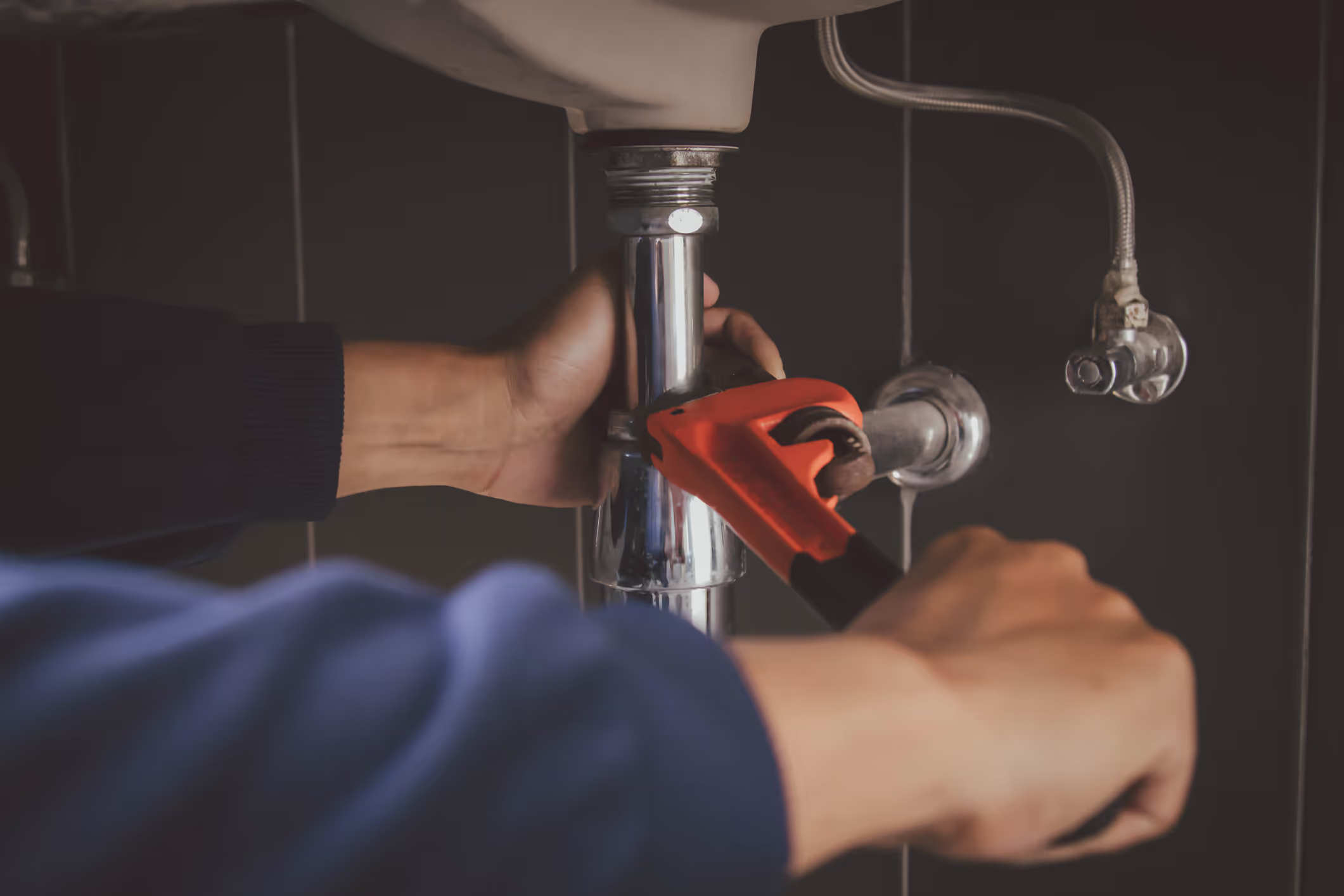
From leaks to full system installs, our plumbing services cover everything you need for a safe, reliable home water system, 24/7.
Our Primary Plumbing Include:
- Water Heater Replacement
- Water Heater Repair
- Trenchless Sewer Line
- Water Filtration
- Slab Leak
- Sewer Line Repair
Don't see the service you need? Call our Team today!
ELECTRICAL

Our electrical services ensure your home stays safe and powered, from routine fixes to complete system upgrades.
Our Primary Electrical Services Include:
- House Rewiring
- Electrician
- Electric Panel Upgrade
- Electric Panel Replacement
- EV Chargers
- Whole House Generator
Don't see the service you need? Call our Team today!
HEATING
.jpg)
We install, repair, and maintain heating & furnace systems with expert care to keep your Colorado home comfortable and energy-efficient year-round.
Our Primary Heating Services Include:
- Heating Installation
- Heating Replacement
- Heating Maintenance
- Heating Repair
- Heating Service
- Heating Tune-Up
Don't see the service you need? Call our Team today!