Why Front Range Homeowners Are Warming Up to Heat Pumps
Is a heat pump right for your Front Range home? For most Denver-area homeowners, the answer is yes — but a few key factors determine whether it’s the right fit for your specific situation.
Quick answer: A heat pump is likely a good fit if you:
• Have a 200-amp electrical panel (or are open to upgrading)
• Have existing ductwork in good condition, or want zoned ductless comfort
• Want one system that handles both heating and cooling year-round
• Are replacing an aging furnace, AC, or both
• Want to take advantage of 2026 rebates through Xcel Energy and Colorado state programs
• Have solar panels or net-zero goals
A heat pump may not be the best fit if you:
• Have a poorly insulated home with no plans to improve the building envelope
• Have a 100-amp panel and no budget for an upgrade
• Need the absolute lowest upfront cost with no long-term savings consideration
Modern cold-climate heat pumps are built to handle Colorado winters — some operate efficiently down to -22°F — making the old concern about heat pumps “not working in the cold” largely a thing of the past. The Front Range climate, with its dry air, high-altitude sunshine, and winters that stay above 25°F for the vast majority of heating hours, is actually well-suited to today’s heat pump technology.
That said, getting the right result depends on proper sizing, the right equipment, and an honest evaluation of your home — not just a one-size-fits-all recommendation.
I’m Mike Townsend, a U.S. Army veteran and the founder of Veteran Heating, Cooling, Plumbing & Electric, and my experience — from managing precision cooling systems in the military to leading thousands of HVAC installations across the Denver metro — gives me a unique perspective on answering the question of is a heat pump right for your Front Range home. Let’s walk through everything you need to know to make a confident, informed decision.
Is a heat pump right for your Front Range home?
Deciding to switch your HVAC system is a big move. In the Denver metro area—from the busy streets of Aurora to the quiet neighborhoods of Arvada—homeowners are looking for ways to stay comfortable without watching their utility bills skyrocket. But before we talk about the equipment, we have to talk about the house.
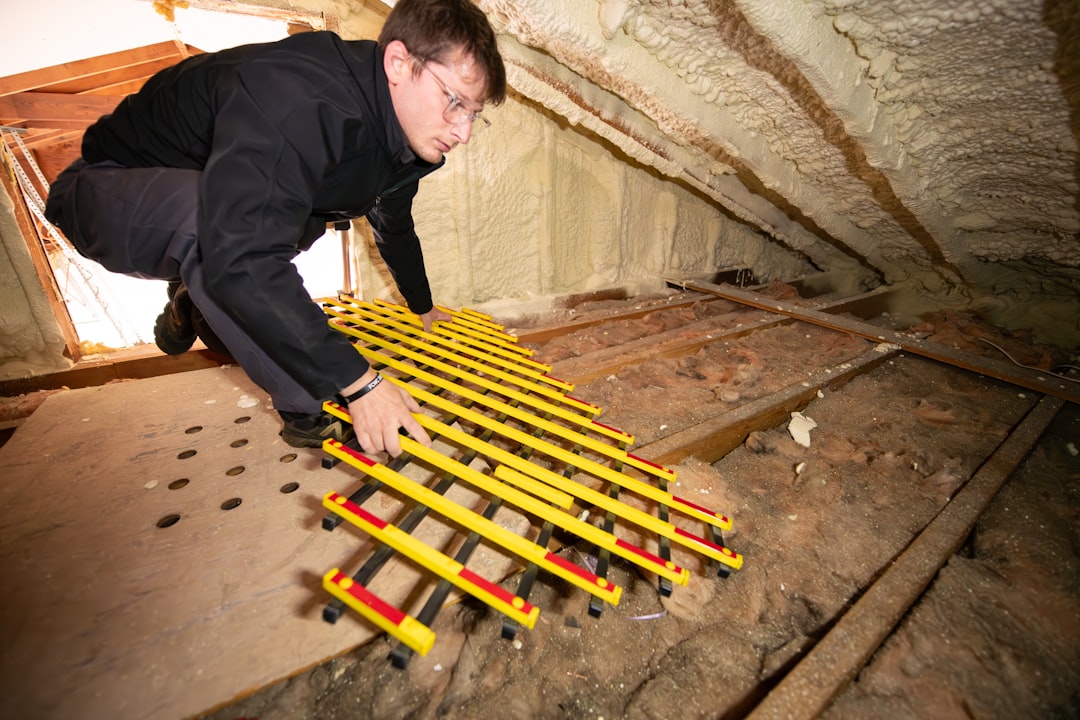
A heat pump doesn’t “create” heat by burning fuel; it moves heat from one place to another using a refrigerant cycle. Because of this, the efficiency of the system is heavily tied to your home’s “building envelope.” If your attic insulation is thin or your windows are drafty, a heat pump has to work harder to maintain your preferred temperature.
When we visit a home in Denver or Centennial, we start with a Manual J calculation. This isn’t a “rule of thumb” based on square footage. It’s a detailed engineering calculation that accounts for your home’s orientation, insulation levels, window types, and even the local altitude. Speaking of altitude, Denver sits at 5,280 feet, where the air is about 17% less dense than at sea level. This means standard equipment might lose 5-10% of its rated capacity. We ensure your system is sized specifically for these Colorado conditions.
Your ductwork also plays a starring role. Heat pumps typically move air at slightly lower temperatures (around 95–105°F) compared to the 120–140°F blast of a traditional gas furnace. This means your ducts need to be sized correctly and well-sealed to ensure that warmth actually reaches your living room instead of leaking into the crawlspace. For more details on how these systems fit into your lifestyle, you can explore our heat pump services.
Determining if a heat pump is right for your Front Range home’s electrical capacity
One of the most practical hurdles for homeowners in Littleton or Lakewood is the electrical panel. A traditional gas furnace uses very little electricity—just enough to spin the blower motor. However, a fully electric heat pump system, especially one with electric backup “heat strips,” requires a significant amount of power.
Most modern homes built in the last 20 years have a 200-amp service, which is usually plenty to handle a heat pump. If you live in an older home with a 100-amp panel, you may need an electrical upgrade. As a company that handles both HVAC and electrical work, we can evaluate your circuit capacity and perform the necessary panel upgrades to ensure your home is safe and ready for the transition to electric heating.
Why a heat pump is right for your Front Range home with solar panels
If you’ve invested in solar panels in Golden or Broomfield, a heat pump is often a “no-brainer.” Solar panels and heat pumps go together like peanut butter and jelly. By switching from a gas furnace to an electric heat pump, you are essentially using the energy you harvest from the sun to heat and cool your home.
This move toward energy independence is a major goal for many Front Range residents aiming for a net-zero home. When paired with battery storage, you can offset peak electricity rates and significantly reduce your reliance on the grid. It’s a sustainable cycle: the sun powers the pump, and the pump provides year-round comfort.
How Modern Cold-Climate Technology Handles Colorado Winters
There’s a common myth that heat pumps stop working when it gets cold. While that might have been true in the 1980s, modern cold-climate heat pumps are a different breed. In fact, many units can maintain 80% to 100% of their heating capacity even when temperatures drop into the teens.
So, how do they do it?
• Inverter Compressors: Unlike old systems that were either “on” or “off,” inverter-driven compressors can vary their speed. They can ramp up to provide a boost during a Castle Rock cold snap or slow down to a whisper on a mild Highlands Ranch afternoon.
• Vapor Injection: This technology allows the refrigerant to absorb more heat even when the outdoor air is frigid. Some high-end models are rated to operate effectively down to -22°F.
• The Dry Air Advantage: Colorado’s dry climate is actually a secret weapon for heat pumps. In humid states, frost builds up on the outdoor coils quickly, forcing the unit into frequent “defrost cycles.” In our dry Front Range air, frost builds up much slower, meaning your system spends more time heating your home and less time defrosting itself.
Even with this tech, we always plan for the “what if.” During extreme polar vortex events, most systems utilize supplemental heat—either electric heat strips or a backup gas furnace—to ensure you stay cozy when Denver’s temperatures take a dive.
Comparing Ducted, Ductless, and Dual-Fuel Configurations
Not every home uses the same setup. Depending on whether you’re in a classic bungalow in Columbine or a new build in Centennial, we might recommend different configurations.
• Ducted Heat Pump — Best For: Homes with existing, high-quality ductwork. — Key Advantage: Replaces both AC and furnace using existing vents.
• Ductless Mini-Split — Best For: Older homes, additions, or rooms with “hot/cold spots.” — Key Advantage: Independent zoning; no ductwork required.
• Dual-Fuel (Hybrid) — Best For: Homeowners with a gas line who want a safety net. — Key Advantage: Switches between electric and gas based on temperature.
Dual-fuel systems are incredibly popular in the Front Range. This setup pairs an electric heat pump with a high-efficiency gas furnace backup. The heat pump handles about 80-85% of the heating season (usually when it’s above 25°F). When the temperature drops below a specific “crossover point” where gas becomes more cost-effective or necessary for capacity, the furnace kicks in. This gives you the best of both worlds: high-efficiency electric cooling and heating for most of the year, and the raw power of gas for the coldest nights.
For homes without ducts—like a basement finish or a garage conversion—ductless mini-splits offer incredible zoning. You can keep your bedroom cool while leaving the rest of the house at a higher temperature, saving energy and improving comfort.
Navigating 2026 Rebates and Energy Incentives in Denver
One of the biggest reasons is a heat pump right for your Front Range home in 2026 is the sheer volume of financial incentives available. Between federal, state, and local utility programs, the upfront investment can be significantly offset.
As of April 2026, here is what homeowners in our service area should look for:
1. Xcel Energy Rebates: Xcel continues to offer substantial rebates for cold-climate heat pumps. Depending on the efficiency of the unit (look for ENERGY STAR models), these can reach thousands of dollars per ton.
2. Colorado State Tax Credit: The state offers a tax credit (currently around $1,000) for installing heat pump technology.
3. HEAR Program: For income-qualified households, the Home Electrification and Appliances Rebate (HEAR) program can provide up to $8,000 in point-of-sale discounts.
4. Federal 25C Tax Credit: While some previous federal programs have shifted, always check for current “Energy Efficient Home Improvement Credits” that allow you to deduct a percentage of the installation cost from your federal taxes.
Navigating these forms can be a headache, which is why we help our customers identify and apply for every incentive they qualify for. You can find more information about these incentives and our services here.
Long-Term Comfort and Air Quality Benefits
Beyond the numbers, there is a “feel” to a heat pump that many homeowners prefer. Because they run for longer cycles at lower speeds, they provide balanced airflow and more consistent temperatures. You won’t experience that “blast of hot air followed by a chill” that often comes with older gas furnaces.
There are also significant indoor air quality (IAQ) benefits. Since a heat pump is fully electric, there is no combustion happening inside your home. This eliminates the risk of carbon monoxide from the heating process and reduces the production of nitrogen dioxide (NO2), which has been linked to respiratory issues.
Furthermore, heat pumps are excellent at dehumidifying during our hot, dry summers, and when paired with high-quality filtration, they keep your indoor air clean and fresh. With a typical lifespan of 15 to 20 years when properly maintained, a heat pump is a long-term investment in your family’s health and comfort. At Veteran Heating, Cooling, Plumbing & Electric, we recommend annual maintenance to keep these precision systems running at peak performance.
Frequently Asked Questions about Front Range Heat Pumps
Do heat pumps work in sub-zero Denver temperatures?
Yes! Modern cold-climate heat pumps are designed specifically for regions like ours. While their efficiency (COP) drops as it gets colder, they can still extract heat from the air well below zero. For the few nights a year when it hits -15°F or -20°F, we typically install a backup source (electric strips or a gas furnace) to ensure your home stays at its set point.
What is the difference between a heat pump and central AC?
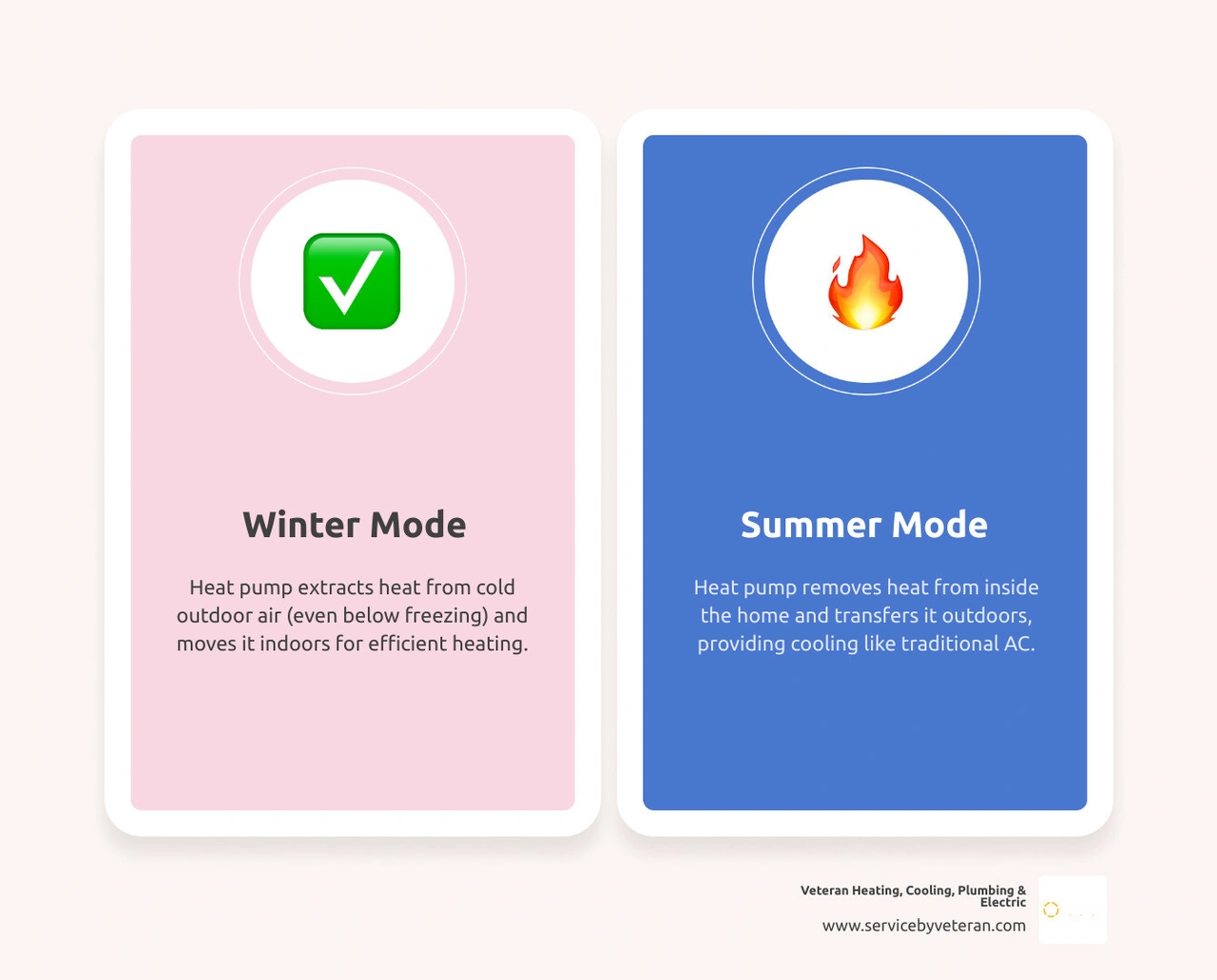
Visually, they look almost identical. Internally, however, a heat pump has a “reversing valve.” In the summer, it acts exactly like an AC, moving heat from inside to outside. In the winter, the valve flips, and it moves heat from the outside air into your home. A central AC is a one-way street; a heat pump is a two-way street.
Does a heat pump require a backup furnace?
It is not strictly required, but it is highly recommended in Colorado. You can go “fully electric” by using electric resistance heat strips inside your air handler as a backup. However, many Front Range homeowners choose a “dual-fuel” setup that keeps a gas furnace as the backup because gas can be more economical during extreme cold snaps.
Conclusion
At the end of the day, the question of is a heat pump right for your Front Range home comes down to your goals for comfort, efficiency, and sustainability. Whether you are in the heart of Denver or the suburbs of Highlands Ranch, the technology has finally caught up to our rugged Colorado climate.
At Veteran Heating, Cooling, Plumbing & Electric, we approach every job with the same integrity and service that defined our military careers. We aren’t here to sell you a box; we’re here to provide a solution that works for your family. That’s why we offer a lifetime warranty on parts and labor, a money-back guarantee, and 24/7 emergency service. We believe in honest, community-focused service—no dispatch fees, no hidden costs, just expert craftsmanship.
If you’re ready to see if a heat pump is the right fit for your home, we’re ready to help. From Castle Rock to Broomfield, our team is standing by to ensure your home stays comfortable every day of the year.
Learn more about our heat pump services and schedule your evaluation today.
ABOUT Veteran Heating, Cooling, Plumbing & Electric
Veteran Heating, Cooling, Plumbing & Electric was founded on the belief that service should be personal, honest, and community-focused. Our team is built around integrity, professionalism, and a true commitment to your home’s comfort and safety.
Led by a U.S. Army veteran with over 30 years of industry experience, we’re proud to remain locally owned and operated. Every technician, plumber, and electrician is EPA-certified, background checked, and driven to exceed expectations.
- 24/7 ServiceWe offer weekend & 24/7 emergency service. We’re here whenever you need us—day, night, or weekend, no exceptions.
- $0 Trip FeesNo dispatch or trip fees. You’ll never pay just for us to show up—service starts when the work does.
OUR SERVICES
AIR CONDITIONING
.jpg)
We offer specialty and seasonal services like indoor air quality upgrades, pre-winter furnace checks, and summer AC tune-ups to keep your home prepared year-round.
Our Primary Air Conditioning Services Include:
Don't see the service you need? Call our Team today!
PLUMBING
From leaks to full system installs, our plumbing services cover everything you need for a safe, reliable home water system, 24/7.
Our Primary Plumbing Include:
- Water Heater Replacement
- Water Heater Repair
- Trenchless Sewer Line
- Water Filtration
- Slab Leak
- Sewer Line Repair
Don't see the service you need? Call our Team today!
ELECTRICAL

Our electrical services ensure your home stays safe and powered, from routine fixes to complete system upgrades.
Our Primary Electrical Services Include:
- House Rewiring
- Electrician
- Electric Panel Upgrade
- Electric Panel Replacement
- EV Chargers
- Whole House Generator
Don't see the service you need? Call our Team today!
HEATING
.jpg)
We install, repair, and maintain heating & furnace systems with expert care to keep your Colorado home comfortable and energy-efficient year-round.
Our Primary Heating Services Include:
- Heating Installation
- Heating Replacement
- Heating Maintenance
- Heating Repair
- Heating Service
- Heating Tune-Up
Don't see the service you need? Call our Team today!