The Sudden Chill: When Your Morning Shower Runs Out of Heat
September in Colorado brings rapid overnight temperature drops, which perfectly explains why traditional tank water heaters in Denver basements struggle during the first September cold snap. You step into a morning shower expecting a familiar blast of heat, only to be met with a lukewarm drizzle that leaves you shivering. This jarring experience usually prompts immediate panic. When the phones ring at Veteran Heating, Cooling, Plumbing & Electric on these brisk mornings, most homeowners assume their plumbing system has suffered a catastrophic failure overnight, but the reality is often much less severe. A sudden lack of hot water during the early fall does not automatically mean your unit is broken; it is frequently the result of a massive, sudden shift in thermodynamics.
Before you rush to replace your entire system, it helps to understand the fundamental differences between tankless and traditional water heater options, and whether you actually need a water heater replacement in Denver. Both styles of water heating face unique seasonal challenges as the weather turns. However, our technicians consistently see that traditional tanks located in uninsulated spaces bear the absolute brunt of the seasonal workload. When the ambient temperature drops, these units are suddenly fighting a two-front war against the cold air surrounding the tank and the freezing water entering it from the city mains.
The thermodynamic shift: As the seasons change, your plumbing hardware remains exactly the same, but the environment it operates within changes drastically. A traditional tank operates by maintaining a large volume of water at a set temperature, usually around 120 degrees Fahrenheit. During the summer, the baseline temperature of the water entering your home is relatively warm, meaning the heating elements only need to provide a minor boost. Once that first September cold snap hits, everything changes, setting the stage for you to determine whether your home simply needs professional seasonal maintenance or a completely new unit.
Understanding Delta-T: The Physics of Denver's Groundwater Drop
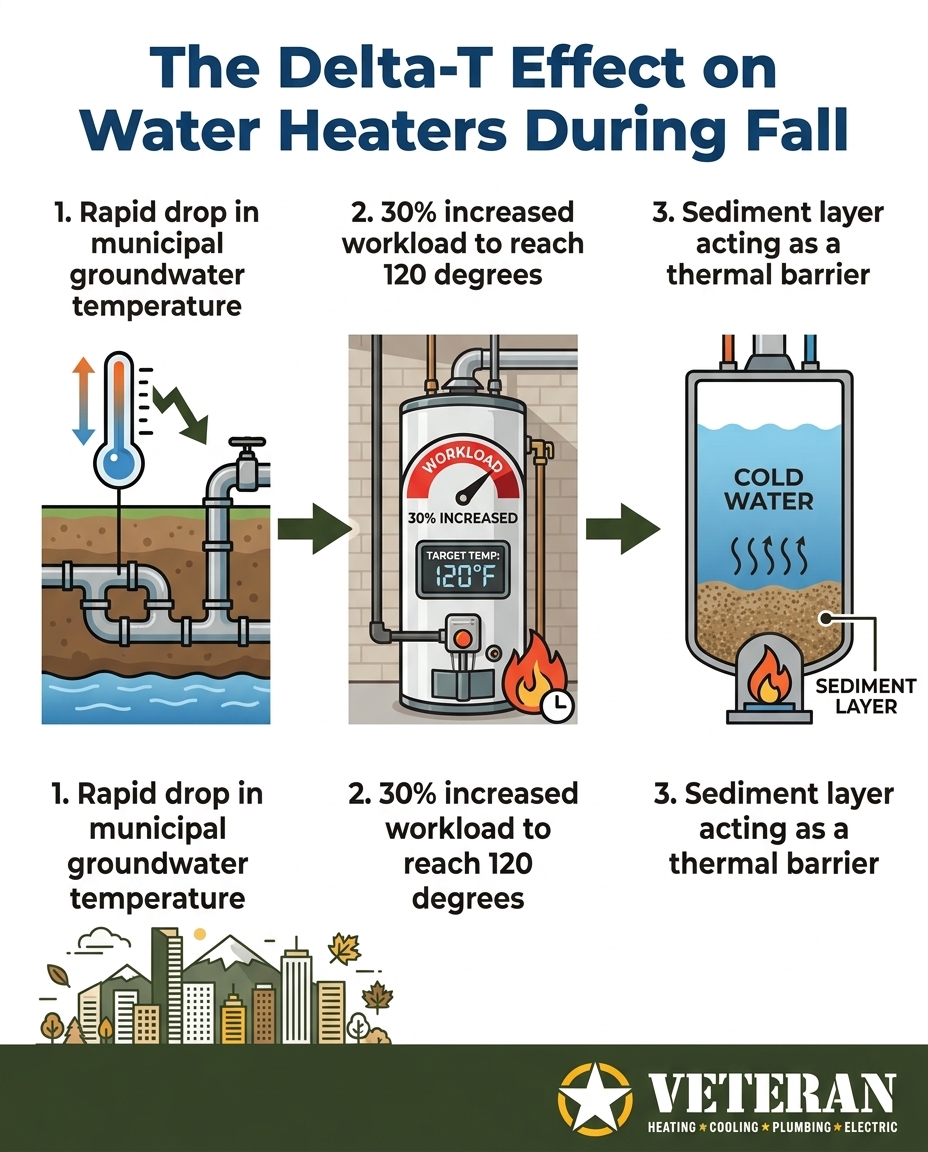
To understand why your plumbing seems to fail as soon as the leaves begin to change, you have to look at the science of water heating. The core concept at play here is known in the HVAC and plumbing industries as "Delta-T," which stands for temperature difference. In simple terms, Delta-T is the mathematical gap between the incoming cold water temperature from the municipal supply and the target 120-degree output you expect at your showerhead.
The Cause: Denver's Surface Water Reliance
Denver relies heavily on snowmelt and surface water reservoirs to supply the metropolitan area. Having serviced plumbing systems all across the Front Range, our team knows firsthand that this geographic reality means our municipal groundwater cools much faster than water in coastal areas or southern states, which often rely on deep, insulated underground aquifers. Because of Denver's high-altitude climate, surface reservoirs and the shallow municipal pipes that carry that water lose heat rapidly in early fall. When the ambient outdoor temperature plummets overnight, the temperature of the water traveling through the city mains drops right along with it.
The Problem: A Drastic Shift in Baseline Temperature
Consider the environment inside typical Denver basements. These lower levels are often uninsulated or partially finished, meaning the ambient air temperature drops significantly during a cold front. However, the drop in incoming city water temperature is far more severe than the drop in the basement's air temperature. In August, the water entering your home might be a comfortable 65 degrees. By late September, that incoming water can easily drop into the low 40s. The gap your system has to bridge suddenly widens by 20 degrees or more.
The Solution: Recognizing the Thermodynamic Gap
When you experience a lukewarm shower, it is crucial to recognize that your water heater's gas burner or electric heating elements are likely functioning normally. The mechanical components are doing exactly what they were designed to do. The problem is that the baseline starting temperature has plummeted. The unit is simply overwhelmed by the sheer volume of freezing water it is suddenly expected to heat, creating a temporary lag in performance rather than a permanent mechanical breakdown.
The Invisible Burden: A 30% Increase in Heating Workload
The sudden drop in incoming water temperature forces your heating elements to stay on significantly longer just to maintain the status quo. Because the water entering the tank is so much colder, the burner has to fire up more frequently and run for extended durations to bridge the widened Delta-T gap. This increased runtime translates to an invisible burden on your plumbing infrastructure.
Quantifying the struggle: During a typical September cold snap, your unit is suddenly forced to take on a 30% harder workload to reach the same shower temperature you enjoyed in July. This massive increase in energy consumption and mechanical strain happens entirely out of sight, down in the utility room, while you go about your daily routine.
• Mid-Summer — Incoming Water Temp: ~65°F — Target Output Temp: 120°F — Delta-T (The Gap): 55°F — System Workload: Normal / Baseline
• Early Fall (Cold Snap) — Incoming Water Temp: ~45°F — Target Output Temp: 120°F — Delta-T (The Gap): 75°F — System Workload: 30% Increase
• Deep Winter — Incoming Water Temp: ~35°F — Target Output Temp: 120°F — Delta-T (The Gap): 85°F — System Workload: Maximum Strain
This invisible burden often leads to sudden water heater failures during the fall schedule change. As families transition back to school and regular work routines, multiple people often need hot water at the exact same time every morning. In our experience, when you combine a 30% harder workload with a sudden spike in simultaneous household demand, the tank simply cannot recover fast enough to keep up. Reassure yourself that the tank is fighting physics, not necessarily suffering from a catastrophic mechanical failure. The system is just temporarily outmatched by the sudden shift in municipal water conditions.
Sediment Buildup: The Insulator Wasting Your Energy
While cold incoming groundwater is the primary thermodynamic issue, there is a common maintenance problem that severely exacerbates the struggle: sediment buildup. Colorado is known for having hard water, which contains high levels of dissolved minerals like calcium and magnesium. Over time, as water is heated inside your tank, these minerals separate from the liquid and settle at the bottom of the unit.
What We Check: The Sediment Layer
In traditional gas water heaters, the burner is located at the very bottom of the tank. In electric models, the lower heating element sits near the bottom. When hard water minerals settle, they form a thick, rock-like layer of sediment directly over the heat source. This sediment layer acts as a highly effective insulator between the gas burner and the water itself.
The efficiency drain: Illustrate the scenario in your mind: your system is already facing a 30% harder workload to heat freezing incoming water. Now, it has to push all of that thermal energy through an inch of calcified rock before the heat ever touches the water. Our crews pull buckets of this hard, rock-like sediment out of Denver water heaters every fall. Heating freezing incoming water through a layer of sediment is highly inefficient and wastes a massive amount of energy. The burner runs longer, the tank bottom overheats, and your utility bills spike.
Ignoring this buildup inside Denver basements is a guaranteed way to shorten the lifespan of your equipment. In fact, neglecting regular sediment flushes is a key factor in predicting your water heater's expiration date. When the burner constantly overheats trying to push past the sediment, the steel bottom of the tank weakens, eventually leading to stress fractures, leaks, and total structural failure.
Diagnostic Checklist: Is It Just Physics or a Failing Unit?
When you step into a cold shower during a September cold snap, it is easy to assume the worst. However, our plumbers always recommend a non-panic diagnostic approach to help you determine if your system just needs a simple seasonal flush or a professional repair. Use this checklist to evaluate what is happening down in the utility room.
1. Check the recovery time: Turn off all hot water taps in the home and wait 45 to 60 minutes. If the tank eventually produces hot water again but just takes much longer than it did in the summer, it is likely fighting the cold water drop and dealing with a 30% harder workload to reach the same shower temperature. The unit is functioning, just slowly.
2. Listen for popping or rumbling noises: Stand next to the tank while it is actively heating. If you hear loud popping, cracking, or rumbling sounds, this indicates severe sediment buildup. The noise is actually water trapped underneath the mineral layer boiling into steam and bursting through the crust. This requires an immediate professional flush.
3. Monitor for inconsistent temperatures or rapid depletion: If your shower is hot for exactly two minutes and then goes ice cold instantly, you might have a broken dip tube. The dip tube directs incoming cold water to the bottom of the tank for heating. If it breaks, cold water dumps directly into the top of the tank, instantly diluting your hot water supply.
4. Inspect the perimeter for leaks: Take a flashlight and check the floor around the base of the unit. If you see pooling water, rust trails, or active dripping from the pressure relief valve, turn off the water supply immediately. A leaking tank cannot be repaired; it crosses into the territory of emergency hot water heater repair and replacement.
Military-Grade Readiness: Pre-Season Preventive Discipline
There is a stark contrast between the stress of an unexpected cold shower on a busy Tuesday morning and the peace of mind that comes from proactive, disciplined home maintenance. At Veteran Heating, Cooling, Plumbing & Electric, we know that waiting for a vital home system to break before servicing it is a reactive approach that almost always costs more time, money, and frustration. Instead, treating your plumbing with military-grade readiness and preventive discipline ensures your home operates smoothly regardless of what the Colorado weather does.
Why Professional Preventive Discipline Matters
One local homeowner recently reached out to our team for general plumbing and HVAC service right before the seasons changed. We provided punctual, knowledgeable, and respectful service, explaining the entire maintenance process clearly. That kind of honest advice and top-tier workmanship delivered with integrity is exactly what preventive discipline looks like. It is about getting ahead of the problem before the first September cold snap ever arrives.
The value of a professional flush: Scheduling a professional seasonal tank flush removes that insulating layer of sediment before the deep winter freeze sets in. By clearing out the calcified minerals, the burner can transfer heat directly to the water, restoring the unit's efficiency and drastically reducing its workload.
Furthermore, a licensed professional can safely verify your thermostat settings. It is incredibly important that these settings are optimized for colder incoming water without risking scalding temperatures at the tap. Adjusting gas valves or electrical thermostats without proper training can lead to dangerous pressure buildups or water temperatures that cause severe burns in seconds. Punctual, honest advice from a trained technician ensures your unit is prepared for the winter, extending its lifespan and keeping your daily routine uninterrupted.
Frequently Asked Questions About Fall Water Heater Performance
Why does my hot water run out faster in the winter and early fall?
The short answer is that the incoming city water is significantly colder during these months. Because the baseline temperature of the water entering your home has dropped, the tank requires more time and energy to heat the water to the set temperature. Even if your tank holds 50 gallons, that reserve depletes faster because the system cannot recover the incoming cold water quickly enough to keep up with your shower.
How does groundwater temperature affect water heaters?
A drop in groundwater temperature increases the Delta-T, which is the temperature gap your system has to bridge. This forces the internal heating elements to run longer and work much harder. As a result, the immediate reserve of hot water is reduced, and the overall recovery time between showers stretches out, making the unit feel less effective.
Why is my basement water heater struggling in the fall?
Most Denver basements are uninsulated spaces that allow the tank to lose standby heat to the surrounding cold air. Combined with the freezing cold incoming municipal water, the unit faces a dual thermal challenge. It is fighting to keep the stored water hot against the cold room, while simultaneously trying to heat up the frigid water rushing in from the city mains.
Should I turn up my water heater thermostat in September?
While it might seem like a quick fix, raising the temperature on your own can increase scalding risks, especially for children and the elderly. A professional should assess the unit and perform a thorough sediment flush before altering any factory settings. Often, removing the sediment restores the heat transfer efficiency, making a dangerous thermostat adjustment completely unnecessary.
Can sediment buildup actually mimic a broken water heater?
Yes, severe sediment acts as a thick barrier that blocks heat transfer from the burner to the water. This causes lukewarm water, incredibly long recovery times, and high utility bills, even if the gas burner or electrical element is fully functional. Homeowners often assume the unit is dead, when it really just needs a comprehensive professional cleaning.
Secure Your Hot Water Supply Before the Freeze
Fighting physics is a natural part of the seasonal transition in Colorado, but your plumbing system doesn't have to struggle through it alone. The sudden drop in municipal groundwater during a September cold snap places a heavy burden on your equipment, but proactive maintenance can bridge that thermodynamic gap. By addressing sediment buildup and verifying your system's efficiency now, you eliminate the invisible strain that leads to premature breakdowns.
Do not wait for a complete system failure in the middle of a mid-winter freeze. Act now, while the weather is just beginning to turn, to ensure your home is fully prepared for the colder months ahead. Schedule a professional flush and inspection with the experts at Veteran Heating, Cooling, Plumbing & Electric today, and secure your daily comfort with disciplined, pre-season readiness. Also, be sure to ask our technicians about any generic energy rebates or utility incentive programs that may apply if you choose to upgrade to a more efficient system!
ABOUT Veteran Heating, Cooling, Plumbing & Electric
Veteran Heating, Cooling, Plumbing & Electric was founded on the belief that service should be personal, honest, and community-focused. Our team is built around integrity, professionalism, and a true commitment to your home’s comfort and safety.
Led by a U.S. Army veteran with over 30 years of industry experience, we’re proud to remain locally owned and operated. Every technician, plumber, and electrician is EPA-certified, background checked, and driven to exceed expectations.
- 24/7 ServiceWe offer weekend & 24/7 emergency service. We’re here whenever you need us—day, night, or weekend, no exceptions.
- $0 Trip FeesNo dispatch or trip fees. You’ll never pay just for us to show up—service starts when the work does.
OUR SERVICES
AIR CONDITIONING
.jpg)
We offer specialty and seasonal services like indoor air quality upgrades, pre-winter furnace checks, and summer AC tune-ups to keep your home prepared year-round.
Our Primary Air Conditioning Services Include:
Don't see the service you need? Call our Team today!
PLUMBING
From leaks to full system installs, our plumbing services cover everything you need for a safe, reliable home water system, 24/7.
Our Primary Plumbing Include:
- Water Heater Replacement
- Water Heater Repair
- Trenchless Sewer Line
- Water Filtration
- Slab Leak
- Sewer Line Repair
Don't see the service you need? Call our Team today!
ELECTRICAL

Our electrical services ensure your home stays safe and powered, from routine fixes to complete system upgrades.
Our Primary Electrical Services Include:
- House Rewiring
- Electrician
- Electric Panel Upgrade
- Electric Panel Replacement
- EV Chargers
- Whole House Generator
Don't see the service you need? Call our Team today!
HEATING
.jpg)
We install, repair, and maintain heating & furnace systems with expert care to keep your Colorado home comfortable and energy-efficient year-round.
Our Primary Heating Services Include:
- Heating Installation
- Heating Replacement
- Heating Maintenance
- Heating Repair
- Heating Service
- Heating Tune-Up
Don't see the service you need? Call our Team today!