Preparing for the Fall Freeze: The Hidden Electrical Hurdle in Aurora
When addressing the specific electrical upgrade needs of Aurora homes preparing for new heat pumps this fall, our team at Veteran Heating, Cooling, Plumbing & Electric frequently sees homeowners hit an unexpected roadblock. You scheduled your installation to beat the cold weather, only to have a technician inform you that your current electrical panel cannot safely power the new system. Your house is simply out of available electrical bandwidth. This discovery can feel frustrating, especially when you are eager to transition to a more efficient heating solution before the temperatures drop. However, understanding why this limitation exists is the first step toward a safe and reliable winter.
Upgrading your electrical panel is not an optional add-on or a luxury upgrade; it is a critical foundation for modern, safe, and reliable winter heating. Your electrical panel acts as the heart of your home's power distribution. When you add a high-demand appliance like a modern heat pump, you fundamentally change how power flows through your house. If the heart of that system is too small to handle the volume, the entire network is at risk of failing.
Tackling this electrical hurdle during the early fall pre-heating-season is absolutely crucial. Addressing the limitation early prevents catastrophic emergency failures when the outdoor temperatures inevitably plummet. You do not want to discover your electrical panel is inadequate on the first freezing night of the year, leaving you without heat and scrambling for an emergency repair. By taking a proactive approach now, you guarantee that your new heating system will operate flawlessly the moment you need it.
The 100-Amp Reality in Older Aurora Subdivisions
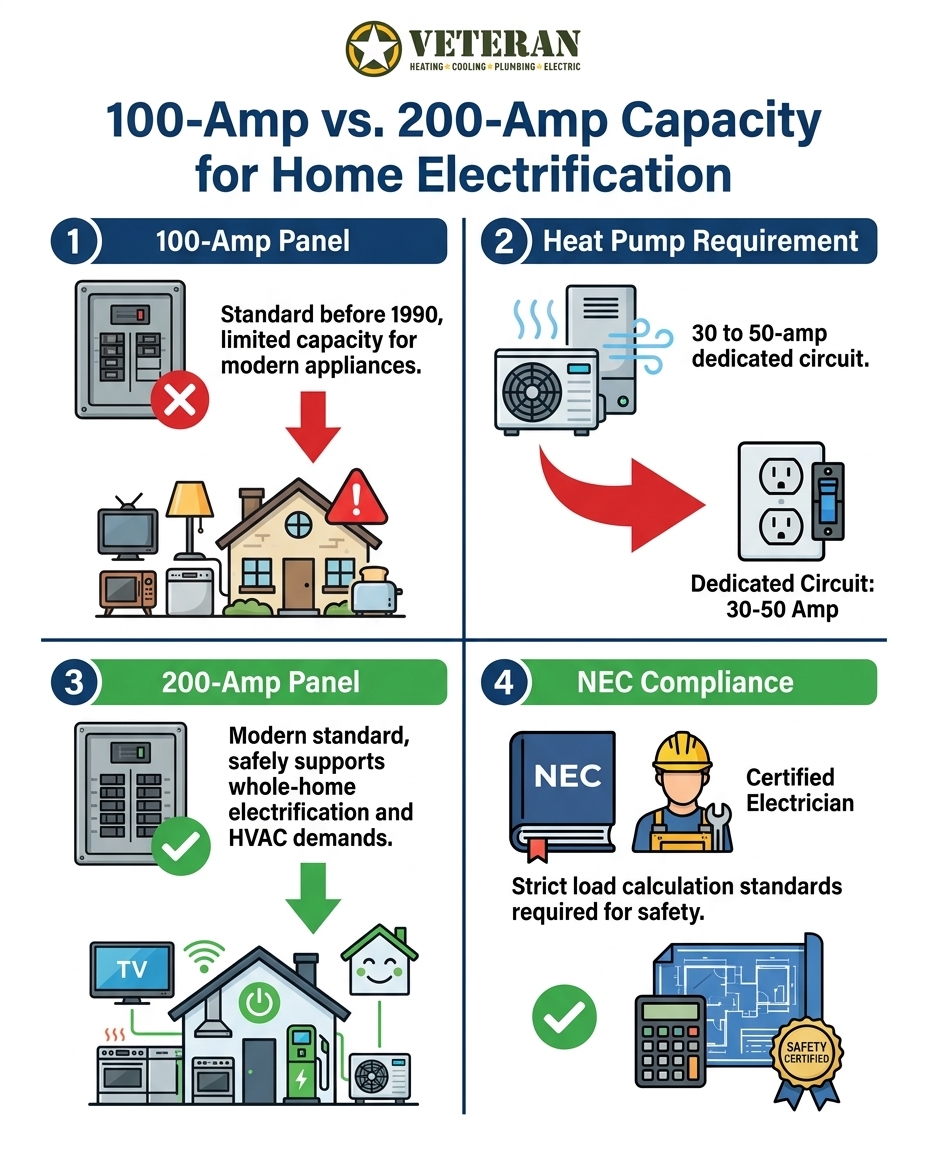
To understand why your electrical panel is struggling, you have to look at the historical context of local housing infrastructure. In our years of serving the Denver and Aurora areas, our team has seen firsthand how many homes built before 1990 were generally equipped with 100-amp electrical panels. At the time of construction, this was considered the gold standard. These original electrical panels were perfectly designed for the electrical loads of the 1970s and 1980s, a time when households consumed significantly less power.
In those decades, a typical home might have a single television, a basic refrigerator, a standard electric range, and conventional incandescent lighting. The concept of whole-home electrification did not exist. Today, our daily power consumption has skyrocketed. We run multiple high-definition televisions, home offices with dual monitors, smart appliances, electric water heaters, and even electric vehicle chargers. When you add a high-efficiency HVAC system into the mix, you quickly exceed the ampacity limits of that original 100-amp service.
The shift in household power consumption:
• 1980s Electrical Demands: Basic lighting, minimal small appliances, gas furnaces (which use very little electricity just to run the blower motor), and standard kitchen appliances.
• Modern Electrical Demands: High-draw smart appliances, electric induction stoves, electric vehicle chargers, home servers, and continuous-draw electric heating systems.
• The Bottleneck Effect: Trying to push modern electrical demands through a 1980s panel is like trying to merge five lanes of rush-hour traffic into a single lane. The system simply cannot process the volume safely.
This is a widespread infrastructural reality across many older Aurora subdivisions, not an isolated issue unique to your property. Our technicians have serviced entire neighborhoods built with this exact 100-amp specification. If your home still has its original gray metal breaker box from the 1970s or 1980s, it is almost certainly a 100-amp panel. Recognizing this reality helps clarify why an upgrade is a standard part of modernizing your home's comfort systems.
Why Modern Heat Pumps Demand a 200-Amp Capacity
The Problem: You want to install a highly efficient modern heat pump to keep your home comfortable year-round, but your existing electrical system lacks the capacity to support it. Heat pumps are incredibly efficient, but they still require a substantial, steady flow of electricity to move thermal energy into your home.
The Cause: Modern heat pumps typically require a dedicated 30 to 50-amp circuit to operate efficiently. If you look at the raw math, the issue becomes obvious. If your home has a total capacity of 100 amps, and your new heat pump requires 50 amps, you have instantly consumed half of your home's total available power for a single appliance. That leaves a mere 50 amps to power your electric oven (often 30 to 40 amps), your electric dryer (30 amps), your water heater, your refrigerator, and every light and outlet in your house. The math simply does not work. When multiple appliances run simultaneously, the demand exceeds the supply, causing breakers to trip to prevent a fire.
The Solution: Upgrading to a 200-amp panel provides the necessary bandwidth to run your heat pump alongside standard household electrical demands without strain. This upgrade doubles your home's electrical capacity. It allows your heat pump to draw its required power smoothly while leaving plenty of overhead for cooking, laundry, and daily living. We always remind our customers that understanding how a heat pump works in a four-season climate means recognizing that these systems operate year-round, utilizing this electrical capacity continuously across both summer cooling and winter heating seasons.
Understanding Dedicated Circuits and Continuous Loads
To fully grasp the 100-amp vs 200-amp capacity debate, you need to understand two critical electrical concepts: dedicated circuits and continuous loads.
A dedicated circuit is an electrical line that runs directly from your main breaker panel to a single appliance. It serves no other outlets or devices. High-draw appliances like heat pumps require a dedicated circuit because they pull a large surge of electricity when the compressor starts up. If other devices were on the same circuit, that startup surge would instantly overload the wire and trip the breaker. Providing a dedicated circuit ensures the heat pump always has unrestricted access to the power it needs to start and run safely.
Furthermore, heat pumps are classified as continuous electrical loads during extreme weather. A continuous load is defined as any electrical draw that runs for three hours or more without stopping. When the temperature drops significantly, your heat pump will run continuously to maintain your indoor climate. Electrical codes dictate that continuous loads can only utilize 80% of a circuit's total rated capacity to prevent the physical wires from overheating. This strict safety margin further reduces the usable power in a 100-amp panel, making the transition to a 200-amp system an absolute necessity for safe, continuous operation.
The Dangers of Overloading an Outdated Electrical Panel
Attempting to run a high-capacity heat pump on an inadequate electrical system is not just inefficient; it is actively dangerous. Our electricians frequently respond to calls where a pushed 100-amp panel begins to exhibit clear warning signs before an ultimate failure occurs. Ignoring these symptoms puts your property and your comfort at severe risk.
The most common symptom of an overloaded panel is frequently tripping breakers. A circuit breaker is a safety device designed to shut off power when the electrical current exceeds the wire's safe carrying capacity. If your main breaker trips when the heat pump and the electric oven run at the same time, the system is doing its job to prevent a fire. However, relying on the breaker to constantly save the system from an overload causes immense wear and tear on the electrical components.
Other symptoms include dimming or flickering lights when the HVAC system kicks on, buzzing sounds originating from the breaker box, and physical heat radiating from the panel cover. These are signs that the internal wiring is overheating. When wires overheat, the protective insulation melts away, exposing bare copper. This creates a severe risk for electrical arcing and hidden electrical fires inside your walls.
• Frequently Tripping Breakers — What It Means Behind the Walls: The electrical demand is exceeding the safe capacity of the wire, forcing the safety switch to cut power.
• Dimming Lights on Startup — What It Means Behind the Walls: The heat pump's compressor is pulling so much voltage that the rest of the house experiences a temporary brownout.
• Buzzing or Humming Panel — What It Means Behind the Walls: Loose connections or overloaded breakers are vibrating due to excessive electrical current.
• Panel is Hot to the Touch — What It Means Behind the Walls: Wires are actively overheating, melting insulation, and creating a severe fire hazard.
With rapid fall temperature drops in Colorado, these electrical risks compound into a serious comfort and safety hazard. An electrical failure due to an overloaded panel is highly dangerous when the first sudden freeze hits. Losing your primary source of heat in the middle of a freezing night because your outdated panel finally failed is a miserable and preventable experience. Upgrading the panel during the early fall pre-heating-season eliminates these risks, ensuring uninterrupted comfort and peace of mind when the harsh winter weather arrives.
National Electrical Code (NEC) Compliance and Precision Installation
Upgrading from a 100-amp vs 200-amp capacity is not a casual home improvement project; it is a highly regulated structural modification. Electrical upgrades are governed by strict National Electrical Code (NEC) load calculation standards. The NEC provides the legal and safety framework that dictates exactly how much electrical capacity a home must have based on its square footage, the number of circuits, and the specific appliances installed.
A licensed professional must perform these complex load calculations to ensure the home's electrical system is legally and safely compliant. They must account for the continuous load of the new heat pump, the intermittent loads of kitchen appliances, and the baseline draw of lighting and outlets. This mathematical proof guarantees that the new 200-amp panel will safely handle the home's peak electrical demand without ever risking an overload.
Cutting corners on electrical work is never an option, especially for high-draw appliances like heat pumps. At Veteran Heating, Cooling, Plumbing & Electric, we bring veteran-led precision and strict code compliance to ensure that these complex electrical upgrades are done safely and correctly the first time. Discipline, accountability, and a refusal to take shortcuts are mandatory traits for our team when dealing with high-voltage residential systems. Our knowledgeable technicians will clearly explain these complex requirements to you, walking you through the load calculations so you understand exactly why the upgrade is required for your safety.
Reliability in these installations is paramount. Recently, one of our homeowners reached out on a freezing winter day needing urgent service for their system. One of our technicians arrived the same day, proving to be efficient, knowledgeable, and professional while restoring their system safely. That level of rapid, precise response is exactly what you should expect when dealing with critical home infrastructure. Precision installation guarantees that your new electrical panel and heat pump will communicate flawlessly, providing steady, reliable heat when you need it most.
Navigating Generic Tax Credits and Your Fall Installation Timeline
Planning your electrical upgrade and heat pump installation requires careful timing. We advise our customers to schedule electrical panel assessments and heat pump installations early in the fall, well before the winter rush begins. Once the first major freeze hits, HVAC and electrical schedules fill up rapidly with emergency no-heat calls. By securing your spot on the schedule early, you ensure your home is fully prepared before the severe weather arrives.
As you plan this transition for your home in one of the many older Aurora subdivisions, you should also look into financial incentives that can help offset the initial investment. Federal tax credits may apply to qualifying heat pump installations and related electrical panel upgrades. Many energy efficiency programs recognize that upgrading an electrical panel is often a mandatory prerequisite for installing high-efficiency electric heating, and they have structured their incentives accordingly.
Your Fall Installation Checklist:
1. Schedule an Assessment: Have a licensed professional from our team evaluate your current electrical panel and perform an NEC load calculation.
2. Verify Incentives: Consult with a tax professional or your local utility provider to verify current generic incentive programs and confirm what documentation you will need.
3. Plan the Outage: Coordinate with your installation team. A panel upgrade typically requires the power to be shut off to your home for several hours while the new equipment is installed and inspected.
4. Complete the Installation: Have the new panel and heat pump installed simultaneously or in close sequence to minimize disruption.
A professional, well-executed installation process ensures the system is ready for the upcoming cold weather. During a previous project, one of our customers needed a new heat pump installed. Three of our technicians arrived to professionally install the system, taking the time to answer all questions and ensure the homeowner was completely comfortable with the new setup. That level of thorough communication and professional execution is exactly what you need to navigate a major home upgrade successfully. By acting now, you secure a warm, safe, and electrically sound home for the winter ahead.
Frequently Asked Questions
Do I need to upgrade my electrical panel for a heat pump?
In many older homes, upgrading the electrical panel is a strict requirement for safely installing a heat pump. If your home currently has a 100-amp panel, it likely lacks the capacity to support the high electrical draw of a modern heating system alongside your other appliances. A licensed professional must perform a load calculation to determine your exact needs.
Can a 100-amp panel handle a heat pump in a smaller home?
It is highly unlikely that a 100-amp panel can safely handle a modern heat pump, even in a smaller home. While the square footage might be small, the home still contains an electric oven, dryer, water heater, and standard appliances that consume the majority of that 100-amp capacity. Adding a heat pump usually pushes the total demand well over the safe limit, requiring an upgrade.
How many amps does a heat pump use on average?
A modern residential heat pump typically requires a dedicated circuit ranging from 30 to 50 amps, depending on the size and efficiency rating of the unit. During startup and periods of continuous operation in extreme cold, the system draws a significant amount of power. This dedicated circuit ensures the heat pump has unrestricted access to the electricity it needs without overloading the rest of the house.
Why do I need 200 amps for a heat pump if my current panel seems fine?
Your current panel seems fine because it is only powering your current appliances. When you add a heat pump, you are introducing a massive new continuous electrical load that your original panel was never designed to handle. Upgrading to 200 amps provides the necessary overhead to run the heat pump safely without causing breakers to trip or wires to overheat.
What are the signs my Aurora home needs an electrical panel upgrade?
Common signs include frequently tripping breakers, lights that dim or flicker when large appliances turn on, and a breaker box that feels warm to the touch. If you live in an older subdivision and still have the original gray metal breaker box, our technicians can almost guarantee it is a 100-amp system. Any buzzing sounds or burning smells near the panel require immediate professional attention.
Are there tax credits available for upgrading my electrical panel for a heat pump?
Yes, federal tax credits may apply to qualifying heat pump installations and the electrical panel upgrades required to support them. Because these programs change frequently and have specific qualification criteria, you should consult with a tax professional or your local utility provider. They can help you verify current generic incentive programs and ensure you have the proper documentation.
ABOUT Veteran Heating, Cooling, Plumbing & Electric
Veteran Heating, Cooling, Plumbing & Electric was founded on the belief that service should be personal, honest, and community-focused. Our team is built around integrity, professionalism, and a true commitment to your home’s comfort and safety.
Led by a U.S. Army veteran with over 30 years of industry experience, we’re proud to remain locally owned and operated. Every technician, plumber, and electrician is EPA-certified, background checked, and driven to exceed expectations.
- 24/7 ServiceWe offer weekend & 24/7 emergency service. We’re here whenever you need us—day, night, or weekend, no exceptions.
- $0 Trip FeesNo dispatch or trip fees. You’ll never pay just for us to show up—service starts when the work does.
OUR SERVICES
AIR CONDITIONING
.jpg)
We offer specialty and seasonal services like indoor air quality upgrades, pre-winter furnace checks, and summer AC tune-ups to keep your home prepared year-round.
Our Primary Air Conditioning Services Include:
Don't see the service you need? Call our Team today!
PLUMBING
From leaks to full system installs, our plumbing services cover everything you need for a safe, reliable home water system, 24/7.
Our Primary Plumbing Include:
- Water Heater Replacement
- Water Heater Repair
- Trenchless Sewer Line
- Water Filtration
- Slab Leak
- Sewer Line Repair
Don't see the service you need? Call our Team today!
ELECTRICAL

Our electrical services ensure your home stays safe and powered, from routine fixes to complete system upgrades.
Our Primary Electrical Services Include:
- House Rewiring
- Electrician
- Electric Panel Upgrade
- Electric Panel Replacement
- EV Chargers
- Whole House Generator
Don't see the service you need? Call our Team today!
HEATING
.jpg)
We install, repair, and maintain heating & furnace systems with expert care to keep your Colorado home comfortable and energy-efficient year-round.
Our Primary Heating Services Include:
- Heating Installation
- Heating Replacement
- Heating Maintenance
- Heating Repair
- Heating Service
- Heating Tune-Up
Don't see the service you need? Call our Team today!