What You Need to Know About Hot Water Installation in Denver Metro
Installation hot water systems in your home is more straightforward than most people think — but getting it right matters. Whether your current water heater is aging out, leaking, or simply not keeping up with your household's demand, knowing the key steps can save you time, stress, and money.
Here's a quick overview of how hot water installation works:
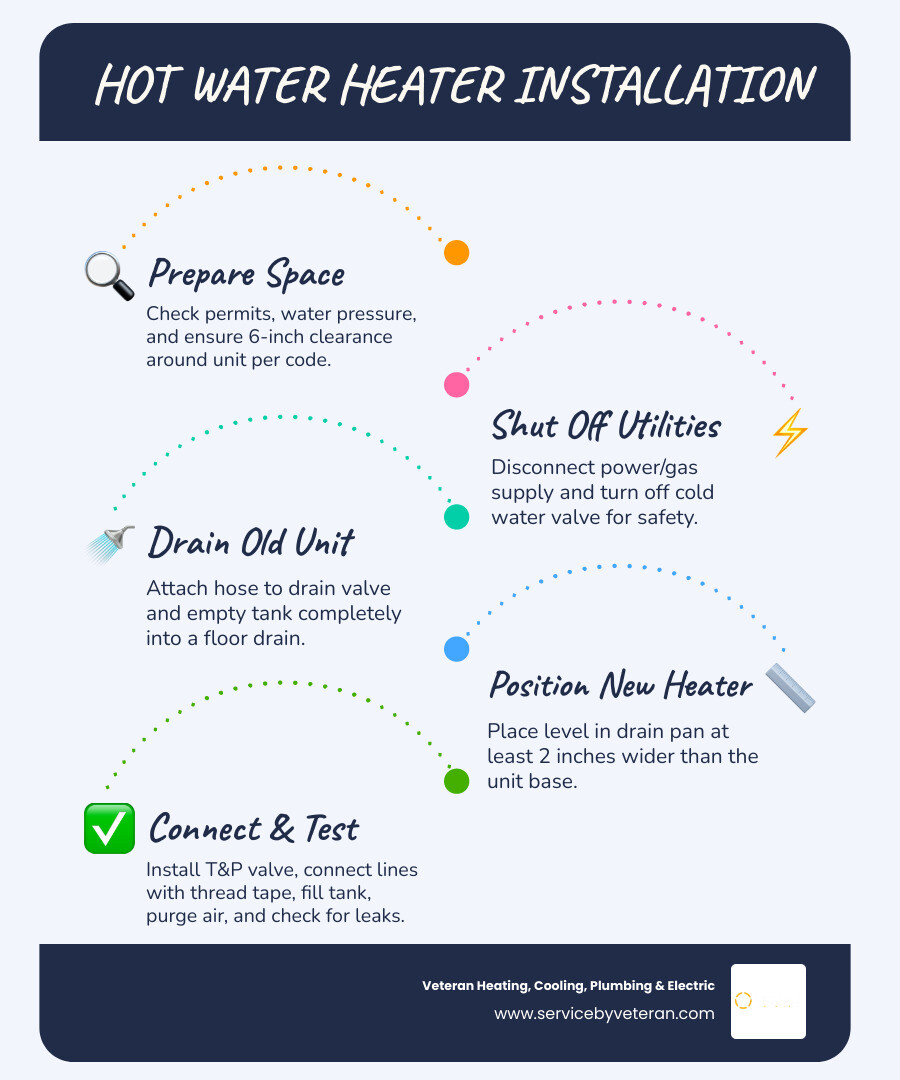
1. Prepare your space - Check local permits, water pressure, and clearance requirements
2. Shut off utilities - Turn off power or gas and the cold water supply
3. Drain and remove the old unit - Connect a garden hose to the drain valve and empty the tank
4. Position the new water heater - Place it level in a drain pan at least 2 inches wider than the unit
5. Connect water lines and T&P valve - Use proper fittings and thread tape for a secure seal
6. Fill the tank and purge air - Run a hot faucet for 3 minutes before restoring power
7. Power on and test - Set thermostat to 120°F and inspect all connections for leaks
Electric water heaters typically last 10 to 15 years, and most tank-style units won't make it past 20 — even with good maintenance. If yours is showing its age, this guide walks you through every step of the replacement process safely and clearly.
I'm Mike Townsend, a U.S. Army veteran and founder of Veteran Heating, Cooling, Plumbing & Electric, serving homeowners across the Denver Metro area with the same precision I once applied to managing complex cooling systems in the military. My team and I have helped countless Denver-area homeowners navigate hot water installation the right way — safely, up to code, and built to last. Let's walk through exactly how it's done.
Preparing Your Home for a New Installation Hot Water System
Before we even touch a wrench, we need to make sure the "battlefield" is ready. In the Denver Metro area, including cities like Aurora, Lakewood, and Centennial, local building codes are very specific about how a installation hot water project must be handled.
Gathering the Right Tools and Materials
You don’t want to be halfway through a job and realize you’re missing a critical fitting. For a standard installation, we recommend having the following ready:
• Tools: Pipe wrench, adjustable wrench, pipe cutter, non-contact voltage tester, screwdriver, and a garden hose.
• Materials: The new water heater, a drain pan, a Temperature and Pressure (T&P) relief valve (usually included), flexible water supply connectors, Teflon thread tape, and potentially a thermal expansion tank.
Safety First: Power and Water
Safety is our top priority. For electric units, you must head to your circuit breaker and turn off the power. Use a non-contact voltage tester to verify the wires at the water heater are truly "dead." For gas units, turn the gas supply valve to the "off" position. Finally, shut off the main water supply to the house or the dedicated cold water shut-off valve above the heater.
Permits and Local Codes
Don't skip the paperwork! Most municipalities in the Denver Metro area, such as Arvada and Broomfield, require a permit for water heater replacement. This ensures that a city inspector can verify the unit is vented correctly and braced for safety. For more details on local requirements, check out our Water Heater Installation Aurora CO Guide.

The 7-Step Guide to Replacing Your Water Heater
Step 1: Drain the Tank
Attach a garden hose to the drain valve at the bottom of the old tank. Run the other end to a floor drain or outside. Open a hot water faucet somewhere in the house to let air in, which helps the tank drain faster. Be careful—the water coming out will be hot!
Step 2: Disconnect and Remove
Once empty, disconnect the water supply lines and the electrical wiring (or gas line). If you have a gas unit, you’ll also need to disconnect the vent hood. Use an appliance dolly to move the old unit out of the way. Even "empty" tanks often have heavy sediment at the bottom, so use your legs, not your back!
Step 3: Prepare the New Unit
Before sliding the new heater into place, install the T&P relief valve if it isn't already attached. This valve is a critical safety feature that prevents the tank from exploding if pressure builds too high. You should also install "heat trap" fittings if your unit didn't come with them; these help prevent hot water from wandering out of the tank when not in use, saving you energy.
Step 4: Position and Level
Place the new heater into a metal drain pan. This pan should be at least 2 inches wider than the tank to catch any future leaks. In our area, particularly in places like Highlands Ranch or Castle Rock, making sure the unit is level is vital for proper operation. Use plastic shims if the floor is uneven. For a deeper dive into these initial steps, refer to our Water Heater Installation Guide 2025.
Step 5: Finalizing the Installation Hot Water Connections
This is where the magic happens. We prefer using flexible stainless steel connectors because they are easier to work with and provide some "give" during minor seismic shifts.
• Apply Teflon Tape: Wrap the threads of the water heater nipples with Teflon tape or pipe joint compound.
• Connect Water Lines: Attach the cold water inlet and the hot water outlet. Ensure you don't cross-thread the fittings.
• Install the Discharge Pipe: Attach a pipe to the T&P valve that runs down toward the floor drain. This pipe must terminate 1 to 6 inches above the floor to prevent contamination.
• Dielectric Unions: If you are connecting copper pipes directly to galvanized steel nipples, always use dielectric unions to prevent "galvanic corrosion," which can eat through your pipes in just a few years.
For more specific advice on Denver-area plumbing standards, see our Water Heater Replacement Denver CO Guide.
Step 6: Purging Air and Powering the System
CRITICAL STEP: Never turn on the power or gas until the tank is completely full of water. If you turn on an electric heater while the tank is empty, you will "dry fire" and destroy the upper heating element in seconds.
1. Turn the water supply back on.
2. Open a hot water faucet in your kitchen or bathroom.
3. Wait for a steady stream of water to flow without any "burping" or air bubbles. We recommend running it for at least 3 minutes.
4. Once the air is purged, you can safely connect the wiring or light the pilot.
Step 7: Final Checks and Calibration
Set the thermostat to 120°F. This is the "sweet spot" for most homes—it’s hot enough to kill bacteria but cool enough to prevent accidental scalding. After an hour or two, check all your connections again for any tiny drips.
Gas vs. Electric: Understanding the Installation Differences
Choosing between gas and electric often depends on what is already in your home. However, if you're considering a switch, the installation hot water process changes significantly.
• Power Source — Electric Water Heater: Dedicated 240V or 120V circuit — Gas Water Heater: Natural gas or Propane line
• Venting — Electric Water Heater: None required — Gas Water Heater: Must vent to chimney or side wall
• Safety Concerns — Electric Water Heater: Wiring/Electrocution — Gas Water Heater: Carbon Monoxide/Gas leaks
• Efficiency — Electric Water Heater: High (especially Heat Pumps) — Gas Water Heater: Moderate to High (Tankless)
• Recovery Rate — Electric Water Heater: Slower — Gas Water Heater: Faster
Gas heaters require a constant supply of "combustion air" and a way to safely exhaust burnt gases. In Denver Metro homes, especially in tighter, newer constructions in Aurora or Littleton, proper venting is a life-safety issue. If you're going tankless, the gas line often needs to be upgraded from a 1/2-inch pipe to a 1-inch pipe to handle the higher BTU demand. You can learn more about these "on-demand" systems in our Tankless Water Heater Installation Guide.
Managing Thermal Expansion and Water Pressure
One thing we see often in the Denver Metro area is high city water pressure. While it’s great for a powerful shower, it’s tough on your plumbing.
• Ideal Pressure: Your home should stay between 50 and 60 PSI. If your pressure is over 80 PSI, you need a pressure-reducing valve (PRV).
• Thermal Expansion Tanks: When water is heated, it expands. In a "closed" plumbing system (common in modern homes), that extra volume has nowhere to go, putting massive stress on your tank and pipes. A small 2-gallon expansion tank (for heaters up to 50 gallons) acts like a shock absorber for your plumbing.
• Seismic Bracing: In Colorado, code requires seismic straps to be installed on the upper and lower thirds of the tank to prevent it from tipping over during an earthquake.
The Benefits of a Professional Installation Hot Water Service
While many homeowners are handy, there are major advantages to calling in the pros at Veteran Heating, Cooling, Plumbing & Electric:
• Lifetime Warranty: We provide a lifetime warranty on all parts and labor. If we install it, we stand by it—forever.
• Veteran Integrity: As a veteran-owned company, we bring military-grade discipline and honesty to every job. No hidden fees, no "upselling" you don't need.
• Code Compliance: We handle the permits and ensure everything is up to the latest 2026 standards.
• 24/7 Availability: If your water heater bursts at 2 AM on a Sunday in Golden or Arvada, we are available to help without dispatch fees.
• Safety: Handling gas lines and high-voltage electricity carries real risks. Our EPA-certified and background-checked technicians ensure your family is safe.
If you'd rather spend your weekend enjoying the Colorado outdoors than wrestling with a heavy tank, we’re here to take the load off your shoulders. Check out our Water Heater Installation service page for more information.
Frequently Asked Questions
How long does a typical water heater installation take?
For a standard tank-for-tank replacement, our pros usually have the job done in 2 to 3 hours. This includes removing the old unit, installing the new one, and testing the system. If we’re switching fuel sources (like electric to gas) or moving the location, it can take a bit longer.
What are the signs that I need to replace my water heater?
Look for the "Big Five" signs:
1. Age: If it's over 10-15 years old, it's on borrowed time.
2. Rusty Water: This indicates the internal tank is corroding.
3. Noises: Rumbling or popping sounds mean sediment has built up and is "cooking" at the bottom.
4. Leaks: Any water pooling around the base is a sign of a structural failure.
5. Cold Showers: If you’re running out of hot water faster than you used to, the heating elements or burner are likely failing.
Do I need a permit for water heater installation in Colorado?
Yes. Whether you live in Denver, Littleton, or Columbine, a permit is required for a new installation hot water system. This isn't just a "money grab" by the city—it’s a safety check. An inspector will verify that the gas isn't leaking, the venting is correct, and the T&P valve is installed properly to prevent accidents.
Should I consider a heat pump water heater?
Absolutely. Modern Rheem Hybrid Heat Pump Water Heaters are up to 4x more energy-efficient than standard electric tanks. In fact, many homeowners in the Denver Metro area are eligible for tax rebates of up to $1,750 for making the switch. They are a fantastic choice for our climate and can significantly lower your monthly utility bills.
Conclusion
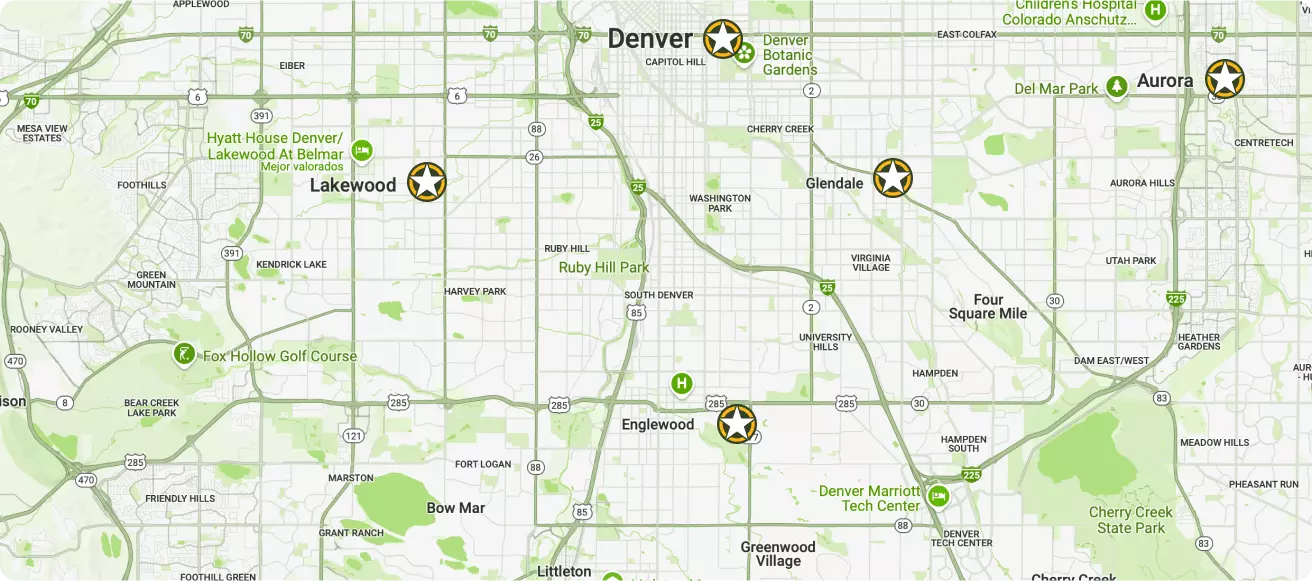
At Veteran Heating, Cooling, Plumbing & Electric, we believe that every homeowner deserves a reliable, safe, and efficient hot water system. From the initial pressure check to the final thermostat calibration, we treat your home with the respect it deserves. We are proud to serve our neighbors in Arvada, Aurora, Broomfield, Castle Rock, Centennial, Columbine, Denver, Golden, Greenwood Village, Highlands Ranch, Lakewood, and Littleton.
Whether you decide to tackle this project yourself or want the peace of mind that comes with a professional installation hot water service, we hope this guide has been helpful. We offer a 10% discount for veterans, seniors, and first responders, and our lifetime warranty means you’ll never have to worry about your water heater again.
Ready for a stress-free upgrade? More info about plumbing services is just a click away, or you can give us a call 24/7. We’re ready to serve!
ABOUT Veteran Heating, Cooling, Plumbing & Electric
Veteran Heating, Cooling, Plumbing & Electric was founded on the belief that service should be personal, honest, and community-focused. Our team is built around integrity, professionalism, and a true commitment to your home’s comfort and safety.
Led by a U.S. Army veteran with over 30 years of industry experience, we’re proud to remain locally owned and operated. Every technician, plumber, and electrician is EPA-certified, background checked, and driven to exceed expectations.
- 24/7 ServiceWe offer weekend & 24/7 emergency service. We’re here whenever you need us—day, night, or weekend, no exceptions.
- $0 Trip FeesNo dispatch or trip fees. You’ll never pay just for us to show up—service starts when the work does.
OUR SERVICES
AIR CONDITIONING
.jpg)
We offer specialty and seasonal services like indoor air quality upgrades, pre-winter furnace checks, and summer AC tune-ups to keep your home prepared year-round.
Our Primary Air Conditioning Services Include:
Don't see the service you need? Call our Team today!
PLUMBING
From leaks to full system installs, our plumbing services cover everything you need for a safe, reliable home water system, 24/7.
Our Primary Plumbing Include:
- Water Heater Replacement
- Water Heater Repair
- Trenchless Sewer Line
- Water Filtration
- Slab Leak
- Sewer Line Repair
Don't see the service you need? Call our Team today!
ELECTRICAL

Our electrical services ensure your home stays safe and powered, from routine fixes to complete system upgrades.
Our Primary Electrical Services Include:
- House Rewiring
- Electrician
- Electric Panel Upgrade
- Electric Panel Replacement
- EV Chargers
- Whole House Generator
Don't see the service you need? Call our Team today!
HEATING
.jpg)
We install, repair, and maintain heating & furnace systems with expert care to keep your Colorado home comfortable and energy-efficient year-round.
Our Primary Heating Services Include:
- Heating Installation
- Heating Replacement
- Heating Maintenance
- Heating Repair
- Heating Service
- Heating Tune-Up
Don't see the service you need? Call our Team today!