The Fall Dilemma: To Cover or Not to Cover Your AC
Early fall in the Front Range brings a familiar shift in the weather, and prepping your outdoor AC unit for hibernation: what actually needs to be covered in Denver is a question our dispatchers at Veteran Heating, Cooling, Plumbing & Electric hear every single September. As the leaves begin to drop and the first frost approaches, you naturally want to protect your expensive home investments from the harsh winter weather ahead. It feels completely counterintuitive to leave a sophisticated piece of mechanical equipment exposed to impending blizzards, freezing rain, and heavy snowdrifts. Because of this protective instinct, many homeowners head to the hardware store to purchase heavy-duty plastic tarps, bungee cords, and specialized canvas wraps to tightly bundle up their cooling systems until spring.
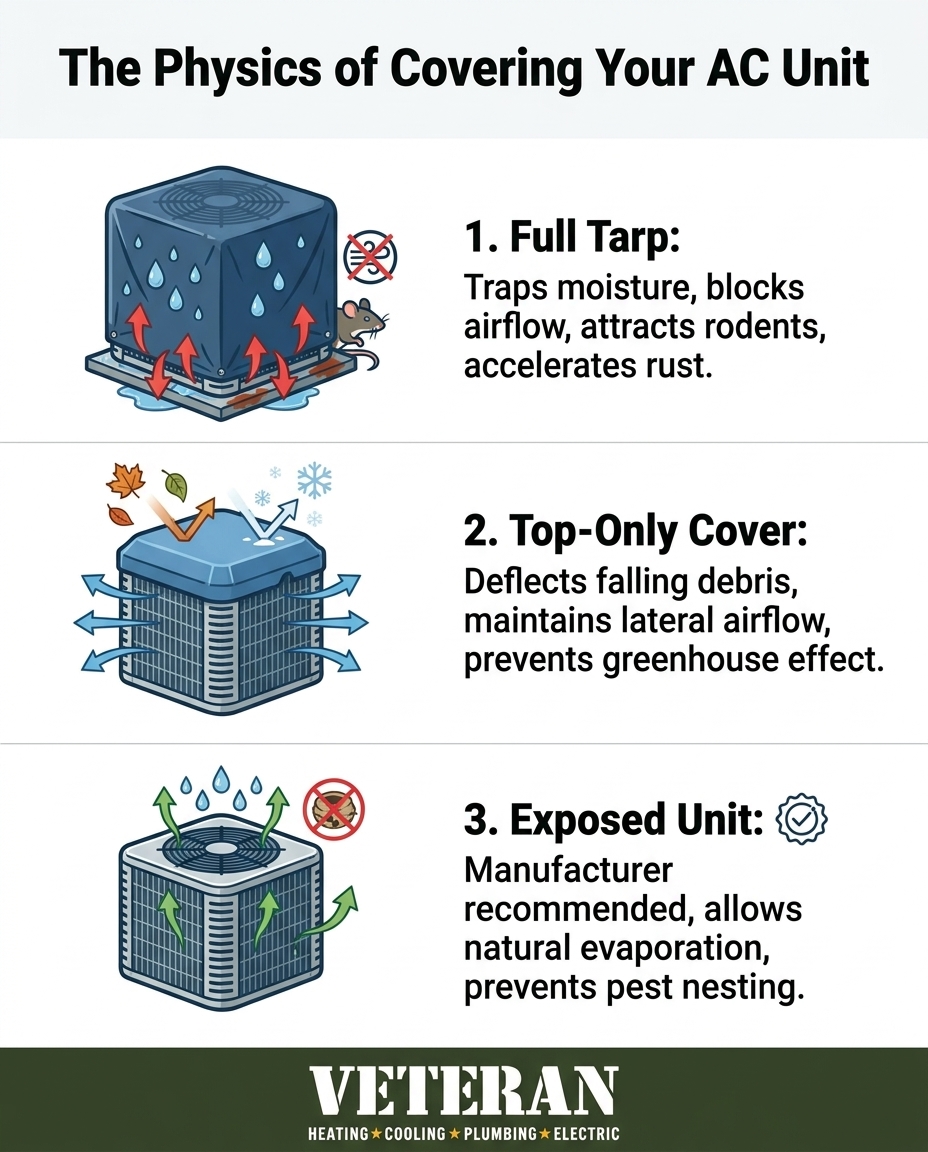
Here is the thing our technicians see year after year: wrapping your system in a heavy plastic tarp inadvertently traps condensation, creating a concrete problem that is far more destructive than snow. The primary decision point you face right now is whether to use a full cover, a top-only cover, or leave the equipment entirely exposed to the elements. While the urge to swaddle your air conditioner is understandable, relying on facts, physics, and professional field experience should always dictate your home maintenance routine, rather than popular neighborhood myths.
When you seal off a piece of metal machinery that lives outdoors, you alter the microclimate immediately surrounding it. To make the best decision for the longevity of your system, you need to understand exactly how moisture behaves inside a restricted space during the colder months, and why airflow is the ultimate protector of your cooling equipment.
How Denver's Unique Climate Punishes Wrapped Condensers
The rules of winterization change depending on where you live, and the Denver metro area presents a highly specific environmental challenge for outdoor mechanical equipment. Over our years of servicing Front Range homes, we've noticed that in consistently overcast, deep-freeze climates like Minnesota or Maine, a covered object stays frozen solid for months at a time. However, our region is famous for boasting roughly 300 days of sunshine a year, combined with high-altitude UV exposure. This creates a significant diurnal temperature variation—meaning we experience massive temperature swings between the daytime high and the overnight low.
When you wrap a condenser in a non-breathable plastic tarp, you create a destructive greenhouse effect. During a sunny, 50-degree afternoon in January, the temperature inside that dark plastic wrap can easily spike into the 70s. Any snow or frost that managed to get under the cover, or moisture drawn up from the damp soil, rapidly melts and turns into vapor. Because the tarp is airtight, that humid vapor has absolutely nowhere to evaporate.
As the sun sets behind the mountains and the ambient temperature plummets back into the 20s, that trapped humidity condenses directly onto the internal electrical components, wiring, and fan motor, freezing into a solid sheet of ice overnight. This rapid freeze-thaw cycle repeats itself day after day, week after week, forcefully injecting moisture into places it was never meant to go.
The Greenhouse Effect Under Plastic
Understanding this cycle is crucial to seeing why plastic is your system's worst enemy during a Colorado winter. The process looks like this:
• Solar Radiation Penetration: Intense high-altitude sunlight heats the dark plastic or canvas, dramatically raising the internal temperature.
• Trapped Humidity: Ground moisture and existing frost turn into vapor, creating a humid microclimate inside the wrap.
• The Freezing Phase: Overnight temperature drops cause the vapor to condense and freeze onto the sensitive internal components.
• The Compounding Damage: With no airflow to dry the interior, the ice layer thickens with every passing freeze-thaw cycle.
The Physics of Rust: Why Plastic Tarps Destroy Equipment
When preparing an outdoor AC condenser for the off-season, you must remember one fundamental rule of physics: airflow is significantly more important than a waterproof seal. The surrounding air is what naturally dries out the internal components after a rainstorm or a heavy snowfall. When you restrict that lateral airflow, you invite accelerated degradation.
Trapped moisture is the primary catalyst for oxidation. When the internal metal components—including the copper coils, the steel fan motor housing, and the electrical contactors—are subjected to constant, stagnant humidity, rust forms rapidly. Our service teams frequently pull tarps off units during spring tune-ups expecting to find a pristine unit, only to discover a rusted, seized fan motor and severely corroded wiring. Furthermore, the dark, damp, and warm environment created by a sealed cover is the perfect breeding ground for mold and mildew. This biological growth can coat your evaporator coils, restricting airflow and severely dropping the system's efficiency when you finally turn it on in the summer.
Water itself is not the enemy of your cooling system. Rain and snow are pure, clean, and easily shed by the unit's design. Trapped, stagnant water is what destroys metal. By allowing the wind to blow through the side louvers of the unit all winter long, you ensure that any moisture that accumulates is quickly dried away.
• Full Plastic Tarp — Airflow Level: Zero lateral airflow — Moisture Status: Trapped vapor & condensation — Rust & Corrosion Risk: Extremely High
• Canvas Wrap — Airflow Level: Minimal airflow — Moisture Status: Absorbs and holds dampness — Rust & Corrosion Risk: High
• Top-Only Cover — Airflow Level: 100% lateral airflow — Moisture Status: Natural evaporation — Rust & Corrosion Risk: Low
• Fully Exposed — Airflow Level: 100% lateral airflow — Moisture Status: Natural evaporation — Rust & Corrosion Risk: Low
Manufacturer Intent: Built Tough for the Elements
If you are worried that snow and ice will break your cooling system, take comfort in the fact that your unit was explicitly designed by engineers to withstand extreme weather. Modern outdoor cabinets are constructed using heavy-duty galvanized steel, which is incredibly resistant to rust and physical impact. The exterior panels are treated with tough, baked-on powder-paint finishes designed specifically for year-round outdoor exposure, easily repelling rain, sleet, and snow.
Working with a veteran-owned company means applying military discipline and practical, fact-based strategies to home maintenance. We trust manufacturer engineering specs and data over popular but damaging home improvement myths because we've seen the costly aftermath of those myths firsthand. The Department of Energy (DOE) and major HVAC manufacturers all agree: outdoor units are built to be outside. They do not require blankets or coats.
Engineers factor heavy precipitation into the fundamental design of the equipment. The bottom pan of the condenser features specific drainage holes that allow rainwater and melting snow to safely exit the chassis. The internal wiring is heavily insulated and weather-stripped. The fan blades are designed to shed water. When you trust the engineering, you realize that adding an aftermarket tarp actually interferes with the system's built-in defense mechanisms.
Unwanted Winter Guests: The Pest Problem
Beyond the physics of moisture and rust, there is a secondary, often-overlooked danger to fully wrapping an AC unit: you are accidentally building a luxury winter resort for local wildlife. As the temperatures drop, rodents like field mice, rats, and squirrels desperately seek out warm, dry, and wind-proof shelters to survive the winter.
A fully wrapped condenser creates an insulated cave that completely blocks the freezing wind. Because the unit sits slightly above the ground and offers multiple entry points through the bottom drainage holes, pests can easily climb inside. Every spring, our HVAC technicians open up covered units to find that local critters have moved in, and the real damage has begun.
The dangers of winter pests inside your AC:
• Chewed Wiring: Rodents constantly gnaw to keep their teeth sharp, and the insulated electrical wires inside your condenser are a favorite target. We frequently see this lead to dangerous shorts and complete system failure in the spring.
• Nesting Material: Pests will drag dead leaves, grass, and trash into the cabinet, packing it tightly around the fan blades and compressor.
• Corrosive Waste: Animal droppings and urine are highly acidic and will rapidly corrode the copper refrigerant lines and aluminum fins.
Leaving the unit exposed is one of the most effective pest deterrents available. When the freezing wind can blow straight through the side panels, the interior of the condenser becomes completely inhospitable to wildlife looking for a cozy winter den.
The Right Way to Protect Your System from Falling Debris
While protecting the unit from moisture is unnecessary and harmful, protecting it from physical impact is sometimes required. You need to clarify the difference between weather protection and debris protection. If your condenser sits directly beneath a large tree that drops heavy branches, or under a roofline notorious for shedding massive icicles, you do need a defense strategy.
The solution is top-only protection. You want to shield the fragile fan grille on the top of the unit while leaving the four sides completely open to the wind. This stops heavy impacts without trapping any condensation.
Safe Coverage Options
• The Plywood Method: For severe icicle drop zones, placing a piece of heavy plywood over the top grille and weighing it down with a brick provides excellent impact resistance. Just ensure it does not overhang the sides and block lateral airflow.
• Breathable Mesh Guards: If your main concern is autumn leaves falling into the fan housing, install a specialized breathable mesh top-cover. These allow rain and snow to pass through while catching leaves and pine needles.
• Maintain Clearances: Ensure there are always 12 to 18 inches of clearance around the entire perimeter of the unit. Do not stack firewood, lean shovels, or pile snow against the side panels.
Essential Fall Maintenance Before the First Freeze
Instead of wrapping the unit in plastic, focus your autumn energy on a safe, fact-based checklist for preparing the system for winter. Proper preparation ensures that when you need cooling again next year, the equipment is ready to perform efficiently. Just last fall, a Denver homeowner reached out to our team when their system was struggling; rather than upselling them on unnecessary winterization gadgets, our technicians provided honest advice on proper off-season care, resulting in a system that now runs flawlessly year-round with top-tier efficiency.
Follow these practical seasonal steps:
1. Clear the Perimeter: Rake away dead leaves, trim back overgrown bushes, and remove any debris from the base of the unit. You want unimpeded airflow around all four sides.
2. Wash the Exterior: Gently wash away summer dirt, pollen, and grass clippings from the exterior casing using a standard garden hose. Never use a high-pressure washer, as the intense stream can easily bend and crush the delicate aluminum fins.
3. Power Down the Disconnect: Locate the exterior power disconnect switch box mounted on the wall near the unit. Flip the switch to the "off" position. This prevents the unit from accidentally turning on if someone bumps the thermostat during an unseasonably warm winter day, which could damage the compressor if it tries to run while full of frozen snow.
4. Check the Indoor Counterpart: Remember that proper outdoor care impacts the whole system. Understanding the connection between your indoor and outdoor AC units helps you realize why keeping the exterior clean prevents issues with the indoor coil and blower motor.
Fact-Based Winterization for Peace of Mind
When it comes to putting your cooling system to bed for the winter, doing less is actually doing more. Trusting the physics of natural airflow is the absolute best way to protect your equipment from rust, corrosion, and pest infestations. Remember that a top-cover is the absolute maximum protection needed, and only if falling debris is a genuine threat in your specific yard.
By abandoning the old myths of plastic tarps and heavy canvas wraps, you save yourself money, time, and the headache of a seized system in the spring. If you are unsure about the state of your equipment after a long, hot summer, seek out clear, logical guidance. Schedule a thorough pre-winter system check with our professional team at Veteran Heating, Cooling, Plumbing & Electric to ensure your home is perfectly prepared for whatever the weather brings.
Frequently Asked Questions About Winterizing Your AC
Should I cover my outside AC unit in the winter?
The short answer is no, you should not fully cover your outdoor unit. Manufacturers design these systems to withstand harsh weather, including rain and snow, without any additional protection. Fully covering the unit restricts vital airflow, which traps moisture inside and accelerates rust on critical components.
What happens if I don't cover my AC unit?
If you leave your unit exposed, it will safely weather the winter exactly as engineered. Rain and melting snow will simply drain out of the weep holes in the bottom pan. The natural wind will quickly dry the internal components, preventing the rust, mold, and pest infestations that plague covered units.
Can I put a tarp over my air conditioner?
You should never wrap a plastic tarp around your air conditioner. A non-breathable tarp creates a greenhouse effect that turns melting snow into trapped humidity. That humidity will repeatedly freeze and thaw on your electrical components, causing severe corrosion and potentially ruining the system.
Do AC units need to be covered in snow?
Snow itself does not harm your air conditioner, as the exterior is made of heavy-duty galvanized steel and powder-coated paint. The internal components are heavily insulated against moisture. As long as the snow is allowed to melt and evaporate naturally in the wind, it poses no threat to the machinery.
Does covering an AC unit cause rust?
Yes, covering the unit is one of the leading causes of premature rust. By blocking the wind, a cover traps condensation inside the cabinet. That stagnant moisture sits on the copper coils and steel motor housings for months, leading to severe oxidation and eventual mechanical failure.
What is a breathable AC cover, and do I need one?
A breathable cover is usually a heavy mesh material that goes only over the top of the unit to stop falling leaves and pine needles. You only need one if your unit sits under trees that drop heavy debris. It is crucial that any cover you use leaves the side panels completely exposed for maximum airflow.
ABOUT Veteran Heating, Cooling, Plumbing & Electric
Veteran Heating, Cooling, Plumbing & Electric was founded on the belief that service should be personal, honest, and community-focused. Our team is built around integrity, professionalism, and a true commitment to your home’s comfort and safety.
Led by a U.S. Army veteran with over 30 years of industry experience, we’re proud to remain locally owned and operated. Every technician, plumber, and electrician is EPA-certified, background checked, and driven to exceed expectations.
- 24/7 ServiceWe offer weekend & 24/7 emergency service. We’re here whenever you need us—day, night, or weekend, no exceptions.
- $0 Trip FeesNo dispatch or trip fees. You’ll never pay just for us to show up—service starts when the work does.
OUR SERVICES
AIR CONDITIONING
.jpg)
We offer specialty and seasonal services like indoor air quality upgrades, pre-winter furnace checks, and summer AC tune-ups to keep your home prepared year-round.
Our Primary Air Conditioning Services Include:
Don't see the service you need? Call our Team today!
PLUMBING
From leaks to full system installs, our plumbing services cover everything you need for a safe, reliable home water system, 24/7.
Our Primary Plumbing Include:
- Water Heater Replacement
- Water Heater Repair
- Trenchless Sewer Line
- Water Filtration
- Slab Leak
- Sewer Line Repair
Don't see the service you need? Call our Team today!
ELECTRICAL

Our electrical services ensure your home stays safe and powered, from routine fixes to complete system upgrades.
Our Primary Electrical Services Include:
- House Rewiring
- Electrician
- Electric Panel Upgrade
- Electric Panel Replacement
- EV Chargers
- Whole House Generator
Don't see the service you need? Call our Team today!
HEATING
.jpg)
We install, repair, and maintain heating & furnace systems with expert care to keep your Colorado home comfortable and energy-efficient year-round.
Our Primary Heating Services Include:
- Heating Installation
- Heating Replacement
- Heating Maintenance
- Heating Repair
- Heating Service
- Heating Tune-Up
Don't see the service you need? Call our Team today!