Don't Wait for the First Freeze: Securing Your Home's Power
Late summer is quickly fading across the Front Range, and understanding why early September is the best time to test your home's backup generator before winter storms can save you from a freezing night in the dark. The transition from late summer to fall in the Denver area is notoriously unpredictable. Mild, sunny days can quickly give way to severe, early-season winter weather that puts immense strain on the local power grid. The absolute worst time to find out your automatic transfer switch is stuck or your starter battery is dead is during a mid-winter blackout when the temperature is dropping rapidly inside your home.
Before the grid is strained by heavy snow and ice, scheduling a professional load-test in the September pre-heating season is a critical decision point for homeowners. A backup generator is only as reliable as the infrastructure supporting it. When evaluating the overall health of your home's power system, investing in proactive electrical repair services and considering necessary home electric panel upgrades ensures that your primary grid and your backup system communicate perfectly when an outage strikes.
The Hidden Risks of Skipping Early Fall Generator Maintenance
Neglecting a standby generator until cold weather arrives introduces serious mechanical vulnerabilities that most homeowners never see coming. The physical components of your backup power system react poorly to freezing temperatures if they have not been properly maintained and exercised under a heavy load.
One of the most significant hidden risks is battery degradation. Cold weather can reduce a lead-acid starter battery's capacity by up to 50%. If a battery is already weak from a summer of inactivity, the sudden demand of a freezing night will often result in a failure to crank. Furthermore, generators that are not regularly exercised under a true electrical load suffer from wet stacking. This occurs when unburned fuel and moisture build up in the exhaust system. Over time, this sludgy residue restricts airflow, reduces engine efficiency, and can eventually cause the generator to shut down entirely to protect itself.
Historical data shows that the first freeze in the Denver Metro area often occurs in early October, making September the final reliable window for mild-weather testing. Discovering these mechanical issues during a storm often leads to complex winter electrical repairs. For example, one Denver Metro homeowner found themselves needing extensive winter electrical repairs when their unmaintained system failed during a sudden freeze; while thorough, professional service eventually got their power restored, the situation could have been entirely avoided with early fall maintenance. Mild weather is absolutely required to properly diagnose and fix these hidden vulnerabilities safely.
• Proactive Load-Testing — Timing: Early September — System Impact: Burns off moisture, verifies ATS function — Risk of Outage Failure: Very Low
• Reactive Emergency Service — Timing: Mid-Winter Blizzard — System Impact: System vulnerable to cold-cranking failure — Risk of Outage Failure: Extremely High
What Does a Professional Generator Load-Test Actually Do?
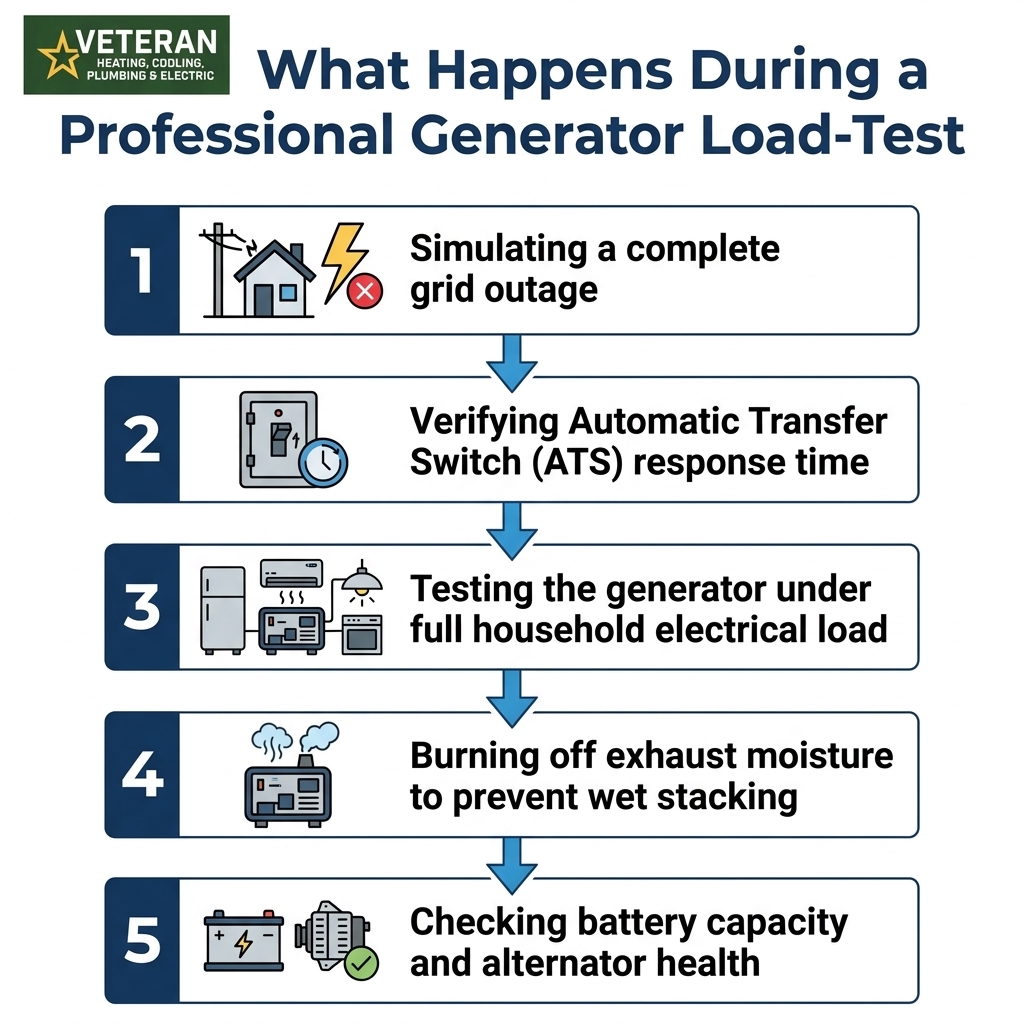
A professional load-test is vastly different from the brief, 15-minute automatic self-exercise your generator might perform every week. While the weekly cycle circulates oil and keeps the engine parts lubricated, it does not force the generator to actually power your home. A true load-test safely simulates a complete power outage to ensure the generator can handle your home's actual electrical demand without stalling or tripping a breaker.
During this comprehensive evaluation, technicians force the system to work hard. This sustained effort burns off the moisture and unburned fuel associated with wet stacking, and it verifies that the engine, alternator, and voltage regulator are functioning perfectly under stress. Because this process involves manipulating the main electrical feed to the home, it carries significant high-voltage risks. We strictly advise against any DIY load-testing; this is a highly technical procedure that requires licensed expertise.
1. System Isolation: The technician safely disconnects the home from the municipal utility grid to simulate a blackout.
2. Transfer Verification: The system monitors how quickly the generator detects the outage and signals the engine to start.
3. Load Application: Full household electrical demand is applied to the generator to monitor performance under stress.
4. Voltage Monitoring: Technicians measure output to ensure the power is clean and stable, which protects sensitive electronics.
5. Cool Down and Restoration: The system is safely reconnected to the grid, and the generator is allowed to run through its proper cool-down cycle.
Why Mild Weather is Required for Safe Testing
Simulating an outage means temporarily cutting power to the home. Doing this in the mild September pre-heating season ensures your home doesn't freeze during the testing process. If a fault is discovered during the test and the generator fails to carry the load, the home remains at a comfortable temperature while repairs are made. Additionally, mild weather allows technicians to work safely and efficiently, opening electrical panels and inspecting delicate components without battling snow, ice, or freezing rain.
The Automatic Transfer Switch: The Brains of Your Backup Power
While the generator engine provides the raw power, the Automatic Transfer Switch (ATS) is the brain of your backup system. The ATS is responsible for constantly monitoring the utility grid. The moment it detects a power drop, it isolates your home from the dead grid and transfers the electrical load to the generator—usually within a matter of seconds. If the ATS fails, your generator is completely useless, no matter how perfectly the engine runs.
The ATS must be perfectly synced with your primary electrical panel. If there is a communication failure, delayed transfer, or a mechanical bind, it can lead to system resets, damaged appliances, or even electrical fires. Common reasons an ATS might fail include internal corrosion, stuck mechanical relays from lack of use, and poor wire connections that loosen over time due to vibrations.
Because the ATS is hardwired directly into your home's main electrical infrastructure, any issues here are serious. If you notice flickering lights, strange clicking sounds near your breaker box, or if your panel is struggling to communicate with the ATS during a self-test, you are likely seeing signs your home needs electrical repair. Addressing these communication issues in the Denver Metro area before winter weather hits ensures that the "brain" of your system is ready to act the moment the grid goes dark.
Protecting Your Winter Heating: The Heat Pump Connection
Modern heating systems are highly sophisticated, and they rely on continuous, stable electrical power to operate efficiently. This is especially true for homes utilizing heat pumps. During a winter outage, the critical dependency of your home's heat pump on the backup generator and the ATS becomes immediately apparent.
Heat pump compressors and electronic control boards are sensitive to voltage fluctuations. A seamless ATS transfer keeps the heat pump running smoothly without triggering built-in safety lockouts that would otherwise require a manual reset. If a power transfer is delayed or if the generator provides "dirty" fluctuating power, the heat pump may shut itself down to prevent internal damage, leaving your home without heat even though the generator is running.
Heavy, wet early-season snowstorms frequently cause downed tree limbs and local grid outages across the Denver Metro area. A fully functioning backup system is the ultimate safeguard against freezing indoor temperatures. Because running your heat pump in a four-season climate demands reliable electricity to extract heat from the cold outdoor air, ensuring your generator can handle that specific, heavy electrical load is paramount to your family's winter comfort.
How Power Interruptions Trigger Heating Lockouts
When a heat pump loses power abruptly and then receives a sudden surge as a generator kicks on poorly, the system's internal pressure hasn't had time to equalize. This causes the compressor to pull locked-rotor amps, which trips safety sensors. A professionally calibrated ATS orchestrates this transition smoothly, allowing the heating system to step down and restart safely, preventing you from waking up to a freezing house and a locked-out thermostat.
Battle-Ready Preparedness: Visual Checks vs. Professional Action
There is a distinct line between the maintenance a homeowner can safely perform and the highly technical work that requires a licensed professional. Understanding this difference is key to keeping your system reliable and your home safe during the September pre-heating season.
As a veteran-owned company, we approach generator readiness with military-level discipline. It is not just about making a casual suggestion to check your oil; it is about ensuring your home is battle-ready for whatever winter throws at it. Professional maintenance is a strategic imperative. While a homeowner can ensure the environment around the unit is clean, it takes professional precision to inspect high-voltage ATS components and calibrate load distribution so the system won't fail when you need it most.
Here are the safe visual checks you can perform right now, compared to what must be left to the experts:
• Clear the perimeter: Ensure there is at least three feet of clearance around the generator. Remove fallen leaves, overgrown bushes, and debris that could block airflow.
• Inspect the exterior: Look for obvious signs of physical damage to the housing, rust, or signs that pests have tried to nest inside the enclosure.
• Check the indicator lights: Verify that the external status lights on the generator are showing green, indicating it is in "ready" mode.
• Leave the high voltage to professionals: Never attempt to open the ATS enclosure, adjust the fuel mix, or test the output voltage yourself. These require specialized tools and strict safety protocols.
Beating the Winter Emergency Call Rush
The reality of the home service industry is that emergency electrical service call volumes spike dramatically during the first major freeze. When the grid goes down and thousands of unprepared standby generators fail to start, local electricians are flooded with desperate calls for help.
High demand, combined with hazardous driving conditions, inevitably leads to delayed response times for reactive homeowners. A technician navigating an icy Denver Metro highway during a blizzard simply cannot reach you as quickly as they could on a sunny afternoon. A typical pattern we see is proactive homeowners scheduling their service in the fall, experiencing 5-star professionalism and thorough attention to detail without the rushed chaos of a winter emergency.
The Domino Effect of Grid Failures
When a severe storm knocks out power to a large region, it isn't just the utility companies that get overwhelmed. The supply chain for specific generator parts—like replacement ATS relays or specialized cold-weather batteries—can dry up quickly as demand surges. Reinforcing your system with proactive September testing guarantees your equipment is ready, allowing you to bypass the panic of an emergency outage entirely.
Frequently Asked Questions About Generator Testing
Why do automatic transfer switches fail during winter?
Automatic transfer switches often fail during winter due to cold-induced mechanical stiffness or internal corrosion that went unnoticed during warmer months. The rapid drop in temperature can cause moving parts within the switch to bind if they haven't been properly lubricated and exercised. Regular professional testing ensures these mechanisms remain fluid and responsive when the temperature plummets.
How is a professional generator load test performed?
A professional load test is performed by safely disconnecting the home from the utility grid to simulate a true blackout, forcing the generator to start and carry the home's full electrical demand. Technicians monitor the voltage output, engine performance, and ATS response time to ensure the system can handle the stress. This process requires specialized training to manage the high-voltage transition safely.
Why is it important to test a generator before winter?
Testing a generator before winter is important because freezing temperatures severely reduce battery capacity and put immense strain on the engine block. Finding a fault during mild weather allows for safe, efficient repairs without the risk of your home freezing. It also helps you avoid the massive spike in emergency service calls that occurs during the first major blizzard.
How often should I test my whole house generator?
Your whole house generator should undergo a brief, automatic self-exercise cycle every week to keep fluids circulating. However, a comprehensive professional load-test should be conducted at least once a year, ideally in the early fall. This annual deep-dive ensures that the system is fully prepared to handle the heavy demands of the winter heating season.
What happens if you don't exercise a generator under load?
If you don't exercise a generator under load, the engine is prone to a condition called wet stacking, where unburned fuel and moisture accumulate in the exhaust system. This buildup reduces the generator's efficiency and can eventually cause the engine to fail entirely. Running it under load burns off this residue and keeps the internal components clean.
Can cold weather drain a standby generator's battery?
Yes, cold weather can significantly reduce the cranking power of a standby generator's lead-acid battery. Even a battery that functioned perfectly in the summer can lose up to half of its capacity when exposed to freezing temperatures. This is why testing the battery and ensuring the charging circuit is fully operational before winter is absolutely critical.
Schedule Your Early Fall Generator Test Today
September is the critical window for ensuring your generator, automatic transfer switch, and primary electrical panel are fully synced and ready for the harsh months ahead. Taking action now provides the ultimate peace of mind, knowing your home will stay powered, your heat pump will keep running, and your family will remain warm during the first Denver Metro blizzard. Don't wait for the grid to fail—schedule a professional inspection and load-test today, before the snow flies and emergency wait times increase.
ABOUT Veteran Heating, Cooling, Plumbing & Electric
Veteran Heating, Cooling, Plumbing & Electric was founded on the belief that service should be personal, honest, and community-focused. Our team is built around integrity, professionalism, and a true commitment to your home’s comfort and safety.
Led by a U.S. Army veteran with over 30 years of industry experience, we’re proud to remain locally owned and operated. Every technician, plumber, and electrician is EPA-certified, background checked, and driven to exceed expectations.
- 24/7 ServiceWe offer weekend & 24/7 emergency service. We’re here whenever you need us—day, night, or weekend, no exceptions.
- $0 Trip FeesNo dispatch or trip fees. You’ll never pay just for us to show up—service starts when the work does.
OUR SERVICES
AIR CONDITIONING
.jpg)
We offer specialty and seasonal services like indoor air quality upgrades, pre-winter furnace checks, and summer AC tune-ups to keep your home prepared year-round.
Our Primary Air Conditioning Services Include:
Don't see the service you need? Call our Team today!
PLUMBING
From leaks to full system installs, our plumbing services cover everything you need for a safe, reliable home water system, 24/7.
Our Primary Plumbing Include:
- Water Heater Replacement
- Water Heater Repair
- Trenchless Sewer Line
- Water Filtration
- Slab Leak
- Sewer Line Repair
Don't see the service you need? Call our Team today!
ELECTRICAL

Our electrical services ensure your home stays safe and powered, from routine fixes to complete system upgrades.
Our Primary Electrical Services Include:
- House Rewiring
- Electrician
- Electric Panel Upgrade
- Electric Panel Replacement
- EV Chargers
- Whole House Generator
Don't see the service you need? Call our Team today!
HEATING
.jpg)
We install, repair, and maintain heating & furnace systems with expert care to keep your Colorado home comfortable and energy-efficient year-round.
Our Primary Heating Services Include:
- Heating Installation
- Heating Replacement
- Heating Maintenance
- Heating Repair
- Heating Service
- Heating Tune-Up
Don't see the service you need? Call our Team today!