The Hidden Cause of Sudden Fall Plumbing Backups
Your toilets are suddenly gurgling every time the washing machine runs, and the basement shower drain is backing up—a frustrating scenario that perfectly illustrates how Greenwood Village's soil changes in fall impact your home's main sewer line. In our years of serving the community, our team at Veteran Heating, Cooling, Plumbing & Electric typically sees an unexpected spike in slow drains and unpleasant plumbing odors as summer transitions into late September. Because these symptoms often mimic everyday household blockages, it is incredibly easy to assume you are dealing with a standard, albeit stubborn, clog that can be cleared with a quick plunge or chemical drain cleaner.
However, the reality beneath the surface of your property is often much more complex. The critical decision point for any homeowner facing these sudden early fall issues is determining whether you are dealing with a routine blockage inside your home's interior pipes or a structural shift in your underground exterior sewer lines. Treating a structural problem like a simple clog wastes valuable time and allows the underlying damage to progress.
Ignoring these early warning signs can lead to catastrophic, full-system backups that push raw sewage into your lowest living spaces, making it absolutely vital to understand the root cause before attempting temporary fixes. If you are noticing persistent drainage issues this season, learning more about the hidden plumbing problems lurking underground is your first line of defense.
Understanding the Geology of the Colorado Front Range
To understand why your plumbing is acting up in early fall, you first have to look at the ground your home is built on. The local geology of the Denver metro area, and specifically communities like Greenwood Village, is heavily composed of bentonite and smectite clay. These specific mineral compositions are known collectively in geotechnical circles as "expansive soils." Unlike sandy or loamy earth that maintains a relatively stable volume regardless of the weather, expansive soils act exactly like a giant, geological sponge.
During the wet spring months, when snowmelt and seasonal rain saturate the ground, this clay soil swells dramatically. As it expands, it exerts immense hydrostatic pressure against everything buried within it, including your home's foundation walls and your underground plumbing infrastructure. During this saturated phase, the swollen soil tightly packs itself around your main sewer line, providing a firm, albeit high-pressure, cradle of support for the heavy pipes.
Conversely, the climate context of the Denver metro area brings a sharp drop in precipitation following the peak heat of summer. As we move into late September, the intense summer sun and lack of consistent rainfall lead to rapid soil moisture loss. When this moisture evaporates, the expansive clay drastically shrinks. The geological contraction: As the soil dries out and reduces in volume, it physically pulls away from the very foundations and plumbing pipes it is supposed to support, creating voids and empty spaces beneath your property.
How Soil Shrinkage Creates Sewer Line "Bellies"
A pattern we see often during our early fall service calls is that the transition from wet, supportive soil to dry, contracted soil sets the stage for a major plumbing failure. As the expansive clay dries out throughout the late summer and early fall, it contracts and physically recedes from the horizontal sewer lines buried deep underground. This soil shrinkage removes the crucial physical support beneath the pipes. Because sewer lines rely on a very specific, carefully calculated downward slope (usually a quarter-inch drop per foot of pipe) to utilize gravity for waste removal, any loss of structural support is devastating.
Without uniform earth packed tightly beneath it, heavy sections of the pipe—especially those filled with flowing water and waste—begin to sag under their own weight. This creates a low spot in the horizontal line commonly referred to in the plumbing industry as a "belly."
1. The soil recedes: Moisture loss causes the clay to shrink away from the bottom of the pipe.
2. The pipe sags: Gravity pulls the unsupported section of the pipe downward, bending or disjointing the line.
3. The trap forms: A dip or "belly" is created, breaking the continuous downward slope required for proper drainage.
4. Waste accumulates: Instead of flowing smoothly to the municipal sewer in Greenwood Village, solid waste, toilet paper, and standing water pool in this sagging section.
Over time, this accumulation builds up until it completely blocks the pipe, eventually causing a full-system backup into your home. Understanding this mechanical shift is critical, as it highlights how deeply interconnected your home is with the earth around it. In fact, these same geological forces are responsible for a variety of property issues, which is why understanding Colorado expansive soils and slab leak risks is so important for local homeowners.
The Ripple Effect on Your Entire Plumbing System
A belly in the main sewer line does not just cause an isolated issue; it creates a structural bottleneck that slows down drainage throughout your entire house. Because all the drains in your home eventually feed into this single main exit pipe, a restriction in the yard will cause symptoms indoors. You will typically notice this ripple effect first on the lowest level of your home—such as basement floor drains, ground-floor showers, or downstairs toilets—because wastewater will always seek the lowest possible exit point when it cannot push past the belly.
Furthermore, this structural shift puts immense physical stress on the joints and connections of your plumbing system. As one section of the pipe sags, it pulls against the adjacent sections. This tension can easily break the watertight seals at the pipe joints, increasing the risk of secondary underground leaks that release raw sewage directly into your yard, further complicating the soil conditions.

Standard Clog vs. Structural Shift: Reading the Symptoms
When a sink refuses to drain or a toilet bubbles ominously, your first instinct is likely to reach for a plunger. However, properly diagnosing the issue requires differentiating between minor indoor plumbing issues and major underground shifts caused by soil contraction. A standard clog is usually a localized problem—hair in a shower drain, grease in a kitchen sink, or an excessive amount of toilet paper in a single bathroom. A structural shift, on the other hand, affects the main artery of your home's plumbing.
The Gurgle Test: One of the most definitive signs of a main line restriction is the presence of sympathetic symptoms. For example, hearing gurgling sounds from your downstairs toilet when you are running the washing machine upstairs is a strong indicator that air is being forced backward through your plumbing vents because the main line is blocked by a belly.
In our experience, attempting to snake a line that has developed a belly will often result in immense frustration. A mechanical auger will simply punch a temporary hole through the accumulated waste sitting in the sagging pipe. The water will drain momentarily, offering false hope, but because the physical sag remains, the belly will simply refill with waste over the next few days or weeks. Repeated backups immediately after recent professional drain cleaning heavily suggest that the pipe itself has shifted out of alignment.
• Location of Backup — Standard Clog: Isolated to a single fixture or one specific room. — Structural Shift (Belly): Multiple drains backing up simultaneously, usually on the lowest floor.
• Unusual Noises — Standard Clog: None, or minor bubbling isolated to the affected sink. — Structural Shift (Belly): Toilets gurgling when other high-volume appliances (like washing machines) drain.
• Reaction to Snaking — Standard Clog: Permanently resolves the issue once the blockage is removed. — Structural Shift (Belly): Provides temporary relief, but backups return within days or weeks as the belly refills.
• Odor — Standard Clog: Localized foul smell right at the drain opening. — Structural Shift (Belly): Pervasive sewage smell in the basement or yard as standing water stagnates in the sagging pipe.
The Urgency of Addressing Slow Drains Before Winter Freezes
Timing is everything when dealing with underground plumbing anomalies. The dry out phase of late September and early October is a critical window for diagnosing underground issues before the ground freezes solid. As we transition from the dry fall season to the freezing winter months typical of the Colorado Front Range, the stakes for your plumbing system rise dramatically.
Once winter temperatures set in and the frost line deepens, the contracted, dry soil freezes solid. If your sewer line has developed a belly during the fall, the frozen earth essentially locks the pipe into its compromised, sagging position. The freezing temperatures also make the plastic or cast iron pipes significantly more brittle and prone to snapping under pressure.
Furthermore, frozen ground makes any necessary excavation or structural correction significantly more difficult, time-consuming, and disruptive to your property. Digging through frozen bentonite clay is a monumental task compared to excavating in the fall. Addressing the symptoms now, while the ground is still relatively workable, prevents emergency structural failures during the harshest weather conditions of the year. If you suspect your pipes have shifted, securing professional pipe repair methods before the first deep freeze hits is the most strategic move a homeowner can make.
Why Precision Diagnostics Are Non-Negotiable
Guesswork has no place in underground plumbing. Treating a structural belly like a standard clog not only wastes your time but also risks causing further damage to weakened pipe joints. Because you cannot see through feet of compacted earth, a high-definition camera inspection is the only definitive way to provide visual proof of the pipe's internal condition and verify its exact slope.
Working with our veteran-owned team means you are getting the same level of discipline and accountability that military service demands. We believe that methodical, tactical precision is required to map out the exact location and depth of a structural shift. Just last fall, a Greenwood Village homeowner called us about a recurring basement drain backup that another contractor had repeatedly just snaked. Our team arrived promptly, ran our diagnostic cameras, and immediately identified a massive belly caused by soil contraction. We apply this exact same tactical discipline to every complex underground plumbing anomaly we encounter. We do not guess; we verify.
During a camera inspection, a specialized, waterproof camera is fed through your cleanout valve, transmitting high-resolution video back to a monitor. This allows the technician to visually confirm the presence of standing water in a belly, identify root intrusions, and pinpoint the exact depth and location of the sag using above-ground locating equipment. Once the anomaly is accurately diagnosed with this level of precision, modern, minimally invasive repair solutions can be deployed to restore the line's integrity. For a comprehensive look at how these advanced solutions work, you can review the trenchless sewer repair process to see how we correct structural shifts without destroying your entire landscape.
Frequently Asked Questions About Soil and Sewer Lines
Can shifting soil break a sewer line?
Yes, shifting soil is one of the leading causes of severe underground plumbing damage. When expansive clay soils swell with water, they exert immense crushing pressure on pipes, and when they dry out, they remove vital physical support. This constant cycle of heaving and settling can easily snap brittle cast iron pipes, separate the joints on PVC lines, and cause severe sagging that stops wastewater from flowing properly.
How do you fix a belly in a sewer line?
Fixing a belly requires physically correcting the slope of the pipe, which means a standard drain snake or hydro-jetting will not solve the problem permanently. The sagging section of the pipe must be excavated, removed, and replaced with new piping that is properly bedded with stable material (like gravel or road base) to ensure the correct downward slope is maintained. In some cases, advanced trenchless methods can be utilized to rehabilitate the line, provided the belly is not too severe.
What are the signs of a collapsed sewer line?
A collapsed sewer line presents severe, immediate symptoms that go beyond a simple slow drain. You will typically experience multiple fixtures backing up simultaneously on the lowest level of your home, pervasive sewage odors in your yard or basement, and completely non-functional plumbing. Additionally, you might notice sudden, unexplainable sinkholes or persistently soggy, lush patches of grass in your yard directly above where the sewer line runs, indicating that wastewater is flooding the subsurface.
Why is my sewer backing up in the fall?
Fall sewer backups are incredibly common in late September due to a combination of geological and environmental factors. Following the hot summer months, expansive soils dry out and shrink, pulling support away from your pipes and causing them to sag and accumulate waste. Furthermore, fall is the time when thirsty tree roots aggressively seek out the moisture and nutrients found inside your sewer lines, infiltrating tiny cracks and creating massive organic blockages right as the weather turns.
Are expansive soils bad for plumbing?
Expansive soils pose a significant challenge for all underground infrastructure, including plumbing, foundations, and concrete flatwork. Because soils rich in bentonite and smectite clay act like sponges—expanding violently when wet and shrinking dramatically when dry—they subject buried pipes to constant, shifting mechanical stress. Homes built on expansive soils require careful moisture management around the foundation and highly precise plumbing installations to mitigate the risks of shifting pipes.
How quickly do expansive soils contract in the Denver metro area?
The rate of soil contraction depends heavily on the weather patterns, but in the Denver metro area, it can happen remarkably fast. Following a typical dry, hot summer, the transition into early fall can cause the top several feet of soil to lose significant moisture in just a matter of weeks. This rapid desiccation is why so many homeowners experience sudden, seemingly unexplainable plumbing shifts and foundation settling right around late September and early October.
Secure Your Sewer Line Integrity Today
Do not let a slow drain or a gurgling toilet turn into a catastrophic raw sewage backup as the season changes. The geological shifts occurring in Greenwood Village right now are actively testing the structural integrity of your underground plumbing. A professional, high-definition camera inspection is the only definitive way to know for sure if your pipes have shifted, sagged, or developed a belly due to contracting fall soils.
Schedule an evaluation with a disciplined, local expert today to protect your home's plumbing system. Taking methodical, tactical action now ensures your sewer lines are properly diagnosed and secured before the winter ground freezes, saving you from a major emergency when you least expect it.
ABOUT Veteran Heating, Cooling, Plumbing & Electric
Veteran Heating, Cooling, Plumbing & Electric was founded on the belief that service should be personal, honest, and community-focused. Our team is built around integrity, professionalism, and a true commitment to your home’s comfort and safety.
Led by a U.S. Army veteran with over 30 years of industry experience, we’re proud to remain locally owned and operated. Every technician, plumber, and electrician is EPA-certified, background checked, and driven to exceed expectations.
- 24/7 ServiceWe offer weekend & 24/7 emergency service. We’re here whenever you need us—day, night, or weekend, no exceptions.
- $0 Trip FeesNo dispatch or trip fees. You’ll never pay just for us to show up—service starts when the work does.
OUR SERVICES
AIR CONDITIONING
.jpg)
We offer specialty and seasonal services like indoor air quality upgrades, pre-winter furnace checks, and summer AC tune-ups to keep your home prepared year-round.
Our Primary Air Conditioning Services Include:
Don't see the service you need? Call our Team today!
PLUMBING
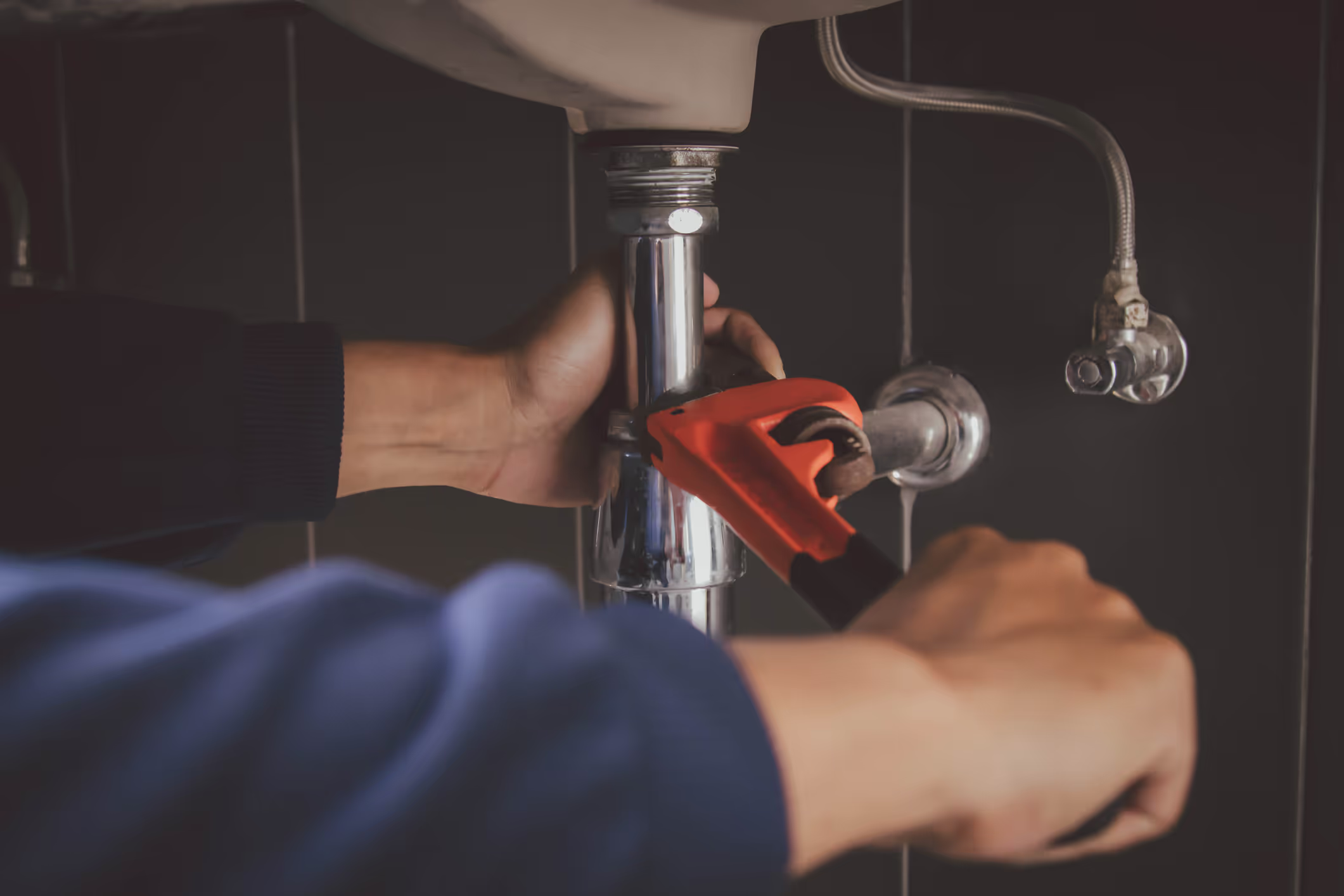
From leaks to full system installs, our plumbing services cover everything you need for a safe, reliable home water system, 24/7.
Our Primary Plumbing Include:
- Water Heater Replacement
- Water Heater Repair
- Trenchless Sewer Line
- Water Filtration
- Slab Leak
- Sewer Line Repair
Don't see the service you need? Call our Team today!
ELECTRICAL

Our electrical services ensure your home stays safe and powered, from routine fixes to complete system upgrades.
Our Primary Electrical Services Include:
- House Rewiring
- Electrician
- Electric Panel Upgrade
- Electric Panel Replacement
- EV Chargers
- Whole House Generator
Don't see the service you need? Call our Team today!
HEATING
.jpg)
We install, repair, and maintain heating & furnace systems with expert care to keep your Colorado home comfortable and energy-efficient year-round.
Our Primary Heating Services Include:
- Heating Installation
- Heating Replacement
- Heating Maintenance
- Heating Repair
- Heating Service
- Heating Tune-Up
Don't see the service you need? Call our Team today!