When the Grid Goes Dark: Managing the Surge of Summer Storm Calls
If you are standing in a dark hallway wondering exactly how our veteran-led team triages emergency electrical calls during August thunderstorms, you are certainly not alone. As veteran electricians who have spent years serving the Denver metro area, we know firsthand that the moment a severe weather cell moves over the Front Range, the sudden loss of power creates immediate chaos for homeowners. The lights go out, the air conditioning stops, and that strange popping sound from the basement leaves you wondering if your home is actually safe. In those first few minutes after a lightning strike, the anxiety is palpable, and the instinct is to pick up the phone and demand immediate help.
During these intense weather events, our dispatch centers at Veteran Heating, Cooling, Plumbing & Electric are flooded with hundreds of calls simultaneously. These reports range from minor inconveniences, like a single tripped breaker, to active, life-threatening electrical fires. Without a strict, disciplined methodology for handling this overwhelming volume, critical life-safety hazards could easily be delayed behind minor nuisance calls. To prevent this, we rely on a military-inspired system to ensure the most dangerous situations are handled first. If you find yourself needing an emergency electric panel replacement or immediate safety inspection, understanding how this triage process works can give you crucial peace of mind when the grid goes dark.
The Anatomy of a Front Range Lightning Surge
August late-summer thunderstorms in Denver are notorious for their intensity. In our years of repairing lightning surge damage across local neighborhoods, we've seen how peak monsoon moisture colliding with the heat of the Front Range generates frequent, severe lightning strikes. These strikes are not just loud and intimidating; they are highly destructive to residential infrastructure. A single lightning strike can induce massive voltage surges in home wiring systems, pushing thousands of volts through circuits designed to handle only standard household currents. This sudden influx of raw energy far exceeds standard protective capacities, bypassing basic surge protectors and striking the heart of your electrical panel.
Understanding the Point of Impact
When lightning hits near your property, the energy seeks the path of least resistance to the ground. Often, that path runs directly through your home's electrical service drop, utility lines, or even underground plumbing pipes. The rapid voltage surges associated with these strikes can melt wire insulation, weld breaker contacts together, and permanently destroy sensitive electronics. Homeowners frequently confuse a neighborhood grid outage with localized damage. A grid outage means the utility company's transformers or substations have failed, cutting power to the entire block. Localized damage means the utility power is still flowing, but your home's specific electrical panel has been compromised or destroyed by a surge.
Grid Failure vs. Localized Surge Damage
• Scope of Outage — Grid Outage (Utility Issue): Entire neighborhood or street is dark. — Localized Surge Damage (Home Issue): Only your home, or specific rooms, lack power.
• Panel Condition — Grid Outage (Utility Issue): Breakers are in the "ON" position, no smells. — Localized Surge Damage (Home Issue): Breakers are tripped, melted, or smell like burning plastic.
• Meter Status — Grid Outage (Utility Issue): Utility meter is blank or unresponsive. — Localized Surge Damage (Home Issue): Utility meter is active, but the house has no power.
• Next Step — Grid Outage (Utility Issue): Wait for the utility company to restore service. — Localized Surge Damage (Home Issue): Call an emergency electrician immediately.
The sudden influx of monsoon moisture combined with rapid temperature drops also exacerbates existing electrical vulnerabilities. Water intrusion from heavy rain can find its way into worn exterior meter boxes or cracked weatherheads, creating a perfect storm for electrical shorts. Reviewing storm preparedness tips for Colorado homeowners before the season hits is the best way to fortify your system against these aggressive environmental threats.
Applying Military Precision to Civilian Dispatching
Handling a high-stress, chaotic surge of incoming emergency calls requires more than just a ringing phone and a notepad. It requires veteran-led operational triage protocols. In military operations, triage is the disciplined process of determining the priority of patients' treatments based on the severity of their condition. We apply these exact same military operational disciplines to civilian home service dispatching. When the board lights up with fifty calls in ten minutes, panic is not an option. Clear-headed, life-safety-first prioritization is the only way to protect the community effectively.
The Dispatcher's Diagnostic Sequence
Triage is never about ignoring customers or dismissing their discomfort. It is about systematically ensuring that a home with an active electrical fire receives a technician before a home that simply lost power to a television. Our dispatchers are trained to remain calm under extreme pressure, guiding panicked homeowners through a specific diagnostic sequence. They ask targeted, highly structured questions designed to cut through the confusion and identify the true nature of the electrical failure.
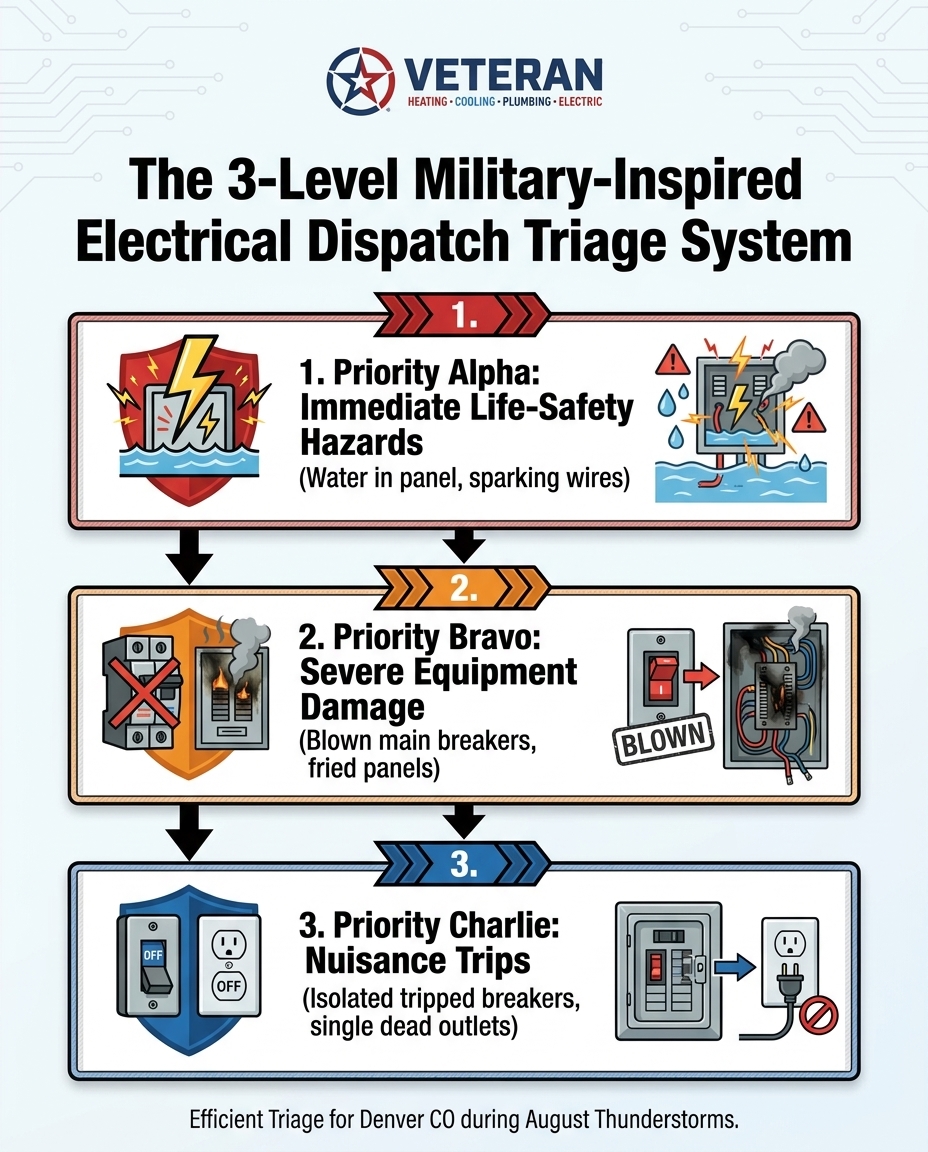
1. Establish the immediate threat level: Are there active flames, smoke, or a burning smell?
2. Assess the environment: Is there standing water near electrical equipment, or are power lines physically down on the property?
3. Determine the scope: Is the entire house affected, or just an isolated circuit?
4. Assign the priority code: Based on the answers, the call is categorized into Alpha, Bravo, or Charlie status for immediate or scheduled dispatch.
This military-inspired system removes emotion and guesswork from the equation. It guarantees that our technicians are deployed exactly where they are needed most, maximizing our ability to prevent catastrophic property damage and protect human life during severe weather events.
Priority Alpha: Identifying Immediate Life-Safety Hazards
In our veteran-led operational triage protocols, a Priority Alpha classification represents an immediate, active threat to life and property. These are the highest-priority electrical emergencies that require absolute first-response action. When a call meets the criteria for a Level 1 emergency, it completely bypasses the standard daily schedule. Technicians are immediately rerouted from non-emergency jobs to address these critical hazards before they escalate into catastrophic house fires or severe electrocution incidents.
Criteria for a Level 1 Emergency
Dispatchers listen specifically for signs that the electrical system has catastrophically failed and is actively discharging energy in an uncontrolled manner. The primary indicators of a Priority Alpha situation include:
• Downed power lines touching the structure: Live utility lines resting on the roof, siding, or fencing energize the entire area.
• Water intrusion in the panel: Rainwater from a severe thunderstorm pouring directly into the main breaker box creates an immediate short-circuit and electrocution risk.
• Audible arcing or visible sparks: Loud buzzing, hissing, or visible flashes of light coming from switches, outlets, or the panel itself.
• Acrid smoke or burning plastic smells: The distinct odor of melting wire insulation indicates that a hidden electrical fire may already be smoldering inside the walls.
If you notice any of these severe signs your home needs electrical repair, you must evacuate the immediate area and avoid touching any metal surfaces or standing in water. Our dispatchers will instruct you on how to stay safe while the cavalry is on the way. This unwavering commitment to life-safety applies year-round, regardless of the weather. For instance, during a sudden late-summer microburst right before the back-to-school rush, one customer experienced an immediate electrical issue where heavy rain breached their main panel. Because the situation posed a direct threat, our team came out the same day, provided professional, urgent service, and resolved the issue with great customer service to ensure the household was secure.
Priority Bravo: Addressing Severe Equipment and Panel Damage
Once all Priority Alpha life-safety hazards have been secured across the dispatch board, our team immediately shifts focus to Priority Bravo calls. This second tier of triage encompasses significant equipment damage that, while not currently an active fire threat, leaves the home completely vulnerable and requires urgent, comprehensive repair. These are Level 2 emergencies where the electrical system has sustained a heavy blow from a lightning strike house electrical damage event, but the immediate danger of electrocution or fire has been temporarily stabilized.
Stabilizing the Threat
In our years operating in Colorado's unpredictable climate, we see that Priority Bravo situations typically involve blown main breakers that refuse to reset, entirely fried electrical panels with visible scorch marks, and widespread internal surges that have knocked out major appliances. In these scenarios, the home is essentially disabled. However, if the main breaker is confirmed to be in the "OFF" position, or if the utility company has entirely cut power to the meter, the active threat is neutralized. The home is safe to inhabit temporarily, even if it is uncomfortable and dark.
Our dispatchers work with homeowners to confirm that the power is fully isolated before assigning a Bravo status. The timeline for addressing Priority Bravo calls is rapid, but it strictly follows the clearance of all Alpha calls. We understand that being without a functioning electrical panel is deeply stressful, but our military-inspired triage ensures that we do not leave a burning house waiting while we replace a stabilized, albeit broken, breaker box.
Bravo Symptoms vs. Homeowner Actions
• Main Breaker Won't Reset — What It Means: The surge damaged the internal mechanism of the main disconnect. — Immediate Homeowner Action: Leave it OFF. Do not force the switch.
• Black Soot Around Breakers — What It Means: A massive short circuit occurred, melting internal components. — Immediate Homeowner Action: Do not touch the panel face. Wait for a technician.
• Multiple Appliances Dead — What It Means: A power surge bypassed the panel and destroyed device circuitry. — Immediate Homeowner Action: Unplug sensitive electronics to prevent secondary damage when power returns.
Priority Charlie: Diagnosing Minor Nuisance Trips
The final tier in our veteran-led operational triage protocols is Priority Charlie. During August late-summer thunderstorms in Denver, the vast majority of incoming calls actually fall into this category. These Level 3 issues involve minor nuisance trips and isolated electrical anomalies. While it is incredibly frustrating to lose power to your home office or have your kitchen lights go dark during a storm, these situations rarely pose a danger to your property or your family.
Why Breakers Do Their Job
Common Charlie-level symptoms include isolated tripped breakers that easily reset, a single dead outlet, or lights that flicker intensely during a nearby lightning strike but quickly return to normal. Most homeowners do not realize that a tripped breaker during a severe storm is actually a sign of success. It means that the home's safety mechanisms did exactly what they were engineered to do: they detected an abnormal fluctuation in current and severed the connection before the wires could overheat.
When you call our dispatch center with frequent circuit breaker tripping during a weather event, our goal is to set realistic expectations. We provide honest advice and top-tier workmanship without upselling unnecessary emergency fees for non-emergency situations. If your issue is categorized as Priority Charlie, we will likely schedule your visit for the following day, once the storm has passed and the immediate life-safety hazards in the community have been resolved. This approach consistently earns trust. During a recent August storm, one customer reached out for general electrical work after experiencing minor nuisance trips while running their end-of-season cooling. Instead of rushing an emergency fee, our team provided honest advice, scheduled a standard visit, and delivered top-tier workmanship, leaving the customer thoroughly impressed with the professionalism and quality of the repair.
Frequently Asked Questions About Storm-Related Electrical Outages
What constitutes a true electrical emergency?
A true electrical emergency is any situation that poses an immediate risk of fire, electrocution, or severe property damage. This includes water actively leaking into your electrical panel, exposed or downed power lines on your property, visible sparks, or the smell of burning plastic coming from your outlets. If you experience any of these symptoms, evacuate the immediate area and contact an emergency electrician Denver relies on right away.
How do electricians prioritize emergency calls during a storm?
At Veteran Heating, Cooling, Plumbing & Electric, we prioritize calls based on the severity of the threat to life and property, using a structured triage system. Active hazards like smoking panels or downed lines are classified as top priority and receive immediate, first-response dispatch. Secondary priorities include severely damaged but stabilized equipment, while minor nuisance trips are scheduled for standard service once the severe weather passes.
What is the difference between a nuisance trip and a lightning surge hazard?
A nuisance trip occurs when a breaker safely shuts off power to a single circuit due to a minor fluctuation, and it can usually be reset without issue. A lightning surge hazard involves massive voltage overwhelming the system, resulting in melted breakers, scorched panel covers, and a persistent inability to restore power safely. If a breaker instantly trips again forcefully after being reset, it is a hazard, not a nuisance.
Should I call an electrician or the power company for a neighborhood outage?
If your entire neighborhood or street has lost power, you should contact your local utility or power company, as the issue lies with the grid infrastructure. However, if your home is the only one without power, or if you have visible damage to your home's electrical panel or weatherhead, you must call a licensed electrician to repair the localized damage.
Can lightning damage my home electrical wiring even if it doesn't strike my house directly?
Yes, lightning can cause severe damage without a direct hit. When lightning strikes nearby ground or utility poles, the massive energy surge can travel through the earth, enter your home's underground plumbing or utility lines, and backfeed into your electrical panel. This indirect surge is often powerful enough to fry sensitive electronics and melt wire insulation.
How long should I expect to wait for an electrician after a major summer storm?
Wait times depend entirely on the triage classification of your specific issue and the total volume of calls in the area. Life-safety hazards are addressed immediately, often within hours. If your home has suffered a nuisance trip or minor damage, you should expect to wait 24 to 48 hours while dispatchers clear the active fire threats from the board.
Peace of Mind Through Disciplined Emergency Response
Navigating the aftermath of severe weather is stressful, but understanding how our veteran-led operational triage protocols work provides homeowners with immense peace of mind. By categorizing calls into Alpha, Bravo, and Charlie priorities, we set realistic expectations and ensure that every single customer receives the right level of attention at the right time. This disciplined, military-inspired approach guarantees that life-safety threats are neutralized immediately, keeping everyone in our community safe when the grid goes dark.
If your home recently weathered one of these intense August late-summer thunderstorms in Denver and you are unsure about the integrity of your wiring, do not wait for the next storm to find out if your system is compromised. Reach out to our veteran-led team at Veteran Heating, Cooling, Plumbing & Electric today for a comprehensive post-storm electrical evaluation. We will thoroughly inspect your panel, verify your safety mechanisms, and ensure your home is fully prepared to handle whatever the Colorado weather brings next.
ABOUT Veteran Heating, Cooling, Plumbing & Electric
Veteran Heating, Cooling, Plumbing & Electric was founded on the belief that service should be personal, honest, and community-focused. Our team is built around integrity, professionalism, and a true commitment to your home’s comfort and safety.
Led by a U.S. Army veteran with over 30 years of industry experience, we’re proud to remain locally owned and operated. Every technician, plumber, and electrician is EPA-certified, background checked, and driven to exceed expectations.
- 24/7 ServiceWe offer weekend & 24/7 emergency service. We’re here whenever you need us—day, night, or weekend, no exceptions.
- $0 Trip FeesNo dispatch or trip fees. You’ll never pay just for us to show up—service starts when the work does.
OUR SERVICES
AIR CONDITIONING
.jpg)
We offer specialty and seasonal services like indoor air quality upgrades, pre-winter furnace checks, and summer AC tune-ups to keep your home prepared year-round.
Our Primary Air Conditioning Services Include:
Don't see the service you need? Call our Team today!
PLUMBING
From leaks to full system installs, our plumbing services cover everything you need for a safe, reliable home water system, 24/7.
Our Primary Plumbing Include:
- Water Heater Replacement
- Water Heater Repair
- Trenchless Sewer Line
- Water Filtration
- Slab Leak
- Sewer Line Repair
Don't see the service you need? Call our Team today!
ELECTRICAL

Our electrical services ensure your home stays safe and powered, from routine fixes to complete system upgrades.
Our Primary Electrical Services Include:
- House Rewiring
- Electrician
- Electric Panel Upgrade
- Electric Panel Replacement
- EV Chargers
- Whole House Generator
Don't see the service you need? Call our Team today!
HEATING
.jpg)
We install, repair, and maintain heating & furnace systems with expert care to keep your Colorado home comfortable and energy-efficient year-round.
Our Primary Heating Services Include:
- Heating Installation
- Heating Replacement
- Heating Maintenance
- Heating Repair
- Heating Service
- Heating Tune-Up
Don't see the service you need? Call our Team today!