Why Heat Pump Maintenance Matters for Your Home
Heat pump maintenance keeps your system running efficiently year-round, saving you money and preventing unexpected breakdowns. Here's what you need to know:
Essential Heat Pump Maintenance Tasks:
1. Monthly: Check and replace air filters (every 1-3 months)
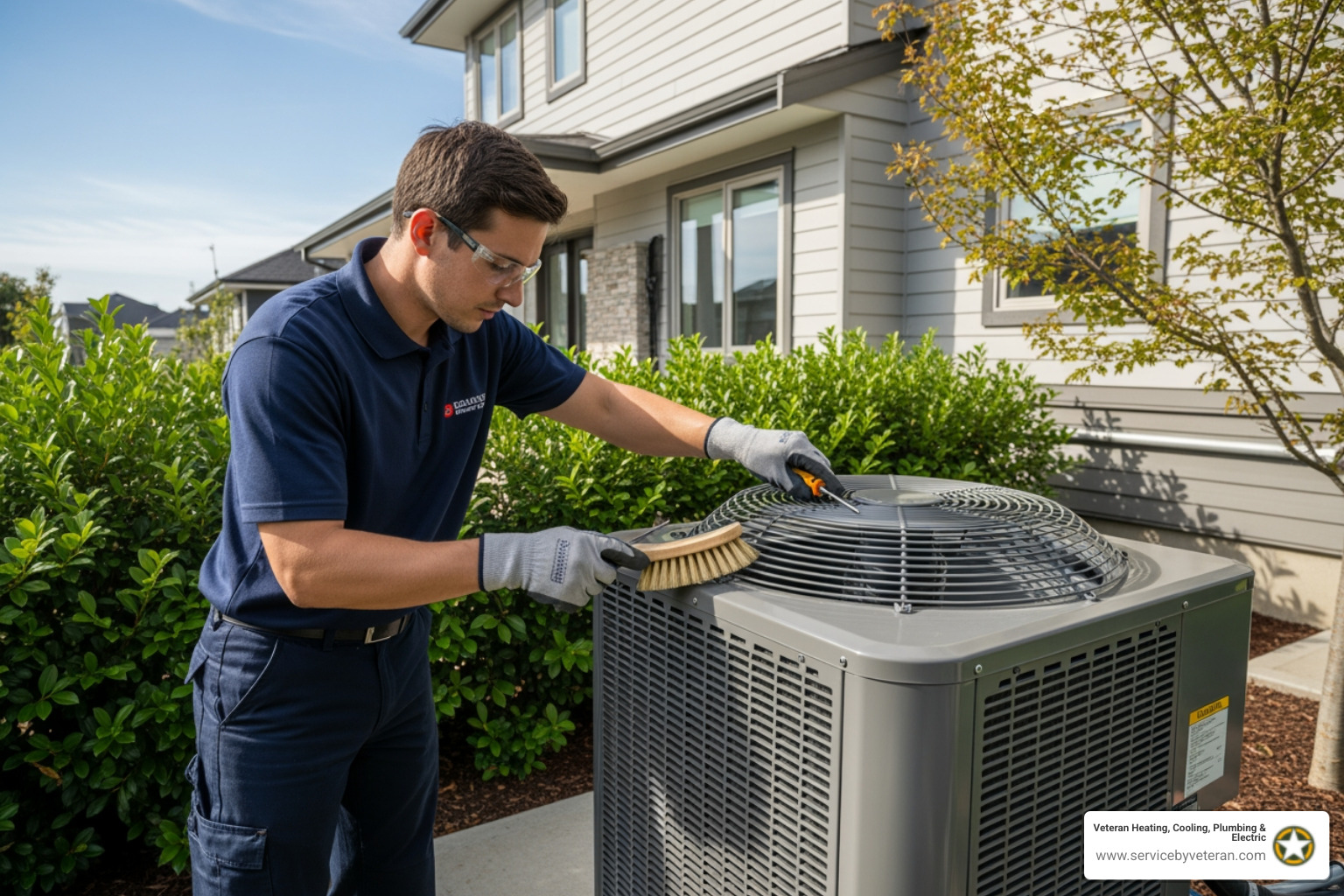
2. Seasonal: Clear debris from outdoor unit, maintain 18-inch clearance
3. Twice Yearly: Schedule professional tune-ups (spring and fall)
4. Year-Round: Keep vents unblocked, monitor system performance
5. Winter: Clear snow and ice from outdoor unit
Benefits of Regular Maintenance:
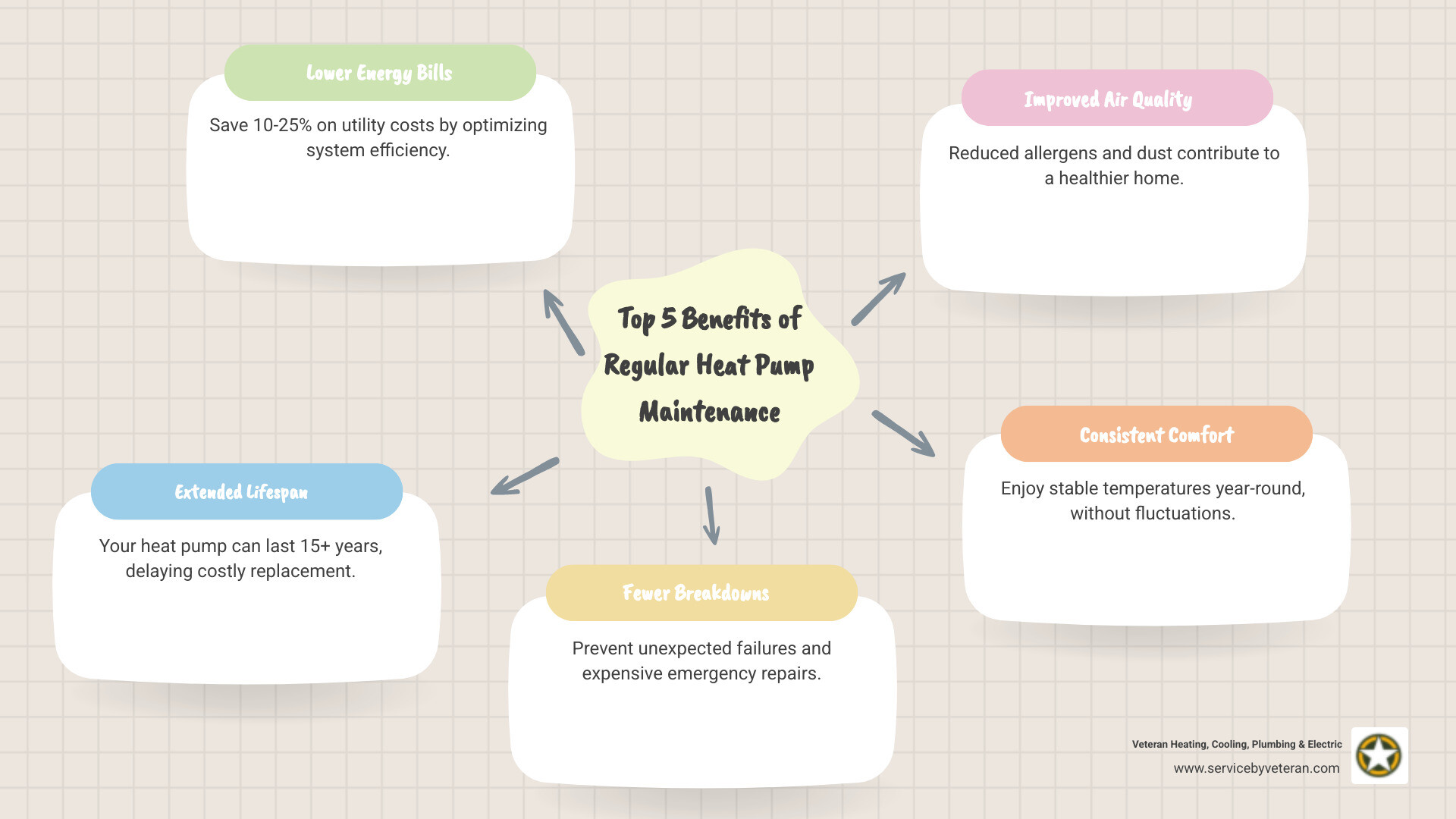
• 10-25% lower energy consumption
• Extended system lifespan (10-15+ years)
• Fewer costly repairs
• Consistent home comfort
• Improved indoor air quality
Your heat pump works year-round to keep you comfortable. Without regular care, its efficiency will drop, utility bills will climb, and you risk an expensive repair or a complete system failure. The good news is that most problems are preventable. A well-maintained system can last 15 years or longer and use up to 25% less energy, saving you money and preventing emergency calls.
Need expert HVAC guidance? Explore our complete range of services or schedule your heat pump maintenance today to protect your investment.
I'm Mike Townsend, and during my eight years in the U.S. Army, I managed precision cooling systems for heat-seeking missile technology—work that demanded absolute reliability. That same precision now guides how I approach heat pump maintenance for homeowners, ensuring every system receives the care it needs to perform at its peak.
Why Regular Maintenance is Non-Negotiable
Heat pump maintenance isn't optional; it's the difference between a system that runs efficiently for 15+ years and one that fails early after racking up repair bills. You wouldn't drive your car 50,000 miles without an oil change, and your heat pump works even harder, running year-round to keep your family comfortable.
The financial impact alone makes maintenance a smart choice. A well-maintained heat pump consumes 10% to 25% less energy than a neglected one, putting real money back in your pocket every month. Regular maintenance also extends your equipment's lifespan, protecting your investment. Heat pumps are built to last 10 to 15 years, but only with proper care. Catching small issues early prevents them from becoming expensive repairs.
Most importantly, consistent upkeep means fewer unexpected breakdowns when you need your system most. It also leads to more consistent temperatures and better Indoor Air Quality Golden for your family.
The Impact on Your Home's Health and Comfort
Your heat pump is your home's respiratory system. When it's well-maintained, everyone benefits. System reliability is the foundation of comfort, providing consistent temperatures and eliminating cold spots in winter or stuffy areas in summer. A maintained system also improves the air you breathe. Clean filters and coils mean reduced allergens and dust reduction. This direct link between heat pump care and Air Quality Improvement is crucial for family members with allergies or asthma. Proper maintenance delivers peace of mind, knowing your family's comfort and health are protected.
The Consequences of Neglecting Your System
Ignoring your heat pump's maintenance needs always ends up being more expensive. The consequences are predictable and costly:
• Premature Failure: A system that should last 15 years might give out after only 8 or 10, forcing a major, unplanned replacement.
• Increased Energy Consumption: The 10-25% efficiency loss can cost you hundreds of dollars annually as your system works harder than it should.
• Unexpected Breakdowns: Failures often happen during extreme weather, leading to stress, discomfort, and premium rates for an emergency AC Repair Near Me call.
• Reduced Performance: Your home may no longer reach the set temperature, or the system may run longer to accomplish less, wasting energy and comfort.
• Voided Manufacturer's Warranty: Most warranties require proof of regular professional service. Without it, you could be paying out-of-pocket for repairs that should have been covered.
Your DIY Heat Pump Maintenance Checklist
While professional servicing is crucial, you can perform several tasks to keep your heat pump running smoothly. Before you begin, always turn off the power to your heat pump at both the thermostat and the breaker. Safety first. Also, consult your manufacturer's guidelines for model-specific instructions.
Your heat pump maintenance routine should include monthly checks and seasonal tasks. Monthly, inspect your air filters and clear debris from the outdoor unit. Seasonally, perform more thorough cleaning to prepare for the weather ahead.
The Importance of Air Filter Changes
If you do nothing else, change your air filters. It's the easiest and most impactful DIY task. A dirty filter restricts airflow, forcing your system to work harder, which increases energy bills and causes strain. A surprising number of HVAC service calls are due to a clogged filter.
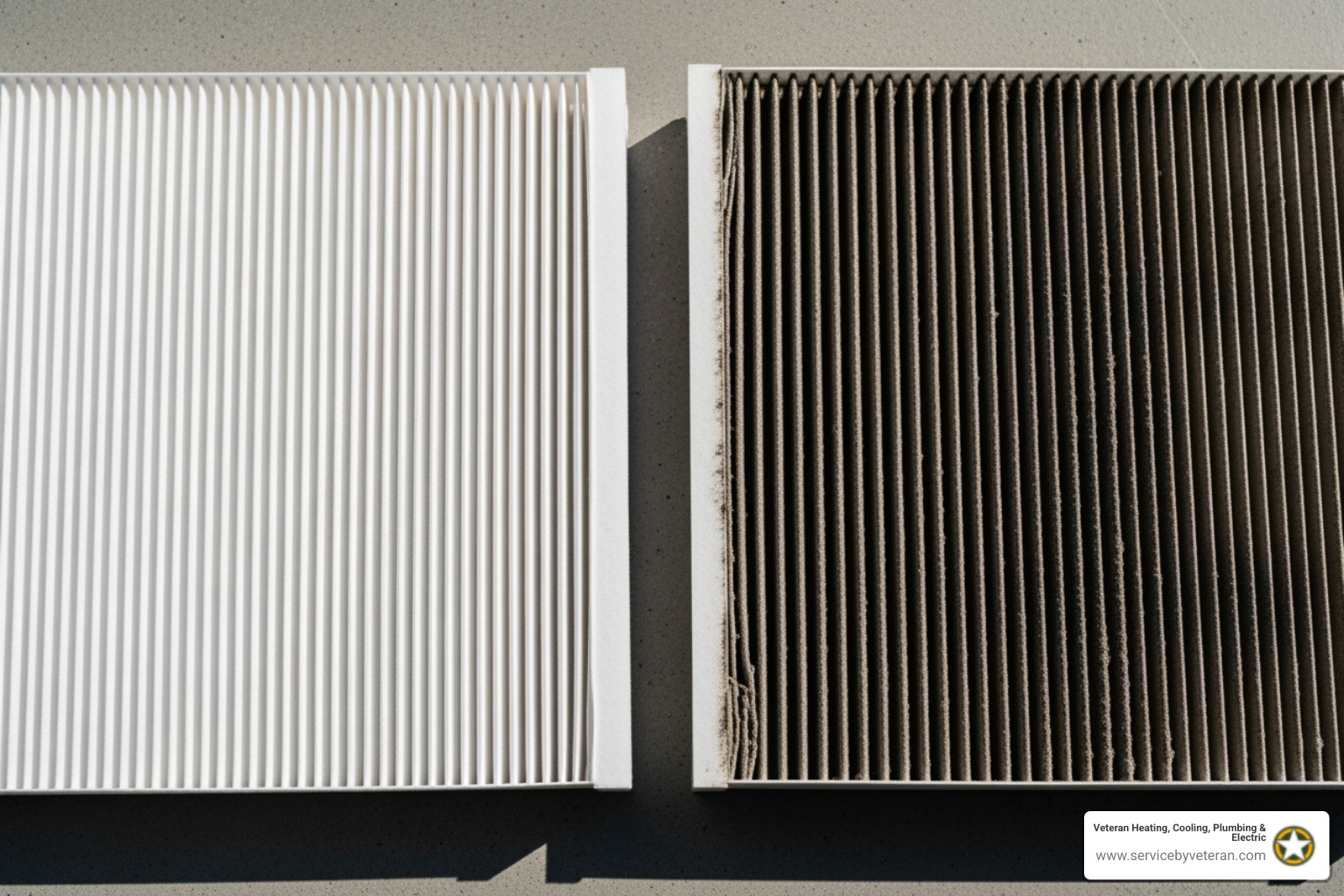
Check standard 1-inch filters monthly and replace them every 1 to 3 months—more often if you have pets or allergies. Thicker pleated filters (4-5 inches) with higher MERV ratings can last up to six months but still need checking. Consistency is key. For advanced solutions, consider our Air Purification Installation services.
Cleaning the Outdoor Unit and Ensuring Proper Airflow
Your outdoor unit battles the elements year-round. Keeping it clean is vital for efficiency.
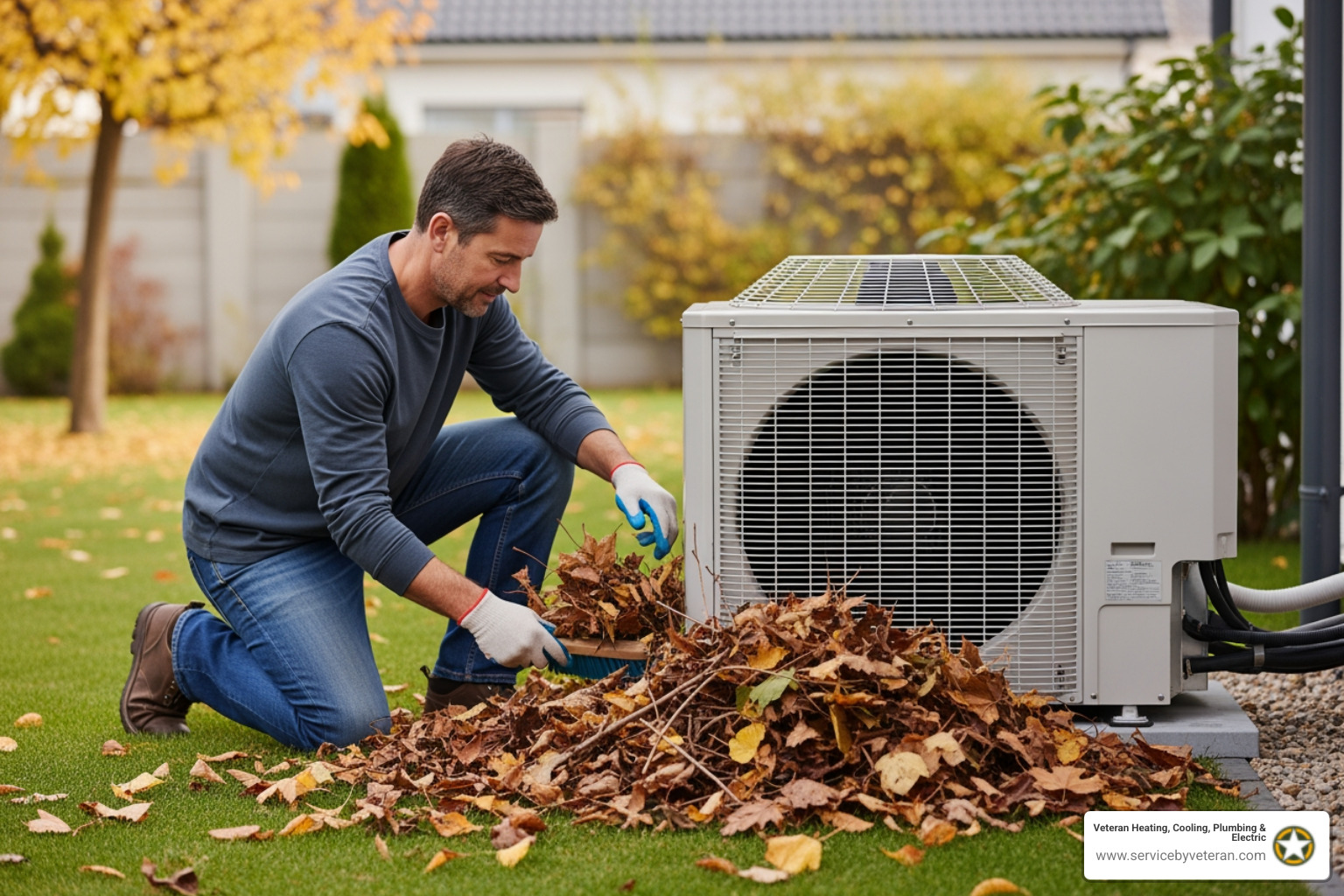
• Debris Removal: Once a month, clear away any accumulated leaves, grass, or dirt from the unit.
• Maintain Clearance: Your heat pump needs breathing room. Trim back bushes and shrubs to maintain at least 18 to 24 inches of clearance on all sides.
• Clean Outdoor Coils: A few times a year, turn off the power and gently rinse the coils with a garden hose. Do not use a pressure washer, as it can damage the delicate fins.
• Snow and Ice Management: After snowfall, gently brush snow away from the unit. If you see excessive ice buildup, turn the unit off and let it defrost naturally. Never chip away at ice, as this can cause damage. If icing is a recurring problem, call a professional.
• Keep Indoor Vents Clear: Walk through your home and ensure that furniture, rugs, or curtains are not obstructing any supply or return vents.
If you have persistent airflow issues, it might be time to explore options for Ductwork Replacement.
Optimizing Thermostat Settings and Operation
How you use your thermostat significantly impacts efficiency. With heat pumps, the "set it and forget it" approach works best. They operate most efficiently when maintaining a steady temperature, not recovering from large temperature swings. Big setbacks often trigger inefficient auxiliary heat, driving up energy bills.
Find a comfortable temperature and keep your thermostat within 2-3 degrees of it. This is different from furnaces, but it's how heat pumps are designed to run. Also, keep the fan on "auto" rather than "on" to save energy, unless you have a high-efficiency variable-speed fan designed for continuous operation.
A programmable or smart thermostat can help automate this process and manage other factors like Humidity Control. Your heat pump is a marathon runner, not a sprinter. Let it maintain a steady pace, and it will reward you with lower energy bills.
Professional Heat Pump Maintenance and Seasonal Prep
Think of professional heat pump maintenance as an insurance policy for your home's comfort. While DIY tasks are essential, your heat pump is a complex machine with electrical and refrigerant systems that require an expert's touch.
We recommend professional service at least once a year, but biannual tune-ups—one in spring and one in fall—are ideal. Your heat pump works year-round, switching between heating and cooling. A spring tune-up prepares it for summer heat, while a fall service ensures it's ready for cold winter nights. This proactive approach catches small issues before they become expensive emergencies.
Many homeowners in Denver, Aurora, and Golden find our Maintenance Plans simplify scheduling and provide priority service to keep their systems running smoothly.
What a Professional Tune-Up Includes
A professional heat pump maintenance visit is a comprehensive inspection of every critical component. Our certified technicians will:
• Inspect ductwork for leaks and seal them on the spot.
• Clean both indoor and outdoor coils to restore efficiency.
• Check refrigerant levels and inspect for leaks.
• Clean and tighten all electrical connections for safety and performance.
• Lubricate motors and inspect belts for wear.
• Clean and adjust blower components in the air handler.
• Flush the condensate drain to prevent clogs and water damage.
• Test all safety controls to ensure they are working correctly.
• Verify thermostat accuracy and check the compressor's amp draw.
• Test the reversing valve and defrost assembly for proper function.
After a complete system test, we can discuss options like our Duct Cleaning Service to ensure your entire system is performing at its best.
When to Schedule Your Professional Heat Pump Maintenance
Timing is key for heat pump maintenance. Schedule tune-ups before you rely heavily on your system, not when it's already struggling on the hottest or coldest day.
Aim for your fall tune-up in September or October to prepare your heat pump for winter heating in Broomfield, Lakewood, and Castle Rock. This is similar to getting a Furnace Service before winter—you want to know it works before you need it.
Your spring tune-up should happen in March or April to get your system ready for summer cooling. This proactive approach helps you avoid the peak season rush, allows for more flexible scheduling, and lets us fix small problems before they become expensive emergency repairs. As a regular maintenance customer, you also get priority scheduling if an unexpected issue arises.
Warning Signs: When Your Heat Pump Needs Attention
Even with diligent heat pump maintenance, issues can arise. Knowing the warning signs helps you address problems quickly, preventing further damage and more expensive repairs. Think of these as your heat pump's way of asking for help.
• Strange Noises: Grinding, squealing, buzzing, or rattling sounds are red flags indicating worn-out parts, loose components, or motor issues that need immediate attention.
• Reduced Performance: If your home isn't reaching the desired temperature or feels less comfortable, your heat pump might be struggling due to low refrigerant, a dirty coil, or a faulty compressor.
• Short Cycling or Constant Running: When your heat pump turns on and off in frequent, short bursts (short cycling), it wastes energy and puts strain on the system. If it runs constantly without shutting off, it's also a sign of a problem.
• Sudden Spike in Utility Bills: An unexpected jump in your energy bills often points to reduced efficiency in your heat pump, forcing it to consume more electricity.
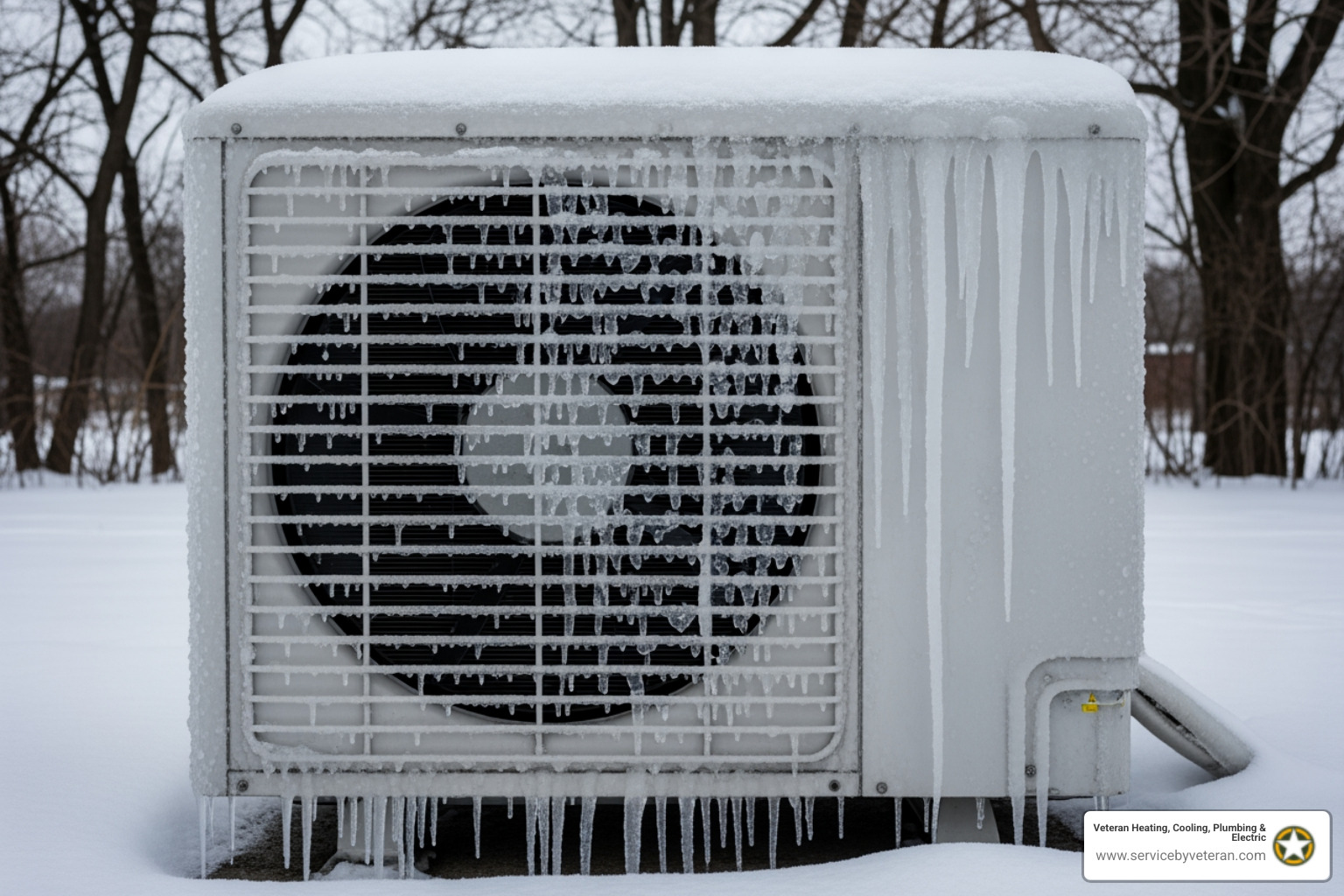
• Excessive Ice Buildup: While a thin layer of frost is normal in winter, thick ice encasing your outdoor unit indicates a problem with the defrost cycle or low refrigerant. Turn the system off and call for service.
• Blowing Cold Air: If your heat pump is set to heat mode but blows cold air, it could be a sign of a faulty reversing valve or low refrigerant.
If you notice any of these warning signs in your Highlands Ranch or Littleton home, don't hesitate to reach out. Our team is experienced with all types of systems, and we also work as a Mini Split Contractor for specialized installations. Catching issues early can save you money and keep your home comfortable.
Frequently Asked Questions about Heat Pump Care
How often should I change my heat pump's air filter?
For standard 1-inch filters, inspect them monthly and replace them every 1 to 3 months. If you have pets, family members with allergies, or live in an area with poor air quality, you may need to change them more frequently, even monthly. If you can see a layer of dirt on the filter, it's time for a new one. Thicker, high-MERV pleated filters (4-5 inches) can last up to six months but still require regular checks. A clogged filter is a leading, and preventable, cause of heat pump maintenance issues.
Is it normal for my heat pump to be covered in ice in the winter?
A thin layer of frost on your outdoor unit is normal during cold weather. Your heat pump's built-in defrost cycle is designed to handle this by periodically melting it away. However, if your unit is encased in thick ice, that is not normal. It could indicate a malfunctioning defrost cycle, low refrigerant, or an airflow problem. If you see this, turn the unit off at both the thermostat and the breaker and call a professional. Running an iced-over unit can cause serious damage to the compressor.
Should I cover my outdoor unit in the winter?
We generally do not recommend covering your entire outdoor heat pump unit. Unlike an air conditioner, your heat pump runs all winter and needs to breathe. A full cover can trap moisture, leading to corrosion, and can also provide a home for pests. If you want to protect your unit from falling debris or ice, use a cover specifically designed for heat pumps that only protects the top, leaving the sides open for proper airflow. Regular heat pump maintenance and keeping the area clear of snow is far more important than covering it.
Conclusion: Protect Your Investment with Consistent Care
Your heat pump works tirelessly to keep your home comfortable through every season, from chilly Broomfield winters to hot Centennial summers. It's a hardworking system that deserves consistent care.
Think of heat pump maintenance as an investment, not an expense. Every filter change and professional tune-up contributes to a system that lasts longer, runs more efficiently, and saves you real money on utility bills. Combining your DIY efforts with professional expertise is the key to peak performance and year-round peace of mind.
At Veteran Heating, Cooling, Plumbing & Electric, we bring the same precision and dedication to your home comfort that Mike learned during his eight years managing critical cooling systems in the U.S. Army. We understand that your heat pump is central to your family's well-being. That's why we stand behind every service call with our lifetime warranty on parts and labor and our money-back guarantee. Your trust means everything to us, and we're committed to earning it with every visit.
Don't wait for a breakdown. Take control of your home's comfort today with proactive maintenance that protects your investment.
Explore our complete range of services and find how we can help you maximize your heat pump's performance. Ready to schedule your maintenance? Check out our convenient maintenance plans designed to keep your system running smoothly with hassle-free, regularly scheduled care.
ABOUT Veteran Heating, Cooling, Plumbing & Electric
Veteran Heating, Cooling, Plumbing & Electric was founded on the belief that service should be personal, honest, and community-focused. Our team is built around integrity, professionalism, and a true commitment to your home’s comfort and safety.
Led by a U.S. Army veteran with over 30 years of industry experience, we’re proud to remain locally owned and operated. Every technician, plumber, and electrician is EPA-certified, background checked, and driven to exceed expectations.
- 24/7 ServiceWe offer weekend & 24/7 emergency service. We’re here whenever you need us—day, night, or weekend, no exceptions.
- $0 Trip FeesNo dispatch or trip fees. You’ll never pay just for us to show up—service starts when the work does.
OUR SERVICES
AIR CONDITIONING
.jpg)
We offer specialty and seasonal services like indoor air quality upgrades, pre-winter furnace checks, and summer AC tune-ups to keep your home prepared year-round.
Our Primary Air Conditioning Services Include:
Don't see the service you need? Call our Team today!
PLUMBING
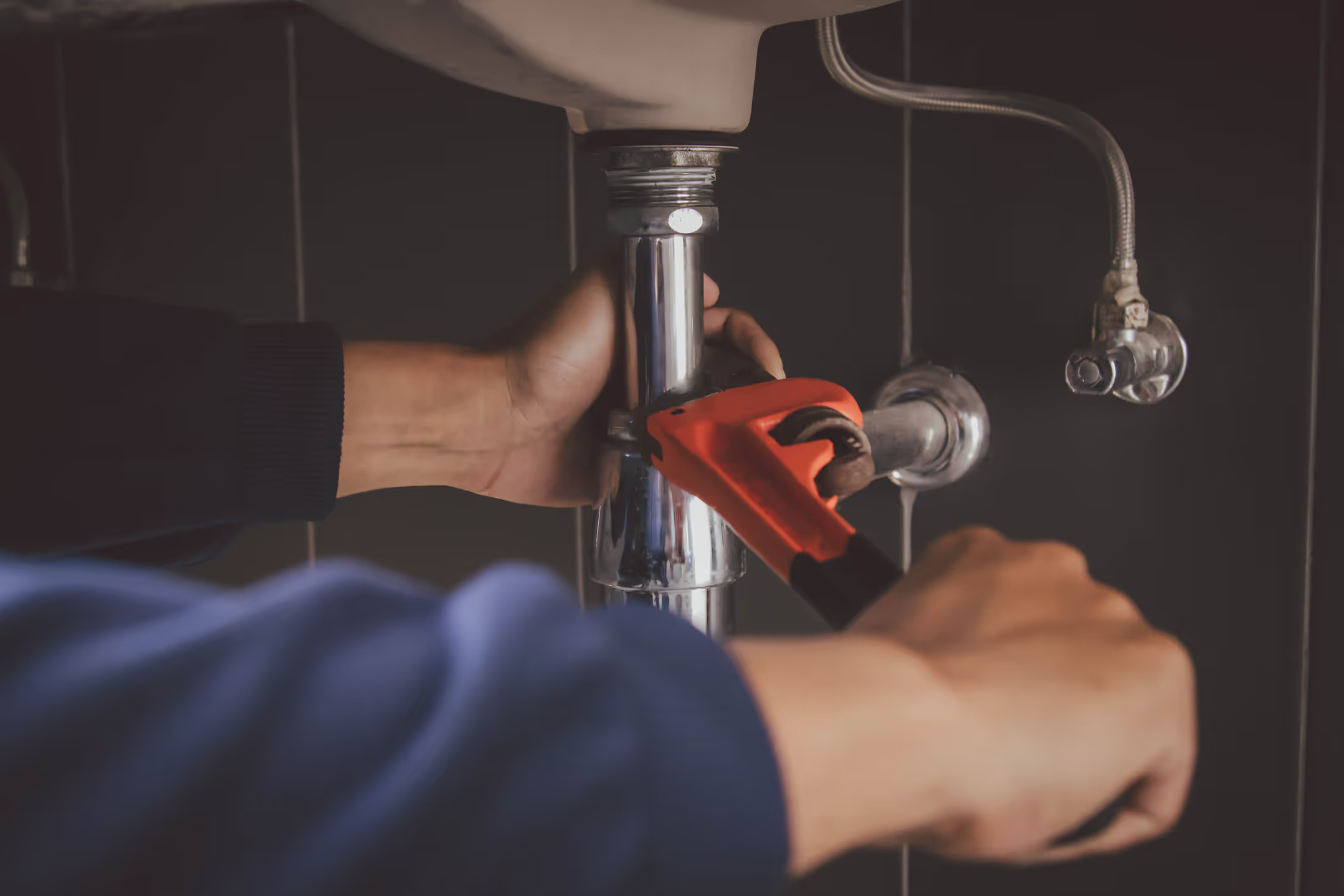
From leaks to full system installs, our plumbing services cover everything you need for a safe, reliable home water system, 24/7.
Our Primary Plumbing Include:
- Water Heater Replacement
- Water Heater Repair
- Trenchless Sewer Line
- Water Filtration
- Slab Leak
- Sewer Line Repair
Don't see the service you need? Call our Team today!
ELECTRICAL

Our electrical services ensure your home stays safe and powered, from routine fixes to complete system upgrades.
Our Primary Electrical Services Include:
- House Rewiring
- Electrician
- Electric Panel Upgrade
- Electric Panel Replacement
- EV Chargers
- Whole House Generator
Don't see the service you need? Call our Team today!
HEATING
.jpg)
We install, repair, and maintain heating & furnace systems with expert care to keep your Colorado home comfortable and energy-efficient year-round.
Our Primary Heating Services Include:
- Heating Installation
- Heating Replacement
- Heating Maintenance
- Heating Repair
- Heating Service
- Heating Tune-Up
Don't see the service you need? Call our Team today!