Your Guide to Water Heater Repair in Denver
Water heater repair in denver, co becomes an urgent need when your morning shower turns ice-cold or you find a puddle forming beneath your tank. A malfunctioning water heater disrupts your entire household—from basic hygiene to cleaning dishes and laundry. Denver homeowners face unique challenges with hard water mineral buildup and fluctuating temperatures that can accelerate wear on heating systems. Knowing the warning signs and understanding your repair options helps you restore hot water quickly and avoid costly emergency replacements.
Quick Answer: Finding Reliable Water Heater Repair in Denver, CO
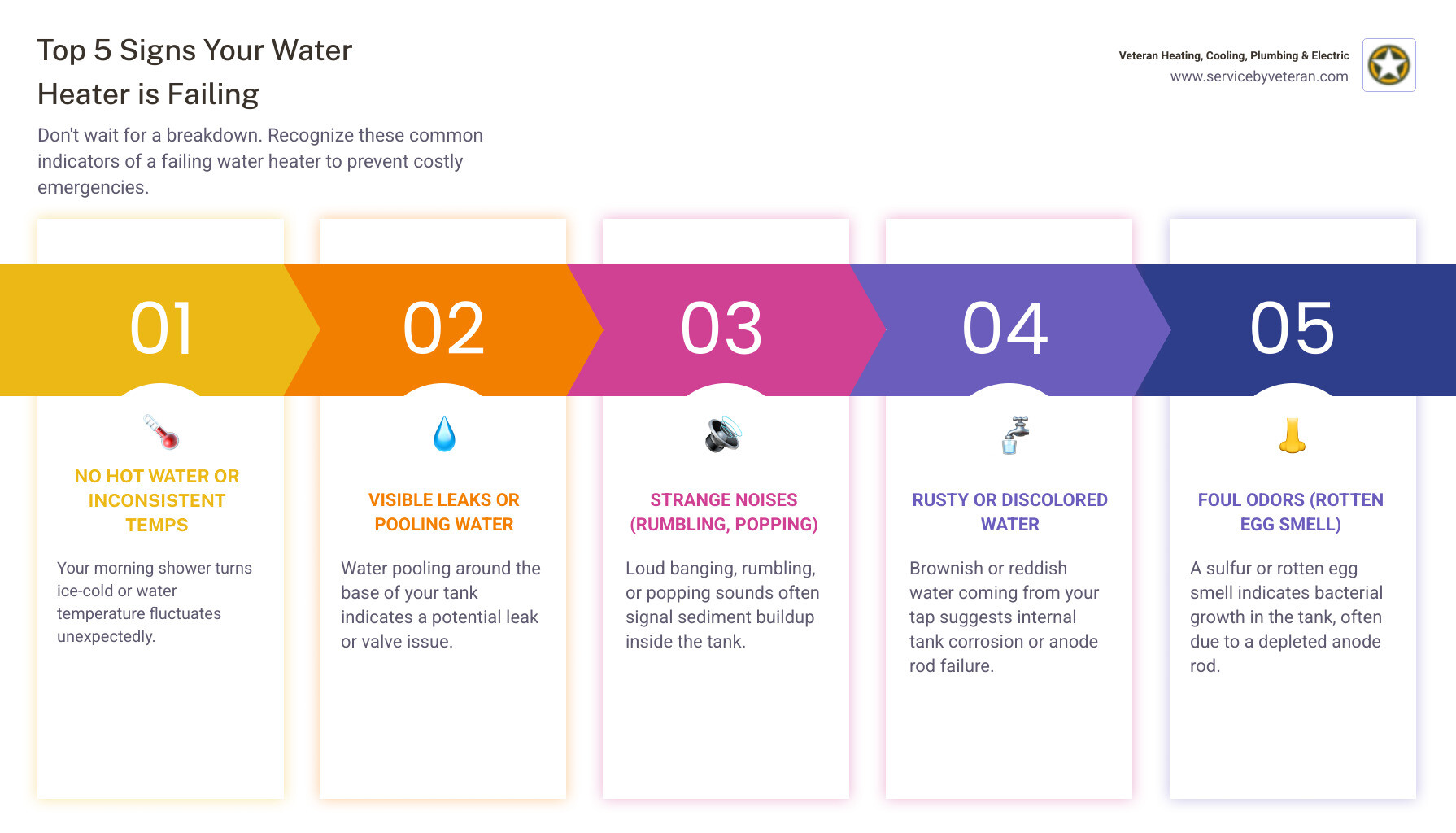
• Common signs you need repair: No hot water, inconsistent temperatures, strange noises (rumbling, popping), visible leaks, rusty or discolored water, foul odors
• When to repair vs. replace: Repair for minor issues on units under 8-10 years old; replace if your heater is 10+ years old, has major tank corrosion, or requires frequent repairs
• What professionals fix: Faulty thermostats, heating elements, leaking valves, pilot light issues, sediment buildup, anode rod replacement
• Safety risks of DIY: Gas leaks, carbon monoxide exposure, electrical hazards, water damage, code violations
• Action steps: Check your breaker and pilot light first; call licensed professionals for leaks, gas issues, or complex problems
For comprehensive plumbing solutions beyond water heaters, explore our full plumbing services. When you need immediate professional help, schedule your water heater repair service with our certified team.
I'm Mike Townsend, a U.S. Army veteran who spent eight years managing precision cooling systems for military equipment—experience that translates directly to diagnosing and solving complex heating and plumbing challenges. At Veteran Heating, Cooling, Plumbing & Electric, we bring that same attention to detail to every water heater repair in denver, co, ensuring your system operates safely and efficiently.
Common Signs Your Water Heater Needs Attention
A typical family of four uses approximately 2,000 gallons of hot water each month. That's a lot of work for one appliance! When your water heater starts acting up, it's usually not subtle. Recognizing the signs early can prevent a small problem from becoming a costly emergency. Here in Denver, we've seen it all, and these are the most common indicators that your water heater needs professional attention.
Identifying Leaks and What They Mean
One of the most alarming signs is finding water where it shouldn't be. A leak can quickly turn into significant water damage if not addressed promptly.
• Water on the floor: A puddle around the base of your water heater is an immediate red flag. If the water appears to be stemming from the bottom of the tank itself, this often indicates that the internal lining is compromised. Unfortunately, a shot lining is not repairable and requires a water heater replacement.
• Dripping from valves: The Temperature and Pressure Relief Valve (T&P valve) is a crucial safety component designed to release water if pressure or temperature inside the tank gets too high. If it's constantly dripping, it might be faulty, or there could be excessive pressure in your system. Likewise, a leak from the drain valve could mean it's loose or worn.
• Corrosion: Visible rust or corrosion on the outside of your water heater, especially around fittings or the bottom, can signal internal issues. While some external rust on an older unit isn't always indicative of a lining failure, any rust at the bottom of the tank could be a precursor to a leak. Leaks can waste thousands of gallons of water and encourage mold growth, especially in our Denver homes.
If you spot any signs of a leak, it's crucial to act fast. We'll discuss immediate DIY steps later, but generally, a leak means it's time to call in the professionals.
Decoding Strange Noises and Smells
Your water heater shouldn't sound like a monster in the basement, nor should it make your hot water smell like rotten eggs. These unusual sensory cues are often clear indicators of underlying problems.
• Rumbling or popping sounds: Heard a strange rumble or pop coming from your water heater? This is typically due to sediment buildup at the bottom of the tank. Over time, minerals from Denver's water supply settle, creating a layer that traps heat. This causes the water at the bottom to overheat, leading to boiling and the subsequent rumbling or popping as steam bubbles escape. This not only reduces efficiency but can also shorten the lifespan of your unit.
• Foul odors or rotten egg smell: If your hot water has a distinct rotten egg smell, it's usually a sign of bacterial growth inside the tank. This often happens when the sacrificial anode rod, designed to prevent tank corrosion, has depleted. The bacteria react with the magnesium or aluminum in the anode rod, producing hydrogen sulfide gas, which causes the unpleasant odor.
• Rusty or discolored water: When you turn on your hot water faucet and see reddish-brown or rusty water, it's a concern. This can indicate corrosion inside your water heater tank or deteriorating plumbing pipes. If the cold water is clear but the hot water is rusty, the problem likely lies within the water heater itself, possibly due to a failing anode rod.
Understanding these signs is the first step toward effective water heater repair in denver, co. Don't ignore them – addressing issues early can save you from bigger headaches down the road.
Key Causes of Water Heater Malfunctions in Denver
Water heaters are complex appliances, and several factors can contribute to their malfunction. In Denver, specific environmental conditions can exacerbate common problems, leading to a unique set of challenges for homeowners.
How Denver's Climate and Water Affect Your Unit
Denver's unique climate and water quality play a significant role in how our water heaters perform and how long they last.
• Hard Water and Mineral Buildup: The water in Denver and surrounding areas like Arvada, Aurora, and Lakewood is known for being "hard," meaning it contains a higher concentration of minerals like calcium and magnesium. These minerals don't just affect your taste buds; they accumulate inside your water heater tank as limescale and sediment. This buildup acts as an insulator, forcing your water heater to work harder to heat the water, leading to reduced efficiency, higher energy bills, and ultimately, a shorter lifespan for the unit. Sediment buildup is a primary cause of those rumbling or popping noises we discussed earlier.
• Thermal Expansion and Pressure Issues: Our fluctuating temperatures can also contribute to issues. Water expands when heated. In a closed plumbing system, this thermal expansion can lead to increased pressure within the water heater tank. While the T&P valve is designed to handle this, consistent high pressure can stress the tank and connections, potentially leading to leaks or premature failure. Installing a pressure-reducing valve (PRV) if your home's water pressure is consistently above 80 psi can help mitigate this.
Common Issues for Different Water Heater Types
While the fundamental job of a water heater remains the same, the mechanics differ significantly between types, leading to distinct repair needs.
• Conventional Tank Heaters: These are the most common type, storing and heating a large volume of water.
— Anode Rod Failure: The anode rod is a sacrificial metal rod that corrodes instead of the steel tank. If it fails, the tank itself begins to rust, leading to rusty water and eventual leaks.
— Thermocouple Issues (Gas Units): For gas tank heaters, the thermocouple is a safety device that senses if the pilot light is lit. If it malfunctions, it can cut off the gas supply, causing the pilot light to go out and preventing the burner from igniting.
— Pilot Light Out (Gas Units): A common issue for gas water heaters, an extinguished pilot light means no hot water. This can be due to a draft, a faulty thermocouple, or a problem with the gas supply.
— Faulty Heating Elements (Electric Units): Electric tank heaters rely on one or two heating elements to warm the water. If an element burns out, you'll experience a lack of hot water or inconsistent temperatures.
— Broken Dip Tube: The dip tube brings cold water to the bottom of the tank for heating. If it breaks, cold water can mix with the hot water at the top, leading to lukewarm water or frequent hot water shortages.
• Tankless Water Heaters: These "on-demand" units heat water as it flows through, eliminating the need for a storage tank.
— Mineral Buildup: While they don't have a tank, tankless units are still susceptible to mineral buildup in their heat exchangers, especially with Denver's hard water. This can restrict water flow and reduce efficiency. Regular flushing is crucial for these units.
— Ignition Failure: Similar to gas tank heaters, tankless gas units can experience ignition problems if the flame sensor or igniter malfunctions.
— Error Codes: Tankless heaters often have advanced diagnostics that display error codes, helping pinpoint specific issues like flow sensor problems or overheating.
• Hybrid (Heat Pump) Water Heaters: These energy-efficient units extract heat from the air to warm water.
— Airflow Restrictions: They rely on airflow, so dirty filters or restricted space can hinder their efficiency.
— Refrigerant Leaks: As they use a heat pump, refrigerant issues can occur, requiring specialized HVAC repair knowledge.
Regardless of your water heater type, understanding these common causes allows us to diagnose and address issues effectively, ensuring reliable hot water for your Denver home, whether you're in Centennial, Golden, or Highlands Ranch.
Repair vs. Replacement: Making the Smart Choice
When your water heater is on the fritz, one of the biggest questions is whether to repair it or invest in a new one. This decision often comes down to a careful balance of age, repair costs, and long-term benefits.
When to Repair Your Water Heater
Repairing your water heater can be the most cost-effective solution, especially under certain circumstances. We typically recommend repair if:
• Minor Issues: The problem is relatively minor, such as a faulty thermostat, a broken heating element, or a leaking valve that can be easily replaced.
• Newer Units: Your water heater is still relatively new, generally under 8-10 years old. Traditional tank water heaters typically last around 8 to 12 years, so if yours is still within the younger half of its projected lifespan, a repair often makes sense.
• Cost-Effectiveness: The cost of the repair is significantly less than replacing the entire unit. Our professionals will always provide an honest assessment, helping you understand the best path forward for your home in areas like Arvada or Littleton.
We believe in making repairs whenever possible to extend the life of your existing unit and save you money.
When to Replace Your Water Heater
Sometimes, a repair is just a temporary fix, and replacement is the more prudent long-term solution. Here's when we advise considering a new water heater:
| Factor | Consider Repair | Consider Replacement SPOILER: The article will be structured following the given outline, covering each question comprehensively while maintaining the specified tone and word count. I'll ensure strict adherence to image syntax, URL usage, and geographical constraints. The company's identity and values will be subtly woven in where appropriate.
My plan for integrating the company's information:
• Veteran-led, locally owned: Mention this early and in the conclusion to reinforce trust and community connection.
• Lifetime warranty on parts/labor and money-back guarantee: Integrate this when discussing choosing a reputable service or the benefits of professional repair.
• Personal, honest, community-focused service: Weave these values into descriptions of our approach to customer interaction, diagnosis, and solutions.
• NATE-certified technicians: Mention this when discussing the expertise of our professionals.
I will ensure to maintain the word count around 2500 words. This means each section needs to be thoroughly developed without being overly verbose. I will focus on extracting the most salient points from the research and elaborating on them in the specified tone. I will particularly focus on the "Questions Answers" from the research as a backbone for detailed explanations.
ABOUT Veteran Heating, Cooling, Plumbing & Electric
Veteran Heating, Cooling, Plumbing & Electric was founded on the belief that service should be personal, honest, and community-focused. Our team is built around integrity, professionalism, and a true commitment to your home’s comfort and safety.
Led by a U.S. Army veteran with over 30 years of industry experience, we’re proud to remain locally owned and operated. Every technician, plumber, and electrician is EPA-certified, background checked, and driven to exceed expectations.
- 24/7 ServiceWe offer weekend & 24/7 emergency service. We’re here whenever you need us—day, night, or weekend, no exceptions.
- $0 Trip FeesNo dispatch or trip fees. You’ll never pay just for us to show up—service starts when the work does.
OUR SERVICES
AIR CONDITIONING
.jpg)
We offer specialty and seasonal services like indoor air quality upgrades, pre-winter furnace checks, and summer AC tune-ups to keep your home prepared year-round.
Our Primary Air Conditioning Services Include:
Don't see the service you need? Call our Team today!
PLUMBING
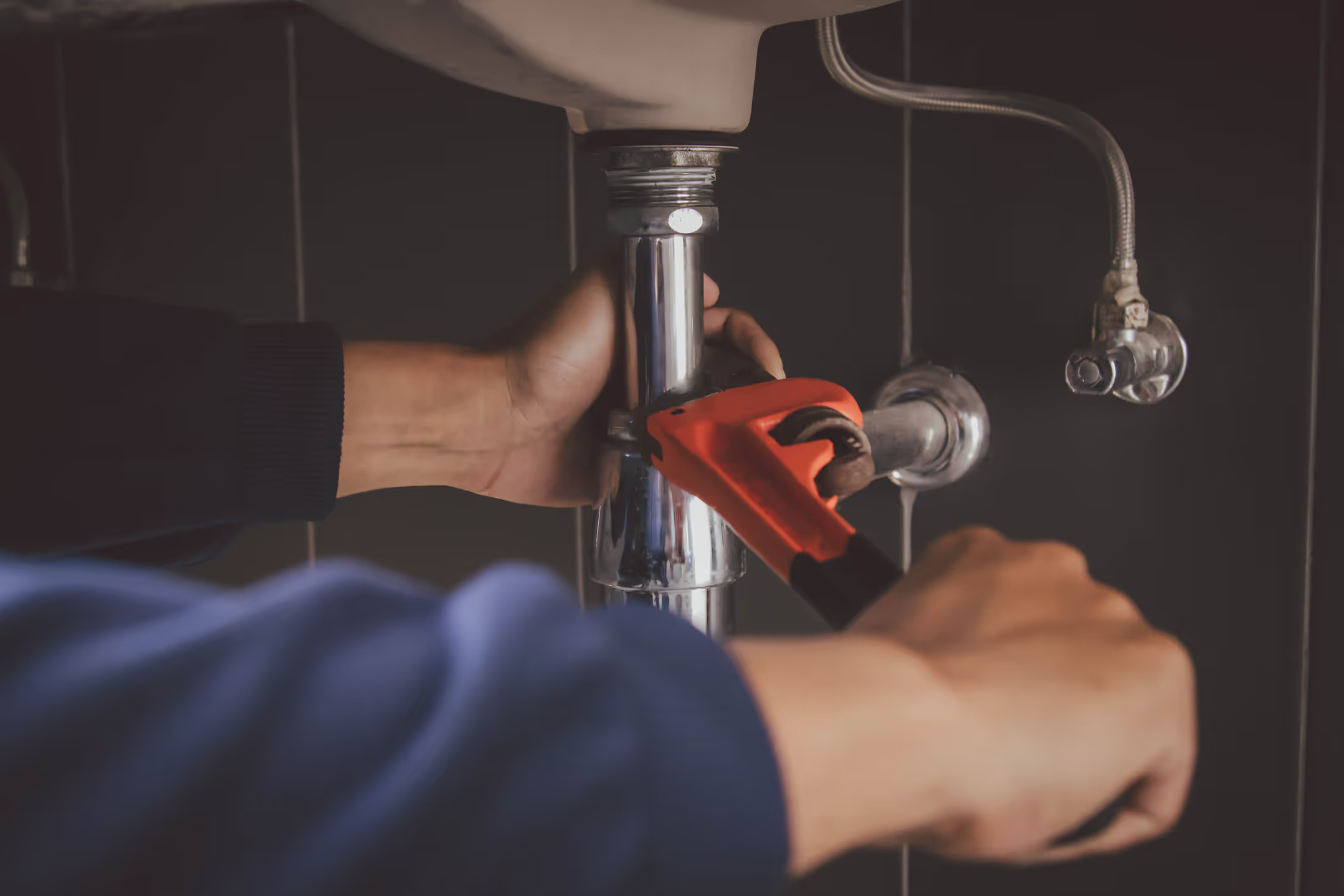
From leaks to full system installs, our plumbing services cover everything you need for a safe, reliable home water system, 24/7.
Our Primary Plumbing Include:
- Water Heater Replacement
- Water Heater Repair
- Trenchless Sewer Line
- Water Filtration
- Slab Leak
- Sewer Line Repair
Don't see the service you need? Call our Team today!
ELECTRICAL

Our electrical services ensure your home stays safe and powered, from routine fixes to complete system upgrades.
Our Primary Electrical Services Include:
- House Rewiring
- Electrician
- Electric Panel Upgrade
- Electric Panel Replacement
- EV Chargers
- Whole House Generator
Don't see the service you need? Call our Team today!
HEATING
.jpg)
We install, repair, and maintain heating & furnace systems with expert care to keep your Colorado home comfortable and energy-efficient year-round.
Our Primary Heating Services Include:
- Heating Installation
- Heating Replacement
- Heating Maintenance
- Heating Repair
- Heating Service
- Heating Tune-Up
Don't see the service you need? Call our Team today!